



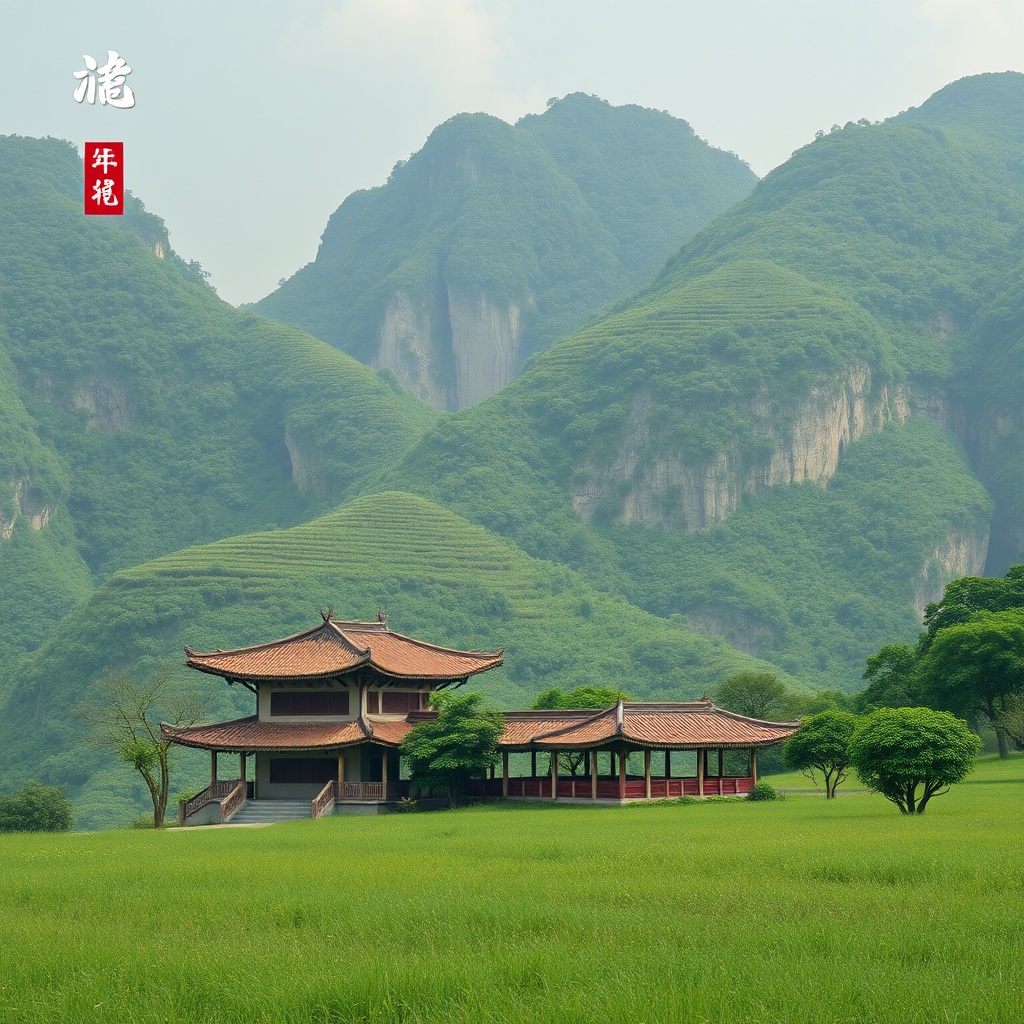
Cao Dai is a syncretic religion originating in Vietnam that seeks to harmonize elements from various spiritual and philosophical traditions. Founded in the 20th century, Cao Dai is distinguished by its ecumenical theology, elaborate rituals, and an organizational structure that reflects its multifaceted nature.
Cao Dai: A Sociological, Historical, and Theological Study
Cao Dai, which literally translates to "Great Palace" or "High Heaven," represents one of the most fascinating and unique religious expressions to emerge in Vietnam in the 20th century. In its essence, Cao Dai is a syncretic religion—a phenomenon widely studied in religious sciences—characterized by the fusion of elements from various pre-existing spiritual and philosophical traditions. Sociologically, the emergence and dissemination of Cao Dai can be analyzed as a response to specific historical contexts marked by political turmoil, colonization, and the search for cultural and spiritual identities in a rapidly changing world. Theologically, Cao Dai proposes to be the "Third Great Alliance" of Humanity, gathering what it considers the essential truth of religions such as Buddhism, Taoism, Confucianism, Christianity, and Islam, in addition to indigenous Vietnamese beliefs.
1. Sociological and Theological Definition
From a sociological perspective, Cao Dai can be classified as a syncretic and, in some aspects, messianic religious movement. Its origin during a period of intense social and political change in Vietnam (early 20th century) suggests that it emerged as a response to the search for meaning, unity, and identity in a landscape of cultural fragmentation and foreign domination. The sociology of religion often analyzes syncretic movements as attempts to accommodate and integrate external influences into a native cultural framework, offering new narratives and belief structures that resonate with the population's needs.
Theologically, Cao Dai is defined by its belief in a supreme God, the "Supreme Being" (Thượng Đế), who is the source of all existence. This Supreme Being manifests in different forms and in different eras, with Cao Dai being the most recent and complete manifestation. The central doctrine of Cao Dai is the belief in the fundamental unity of all religions, which are seen as different paths leading to the same divine truth. The ultimate goal is spiritual ascension and union with the Divine, achieved through the practice of virtue, meditation, prayer, and service to humanity. Cao Dai calls itself a "universal religion," open to all and without rigid dogmatic restrictions, encouraging the individual search for truth.
2. Historical Origin, Founders, and Geographic/Cultural Context
Cao Dai was officially founded in 1926 in the Tây Ninh province of southern Vietnam. Its emergence is intrinsically linked to the period of French colonial rule in Indochina, a context of profound social, economic, and cultural transformations. Western influence, the spread of new ideas, and the erosion of traditional structures created fertile ground for the emergence of new spiritual and religious movements that sought to offer answers and a sense of national and spiritual identity.
The primary founder and prophet of Cao Dai was Ngô Văn Chiêu (1878–1932), a civil servant who, according to tradition, had spiritual visions that led him to develop the fundamental teachings of the new religion. Other important figures in its founding include Phạm Công Tắc (1890–1959), who became the first Pope of Cao Dai and played a crucial role in the organization and expansion of the religion, and Cao Quỳnh Cư and Nguyễn Trung Hậu, who were essential in codifying its rituals and doctrines.
The geographic and cultural context of southern Vietnam, with its history of immigration and the convergence of different influences, was also conducive to the development of a religion that embraced diversity. Proximity to China, strong Buddhist and Taoist influence, and the presence of Confucianism and Christianity (via French missionaries) provided the elements that Cao Dai would eventually syncretize.
3. Main Beliefs, Dogmas, Rites, and Practices
Cao Dai beliefs are characterized by a complex theological system that integrates elements from diverse traditions:
- Supreme Divinity: The belief in Thượng Đế, the Supreme Being, who is the origin and sustainer of the entire universe. He is conceived as both a transcendent and immanent being.
- Religious Syncretism: The idea that all major religions are manifestations of the same divine truth, and that Cao Dai is the culmination of these revelations. Figures such as Buddha, Jesus Christ, Muhammad, and Lao Tzu are revered as "Divine Envoys."
- Reincarnation and Karma: As in Buddhism and Hinduism, Cao Dai believes in the law of karma and reincarnation, where the actions of one life determine the conditions of future lives. The goal is liberation from the cycle of rebirths.
- Virtue and Spiritual Evolution: The practice of virtue, compassion, justice, and wisdom is fundamental to spiritual progress.
- The Divine Eye: One of the most prominent symbols of Cao Dai is the All-Seeing Eye, which represents the Divinity. This eye is often depicted inside a triangle, symbolizing the divine trinity.
Cao Dai rites and practices are elaborate and often spectacular:
- Daily Ceremonies: Followers perform daily prayers and meditations in their homes or at temples.
- Religious Ceremonies: Formal rituals are held in temples, often accompanied by music, chanting, incense, and offerings. Ceremonial attire is colorful and symbolic.
- Table of Three Treasures (Bàn Tam Bửu): A central practice is communication with spirits through mediumship, which occurs in a sacred space called "Bàn Tam Bửu." It is believed that adherents can receive messages and teachings from spiritual figures.
- Vegetarianism: Many Cao Dai followers practice vegetarianism, especially on specific fasting days, as a means of purification and spiritual development.
- The Great Alliance: Cao Dai views itself as the Great Alliance, a pact between Heaven and Earth to guide humanity toward enlightenment.
4. Organizational Structure and Leadership
The organizational structure of Cao Dai is hierarchical and inspired by Catholic and imperial models. At the top of the hierarchy is the Pope (Giao Tong), who is considered the supreme spiritual leader and the representative of the Supreme Being on Earth. Below the Pope are a series of cardinals (Phối Sư) and bishops (Chưởng Pháp), who oversee the various facets of the religion.
Leadership is generally composed of men, although there is also a female branch with its own hierarchies. Clerics are chosen based on their spiritual dedication, knowledge of doctrines, and leadership capacity. The main headquarters of Cao Dai is located in the Holy City of Tây Ninh, where the Great Temple (Toa Thánh) is found. The religion has a network of temples and communities spread across Vietnam and in Vietnamese communities abroad.
The organizational structure reflects Cao Dai's ambition to be a universal and well-organized religion, capable of guiding its followers on their spiritual journey. The authority of the Pope and the hierarchy is seen as a direct channel for the divine will, which grants great power and responsibility to these leaders.
5. [WARNING/CONTROVERSIES] Factual Analysis of Controversies and Ethical Deviations
When analyzing any religious group, it is crucial to separate core doctrines and practices from potential ethical deviations or harmful behaviors. In the case of Cao Dai, the vast majority of its followers and the doctrinal structure itself do not exhibit characteristics of a "destructive cult." Cao Dai, as an established religion in Vietnam, is widely recognized for its cultural and spiritual contribution, and its practices are generally viewed as peaceful and devotional.
However, as with any large religious organization with a power structure and a large number of followers, challenges and controversies can arise. The history of Cao Dai, especially during its formative period and the turbulent years following World War II and the Vietnam War, saw the group involved in complex political relations. During the division of Vietnam, the Cao Dai leadership, particularly in Tây Ninh, faced pressures and had to navigate a delicate political landscape, which at times led to associations with political factions or accusations of collaboration.
It is important to note that the term "destructive cult" is applied to groups that demonstrate consistent patterns of abuse, exploitation, and coercive control over their members, often resulting in significant harm to individuals and society. These include extreme social isolation, predatory financial exploitation, rigorous mind control, physical or sexual abuse, and criminal activities. Based on academic research and serious reporting on Cao Dai, there is no substantial evidence to classify the movement as a whole as a "destructive cult" in the manner defined by social sciences and studies on coercive cults. The religion has been recognized by the Vietnamese government and operates relatively openly.
Nevertheless, it is prudent to emphasize that the factual analysis of any religious group must remain vigilant. The charismatic nature of some spiritual leaders, the complexity of mediumship practices, and the possibility of deviations in any human organization require a critical, evidence-based approach. When researching Cao Dai, it is essential to consult reliable academic sources, human rights reports, and investigative journalism that distinguish between doctrine and peaceful practices from any isolated incidents or specific controversies that may have occurred throughout its history.
Academic sources such as those by Philip Taylor (in works on religion and society in Vietnam) and Karen F. Johnson (on religion and politics in Vietnam) offer in-depth analyses of Cao Dai, contextualizing its historical development and its relations with political power, without, however, characterizing it as a destructive group.
6. Social, Cultural Impact, and Contemporary Relevance
Cao Dai has had a significant social and cultural impact in Vietnam, especially in the south. The religion not only offered a system of beliefs and spiritual practices for its followers but also became an important element of Vietnamese cultural identity, promoting values of harmony, compassion, and tolerance. The architecture of Cao Dai temples, with their vibrant colors and rich symbolism, is a remarkable artistic and religious expression.
On a social level, Cao Dai has been active in charity and social assistance, reflecting its ideal of serving humanity. The religion has also played a role in preserving cultural traditions and promoting peace in times of conflict.
The contemporary relevance of Cao Dai lies in its ability to offer a spiritual alternative in an increasingly secularized and fragmented world. Its message of religious unity and tolerance resonates in a global context of diversity and interconnection. Although the number of followers may have decreased compared to the peak of its popularity, Cao Dai continues to be an important spiritual and cultural force in Vietnam and its diaspora, keeping alive a tradition that celebrates the search for truth and universal harmony.
References and Research Sources
- Taylor, Philip. "The Religious Question in Modern Vietnam." Journal of Southeast Asian Studies, vol. 36, no. 3, 2005, pp. 415-437.
- Taylor, Philip. "Ancestor, Spirit, and the State: Religion and Politics in Vietnam." University of Hawai'i Press, 2008.
- Johnson, Karen F. "The Cao Dai Religion: A Syncretic Faith in Vietnam." Nova Religio: The Journal of Alternative and Emergent Religions, vol. 13, no. 1, 2009, pp. 3-26.
- Oliver, Victor L. "Caodaism: A Vietnamese Religion." The Journal of Religion, vol. 44, no. 3, 1964, pp. 196-210.
- Encyclopædia Britannica. "Caodaism." https://www.britannica.com/topic/Caodaism
- Cesaretti, Giovanni. "Caodaism: The Religion of the Great Palace." The World and I, Jan. 2003.





