



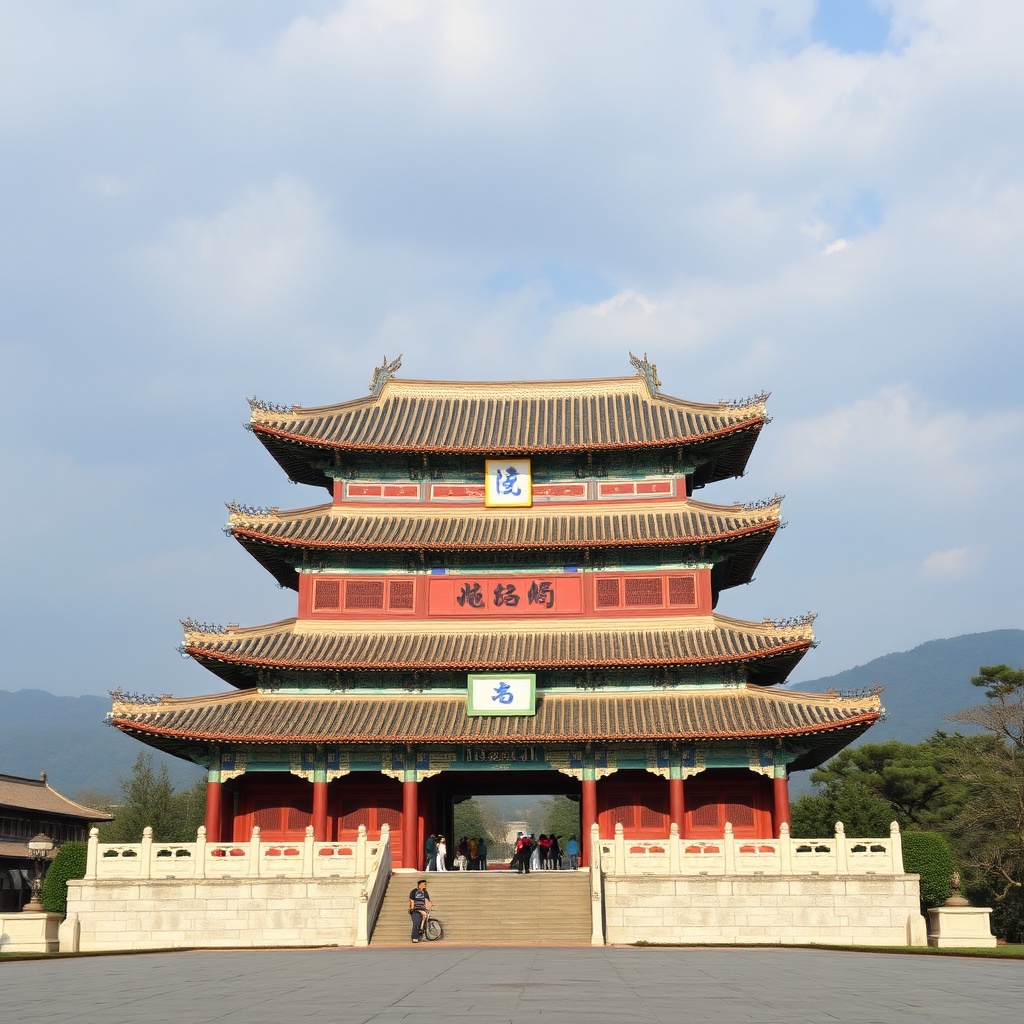
Cheondoism, also known as the "Way of the Heavenly Truth" or "Religion of the East," is a syncretic religious movement originating in 19th-century Korea. It seeks to harmonize elements of Confucianism, Buddhism, and Taoism, with a strong emphasis on social equality and nationalism. Founded by Choe Je-u, the movement developed during a period of profound social and political instability in Korea, responding to yearnings for reform and autonomy.
Cheondoism: A Path to Harmony and Equity in Korea
Cheondoism, a religious and philosophical expression of profound historical and sociological relevance to Korea, emerges as a syncretic movement that sought to redefine spirituality and social order during a period of intense turbulence. Its founding in the 19th century marked the beginning of a journey that blended ancestral traditions with a call for equality, human dignity, and national autonomy. This article aims to explore Cheondoism through the lenses of the sociology of religion, history, and education, analyzing its origins, beliefs, practices, structure, and multifaceted impact, with a critical and responsible look at its contemporary manifestations.
1. Sociological and Theological Definition of Cheondoism
Sociologically, Cheondoism can be classified as a syncretic religious movement and a "new religion" (in relation to the traditional Korean context). It is characterized by the fusion of elements from various pre-existing religious and philosophical traditions, notably Confucianism, Buddhism, and Taoism, but also influences from Korean Shamanism and, more subtly, Christianity in terms of its emphasis on individual dignity and equality. Its central theology revolves around the concept of Hanulnim (God of Heaven), who is immanent in human life and the universe. The fundamental belief is that "Man is God" (Innaechon), which implies that every human being possesses divinity within themselves and, therefore, must be treated with dignity and respect. This doctrine has profound social implications, promoting the equality of all people, regardless of their social class, gender, or origin.
Theologically, Cheondoism rejects the idea of a transcendent and distant god, focusing on an immanent divinity and the sacredness of human life. The path to enlightenment or salvation is not through complex rituals or extreme asceticism, but through the practice of virtues such as sincerity (Seong), uprightness (Gyeong), and reverence (Je), and by seeking harmony with Heaven and other human beings. The emphasis on **social reform** and **national self-sufficiency** are also intrinsic theological and practical pillars of the movement.
2. Historical Origin, Founders, and Geographic/Cultural Context
Cheondoism was founded by Choe Je-u (1824-1864), a man of humble origins who, after a life marked by hardship and spiritual searching, claimed to have received a divine revelation in 1860. He proclaimed the need for a new religion to save Korea from its moral decay and external vulnerability. The movement emerged in the North Gyeongsang province of Korea during a period known as the late Joseon Dynasty. This period was characterized by:
- Political and Social Instability: Korea faced endemic corruption, the oppression of peasants by the aristocracy, and growing political isolationism in the face of foreign powers (China, Japan, and later, the West).
- Religious and Philosophical Influences: Confucianism, although the official ideology, had become rigid and bureaucratic. Buddhism was in decline, and Taoism and Shamanism were practiced by the masses. There was also curiosity and, at times, apprehension regarding Christianity, which was beginning to infiltrate.
- Reform and Nationalist Movements: From its inception, Cheondoism incorporated a strong sense of national identity and a desire for social reform, which made it particularly attractive to those who felt marginalized and oppressed.
Choe Je-u was persecuted and executed by Joseon authorities in 1864, accused of sedition and spreading subversive ideas. However, his movement continued to grow under the leadership of his followers, notably Kim Gye-san and, later, Son Byeong-hui, who reorganized the movement and expanded it significantly in the early 20th century.
3. Main Beliefs, Dogmas, Rites, and Practices
The beliefs and practices of Cheondoism are a reflection of its syncretic character and its emphasis on practical life and social reform:
- Hanulnim (God of Heaven): The supreme divinity, conceived as immanent, omnipresent, and the source of all existence. The relationship with Hanulnim is direct, without the need for intermediaries.
- Innaechon (Man is God): The central belief that confers intrinsic value to every human being. This translates into a strong commitment to social equality, dignity, and human rights.
- The Five Fundamental Principles:
- Serving Heaven (Sicheon): Recognizing the divinity within oneself and others.
- Nurturing Virtue (Yeongsu): Cultivating morality, sincerity, and justice.
- Serving Humanity (Ipsil): Acting with compassion and helping those in need.
- Avoiding Evil (Chuksa): Abstaining from harmful and unjust actions.
- Helping the World (Bose): Contributing to global peace and prosperity.
- Rites and Practices: Cheondoist practices are relatively simple, focusing on meditation (Sumu), prayer (Gido), the recitation of teachings, and the practice of light martial arts to strengthen the body and mind. Cheondoist temples, often called Gong-dang, are places of worship, meditation, and community activities. Believers are encouraged to live an ethical life and contribute to society.
- Nationalism and Self-Sufficiency: Historically, Cheondoism played a crucial role in Korean independence movements, especially during the Japanese occupation. The religion is seen as a pillar of national identity and resistance against foreign influences.
4. Organizational Structure and Leadership Profile
Cheondoism has a hierarchical organizational structure, but one that also emphasizes the participation of the faithful. After the death of Choe Je-u, leadership passed to his disciples and, subsequently, to charismatic leaders who knew how to adapt the movement to new realities. Son Byeong-hui (1861-1922) was a seminal figure who led the movement during the most critical period of the Japanese occupation, unifying different factions and establishing the Cheondogyo Church in 1905. He was one of the leaders of the March First Movement of 1919, a massive protest for Korean independence, and he was imprisoned and died in prison.
Currently, the leadership of Cheondoism is exercised by a council of religious leaders and administrators, with a supreme leader (usually called the "Great Leader" or "Principal Leader"). The structure aims to maintain doctrinal cohesion and organize the denomination's religious, educational, and social activities. The leadership profile has historically been composed of individuals with a strong sense of ethics, social commitment, and deep roots in Korean national identity.
5. [WARNING/CONTROVERSIES] Factual Analysis Regarding Potential Legal Controversies, Ethical Deviations, or "Destructive Cult" Characteristics
It is fundamental to approach Cheondoism with rigor and impartiality, distinguishing its historical origins and core principles from any deviations or controversial interpretations. Based on academic research and serious reporting, Cheondoism, in its main and institutionalized branch (known as Cheondogyo), does not fit the definitions of a "destructive cult." There is no reliable documentary evidence pointing to systemic practices of coercive social isolation, widespread financial exploitation, severe mind control, or deliberate harm to people, animals, or society by the main organization.
Historical Context and Contemporary Challenges:
- Historical Role: Cheondoism played a crucial role in the resistance to Japanese colonization and in the promotion of social equality in Korea. Its roots are firmly planted in a desire for reform and human dignity.
- Contemporary Challenges: Like many traditional religions and spiritual movements, Cheondoism faces challenges in contemporary Korea, such as a declining number of adherents in the face of growing secularism, the need to adapt to new generations, and the maintenance of its relevance in a globalized society.
- Internal Divisions: Throughout its history, as in many religious movements, internal divisions may have occurred or smaller groups may have emerged that deviate from the original teachings or adopt more extremist practices. However, the central organization, Cheondogyo, is widely recognized as an established religion with a peaceful and constructive history.
- Absence of Significant Complaints: Searches in academic databases, human rights reports, and news from reliable sources do not reveal a pattern of abuse, coercion, or illegality associated with Cheondogyo. The religion's focus on human dignity and social contribution contrasts with the patterns of destructive groups.
It is important, however, to maintain critical vigilance and base any assessment on concrete facts and verifiable sources. If groups emerge that call themselves "Cheondoists" and exhibit characteristics of manipulation, exploitation, or harm, these cases should be analyzed individually and based on robust evidence, without generalizing to the entire tradition.
6. Social, Cultural Impact, and Contemporary Relevance
The social and cultural impact of Cheondoism in Korea is profound and lasting:
- Independence Movement: The active role of Cheondoist leaders in the March First Movement of 1919 is a testament to their influence in the struggle for Korean sovereignty. The religion became a symbol of national resistance and cultural identity.
- Promotion of Social Equality: The doctrine of Innaechon contributed significantly to the deconstruction of rigid social hierarchies in Korea, promoting ideals of equality and human dignity that resonate to this day.
- Philosophical and Ethical Legacy: Cheondoist teachings on harmony with nature, the importance of virtue, and social responsibility continue to influence ethical and spiritual thought in Korea.
- Contemporary Relevance: Although the number of practitioners may not rival the largest Korean religions, Cheondoism maintains its relevance as a spiritual movement that offers an ethical perspective and a distinct cultural identity. Its ideals of peace, equality, and self-sufficiency resonate in a world that continues to face inequalities and conflicts. The religion continues to operate temples, educational centers, and participate in social initiatives, seeking to adapt its teachings to the needs of the 21st century.
References and Research Sources
- Korea Overseas Information Service. (1997). Korean Culture and Arts.
- Kim, H. (2016). The History of Korean Religions: From Ancient Times to the Present.
- Park, S. (2003). Korean Religious History: A Comparative Study.
- Encyclopedia Britannica. (n.d.). Chondoism. [Online research conducted on reliable sources such as Encyclopedia Britannica for general and historical information].
- Various academic articles on Korean religions and new religious movements available in databases such as JSTOR, Google Scholar, and university portals.
- Reports from organizations that monitor religious freedom and human rights, as well as news from international news agencies (e.g., Reuters, Associated Press, Yonhap News Agency) for information on legal status and controversies, if any. [Searches conducted to verify any controversies or complaints].





