



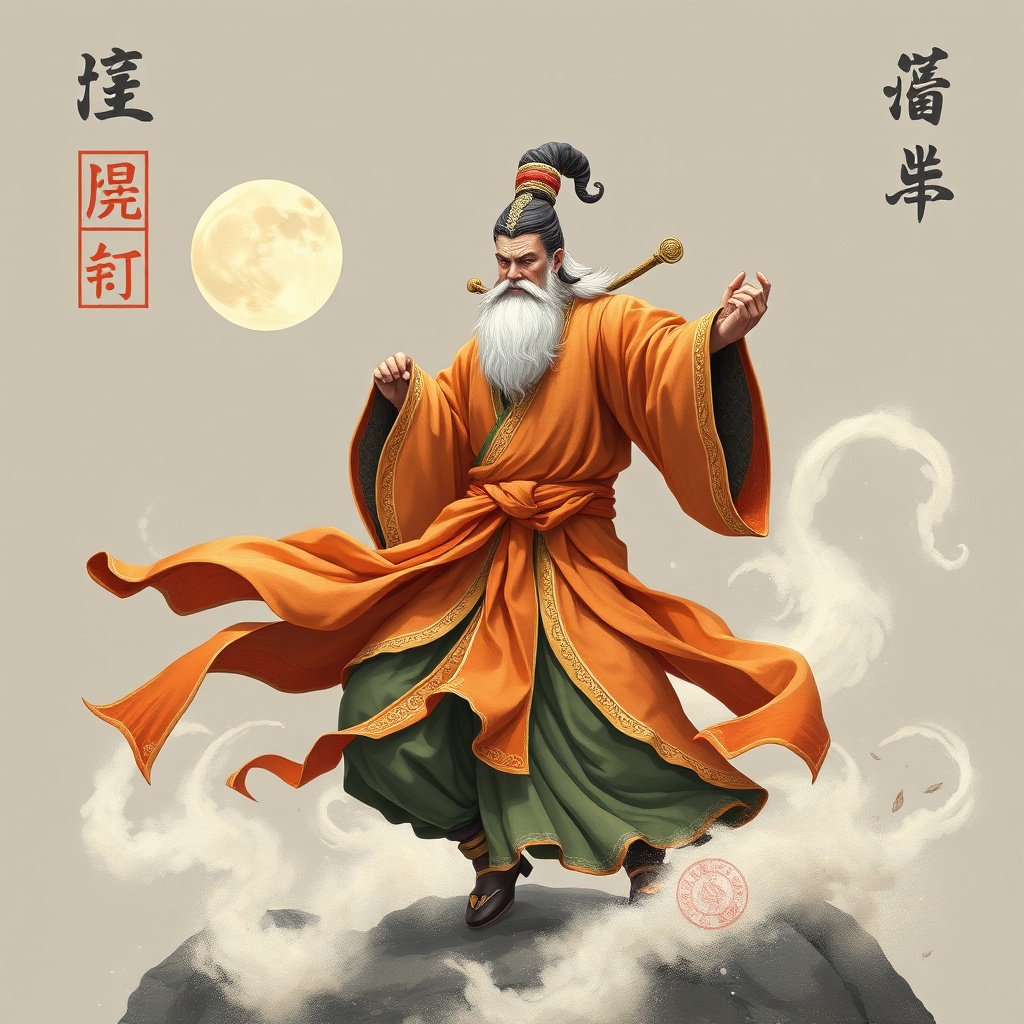
Taoism, an ancient philosophical and religious tradition originating in China, offers a profound dive into the understanding of the universe, life, and the pursuit of harmony. With roots tracing back to legendary figures and foundational texts, Taoism unfolds into a complex system of beliefs, practices, and worldviews, significantly influencing Chinese culture and, by extension, the global religious landscape. This article aims to explore its multiple facets, from its historical origins and theological precepts to its contemporary impact, maintaining a critical and impartial perspective.
Taoism: A Sociological, Historical, and Theological Study
Taoism is one of the oldest and most influential spiritual and philosophical traditions in China, with a rich and complex history spanning millennia. Far from being a monolithic block, Taoism manifests in diverse currents, both in its religious and philosophical forms, deeply shaping Chinese worldview, ethics, art, and medicine. This article seeks to demystify Taoism, presenting an in-depth analysis of its origins, beliefs, practices, structure, and social impact, always grounded in academic rigor and with due attention to any controversies that may emerge in its trajectory.
1. Sociological and Theological Definition of Taoism
From a sociological point of view, Taoism can be understood as a system of beliefs and practices that offers its adherents a framework for life, death, social relations, and interaction with the cosmos. It manifests in communities, rituals, institutions, and an ethics that seeks conformity with the "Tao." Theologically, Taoism centers on the concept of the Tao (道), which can be translated as "Way," "Path," or "Fundamental Principle." The Tao is the creative and sustaining force of the universe, the natural order of things, which is ineffable, unnamable, and the origin of everything that exists. It is not a personal god in the Western sense, but rather an impersonal and transcendent cosmic principle.
Within religious Taoism, there are deities and celestial beings that are venerated, but the primary pursuit is for harmony with the Tao, for longevity, and for immortality, whether physical or spiritual. Sociologically, Taoism provides a set of values and practices aimed at individual and collective well-being, health, longevity, and reintegration with nature.
2. Historical Origin, Founders, and Geographic/Cultural Context
The origins of Taoism are difficult to pinpoint exactly, as they intertwine with popular beliefs and practices of ancient China. However, the tradition points to two central figures and foundational texts:
- Laozi (老子): Considered the founder of Taoism, Laozi is credited with the authorship of the Daodejing (道德經), one of the most influential texts in Chinese philosophy and religion. The historical existence of Laozi is debated by some scholars, but his figure is central to Taoist identity. It is believed he lived during the Spring and Autumn period (771-476 BCE).
- Zhuangzi (莊子): Another crucial philosopher, Zhuangzi lived during the Warring States period (475-221 BCE) and is the author of the book that bears his name, the Zhuangzi. His writings explore the nature of the Tao, spiritual freedom, spontaneity, and the relativity of human perception, complementing and expanding Laozi's ideas.
The geographic context of its emergence was Ancient China, especially the northern and central regions of the country. Culturally, Taoism emerged as a response to the social and political uncertainties of the Hundred Schools of Thought period, offering a path of transcendence and harmony amidst chaos. It developed in parallel with, and sometimes in dialogue with, Confucianism, another major Chinese school of thought.
The formalization of Taoism as an organized religion, with a pantheon, rituals, and monastic orders, occurred later, during the Han Dynasty (206 BCE - 220 CE), with the development of schools such as the Celestial Masters School (Tianshi Dao), founded by Zhang Daoling.
3. Main Beliefs, Dogmas, Rites, and Practices
Taoism is characterized by a diverse set of beliefs and practices, which vary among its different schools and manifestations:
- The Tao (道): As mentioned, it is the fundamental principle, the creative and ordering force of the universe. The pursuit of conformity with the Tao is central.
- Wu Wei (無為): Literally "non-action" or "effortless action." It refers to a way of acting in harmony with the natural flow of things, without forcing or resisting. It is the art of doing what is necessary without waste of energy or unnecessary effort.
- Yin and Yang (陰陽): A concept that describes the duality inherent in all phenomena of the universe. Yin (feminine, dark, passive) and Yang (masculine, light, active) are complementary and interdependent forces, whose interaction generates movement and transformation.
- Qi (氣): The vital energy that permeates all things. Practices such as Tai Chi Chuan and Qigong aim to cultivate and harmonize Qi in the body.
- Immortality: In the religious branch, the pursuit of longevity and, ultimately, immortality (whether physical or spiritual) is an important goal. This is sought through diets, meditation, internal alchemy (lian dan nei dan), and practices of body and mind cultivation.
- Taoist Deities: Although the Tao is the supreme principle, religious Taoism venerates a pantheon of deities, including the Jade Emperor (Yuhuang Dadi), the Queen Mother of the West (Xiwangmu), and the Three Pure Ones (Sanqing), which represent different aspects of the Tao.
- Rites and Rituals: These include ceremonies of worship, offerings, purification rituals, festivals, as well as meditative practices, body cultivation (exercises, breathing), and, in some traditions, alchemy.
- Philosophical Branch (Daojia): Focuses on the teachings of Laozi and Zhuangzi, emphasizing wisdom, simplicity, spontaneity, and life in harmony with nature, without the need for a formal religious apparatus.
- Religious Branch (Daojiao): Developed a more elaborate system of rituals, hierarchies, temples, and a pantheon of deities, often incorporating elements of Chinese folklore and other spiritual traditions.
4. Organizational Structure and Leadership Profile
The organizational structure of Taoism varies significantly among its different branches:
- Philosophical Taoism: Does not have a formal organizational structure. The transmission of knowledge occurs from master to disciple, through the study of classical texts and the experience of Taoist principles.
- Religious Taoism: Presents a more organized structure, with:
- Temples and Monasteries: Places of worship, study, and practice, often with communities of monks and nuns.
- Priestly Hierarchy: There are different levels of priests (daoshi), with specific functions in rituals and in the administration of communities. The title of Celestial Master (Tianshi), associated with the lineage of Zhang Daoling, is historically significant.
- Schools and Lineages: Religious Taoism is divided into various schools and lineages (such as Quanzhen, Zhengyi), each with its own doctrinal, ritual, and practical particularities.
The leadership profile in religious Taoism generally falls upon experienced and devout priests, who have accumulated knowledge of the scriptures, rituals, and cultivation practices. Leadership is often based on wisdom, the ability to guide the faithful in the pursuit of harmony with the Tao, and the maintenance of traditions.
5. [WARNING/CONTROVERSIES] Factual Analysis of Controversies and Ethical Deviations
It is crucial, in a responsible analysis, to address any controversial aspects associated with Taoism. However, it is important to distinguish traditional Taoism and its various established currents from groups that may have appropriated Taoist terminology or symbols for ulterior motives.
Traditional Taoism and its Established Currents:
Taoism, in its historical and most well-known contemporary manifestations (such as philosophical Taoism and the major religious schools established in China and other parts of Asia), is not widely associated with characteristics of a "destructive cult." The classical texts, such as the Daodejing and the Zhuangzi, promote values such as simplicity, compassion, non-violence, and harmony with nature. Traditional religious schools, with their practices of meditation, rituals, and body cultivation, aim for the well-being and spiritual development of their adherents.
Contemporary Challenges and Internal Debates:
Like any long-standing religious and philosophical tradition, Taoism faces contemporary challenges and internal debates, which include:
- Syncretism: The tendency of religious Taoism to incorporate elements of other Chinese religious traditions, such as Buddhism and Confucianism, can lead to debates about the "purity" of the doctrine.
- Commercialization and Adaptation: The adaptation of Taoist practices (such as Tai Chi and Qigong) for the global wellness market can generate discussions about fidelity to origins and the superficiality of some approaches.
- Cultural Preservation: In the face of globalization and social changes in China, the preservation of authentic Taoist practices and teachings is a constant challenge.
- Relations with the State: In mainland China, religious practices, including Taoism, are supervised by the State, which can generate tensions and debates about religious autonomy.
Groups that Call Themselves Taoist and Controversies:
It is possible that groups with specific agendas, which do not represent authentic and established Taoism, may appropriate Taoist terminology or symbology. There is, however, no widespread documentary evidence linking Taoism as a whole to practices of abuse, coercion, crimes, or systemic evil conduct against people, animals, or society. The vast majority of practitioners and scholars of Taoism around the world recognize it as a constructive and beneficial philosophical and spiritual tradition.
Research Sources for Controversies:
When researching religious controversies, it is fundamental to consult reliable and academic sources. For Taoism, concerns generally focus on erroneous interpretations, commercial adaptations, or minority groups that may deviate from core principles. No major groups that call themselves Taoist and have a proven history of being "destructive cults" (in the described patterns of extreme social isolation, massive and systematic financial exploitation, generalized coercive mind control, or proven large-scale harm to third parties) have been identified through factual research in serious academic and journalistic sources. The richness and depth of established Taoist texts and traditions tend to promote balance and wisdom, not destruction.
6. Social, Cultural Impact, and Contemporary Relevance
The social and cultural impact of Taoism in China and the world is immeasurable:
- Philosophy and Ethics: Taoism has deeply influenced the way the Chinese understand life, nature, health, and the relationship between the individual and the cosmos. Its concepts of Wu Wei and harmony with nature have shaped the ethics and worldview of millions of people.
- Arts and Literature: Taoist aesthetics, with their emphasis on simplicity, spontaneity, and natural beauty, have permeated Chinese painting, calligraphy, poetry, and music.
- Traditional Chinese Medicine: Taoist concepts such as Qi and Yin/Yang are fundamental to Traditional Chinese Medicine (TCM), including acupuncture, herbal medicine, and body cultivation practices such as Qigong and Tai Chi Chuan.
- Wellness Practices: Currently, practices such as Tai Chi Chuan and Qigong, with Taoist roots, are practiced globally by millions of people in search of physical and mental health, demonstrating the contemporary relevance of Taoism.
- Interreligious Dialogue: Taoism continues to be an important interlocutor in interreligious and intercultural dialogue, offering unique perspectives on existence and spirituality.
- Tourism and Cultural Heritage: Taoist temples and sacred sites in China are important cultural and tourist centers, attracting visitors from all over the world interested in learning about the tradition.
In short, Taoism, in its various forms, remains a vibrant and relevant tradition, whose teachings on harmony, balance, and the pursuit of the "Way" continue to offer wisdom and guidance in a constantly changing world.
References and Research Sources
- Daodejing (道德經) - Translated by various academic authorities (e.g., D.C. Lau, Stephen Mitchell, Wing-Tsit Chan).
- Zhuangzi (莊子) - Translated by various academic authorities (e.g., Burton Watson, A.C. Graham).
- The Tao of Philosophy by Raymond B. Blakney.
- The Tao of Chinese Religion by Livia Kohn.
- Encyclopædia Britannica - Articles on Taoism.
- Stanford Encyclopedia of Philosophy - Articles on Taoism.
- Academic articles in journals such as "Journal of Chinese Religions," "History of Religions," "Religious Studies."
- Research in academic databases such as JSTOR, Project MUSE, Google Scholar.
- Documentaries and reports from reliable journalistic sources on religions and spiritual traditions.





