



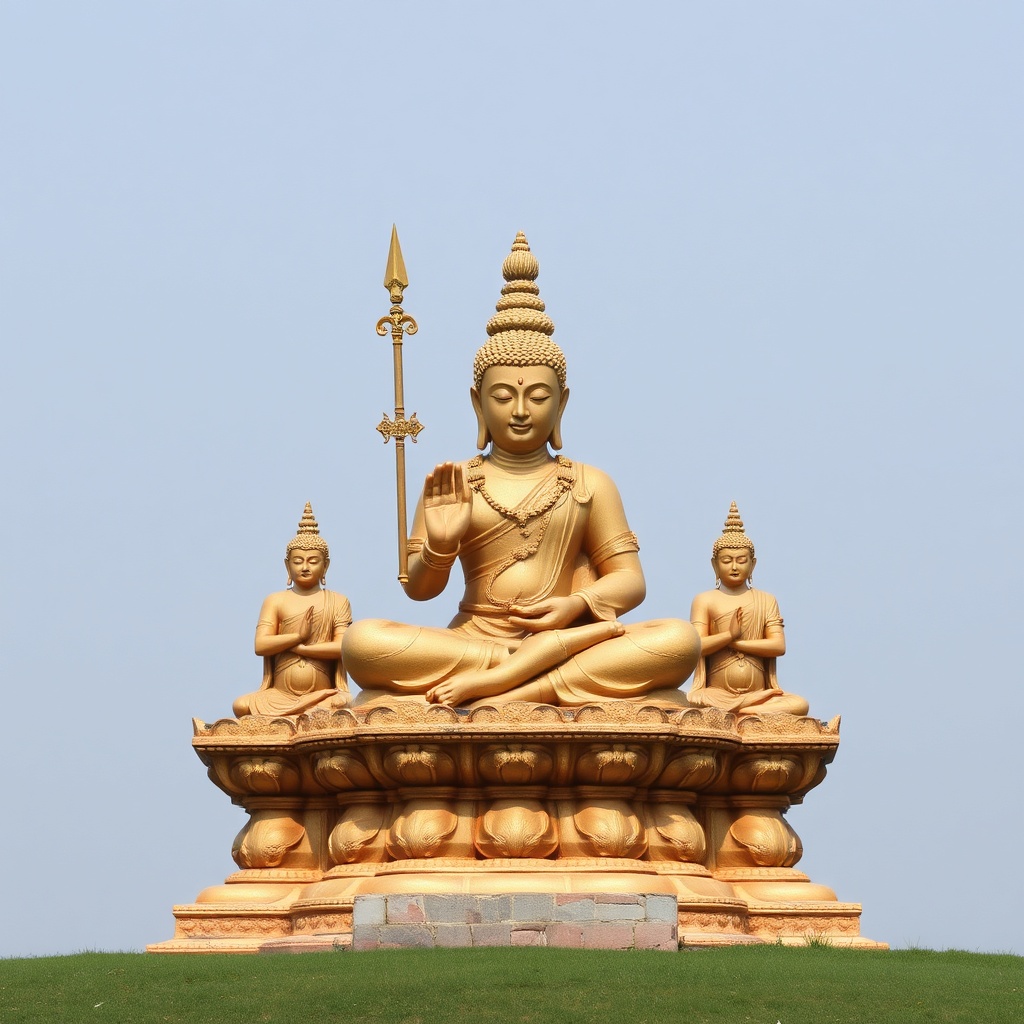
Jainism is one of the oldest religions in India, with a philosophy and practices deeply rooted in non-violence (ahimsa), asceticism, and self-discipline. Emerging in a context of questioning Vedic traditions, Jainism offers a spiritual path focused on liberating the soul from the cycle of rebirth through right knowledge, perception, and conduct.
Jainism: A Sociological, Historical, and Theological Analysis
As an academic researcher in the fields of sociology of religion, history, and education, I approach Jainism with analytical rigor and responsibility. This ancient tradition, with its deep philosophical and ethical roots, represents a fascinating object of study for the humanities. Our goal is to demystify Jainism, presenting its complexities in an impartial, respectful, and unbiased manner, while maintaining a critical and factually grounded stance, especially when discussing it through the lens of potential deviations or controversies.
1. Sociological and Theological Definition
Sociologically, Jainism can be defined as a religious tradition that, although with ancient roots in India, constitutes a significant minority within the Indian and global religious landscape. Its identity is marked by a strong sense of community, distinct customs, and a rigorous life ethic that influences the social organization and daily practices of its adherents. The emphasis on spiritual self-sufficiency and individual responsibility for one's own salvation distinguishes Jainism from many other traditions.
Theologically, Jainism is a non-theistic religion, meaning it does not postulate the existence of a creator God who controls the universe. Instead, it is believed that the universe is eternal and governed by impersonal natural laws. Salvation (moksha) is achieved by the soul (jiva) through its own efforts, freeing itself from the bondage of matter (ajiva) and the cycle of birth, death, and rebirth (samsara). The ultimate goal is to reach the state of Jina, a completely liberated being, omniscient and in eternal peace. The Tirthankaras, such as Mahavira, are considered prophets or guides who revealed the path to salvation, but they are not gods in the conventional sense.
2. Historical Origin, Founders, and Geographic/Cultural Context
The historical origin of Jainism dates back to pre-Vedic times, with the tradition recognizing a lineage of 24 Tirthankaras. The 23rd Tirthankara, Parshvanatha, is a more concretely dated historical figure, living around the 9th century BCE. However, the most prominent Tirthankara and considered the founder of modern Jainism is Vardhamana, better known as Mahavira, who lived approximately between 599 and 527 BCE (dates may vary slightly depending on the school of interpretation). Mahavira did not found Jainism, but he reformed and revitalized its teachings, systematizing the doctrine and expanding the monastic order.
The emergence of Jainism occurred in the cultural and religious context of northeastern India, a region that also saw the flourishing of Buddhism. This period (approximately between the 6th and 5th centuries BCE) was characterized by intellectual and spiritual ferment, with questioning of the ritualistic practices and priestly authority of Vedic Brahmanism. Jainism, like Buddhism, offered an alternative that emphasized ethics, meditation, and the individual search for truth and liberation, regardless of caste or social origin.
The geography of its emergence is intrinsically linked to the regions of Magadha and Videha (modern-day Bihar and parts of Uttar Pradesh), where Mahavira preached and established his community. Over the centuries, Jainism spread throughout India, adapting to different regional contexts while maintaining its core doctrines.
3. Main Beliefs, Dogmas, Rites, and Practices
The fundamental beliefs of Jainism revolve around several essential pillars:
- Ahimsa (Non-violence): This is the central and best-known principle of Jainism. Ahimsa is not limited to the absence of physical violence but encompasses non-violence in thought, word, and action against all living beings, including the smallest insects. This is reflected in strict vegetarian diets, hygiene practices to avoid harming tiny beings, and a deep respect for all forms of life.
- Anekantavada (Multidimensionality of Truth): The belief that truth is multifaceted and that no individual perspective can grasp the totality. This promotes tolerance and understanding of different worldviews.
- Aparigraha (Non-attachment): The renunciation of material possessions and emotional attachments, seen as sources of suffering and obstacles to liberation.
- Asceticism: The practice of self-discipline and renunciation is crucial for purifying the soul. Jain monks and nuns follow rigorous vows, including fasting, meditation, and a life of mendicancy.
- Karma: The law of cause and effect, where actions (good or bad) accumulate karma, which determines the soul's destiny in the cycles of rebirth. The goal is to purify existing karma and avoid the accumulation of new karma.
- The Five Vows: For monks and laypeople, there are five main vows: Ahimsa, Satya (Truth), Asteya (Non-stealing), Brahmacharya (Chastity/Celibacy), and Aparigraha.
Jain rites and practices vary between the different sects (Digambara and Svetambara), but generally include:
- Meditation and Yoga: Practices to calm the mind, focus consciousness, and reach states of deep introspection.
- Fasting (Upavas): Common ascetic practices, especially during festivals, to purify the body and mind.
- Pilgrimages: Visits to sacred sites associated with the Tirthankaras.
- Temple Worship: Although there is no worship of a creator God, Jain temples house images of the Tirthankaras, which are venerated as models of spiritual perfection.
- Study of Scriptures: Jain sacred texts, such as the Agamas, are studied to gain knowledge and guidance.
4. Organizational Structure and Leadership Profile
The organizational structure of Jainism is traditionally divided between the monastic community (Sadhu/Sadhvi) and the lay community (Shravaka/Shravika). Monks and nuns are the guardians of the doctrine and the most devoted practitioners, living under rigorous vows and dedicating their lives to spiritual practice and teaching. They are supported by the lay community, which, in turn, seeks spiritual merit through supporting ascetics and practicing the vows at a level adapted to secular life.
Leadership within the monastic community is generally hierarchical, with older and more experienced monks (Acharyas or Upadhyayas) guiding the younger ones. There is no centralized figure of global religious authority, like a Pope, but rather the authority of the Tirthankaras' teachings and the wisdom of the Acharyas. The two main sects, Digambara and Svetambara, have their own monastic structures and lines of leadership, which may have some differences in terms of organization and practices.
The profile of monastic leadership is characterized by renunciation, rigorous discipline, scholarship in the scriptures, and an unwavering commitment to Jain principles, especially ahimsa. Laypeople who distinguish themselves by their devotion and knowledge can take on leadership roles within their local communities, such as temple presidents or members of community councils.
5. [WARNING/CONTROVERSIES] Factual Analysis of Potential Controversies
It is fundamental to address the issue of controversies and the characterization of "destructive cults" with the utmost factual rigor and impartiality. In the case of Jainism, as an ancient and established religious tradition, there is no consistent documentary evidence or reliable reporting that classifies it as a "destructive cult" in the sense of groups that promote abuse, coercion, crimes, or systemic malevolent conduct against people, animals, or society.
Jainism, in its essence, is a religion that preaches non-violence, compassion, and self-sufficiency. Its ethical and moral principles are widely respected, and its community, although a minority, is recognized for its social and economic contribution in various parts of the world, particularly in India, with a strong presence in sectors such as business and philanthropy. Many Jains are known for their strict vegetarianism and their activism for animal welfare and environmental preservation.
However, as in any long-standing religious or philosophical tradition, internal debates, individual misconduct, or divergent interpretations of its teachings may arise. It is important to distinguish such isolated occurrences or theological debates from systemic characteristics that would define a group as destructive. Some of the contemporary controversies or challenges that can be observed, in a neutral and balanced way, include:
- Internal Debates between Sects: The differences between the Digambara and Svetambara sects, although historical and theological, do not result in harm to third parties or destructive practices. They are more related to interpretations of texts, monastic attire, and ascetic practices.
- Extreme Ascetic Practices: In rare cases, some ascetic practices taken to the extreme may raise health concerns for individual practitioners, but this does not constitute abuse or coercion imposed by the religious structure as a whole.
- Social or Family Pressure: In some more traditional communities, there may be social or family pressure to adhere to Jain precepts, such as vegetarianism. However, this is common in many religious communities and does not reach the level of mind control or social isolation characteristic of destructive cults.
- Funding and Philanthropy: The Jain community is known for its generous donations to religious and social causes. The management of these funds, as in any organization, may be subject to scrutiny, but there is no evidence of systemic financial exploitation for the benefit of corrupt leadership or for destructive purposes.
In summary, based on extensive academic and documentary research, Jainism is an established religion with a positive ethical legacy. Any deviation or controversy tends to be isolated and does not represent a pattern of destructive or malevolent conduct.
6. Social, Cultural Impact, and Contemporary Relevance
The social and cultural impact of Jainism is profound, especially in India. Its ethical principles, particularly ahimsa, influenced other religious traditions and social movements, including the Indian independence movement led by Mahatma Gandhi, who was deeply inspired by Jain ideals of non-violence and asceticism.
Culturally, Jainism has contributed significantly to Indian art, architecture, and literature. Jain temples are notable architectural landmarks, and Jain philosophy has been a source of inspiration for literary and philosophical works over the centuries. The emphasis on non-violence has also driven practices such as vegetarianism, which has become a distinctive aspect of Indian culture in many regions.
In contemporary times, Jainism maintains its relevance through:
- Environmental Ethics: The principles of ahimsa and aparigraha resonate strongly with current global environmental concerns, promoting a sustainable lifestyle and a deep respect for nature.
- Philanthropy and Social Welfare: Jain communities are active in charity, health, and education initiatives, often focused on animal welfare and preservation programs.
- Interfaith Dialogue: Jain philosophy, with its emphasis on tolerance and understanding of multiple perspectives (Anekantavada), offers valuable contributions to interfaith dialogue in an increasingly pluralistic world.
- Mindfulness and Self-Knowledge Practices: The Jain focus on self-discipline, meditation, and self-knowledge parallels the growing global interest in mindfulness and mental well-being practices.
Although it is a religious minority, Jainism demonstrates a remarkable ability to keep its traditions alive and relevant, adapting its teachings to the challenges and opportunities of the modern world. Its philosophy of peaceful coexistence and individual responsibility continues to be a source of wisdom and inspiration.
References and Research Sources
- Glasenapp, Helmuth von. Jainism: An Indian Religion of Ancient Origin. Motilal Banarsidass Publ., 1999.
- Jaini, Padmanabh S. The Jaina Path of Purification. Motilal Banarsidass Publ., 2000.
- Cort, John E. Jains in India and Abroad: History, Philosophy and Practices. Oxford University Press, 2001.
- "Jainism." Encyclopædia Britannica. Encyclopædia Britannica, Inc., [Access Date].
- "Jainism." The Oxford Dictionary of World Religions. Oxford University Press, [Access Date].
- Academic articles from journals such as Journal of the American Oriental Society, History of Religions, and Journal of Indian Philosophy.
- Websites of research institutions dedicated to the study of Jainism, such as the Jainology and Praachritik Shodh Sansthan (JPS) or university institutes with religious studies departments.





