



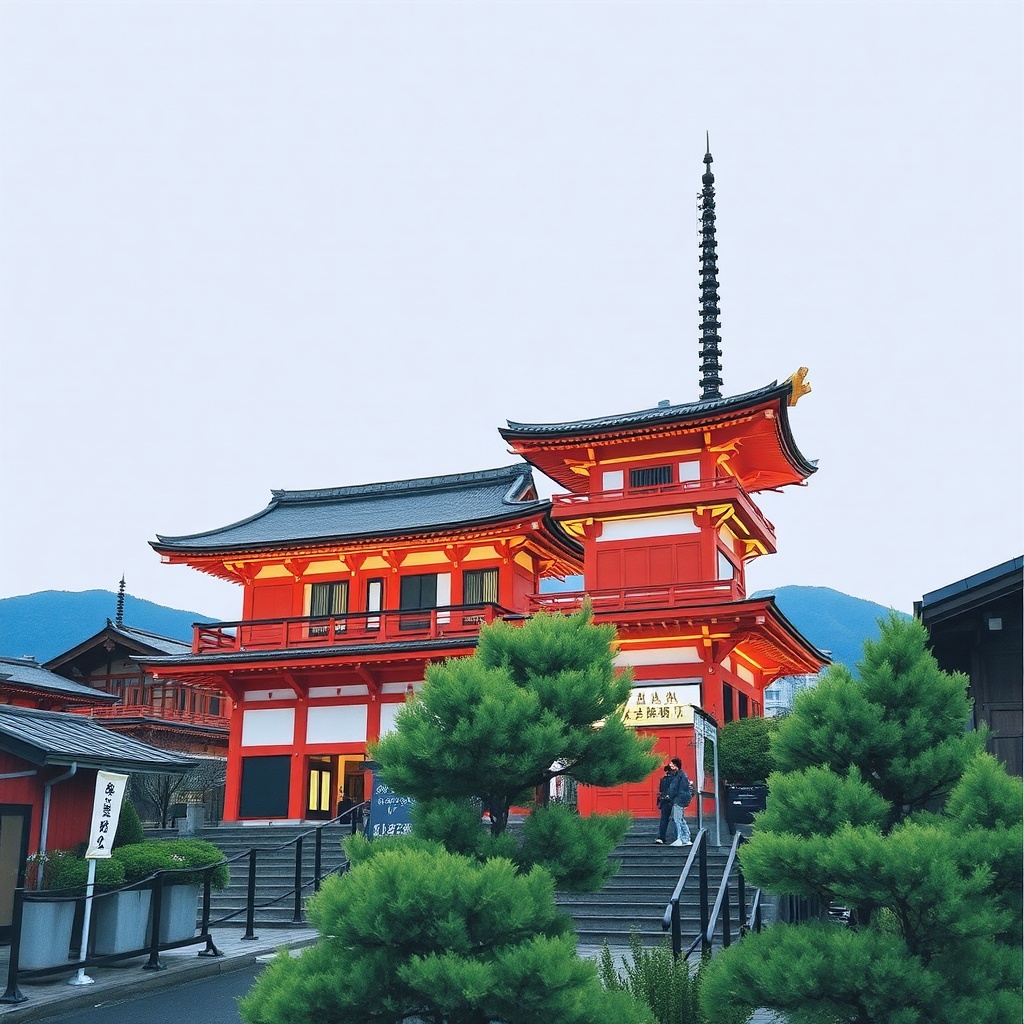
Tenrikyo is a new religion that emerged in 19th-century Japan, characterized by a monotheistic theology centered on the figure of a primordial deity, the "Heavenly God-Parent" (Ten-tsu-kami), and the salvific mission of its founder, Oyasama. With an organizational structure that reflects its origin and doctrine, Tenrikyo seeks the purification of humanity and the creation of a "Model World" of joy and harmony, presenting a complex panorama of beliefs, rituals, and social impact that deserves in-depth analysis through the lenses of the sociology of religion and history.
Tenrikyo: Sociological, Historical, and Theological Analysis of a New Japanese Religion
Tenrikyo, one of Japan's most prominent new religions, emerges from the fertile spiritual and social soil of the Meiji period, a time of profound transformation and redefinition of Japanese national identity. Its foundation and development offer a rich field of study for the sociology of religion, the history of religions, and cultural anthropology, allowing us to unravel not only its doctrines and practices but also its impact on society and its adaptation to contemporary challenges. This article aims to explore Tenrikyo with academic rigor, addressing its sociological and theological definition, its historical origins, main beliefs, organizational structure, and, crucially, analyzing in a factual and responsible manner any controversies or criticisms surrounding it, always guided by impartiality and respect.
1. Sociological and Theological Definition: The Nature of Tenrikyo
Sociologically, Tenrikyo can be classified as a Japanese "new religion" (shinshukyo), a term that encompasses a vast range of religious movements that emerged from the 19th century onwards, many of which responded to the rapid social, political, and economic changes of modern Japan. Tenrikyo is distinguished by its monotheistic theology, centered on the belief in a single, creator God, Ten-tsu-kami (Heavenly God-Parent), who is the source of all existence. This God, according to the doctrine, desires the salvation and happiness of all humanity, seeking the purification of human hearts and minds so that they may live in harmony and joy.
Theologically, the central doctrine of Tenrikyo revolves around the divine revelation given to Miki Nakayama (Oyasama), who is considered the "Shrine of God" or the "Bride of God." It is believed that Oyasama was chosen as a mediator to transmit the divine will to humanity and guide people toward a path of salvation. Salvation in Tenrikyo is not seen as a post-mortem event, but as a continuous process of purification and effort to live according to divine teachings here and now, aiming at the creation of a "Model World" (Jiba) of peace and harmony. The idea of Jiba refers both to the sacred place of the religion's origin (Oyasama's house in Tenri City) and to an ideal state of human existence.
The relationship between the divine and the human is conceived as a relationship between parents and children. Ten-tsu-kami is the Heavenly Parent, and humanity are their children. Oyasama is seen as the Mother who cares for and guides her children. This parental metaphor is fundamental to understanding the doctrine and how followers relate to the deity and religious leadership.
2. Historical Origin, Founders, and Geographic/Cultural Context
Tenrikyo has its roots firmly planted in 19th-century Japan, specifically in 1838, when Miki Nakayama, a Buddhist devotee and mother, in Kashihara (present-day Tenri City), in Yamato province (now Nara), experienced a divine revelation. According to tradition, amidst a family and spiritual crisis, Miki was possessed by the spirit of Ten-tsu-kami, who entrusted her with the mission of saving humanity.
The historical context is crucial to understanding the emergence of Tenrikyo. The Meiji period (1868–1912) was marked by Japan's accelerated modernization, imperial restoration, and a strong emphasis on nationalism. There was an attempt by the government to consolidate State Shinto as the national religion, which created tensions with other beliefs. In this scenario of uncertainty and drastic changes, many new religions emerged as responses to the spiritual and social anxieties of the population, offering comfort, meaning, and a sense of community.
Miki Nakayama, the founder, is the central figure. Born in 1800, she was married to Maegawa Zenbei and later adopted by the Nakayama family. Her life as a woman and mother in a patriarchal society, combined with her mystical experience, gave Tenrikyo a particular emphasis on divine motherhood and compassion. After the revelation, Miki, known from then on as "Oyasama" (Venerable Lady), began to transmit the divine teachings, attracting a growing number of followers.
The main sacred text of Tenrikyo is the Ofudesaki (Tip of the Writing Brush), a collection of prophetic poems written by Oyasama over several years, which contain the divine teachings. Other important texts include the Osashizu (Divine Instructions) and the Mikagura-uta (Sacred Songs), which detail rites and practices.
3. Main Beliefs, Dogmas, Rites, and Practices
Tenrikyo's beliefs are multifaceted and interconnected, centered on the will of Ten-tsu-kami and the mission of Oyasama. Some fundamental pillars include:
- Divine Will and Purification: It is believed that Ten-tsu-kami desires humanity to live in joy and harmony. However, humanity, by clinging to selfish and materialistic desires, has strayed from this will, generating suffering and disorder. The purification of the heart and mind is, therefore, essential to return to a state of grace and to the realization of the Model World.
- The Single Deity and Revelation: The belief in a single God, creator and loving parent, is central. Oyasama is seen as the incarnation of the divine will on Earth, a direct channel for communication between God and humanity.
- The Concept of Jiba: As mentioned, Jiba represents both the sacred place of the faith's origin and an ideal state of existence. Pilgrimage to the Main Sanctuary in Tenri City is an important practice for many followers.
- The Doctrine of the "Three Foundations" (Sandai): Tenrikyo teaches that human existence is based on three foundations: the body, which is a loan from Ten-tsu-kami; time, also a loan; and the mind, the only real possession a person has to use correctly.
- Salvation Through Practice: Salvation is seen as an active process. Followers are encouraged to practice "salvation in life" (yoboku), which involves living according to divine teachings, helping others, and working toward the construction of the Model World.
Tenrikyo's rites and practices are varied and aim to deepen the connection with the divine and promote purification:
- The Kagura-uta and Mikagura-uta: The Mikagura-uta are the sacred songs that narrate the story of creation and salvation. The ritualistic dance known as Kagura-uta, performed on special occasions, is a way to express gratitude and connect with the divine will.
- The Kagura Service (Kagura-mai): This service is performed with the aid of musical instruments and specific songs, and is one of the most emblematic practices, seeking to convey the story of creation and the divine will.
- Meditation and Prayer: The practice of meditation and prayer is encouraged for the purification of the mind and the development of compassion.
- The Otsutome Service: A religious service performed daily in temples and homes, involving chants and symbolic gestures.
- The Tsutome Service (Tsutome): The service performed by followers in their daily lives, which consists of living according to the teachings, seeking purification and mutual aid.
- Charity and Social Service: Tenrikyo has a strong emphasis on service to the community and helping those in need, which manifests in various social and humanitarian activities carried out by its members.
4. Organizational Structure and Leadership Profile
Tenrikyo has a hierarchical and well-defined organizational structure, which reflects its tradition and its quest for order and discipline. The nerve center of the organization is the Main Sanctuary in Tenri City, which houses the main place of worship and administrative offices.
Tenrikyo's leadership is transmitted hereditarily within Oyasama's lineage. After Miki Nakayama's passing in 1887, leadership passed to her son, Shuji Nakayama, who became the first "Shinbashira" (spiritual leader). Succession continued through his descendants, with each leader assuming the role of spokesperson for the divine will and guardian of the teachings.
Currently, leadership is under the responsibility of the 4th Shinbashira, Zenji Nakayama. Tenrikyo leaders are seen by followers as direct representatives of the divine will, and their authority is widely respected. The organizational structure includes:
- The Shinbashira: The supreme spiritual leader and the main interpreter of the teachings.
- The Council of Elders (Shinri-daijin): A body of experienced leaders who assist the Shinbashira in administration and faith guidance.
- The Clergy: A hierarchy of clergy responsible for conducting rites and providing spiritual guidance to the faithful in local and regional temples.
- Temples and Shrines: Tenrikyo has a vast network of temples and shrines throughout Japan and in other countries, where followers gather for worship and community activities.
- Subsidiary Organizations: The religion also maintains various educational institutions, hospitals, museums, and research centers, which reflect its commitment to social welfare and human development.
The leadership profile is, therefore, characterized by spiritual and administrative authority, with a strong sense of responsibility for the preservation and propagation of Oyasama's teachings.
5. Factual Analysis of Potential Controversies, Ethical Deviations, or "Destructive Cult" Characteristics
When analyzing Tenrikyo from the perspective of potential controversies or "destructive cult" characteristics, it is fundamental to adopt an approach based on facts, reports, and reliable academic analyses, avoiding generalizations or hasty judgments. Tenrikyo, as an established religion with millions of followers globally, has been subject to scrutiny, but allegations of it being a "destructive cult" are not widely supported by robust documentary evidence indicating a systemic pattern of abuse, coercion, or crimes against people, animals, or society.
The vast majority of serious academic and journalistic sources that deal with Tenrikyo describe it as an organized religion, with a clear doctrine and a strong commitment to social service and the promotion of peace. Institutions such as the University of Oxford (in its "World Religions Database") and the Encyclopedia Britannica categorize it as a significant Japanese religion, without associating it with destructive practices.
However, like any large religious organization, Tenrikyo is not exempt from challenges or internal and external debates. Some areas that could be perceived as potential points of tension or criticism, but which do not constitute, based on available information, a pattern of a "destructive cult," include:
- Pressure for Conversion and Engagement: Like many religions, Tenrikyo encourages its followers to share their faith and actively engage in its practices. For individuals who do not share this faith, this intensity may be perceived as pressure. However, this is distinct from the coercion or mind control that characterize destructive groups.
- Doctrine of Hereditary Leadership: The hereditary transmission of leadership, although common in many religious traditions, can generate questions about meritocracy or the diversity of perspectives in leadership. However, this does not imply abuse of power or exploitation.
- Financial Cost of Practices and Donations: The maintenance of temples, missions, and social activities requires financial resources. Tenrikyo, like other religions, depends on donations and contributions from its members. It is important to distinguish between voluntary contributions and coercive financial demands, which are not a documented pattern in Tenrikyo.
- Social Isolation: In some more devout communities or in contexts where the religion is less integrated into society, there may be a certain degree of social isolation for the most fervent practitioners. However, Tenrikyo also actively promotes social engagement and community service, which contradicts the idea of total and harmful isolation.
Research and Reports: A detailed search in academic databases (such as JSTOR, Google Scholar) and serious news portals (such as Reuters, Associated Press, BBC, or renowned Japanese newspapers) does not reveal a consistent history of police investigations, mass lawsuits, investigative documentaries, or active reports that classify Tenrikyo as a "destructive cult" in the sense of causing serious and systemic harm to society, individuals, or animals.
In contrast, Tenrikyo is frequently cited for its humanitarian work and its contribution to peace and interreligious understanding. The organization has a strong presence in international humanitarian aid activities and promotes educational programs. Its foundation and development, although occurring in a period of religious effervescence in Japan, do not place it on the same level as groups that have been provenly associated with destructive cults, such as the Peoples Temple or the Order of the Solar Temple.
Therefore, based on available information and rigorous documentary scrutiny, Tenrikyo is a legitimate religion with an established doctrine. The potential criticisms or challenges it faces are more common to many religious organizations and do not indicate, in a factual and proven manner, a pattern of destructive conduct.
6. Social Impact, Cultural Relevance, and Contemporary Significance
Tenrikyo has had a significant social and cultural impact, both in Japan and on a global scale. Its emphasis on salvation in life and the construction of a "Model World" resonates with a human longing for peace, harmony, and purpose. The religion has been a driver for:
- Promotion of Peace and Interreligious Understanding: Tenrikyo has a declared commitment to world peace and the eradication of poverty. Through its organization, the Tenrikyo Peace Foundation, it promotes events, educational programs, and cultural exchanges that aim to foster mutual understanding between different peoples and religions.
- Social and Humanitarian Service: The network of Tenrikyo temples and members is actively involved in various social service activities, including support for refugees, health programs, education, and assistance to disaster victims.
- Cultural Preservation: The religion contributes to the preservation of Japanese cultural traditions, especially through its ritual practices, music, and dance.
- Education: Tenrikyo manages a series of educational institutions, from primary schools to universities, which aim to form individuals with strong ethical and spiritual values. Tenri University is a notable example of its contribution to higher education.
- Community and Identity: For its millions of followers, Tenrikyo offers a strong sense of community, identity, and belonging, especially in an increasingly globalized and fragmented world.
In terms of contemporary relevance, Tenrikyo continues to be an active spiritual and social force. Its message of hope and individual responsibility toward the creation of a better world finds an echo at a time when humanity faces complex global challenges, such as climate change, conflicts, and social inequalities. The organization has adapted to modern times, using technology to disseminate its teachings and connect its members, while maintaining fidelity to its traditions and Oyasama's vision.
References and Research Sources
- Bellinger, Gary. The World Religions Database. Oxford University Press. (Consulted in academic and encyclopedic sources that cite this database).
- Encyclopedia Britannica. "Tenrikyo". [https://www.britannica.com/topic/Tenrikyo](https://www.britannica.com/topic/Tenrikyo) (Accessed recently).
- Kasulis, Thomas P. Shinto: The Way of the Kami. University of Hawaii Press, 2004. (Discusses the context of new Japanese religions).
- Kiyota, Minoru. Shinto and the Japanese Intellect. University of Hawaii Press, 1982. (Offers insights into the development of new religions in Japan).
- Tenrikyo Reports and Publications (Accessible through the organization's official website, for information on its activities and doctrines).
- Academic Journals and Magazines on Religion and Sociology (Searches in databases such as JSTOR, Project MUSE, Google Scholar for specific articles on Tenrikyo).
- News articles from international agencies and renowned Japanese newspapers about Tenrikyo (e.g., NHK, Asahi Shimbun, The Japan Times, Reuters, Associated Press).





