



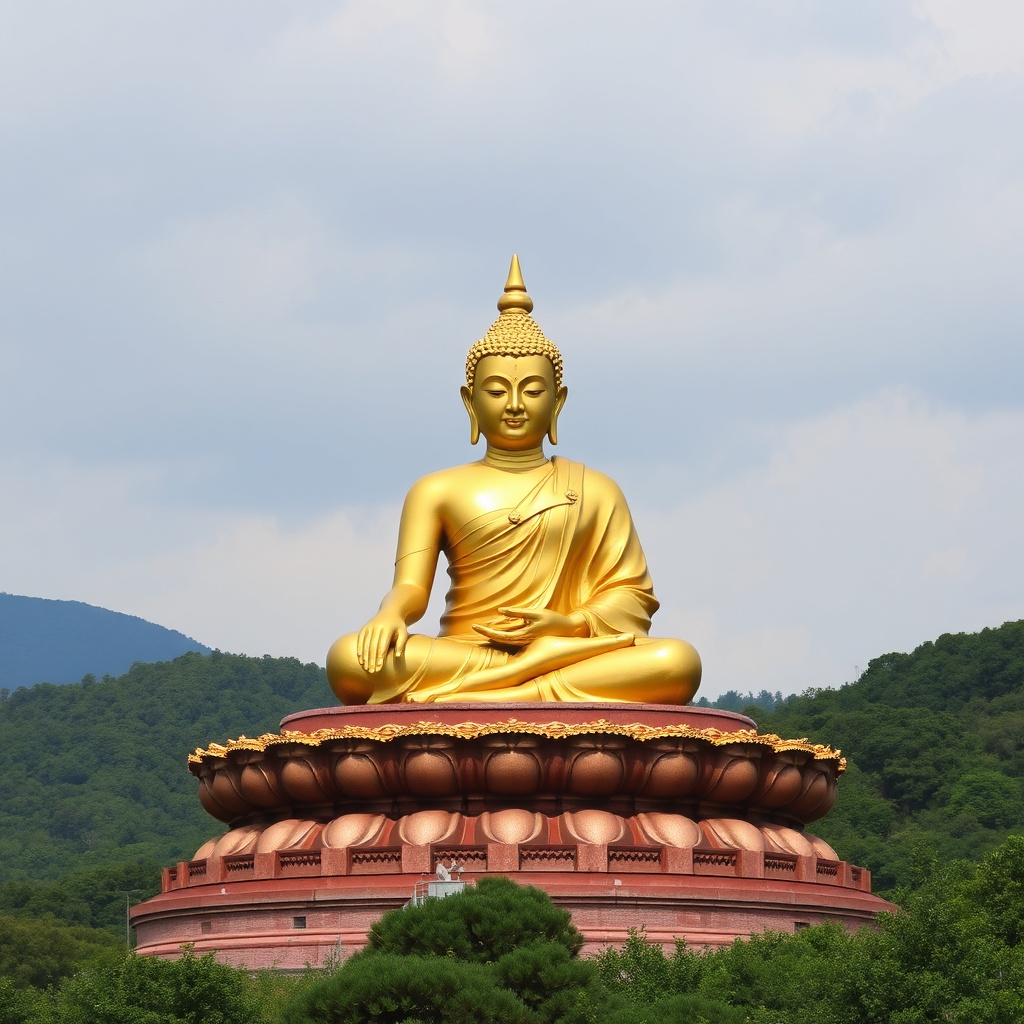
Buddhism, one of the world's oldest and most influential spiritual traditions, transcends the simplistic definition of a religion, presenting itself as a complex philosophical, ethical, and spiritual system originating in ancient India. Its essence lies in the pursuit of enlightenment and the cessation of suffering through self-knowledge and the practice of moral and meditative principles. This article aims to unveil its multiple facets, from its historical and theological roots to its global impact and contemporary challenges, maintaining a rigorous and impartial perspective.
Buddhism: A Sociological, Historical, and Theological Analysis
The term "Buddhism" evokes a vast range of interpretations, beliefs, and practices that have spanned over two and a half millennia, shaping cultures and philosophies across much of Asia and, more recently, in the West. As an academic researcher, sociologist of religion, historian, and educator, my goal is to present an in-depth and responsible analysis, grounded in historical, sociological, and documentary rigor, while maintaining impartiality and respect for the diverse manifestations of this tradition.
1. Sociological and Theological Definition of Buddhism
Sociologically, Buddhism can be understood as a religious phenomenon that offers a system of values, rituals, community (Sangha), and a worldview for its adherents. It provides answers to fundamental existential questions, such as the meaning of life, the nature of reality, and the overcoming of suffering. The diversity of Buddhist schools and traditions, such as Theravada, Mahayana, and Vajrayana, reflects the adaptation of Buddhism to different cultural and social contexts, generating a rich tapestry of practices and theological interpretations.
Theologically, Buddhism distinguishes itself from many theistic religions by not postulating the existence of an omnipotent creator God. Instead, the focus falls on the concept of anatta (no-self), impermanence (anicca), and suffering (dukkha) as intrinsic characteristics of conditioned existence. Salvation or liberation (Nirvana) is not obtained through divine grace, but through wisdom and ethical and meditative practice, following the teachings of the Buddha.
2. Historical Origin, Founders, and Geographic/Cultural Context
Buddhism has its origins in ancient India, around the 6th century BCE, with the central figure of Siddhartha Gautama, known as the historical Buddha ("the Awakened One"). Born into a royal family in what is now Nepal, Siddhartha renounced his life of privilege after witnessing human suffering (sickness, old age, death) and embarked on a spiritual journey in search of truth and liberation. After years of asceticism and meditation, he attained enlightenment under the Bodhi tree in Bodh Gaya, India.
The geographic and cultural context of its emergence was that of Vedic India, a period marked by complex philosophical and religious systems, including Brahmanism, with its castes, elaborate rituals, and sacred scriptures. Buddhism emerged as a critique of certain aspects of the caste system, overly formalized rituals, and the emphasis on devotion to specific deities, proposing a more individual and direct path to understanding the truth and liberation from the cycle of rebirth (Samsara).
The initial dissemination of Buddhism occurred through the teachings of the Buddha himself and his disciples, who traveled throughout India. After his death, Buddhism expanded to other parts of Asia, including Sri Lanka, Southeast Asia (Myanmar, Thailand, Cambodia, Laos), Central Asia, China, Korea, Japan, and Tibet, adapting and developing new schools and doctrines throughout these processes of syncretism and cultural exchange.
3. Main Beliefs, Dogmas, Rites, and Practices
The core beliefs of Buddhism revolve around the following pillars:
- The Four Noble Truths: The truth of suffering (dukkha), the truth of the origin of suffering (attachment and craving, trishna), the truth of the cessation of suffering (nirvana), and the truth of the path that leads to the cessation of suffering (the Noble Eightfold Path).
- The Noble Eightfold Path: A practical guide for ethical conduct, mental discipline, and wisdom, composed of: right view, right intention, right speech, right action, right livelihood, right effort, right mindfulness, and right concentration.
- Karma: The law of cause and effect, where intentional actions (physical, verbal, or mental) generate future consequences.
- Rebirth (Samsara): The continuous cycle of birth, death, and rebirth, driven by karma and ignorance. The goal is to transcend this cycle.
- Nirvana: The state of final liberation, the cessation of suffering, desire, and the cycle of rebirth.
- Anicca (Impermanence): The transitory nature of all phenomena.
- Anatta (No-Self): The absence of a permanent and unchanging self.
Buddhist rites and practices are varied and depend on the school and culture. They include:
- Meditation: Essential for developing mindfulness, concentration, and insight. Practices such as Vipassanā (insight) and Samatha (calm) are fundamental.
- Chanting and Mantras: Used in various traditions, especially in Mahayana and Vajrayana, to focus the mind and invoke spiritual qualities.
- Devotion and Offerings: In many traditions, there are devotional practices to Buddhas and Bodhisattvas (enlightened beings who postpone their own Nirvana to help others), with offerings of incense, flowers, lights, etc.
- Pilgrimages: Visiting sacred sites associated with the life of the Buddha.
- Study of Scriptures: The teachings of the Buddha are recorded in vast canons of scriptures (such as the Pali Canon and the Mahayana Sutras).
- Ethical Practices: Adherence to Buddhist precepts (such as not killing, not stealing, not lying, etc.) is fundamental.
4. Organizational Structure and Leadership Profile
The organizational structure of Buddhism varies significantly between different schools and traditions. Traditionally, Buddhism is organized around the Sangha, the community of practitioners, which can be divided into monks and nuns (the monastic Sangha) and laypeople (the lay community).
- Monastic Sangha: Monks and nuns renounce secular life to dedicate themselves fully to spiritual practice, study, and the preservation of the teachings. They live in monasteries and follow a strict code of discipline (Vinaya).
- Lay Community: These are followers who maintain a secular life (family, work) but adhere to Buddhist teachings and support the monastic Sangha.
Leadership in Buddhism is often characterized by spiritual authority and wisdom, rather than a rigid centralized hierarchy as in some other religions. Spiritual leaders can be venerable monks, meditation masters, lamas (in Tibetan Buddhism), or qualified teachers. The succession of masters in specific lineages (such as in Zen or Tibetan Buddhism) is common, where a master recognizes and trains a successor.
In Theravada Buddhism, the monastic structure is quite prominent, with independent but interconnected monasteries. In Mahayana Buddhism, the figure of the Bodhisattva and the emphasis on compassion lead to organizational models that may include monasteries, lay meditation centers, and social service organizations. In Tibetan Buddhism, the figure of the Dalai Lama and other high-ranking lamas hold great spiritual and, historically, political authority.
5. [WARNING/CONTROVERSIES] Factual Analysis Regarding Potential Legal Controversies, Ethical Deviations, or Characteristics of a "Destructive Cult"
It is crucial to address the issue of groups that call themselves Buddhist but may exhibit characteristics of "destructive cults." It is fundamental to distinguish established and consolidated Buddhist traditions, with millennia of history and vast academic documentation, from marginal groups that may exploit Buddhist terminology and symbols for nefarious purposes.
Buddhism as an Established Religious Tradition: The main Buddhist traditions (Theravada, Mahayana, Vajrayana), with their historical lineages and globally recognized institutions, such as monasteries, universities, and practice centers, do not present, as a system, the characteristics of a "destructive cult." These traditions are widely studied by academics and practiced by millions of people around the world, with a robust body of literature and well-established ethical practices.
Controversial Groups and the Misuse of the Term "Buddhism": However, history and the contemporary landscape are not free from groups that, under the guise of Buddhist teachings, have exhibited problematic behaviors. It is imperative to conduct a critical and factual analysis, based on investigations and reports:
- Cases of Abuse and Exploitation: Reports of sexual abuse, financial exploitation, and mental coercion have emerged in relation to some masters and meditation centers, especially in contexts of rapid Western expansion of Buddhism. An example frequently cited in academic and journalistic discussions is the case of Sogyal Rinpoche, founder of the Rigpa Fellowship, a Tibetan Buddhist organization. Allegations of sexual, physical, and psychological abuse led to investigations and the dissolution of parts of the organization. Reports and investigations, such as the "Independent Investigation into Allegations Against Sogyal Rinpoche" (2018), detailed the abuses and the failure of leadership to protect them.
- Control and Isolation: Although not a systemic characteristic of Buddhism, some groups with authoritarian leadership may attempt to isolate their followers from their families and the outside world, promoting excessive dependence on the group and its leaders.
- Financial Exploitation: In some cases, meditation centers or Buddhist organizations with opaque power structures may have been accused of financially exploiting their followers through mandatory donations or excessive charges for teachings and retreats.
- Distorted Doctrines: Certain groups may distort Buddhist teachings to justify abusive behaviors or to promote specific ideological agendas.
Responsible Warning: It is fundamental that researchers and the general public remain alert to warning signs. Any group that promotes extreme social isolation, demands blind submission to a leader, practices blatant financial exploitation, ignores or minimizes reports of abuse, or demonstrates disrespect for human rights and individual autonomy should be investigated with rigor. The distinction between deep wisdom and manipulation is crucial. Reliable sources to verify such allegations include investigative reports from serious media outlets, reports from human rights organizations, and academic studies that critically analyze the behavior of religious groups.
Contemporary Challenges in Established Traditions: Even in established Buddhist traditions, there are internal debates and contemporary challenges. These include the integration of Buddhism into secular societies, the adaptation of teachings for diverse audiences, issues of gender in monastic and lay leadership, and engagement with social and political issues, such as nationalism in some Asian countries where Buddhism is predominant (for example, the role of monks in nationalist movements in Myanmar or Sri Lanka, which has been the subject of criticism and sociological analysis).
6. Social, Cultural Impact, and Contemporary Relevance
The social and cultural impact of Buddhism is immeasurable. Over the centuries, it has influenced art, architecture, literature, philosophy, medicine, and the ethical systems of vast regions. The emphasis on compassion, non-violence, and the pursuit of inner peace resonates in many cultures.
In contemporary times, Buddhism has gained prominence in the West, not only as a religion but also as a philosophical system and a set of practices for mental and spiritual well-being. The popularity of mindfulness meditation, derived from Buddhist practices, is a clear example of its current relevance. Buddhism offers valuable tools for dealing with stress, anxiety, and the challenges of modern life.
Buddhist organizations around the world are increasingly engaged in social issues, such as environmental justice, peace, and interreligious dialogue. The figure of the Dalai Lama, for example, is widely recognized as a global advocate for peace and compassion.
In short, Buddhism is a rich and multifaceted tradition that continues to evolve and inspire millions of people. A responsible analysis requires the recognition of its historical and theological depth, while remaining vigilant against the misuse of its teachings by groups that may cause harm.
References and Research Sources
- Harvey, Peter. An Introduction to Buddhism: Teachings, History and Practices. Cambridge University Press, 2013.
- Lopez Jr., Donald S. Buddhism in Practice. Princeton University Press, 1995.
- Gethin, Rupert. The Foundations of Buddhism. Oxford University Press, 1998.
- "Independent Investigation into Allegations Against Sogyal Rinpoche". Rigpa, 2018. (Available in news publications and related websites).
- Investigative reports from sources such as the BBC, The Guardian, The New York Times regarding cases of abuse in spiritual organizations.
- Academic articles in journals of Sociology of Religion and Buddhist Studies.





