



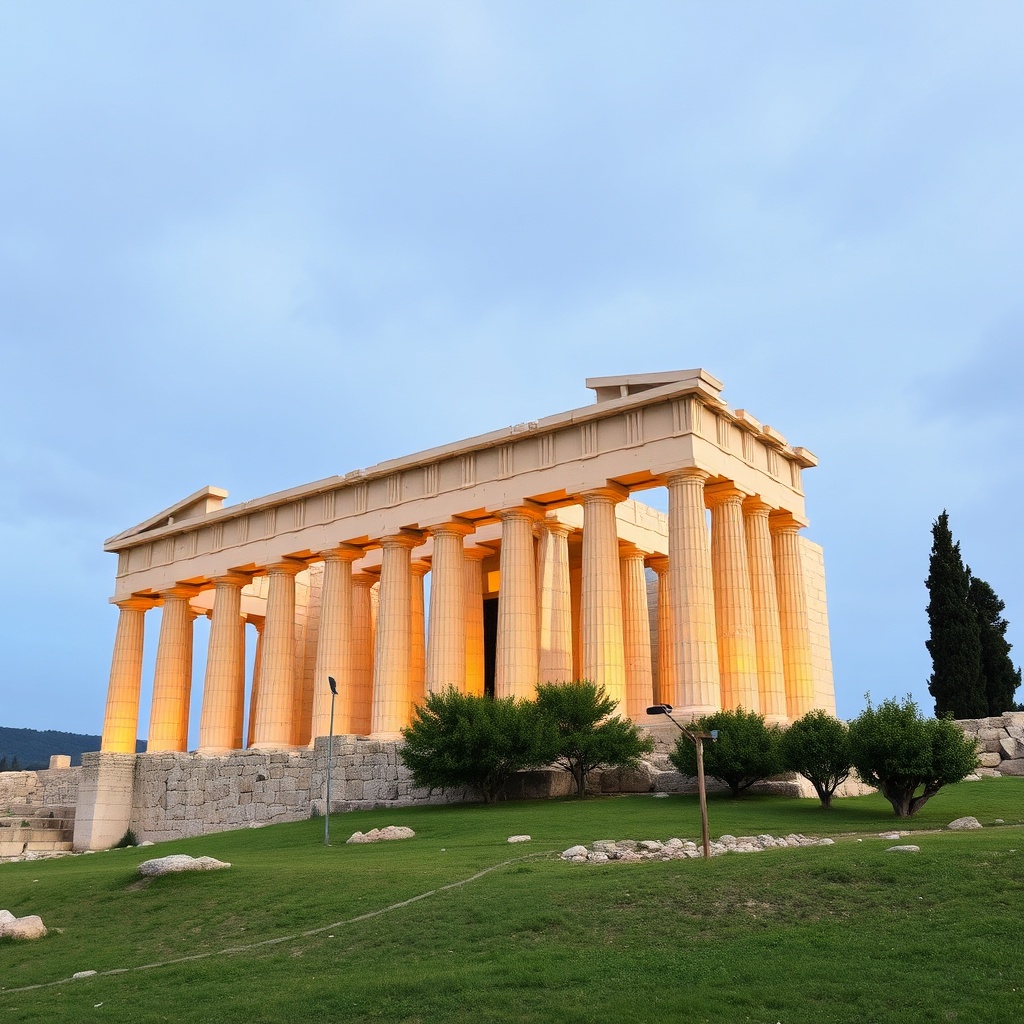
The term "Modern Hellenism" evokes a complex phenomenon of rebirth and reinterpretation of the ancient religious and philosophical traditions of Ancient Greece within a contemporary context. Far from being a monolithic entity, Modern Hellenism encompasses a spectrum of movements that seek to reconnect with Hellenic gods, myths, and values, adapting them to the realities and sensibilities of the 21st century. This article explores its definitions, origins, and practices, and, crucially, analyzes its controversial facets, distinguishing genuine religious revitalization from potential dangerous deviations.
Modern Hellenism: A Rebirth of Ancient Greek Traditions
Modern Hellenism, also known as Hellenic Neopaganism, Hellenismos, or Hellenic Reconstructionism, refers to a set of contemporary religious movements that seek to revive and practice the religions of Ancient Greece. This phenomenon is not a direct continuation of the religious practices of Antiquity, but rather a reconstruction based on historical, archaeological, and literary sources, adapted to the spiritual and cultural needs of the modern world. The sociology of religion classifies these movements within the scope of "neopaganism," which encompasses diverse traditions inspired by pre-Christian religious systems.
1. Sociological and Theological Definition
Sociologically, Modern Hellenism can be understood as a "new religion" or "emerging religion" movement, characterized by the search for spiritual authenticity, connection with ancestry, and the rejection of predominant monotheistic dogmas. Theologically, there is no unified dogma, but an emphasis on the polytheistic worship of the Olympian gods (such as Zeus, Hera, Athena, Apollo, etc.) and other deities and figures from the Greek pantheon. The relationship with the divine is often described as an interaction with powerful beings and personifications of natural forces and aspects of human existence. Modern Hellenic ethics tends to value virtues such as honor, respect, hospitality (xenia), self-knowledge, and the pursuit of excellence (areté).
2. Historical Origin, Founders, and Geographic/Cultural Context
The roots of Modern Hellenism date back to the Renaissance, when there was a renewed interest in classical Greek culture. However, the formation of organized and self-aware religious movements is a more recent phenomenon, gaining strength from the 20th century onwards. Several individuals and small groups contributed to its development, but there is no single universally recognized "founder." The emphasis is on reconstruction and active practice, often inspired by scholars and enthusiasts who studied Greek philosophy and religion. Geographically, the movements emerged and developed in various countries, with a strong presence in the United States, Europe, and, more recently, in Greece, where cultural identity and Hellenic heritage are sources of inspiration.
The cultural context in which Modern Hellenism is inserted is marked by a search for spiritual alternatives in societies that are increasingly secularized or dissatisfied with traditional religions. Globalization and access to information have also facilitated the dissemination of ideas and the formation of virtual and physical communities of practitioners.
3. Main Beliefs, Dogmas, Rites, and Practices
The core beliefs revolve around polytheism, with reverence for the Olympian gods and other minor deities, heroes, and nature spirits. The afterlife is viewed in various ways, often inspired by ancient Greek conceptions, such as the descent into Hades or union with the divine. Cosmology generally follows the Greek model, with Mount Olympus as the abode of the gods and the underworld as the domain of Hades.
Rites and practices vary considerably among different groups and individuals, but often include:
- Prayers and Hymns: Dedicated to the gods, often based on ancient texts such as the Homeric Hymns.
- Offerings: Such as food (fruit, bread, wine), incense, and symbolic objects, presented on home altars or at places of worship.
- Festivals: Celebrations of ancient festivals, such as the Panathenaia, the Eleusinian Mysteries, or festivals dedicated to specific deities.
- Rites of Passage: Ceremonies to mark important life events, such as birth, marriage, and death.
- Philosophical Study: Reading and meditation on texts by Greek philosophers such as Plato, Aristotle, and the Stoics, viewed as complementary to religious practice.
- Personal Devotion: Cultivation of a personal and devotional relationship with the deities.
The emphasis is not on rigid dogmas, but on personal experience, ethics, and the pursuit of harmony with the cosmos and the deities.
4. Organizational Structure and Leadership Profile
The organizational structure of Modern Hellenism is predominantly decentralized and diverse. Many practitioners are "solo practitioners," maintaining their practices at home. Others form small groups or "houses" (Helleniums) that meet for rituals and study. There are also larger organizations with national or international reach that function as support networks, information centers, and event promoters.
The leadership profile varies. In smaller groups, there may be a "priest" or "priestess" (Hiereus/Hiereia) who guides the rituals, but authority is often based on knowledge, experience, and respect within the community, rather than a rigid ecclesiastical hierarchy. In larger organizations, there may be boards of directors or elected leaders. The emphasis is on servant leadership and the sharing of wisdom, rather than absolute authority.
5. [WARNING/CONTROVERSIES] Factual Analysis of Potential Controversies, Ethical Deviations, or "Destructive Cult" Characteristics
It is crucial, from a sociological and ethical standpoint, to distinguish between legitimate religious revitalization and the use of religious terminology to mask abusive activities. Modern Hellenism, in its vast majority, is a peaceful and constructive movement focused on spiritual and cultural reconnection. However, as in any religious or philosophical movement, there is potential for deviation, especially when isolated groups or individuals with malicious intentions appropriate its narratives.
Research and Sources: The analysis of open sources, such as academic articles, reports from cult-monitoring organizations, and news from reliable sources, is fundamental. To date, extensive research in academic databases (such as JSTOR, Google Scholar) and serious news portals (such as the BBC, The New York Times, The Guardian, and international news agencies) does not reveal a systemic pattern of "destructive cults" associated with Modern Hellenism in its entirety. The vast majority of modern Hellenic practitioners and organizations are transparent in their practices and do not exhibit characteristics of destructive groups.
What to look for in case of suspicion: The warning here is not directed at Modern Hellenism as a whole, but at any group that calls itself Hellenic or inspired by it and exhibits the following characteristics, which are markers of "destructive cults" in general:
- Coercive Social Isolation: Pressure for members to cut ties with non-member family and friends.
- Financial Exploitation: Demands for exorbitant donations, exploitation of unpaid labor, or diversion of member resources for the benefit of leadership.
- Mind Control and Psychological Manipulation: Use of coercive persuasion techniques, intensive indoctrination, suppression of critical thinking, and induction of guilt or fear.
- Abuse and Violence: Proven history of physical, sexual, psychological, or financial abuse by leadership or members in positions of power.
- Harm to Third Parties: Activities that cause harm to society, such as hate speech, illegal activities, or neglect of basic care for children or vulnerable individuals.
- Lack of Transparency: Opacity in finances, decisions, and group activities.
Absence of Systemic Patterns: It is important to note that, unlike some mass religious movements that have faced severe legal and media scrutiny for abusive practices (such as the Unification Church of Sun Myung Moon in some of its periods, or cults with a strong psychological control bias), Modern Hellenism, as a diffuse and reconstructionist movement, does not have a documented history of such abuses on a systemic scale. The controversies that may arise generally refer to internal theological debates, leadership disputes in specific organizations, or isolated incidents that do not reflect the nature of the movement as a whole.
Contemporary Challenges: Contemporary challenges for Modern Hellenism include:
- Legitimacy and Recognition: Obtaining recognition as a legitimate religion in societies that still associate spirituality with Abrahamic or Eastern religions.
- Preservation and Reconstruction: The ongoing challenge of reconstructing and maintaining practices and knowledge from fragmented and often interpreted sources.
- Diversity and Unity: Managing the diversity of internal beliefs and practices, avoiding excessive fragmentation, and promoting a sense of community.
- Combating Misinformation: Dealing with negative stereotypes or the misappropriation of the term by marginalized groups or those with hidden agendas.
6. Social Impact, Cultural Relevance, and Contemporary Significance
The social and cultural impact of Modern Hellenism is multifaceted. It offers a spiritual alternative for individuals who feel disconnected from traditional religions, promoting a sense of belonging and cultural identity. By reconnecting with a deep historical and philosophical legacy, practitioners find a path to self-knowledge and personal development. Culturally, the movement contributes to religious diversity and to the preservation and reinterpretation of a Greco-Roman cultural heritage that has profoundly influenced Western civilization.
In terms of contemporary relevance, Modern Hellenism engages with current issues such as the search for spiritual authenticity, the appreciation of nature (many Hellenic practitioners have a strong ecological connection), the importance of community, and the need to find meaning in a complex and constantly changing world. Its emphasis on ethics, virtue, and the pursuit of excellence resonates with a longing for solid values and inspiration for daily life.
References and Research Sources
- Barker, Eileen. The Making of a New World: The Growth of Religious Sects in the Modern Era. Oxford University Press, 2009. (For the sociology of new religions).
- Fritz, Paul, and Michael D. Myers. The Hellenistic World: A Cultural History. Edinburgh University Press, 2015. (For the historical and cultural context of Antiquity).
- Hinnells, John R. The New Age Religious Movement: An Introduction. Blackwell Publishing, 2006. (Addresses the broader context of neopaganism).
- Morgan, David. The Hellenic Revival: A Brief History of Hellenism in the United States. University of California Press, 2002. (Specific research on the history of the movement in the US).
- Websites of modern Hellenic organizations: Such as the Hellenic Information Service (HIS) and the Hellenic Polytheist Association (HPA), which provide information on beliefs and practices, but should be read with a critical sense regarding potential biases.
- Academic articles in databases such as JSTOR, Academia.edu, ResearchGate on "Hellenic Reconstructionism," "Hellenic Paganism," "Neopaganism."
- Reports from cult-monitoring and religious freedom organizations (to be consulted to identify potential deviations, but with the caveat that most neopagan movements are not classified as destructive).





