



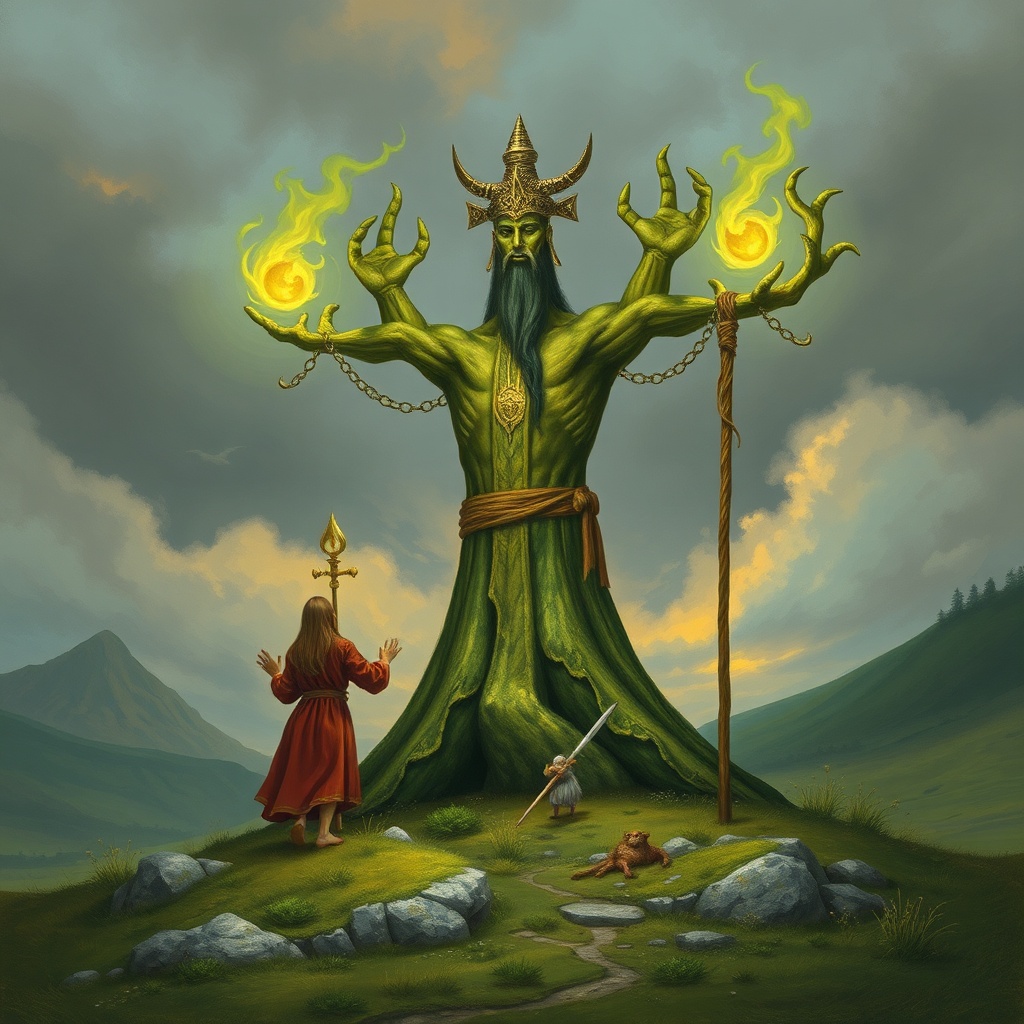
Druidism, a term that evokes images of ancestral wisdom and connection with nature, represents a complex mosaic of spiritual traditions with deep roots in European history. Far from being a monolithic religion, contemporary Druidism encompasses a variety of expressions, from the academic revival of ancient Celtic practices to neopagan movements that seek inspiration in historical druidic figures. This article aims to demystify Druidism, exploring its historical origins, its diverse current manifestations, and the importance of a critical and factual analysis of its practitioners and organizations.
Druidism: A Sociological, Historical, and Educational Analysis
Druidism, in its essence, is a term that encompasses a spectrum of belief systems and spiritual practices that draw inspiration from the ancient traditions of the Celtic druids. Sociologically, it can be classified as a neopagan religious movement, characterized by reverence for nature, the pursuit of ancestral wisdom, and an emphasis on rituals and ceremonies that celebrate natural cycles and the spirits of the earth. From a theological point of view, contemporary druidic beliefs vary widely, but often include the belief in an immanent and transcendent divinity, in the reincarnation or transmigration of the soul, and in the interconnectedness of all living beings.
1. Sociological and Theological Definition
Sociologically, contemporary Druidism falls into the category of new religious movements (NRMs) or neopaganism. It shares with other neopagan movements a rejection of some of the doctrines and structures of the predominant Abrahamic religions, seeking instead to reconnect with pre-Christian spiritual sources and the wisdom of the earth. Diversity is a hallmark of modern Druidism; there is no unified central dogma, and practitioners may identify as druids without belonging to a specific organization, or be members of druidic orders with different emphases and interpretations.
Theologically, Druidism does not possess a single sacred book or a set of canonical scriptures like Christianity, Judaism, or Islam. Theology is often constructed from:
- Historical Reconstruction: Attempts to reconstruct the beliefs and practices of historical druids based on ancient sources, such as the writings of Julius Caesar, Tacitus, and Pliny the Elder.
- Oral Traditions and Personal Experience: Many contemporary druids value orally transmitted wisdom and individual spiritual experience.
- Nature Worldviews: A deep reverence for nature, seen as sacred and inhabited by deities, spirits, and energies.
- Varied Beliefs: Beliefs about deities can range from monotheistic (a primordial deity), polytheistic (various deities, often associated with aspects of Celtic nature), pantheistic (God is in everything), or agnostic. Belief in the afterlife, often in the form of reincarnation or transmigration of the soul, is common.
2. Historical Origin, Founders, and Geographic/Cultural Context
The figure of the druid is one of the most enigmatic in the ancient history of Europe. The druids were the spiritual, intellectual, and legal leaders of the Celtic societies that flourished in much of Europe, especially in the British Isles, Gaul (modern-day France), and parts of the Iberian Peninsula, between the 5th century BC and the 1st century AD. It is crucial to distinguish historical Druidism from contemporary Druidism. The former is a reconstruction based on limited and fragmented evidence, while the latter is a modern movement that draws inspiration from the former.
Historical Sources: The main sources on historical druids come from external observers, notably the Romans:
- Julius Caesar: In "De Bello Gallico," he describes the druids as guardians of knowledge, judges, advisors, and responsible for the education of the youth. He mentions their belief in the immortality of the soul and their long tradition of memorizing verses.
- Tacitus: Reports the intervention of the druids in the defense of the island of Anglesey against the Romans, describing them as imposing figures with white robes and torches.
- Pliny the Elder: In his "Natural History," he describes druidic rituals involving mistletoe and oak, which were considered sacred.
Geographic and Cultural Context: The druids were intrinsically linked to Celtic cultures, which were predominantly agrarian and tribal. Their influence extended across regions such as Britain (Great Britain), Ireland, Scotland, Wales, and Gaul. They did not have a single "founder," but emerged as a priestly class within complex societies with their own social and religious structures.
The End of Historical Druidism: With Romanization and, subsequently, the Christianization of Europe, the influence and practice of historical Druidism gradually declined. The last direct historical references to druids date back to the 2nd century AD. It is believed that many of their traditions were suppressed or absorbed by the new religions.
3. Main Beliefs, Dogmas, Rites, and Practices
Contemporary Druidism, also known as Rebirth Druidism or Neodruidism, is an attempt to revive and adapt druidic traditions for the modern world. As mentioned, diversity is the norm, but some recurring themes include:
- Reverence for Nature: This is perhaps the most defining characteristic. Modern druids celebrate the cycles of nature – the seasons, solstices, equinoxes, moon phases – and view the natural world as sacred. Rituals often take place outdoors, in locations of natural beauty.
- Connection with Ancestors: There is a strong sense of honoring and learning from ancestors, both personal ancestors and spiritual and historical ancestors.
- Wisdom and Knowledge: The pursuit of knowledge, both intellectual and spiritual, is valued. This may involve the study of history, mythology, philosophy, botany, astronomy, and meditative practices.
- Rites and Ceremonies: Druidic rites aim to honor deities, nature spirits, ancestors, and the earth itself. Common practices include:
- Celebration of Solar and Lunar Cycles: Solstices (summer and winter) and equinoxes (spring and autumn) are important milestones, as are the phases of the moon.
- Rites of Passage: Ceremonies to mark important life events, such as births, marriages, and deaths.
- Meditation and Visualization: Techniques to connect with the inner self and the spiritual world.
- Use of Symbols: Trees (especially the oak), stones, stone circles (like Stonehenge, which has become a place of pilgrimage for many druids), and mistletoe are important symbols.
- Ethics: Many contemporary druids follow ethical principles that emphasize environmental responsibility, social justice, and respect for all forms of life.
It is important to note that the idea of the druid as a priest who performs bloody sacrifices, as suggested by some ancient Roman sources, is a point of debate among modern druids. Many reject the idea of animal sacrifice, while others seek to interpret these accounts in a symbolic or historical way, without adopting them in their current practices.
4. Organizational Structure and Leadership Profile
The organizational structure of contemporary Druidism is extremely varied, reflecting its decentralized and diverse nature.
- Independent Druidism: Most druids operate independently, without affiliation to any formal order or group. They may practice alone, with family or friends, or participate in informal gatherings in places of natural power.
- Druidic Orders: There are several druidic orders around the world, each with its own philosophy, study curriculum, and structure. Examples include:
- Order of Bards, Ovates and Druids (OBOD): One of the largest and best-known organizations, based in the UK. It offers a correspondence study curriculum and promotes the practice of Druidism with a focus on wisdom, art, and prophecy.
- Ancient Druids of Great Britain (ADBG): Another prominent organization with an approach more focused on historical reconstruction.
- Druidic Order of Avalon: Focuses on more esoteric and mystical practices.
- Leadership Structure: Leadership within druidic orders is generally based on degrees of knowledge and experience. Progression through levels (often called "degrees") is common, with more experienced leaders guiding beginners. Leadership titles may vary, but often include "Druid" for those who have reached a certain level of mastery. Leadership tends to be more focused on guidance and teaching than on dogmatic authority.
The leadership profile is, ideally, one of wise, experienced individuals dedicated to the tradition and the well-being of their followers. The emphasis is on wisdom, integrity, and the ability to inspire and guide others on their spiritual path.
5. [WARNING/CONTROVERSIES] Factual Analysis of Potential Legal Controversies, Ethical Deviations, or "Destructive Cult" Characteristics
It is fundamental to address the issue in a factual and responsible manner. Druidism, as a contemporary religious movement, has been subject to scrutiny, but the vast majority of druidic organizations and practitioners operate in a peaceful and ethical manner, without characteristics of destructive cults.
Absence of "Destructive Cult" Characteristics in Most Groups: Academic research and journalistic monitoring of druidic groups do not reveal systemic patterns of social isolation, financial exploitation, mind control, abuse of power, or harm to third parties that would characterize a "destructive cult." Modern druidic movements generally promote individual autonomy, connection with the wider community, and respect for human rights.
Sources and Critical Approach: When researching Druidism, it is important to consult reliable academic sources, such as articles in religious studies journals, books by sociologists of religion and historians, and specialized encyclopedias. Serious news portals can be useful for reporting specific events or controversies, but should be read with a critical eye, always seeking fact-checking and a plurality of perspectives.
Potential Points of Debate or Misunderstandings:
- Historical Reconstruction: The speculative nature of some historical reconstructions of Druidism can lead to debates between academics and practitioners about the authenticity of practices. However, this is an academic and internal debate, not harmful conduct.
- Association with Paganism in General: Neopaganism, as a whole, is sometimes misunderstood or stigmatized by the general public. Druidism, as part of this spectrum, may occasionally be the target of prejudices based on misinformation.
- Isolated and Controversial Groups: As in any religious or spiritual movement, it is possible that there are individuals or small groups that call themselves druids and who, for personal or extreme ideological reasons, adopt problematic behaviors. However, these cases are rare and do not represent Druidism as a whole. A search of news databases and reports from organizations that monitor religious groups does not reveal, as of the time of this analysis, a pattern of illegal or destructive conduct associated with widely recognized and established druidic organizations.
Warning: Should concrete, documented evidence verified by reliable sources (such as police investigations, proven court cases, or investigative reports from high-credibility media outlets) emerge that a specific group calling itself druidic is involved in illegal practices, abuse, exploitation, or harm to people, animals, or society, this information should be treated with the gravity it deserves. Such allegations, if they exist and are proven, must be publicly disclosed and analyzed with rigor, separating the actions of isolated groups from the druidic tradition in its entirety.
6. Social, Cultural Impact, and Contemporary Relevance
Contemporary Druidism, although a minority movement in terms of the number of adherents, exerts a significant cultural and social impact in several areas:
- Environmental Awareness: Druidism's strong focus on nature aligns it with modern environmental movements. Many druids are environmental activists, promoting conservation, sustainability, and human connection with the natural world.
- Cultural Preservation: Druidism inspires a renewed interest in ancient Celtic cultures, their mythologies, languages, and traditions. This contributes to the preservation and revitalization of the cultural heritage of regions such as Ireland, Scotland, Wales, and Brittany.
- Alternative Spirituality: In an increasingly secularized world or one dissatisfied with traditional religions, Druidism offers an alternative spiritual path that resonates with those seeking a deeper connection with nature, the self, and the cosmos.
- Tourism and Heritage: Historical sites associated with the druids, such as Stonehenge, Avebury, and Newgrange, attract thousands of visitors, including many druids on pilgrimage. This has an impact on tourism and the appreciation of archaeological heritage.
- Cultural Production: Druidism inspires artists, writers, musicians, and other creators, enriching the cultural landscape with new works that explore themes of nature, spirituality, and ancestral wisdom.
The contemporary relevance of Druidism lies in its ability to offer a spiritual path that values connection with the earth, inner wisdom, and community. In a period of ecological crisis and the search for meaning, the central messages of Druidism – respect for nature, honoring ancestors, and the search for balance – find a significant echo in today's society.
References and Research Sources
- Primary Historical Sources: Caesar, Julius. De Bello Gallico (The Gallic War). Tacitus. Annales (Annals). Pliny the Elder. Historia Naturalis (Natural History).
- Academic Works on Druidism and Neopaganism:
- Pócs, Éva. Fairies and Witches: The Mythology of the Hungarian Village.
- Hutton, Ronald. The Pagan Religions of the British Isles: Their Nature and Legacy. Blackwell Publishing, 1991.
- Hutton, Ronald. The Triumph of the Moon: A History of Modern Paganism. Oxford University Press, 2001.
- Olmsted, Garrett. The Gods of the Celts: Their Mythology and Beliefs.
- Green, Miranda Jane. The Gods of the Celts.
- Websites of Recognized Druidic Organizations:
- Order of Bards, Ovates and Druids (OBOD): [https://druidry.org/](https://druidry.org/)
- Ancient Druids of Great Britain (ADBG): [https://www.archdruid.co.uk/](https://www.archdruid.co.uk/)
- Encyclopedias and Religious Encyclopedias: Oxford Dictionary of World Religions, Encyclopedia Britannica.
- Articles in Academic Journals: Searches in databases such as JSTOR, Project MUSE, Google Scholar using terms such as "Druidism", "Neopaganism", "Celtic Revival", "New Religious Movements".





