



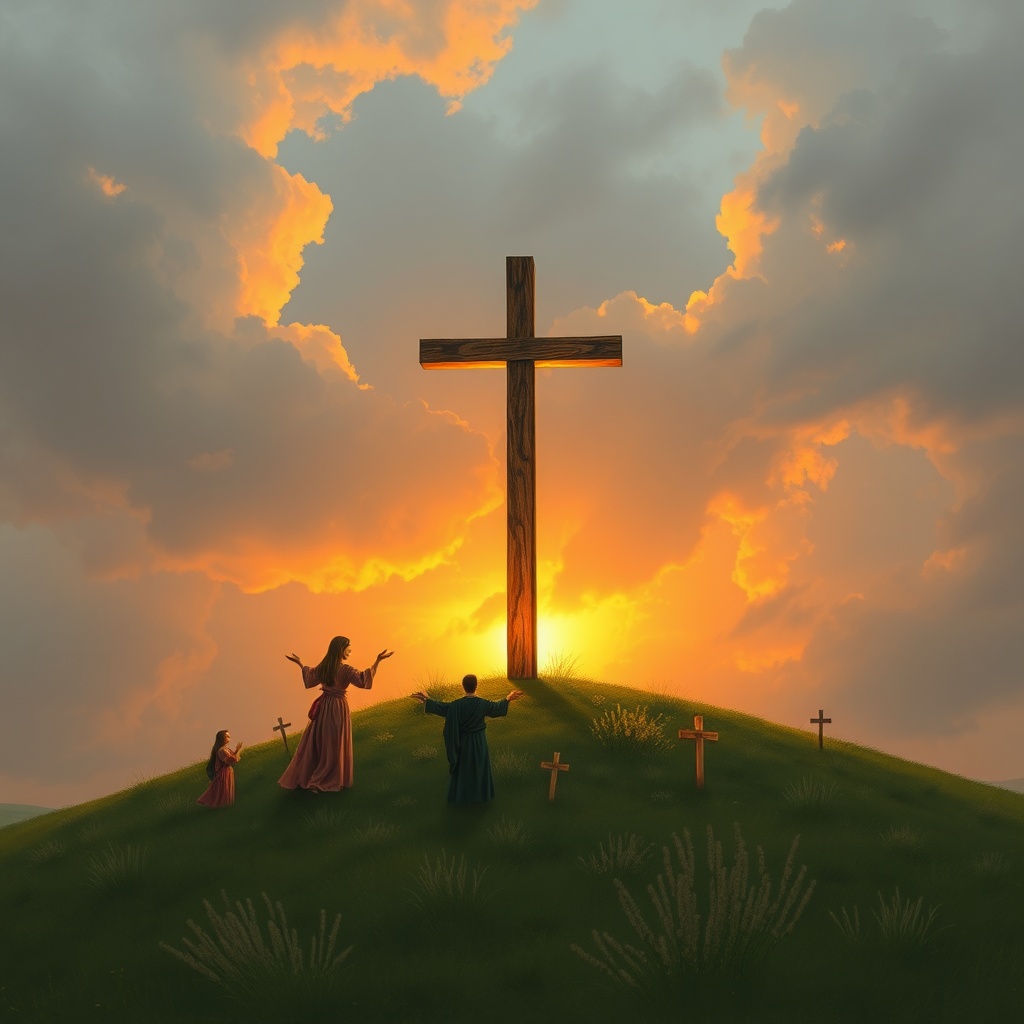
Christianity is an Abrahamic monotheistic religion centered on the life, teachings, and figure of Jesus of Nazareth, which emerged in the 1st century in the Roman province of Judea. As the largest religious phenomenon in the contemporary world, it manifests through a vast plurality of denominations, rites, and organizational structures that have profoundly shaped Western civilization and continue to exert global influence in ethical, political, and cultural spheres.
Christianity: A Sociological, Historical, and Critical Analysis
From a Humanities and Social Sciences perspective
1. Sociological and Theological Definition
Theologically, Christianity is defined as the faith in the incarnation of God in Jesus Christ, considered the Messiah (Christ) promised by the Hebrew Scriptures. Its central doctrine rests on the belief in the Trinity (Father, Son, and Holy Spirit), salvation by grace, and the resurrection of the dead. It is a soteriological religion, focused on the redemption of humanity.
Sociologically, according to the categories of Max Weber and Ernst Troeltsch, Christianity is not a monolithic block, but a complex system that transitions between the Church (an inclusive and stabilized institution), the Denomination (accepted pluralism), and the Sect (protest or renewal groups with rigid boundaries). Christianity acts as a "sacred canopy" (in the terms of Peter Berger), providing a system of meanings that orders the social reality of billions of individuals.
2. Historical Origin and Geopolitical Context
Christianity emerged in the context of the Jewish Second Temple, under the occupation of the Roman Empire. Its historical founder, Jesus of Nazareth, was an itinerant preacher whose messages about the "Kingdom of God" challenged both local religious authorities and the Roman order. After his execution, his followers, led initially by Peter and later expanded by the theological systematization of Paul of Tarsus, transformed a Jewish sectarian movement into a universalist (catholic) religion.
The Edict of Milan (313 AD) and the Edict of Thessalonica (380 AD) were crucial milestones, elevating Christianity from a persecuted religion to the official religion of the Roman Empire, which permanently altered its power structure and its relationship with the State.
3. Main Beliefs, Dogmas, and Rites
Although there are profound variations between Catholicism, Orthodoxy, and Protestantism, the fundamental pillars include:
- Christology: The belief in the full divinity and humanity of Jesus.
- Biblical Canon: The authority of the Scriptures (Old and New Testament).
- Sacraments/Ordinances: Ritual practices such as Baptism (initiation) and the Eucharist/Lord's Supper (communion).
- Eschatology: The hope in the return of Christ and the final judgment.
Rites vary from the highly formal and aesthetic liturgy of the Eastern and Latin churches to the ecstatic and informal worship of contemporary Pentecostal branches.
4. Organizational Structure and Leadership Profile
Christian governance presents three main models:
- Episcopal: Rigid hierarchy based on bishops (e.g., Catholic, Anglican Church).
- Presbyterian: Government by councils of elected elders or presbyters.
- Congregational: Total autonomy of the local church, common in Baptist and independent groups.
Leadership has evolved from charismatic (early prophets and apostles) to bureaucratic and legal (professional clergy), although the 21st century sees a resurgence of personalist "neo-charismatic" leadership, especially in the Global South.
5. [WARNING AND CONTROVERSIES] Critical Analysis and Ethical Deviations
As researchers, it is imperative to distinguish religious tradition from institutional and behavioral pathologies. Christianity, in its long history and modern ramifications, faces serious allegations that require factual vigilance:
Systemic Abuses and Institutional Crises
The Roman Catholic Church has been the target of global investigations into clerical sexual abuse and the systematic cover-up of these crimes for decades. Reports such as the Independent Commission in France and investigations in the USA and Germany have revealed thousands of victims, exposing deep flaws in the management of power and celibacy (Source: CIASE Report, 2021).
Characteristics of "Destructive Sects" in Peripheral Groups
Although the term "sect" is sociologically neutral, the concept of destructive sect applies to groups (often self-styled as Christian or Evangelical) that use:
- Coercion and Mind Control: Isolation of members from their families and the use of "love bombing" techniques followed by psychological punishments.
- Financial Exploitation: Abusive use of the "Prosperity Theology" to compel believers to make donations that compromise their subsistence, often under promises of magical divine retribution.
- Spiritual Abuse: Leaders who proclaim themselves unquestionable, using the fear of eternal damnation to manipulate private and political conduct.
Historical and recent cases, such as the abuses documented in isolated communities and investigations into money laundering in certain neo-Pentecostal megachurches, serve as a warning about the instrumentalization of faith for criminal purposes.
Contemporary Challenges
Currently, the most intense internal debate lies in the tension between religious fundamentalism and human rights (especially gender and diversity issues) and in the growing politicization of faith, where religious discourse is used to erode democratic institutions in various parts of the world.
References and Research Sources
- BERGER, Peter L. The Sacred Canopy: Elements of a Sociological Theory of Religion. New York: Anchor Books, 1967.
- PELIKAN, Jaroslav. The Christian Tradition: A History of the Development of Doctrine. Chicago: University of Chicago Press, 1971-1989.
- WEBER, Max. The Protestant Ethic and the Spirit of Capitalism.
- JENKINS, Philip. The Next Christendom: The Coming of Global Christianity. Oxford University Press, 2011.
- BBC News / Investigative Reports. Documentaries on institutional abuses and contemporary sects.
- Pew Research Center. The Future of World Religions: Population Growth Projections, 2010-2050.





