



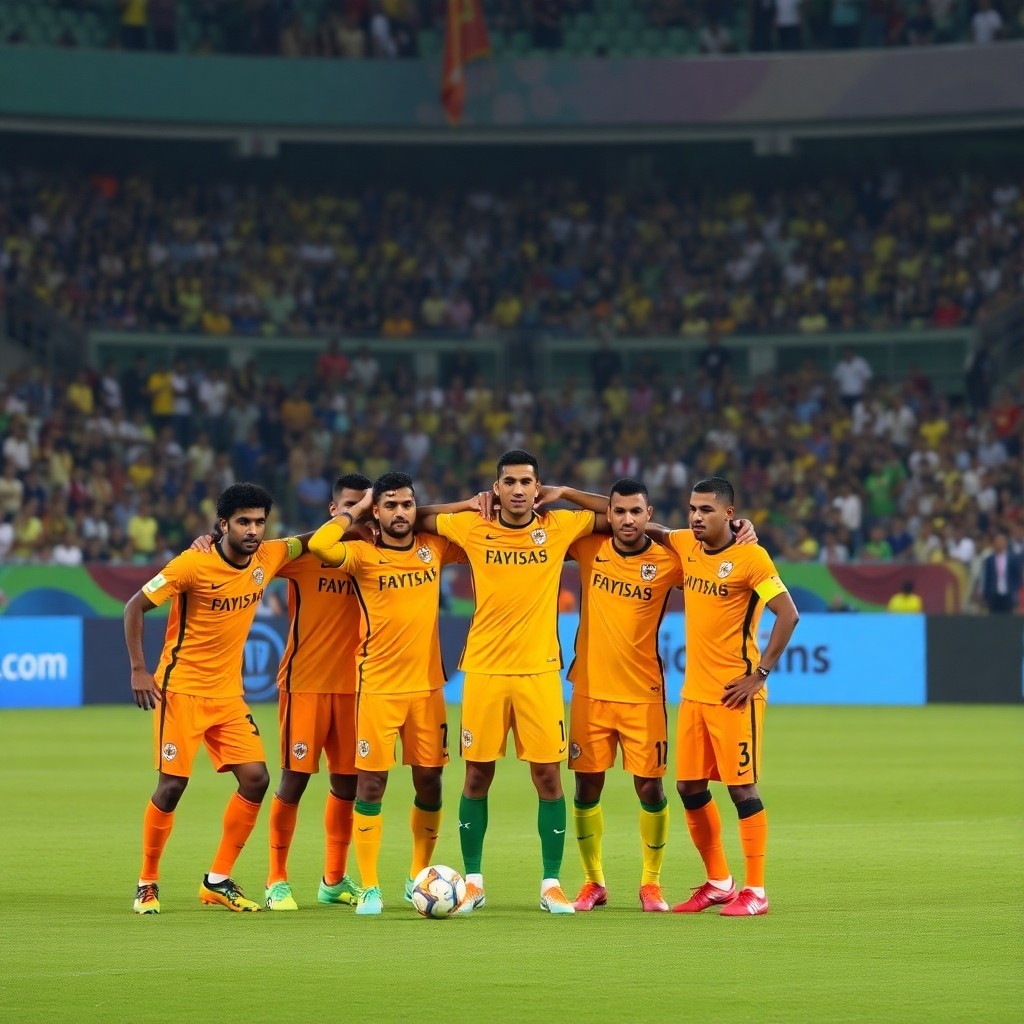
Indian football inhabits one of the greatest and most intriguing contradictions in contemporary sports. Historically classified by FIFA as the "sleeping giant," the country that is home to over 1.4 billion inhabitants and boasts dazzling economic growth seems to live in a tactical and structural time zone misaligned with the rest of the planet. While cricket consumes almost all media attention, sports GDP, and the nation's religious passion, football survives in an ecosystem of intense, yet fragmented, regional passions. The recent retirement of legendary striker Sunil Chhetri in June 2024 not only ended a two-decade era of almost messianic leadership but also exposed a technical and generational abyss. Under the command of experienced Spanish coach Manolo Márquez, the India national team—affectionately known as the Blue Tigers—finds itself at a historical crossroads: to definitively professionalize its grassroots structures and national league to compete in the top tier of the Asian Football Confederation (AFC) or to remain relegated to the role of a supporting actor on a continent that is advancing in leaps and bounds toward the global elite.
1. Origins and Formation of National Identity
To understand the complex tapestry of football in India, it is imperative to go back to the 19th century, when the sport was introduced to the subcontinent by British colonizers. Unlike cricket, which was quickly adopted by local elites as an instrument of assimilation and social prestige, football took root among the working classes, military barracks, and, fundamentally, in the vibrant region of West Bengal. Kolkata became the spiritual cradle of the game, a melting pot where football ceased to be a mere colonial distraction to become a powerful vehicle for political resistance and the assertion of national identity.
The zero hour of this metamorphosis occurred on July 29, 1911. On that rainy afternoon, Mohun Bagan AC, a club founded by the Bengali intellectual elite, faced the East Yorkshire Regiment, a highly trained British military team, in the IFA Shield final. Playing barefoot in the thick mud of Kolkata against opponents wearing heavy, studded leather boots, the Mohun Bagan players achieved a historic 2-1 victory. This triumph transcended the sporting realm: it was interpreted as a metaphorical victory of Indian nationalism against the oppression of the British Empire. The image of Indian athletes running barefoot and overcoming the physical strength of the colonizers transformed football into a symbol of dignity, resilience, and patriotic pride.
The preference for playing barefoot was not just an economic contingency, but a deeply rooted technical and cultural choice. Indian players developed extraordinary sensitivity in ball control, compensating for the lack of protection with astonishing agility and quick, short passes. This unique aesthetic identity accompanied the national team during its first decades of official existence, following the founding of the All India Football Federation (AIFF) in 1937 and its subsequent affiliation with FIFA in 1948, shortly after the traumatic Partition and India's independence.
In the early post-independence years, Jawaharlal Nehru's government saw sport as a vital tool for building national unity in a country fragmented by linguistic, religious, and caste divisions. Football, by its democratic nature and low cost of engagement, seemed the ideal candidate to unify urban and rural masses. However, the lack of a centralized transport infrastructure and the country's vast geography limited the development of a truly national league, confining the sport to strong regional bastions such as West Bengal, Goa, Kerala, and Northeast India. This geographical and cultural fragmentation would shape the following decades, creating a landscape of football fiefdoms that hindered the creation of a cohesive tactical identity for the national team.
2. Golden Era, Great Campaigns, and Eternal Idols
The period between 1948 and 1962 is unanimously revered as the "Golden Era" of Indian football. During these fourteen years, India not only competed on equal terms with the main powers of Asia but also left its mark on global-level competitions. The great architect of this era was the legendary coach Syed Abdul Rahim, a tactical visionary and extraordinary pedagogue, often compared to the great European masters of his time. Rahim took command of the national team and transformed a group of individual talents into a highly disciplined collective machine.
India's Olympic debut occurred at the 1948 London Games. Still playing barefoot (or with only bandages wrapped around their feet), the Indians faced the strong French national team. Despite a 2-1 defeat, the Indian performance drew a standing ovation from the British crowd at Lynn Road stadium. India missed two penalties during the match, and the football displayed, characterized by quick one-twos and extreme individual skill, stunned the European press. King George VI himself invited the team to Buckingham Palace to verify if the players really played without boots.
Two years later, the famous and controversial episode of the 1950 World Cup in Brazil occurred. For decades, the myth persisted that India refused to participate in the tournament because FIFA had banned players from competing barefoot. The historical reality, however, is much more complex and reveals the administrative myopia that would plague the country's football for generations. The AIFF, at the time, underestimated the importance of the World Cup, prioritizing the Olympic Games and the Asian Games. Furthermore, travel costs to Brazil were prohibitive for the newly created federation, and Indian sports authorities failed to grasp the global prestige that the FIFA tournament would eventually acquire.
Under the guidance of Syed Abdul Rahim, the Indian national team reached its technical peak at the 1956 Melbourne Olympic Games. India became the first Asian team to reach the semifinals of an Olympic football tournament. In their historic campaign, they thrashed Australia 4-2, with a monumental performance by striker Neville D'Souza, who scored an unforgettable hat-trick. Although they finished in fourth place after defeats to Yugoslavia and Bulgaria, that campaign temporarily put India on the international football map.
On the continental stage, Indian hegemony was consolidated with the conquest of two gold medals at the Asian Games: the first in 1951, in New Delhi, and the second in 1962, in Jakarta. The 1962 victory, on Indonesian soil, is considered the country's greatest football epic. Facing an extremely hostile environment due to diplomatic tensions between India and Indonesia, and with several players injured, Rahim's tactical scheme—which alternated between the classic WM and a pioneering variation of the 4-2-4—worked with surgical precision. In the final, India defeated the powerful South Korea 2-1 in front of 100,000 spectators at the Senayan Stadium.
This golden era was personified by a generation of extraordinary athletes who became national heroes:
- Sailen Manna: The legendary captain and defender of the 1951 team, known for his ethical leadership, clean tackles, and powerful free kicks.
- Neville D'Souza: The natural goalscorer who made history in Melbourne in 1956, gifted with a rare sense of positioning and lethal finishing.
- PK Banerjee: A fast and intelligent right-winger, whose decision-making ability in crucial moments made him one of the country's greatest sporting icons.
- Chuni Goswami: The elegant and charismatic striker, gifted with a bewildering dribble, who captained the team to gold in 1962.
- Tulsidas Balaram: The third element of the "Iron Trio" (along with Banerjee and Goswami), a tireless attacking midfielder whose vision and tactical sacrifice were far ahead of his time.
The premature death of Syed Abdul Rahim in 1963, a victim of cancer, marked the abrupt end of this golden era. Without its intellectual leader, Indian football plunged into a long period of tactical stagnation and administrative decay, aggravated by the meteoric rise of cricket after India's 1983 Cricket World Cup victory, which definitively captured the nation's imagination and financial resources.
3. Rivalries, Crises, and Behind-the-Scenes Power
The decline of Indian football from the 1970s onwards cannot be explained without a deep analysis of the administrative crises, internal political disputes, and amateurism that characterized the All India Football Federation (AIFF) for nearly half a century. While nations like Japan and South Korea were drafting long-term development plans starting in the 1980s, India remained hostage to parochial power struggles and a total absence of strategic vision.
One of the main historical obstacles to the evolution of the national team has always been the intense regional rivalry, which often overshadowed the interests of the national squad. The epicenter of this phenomenon is the Kolkata classic, the Kolkata Derby, between Mohun Bagan and East Bengal. This rivalry goes far beyond the four lines; it reflects deep socioeconomic and historical divisions. Mohun Bagan historically represents the native population of Kolkata (the Ghotis), associated with the intellectual elite and local tradition. East Bengal, in turn, was founded to represent immigrants and refugees from the eastern region of Bengal (modern-day Bangladesh, the Bangals), who migrated after the 1947 Partition. Matches between these two teams attract crowds exceeding 100,000 spectators at the Salt Lake Stadium and generate an atmosphere of extreme social tension.
Historically, the obsession of state federations and Kolkata clubs to maintain their political dominance over the AIFF stifled the development of football in other regions of the country. For decades, the Indian national team was selected based on political quotas and the influence of Bengali officials, ignoring emerging talents from other regions. The lack of a structured national league until the creation of the National Football League (NFL) in 1996 — which later transformed into the I-League in 2007 — perpetuated this scenario of competitive isolation.
The administrative crisis reached its peak in the 2010s and early 2020s, under the presidency of Praful Patel, an influential Indian politician who led the AIFF for over a decade. Under his management, the federation became involved in severe legal disputes. In 2022, the Supreme Court of India removed Patel from office for systematic violations of the national sports code and appointed a Committee of Administrators (CoA) to manage the entity. This third-party intervention directly violated FIFA statutes, which led the world football governing body to temporarily suspend India in August 2022. Although the suspension was lifted weeks later, following new elections that saw former player Kalyan Chaubey elected as president, the episode exposed the institutional fragility of Indian football.
Parallel to the political crises, the country's football experienced a true corporate revolution with the emergence of the Indian Super League (ISL) in 2014. Created by sports marketing giant IMG-Reliance in partnership with Star Sports, the ISL was structured under the closed franchise model (no relegation), inspired by the American MLS and the Indian Premier League (IPL) of cricket. Initially, the ISL attracted global stars at the end of their careers — such as Alessandro Del Piero, Robert Pires, Marco Materazzi, and Elano Blumer — to generate media engagement.
The emergence of the ISL sparked a silent civil war in Indian football against the traditional I-League. For several years, the country had two competing major leagues, causing enormous confusion in the calendar and political friction. Only after the intervention of the AFC and a complex political agreement was the ISL recognized as the country's official first division, with the I-League being relegated to second-division status, with a gradual plan for the introduction of promotion and tactical relegation.
Internationally, India's rivalries are shaped by the complex geopolitics of South Asia. The clash against Pakistan carries all the historical baggage of wars, nuclear tensions, and the traumatic 1947 Partition. Although Pakistan's technical level in football is considerably lower than India's, matches in the SAFF Championship (South Asian Football Federation Cup) are treated with extreme seriousness by authorities and fans of both countries. India exerts almost absolute hegemony in the South Asian region, accumulating SAFF titles, but this regional dominance often masks the national team's inability to compete against the powers of the Middle East and East Asia.
4. The Current Moment: Tactics, Generation, and Challenges
Indian football is currently undergoing a painful transition process. The departure of Sunil Chhetri, who retired from the national team in June 2024 as the country's all-time top scorer (94 goals in 151 matches), left a technical and leadership void that will be difficult to fill in the short term. Chhetri was the beacon that guided the Blue Tigers for nearly two decades, often masking, with his decisive goals and exemplary professionalism, the team's deep collective deficiencies.
After the dismissal of Croatian coach Igor Štimac — whose five-year tenure was marked by controversial statements, inconsistent results, and a painful elimination in the second round of the 2026 World Cup Qualifiers — the AIFF opted to hire Spaniard Manolo Márquez. A deep connoisseur of local football due to his successful work at Hyderabad FC and FC Goa in the ISL, Márquez took over with the mission of modernizing the national team's style of play and promoting an urgent generational renewal.
Manolo Márquez's Tactical Model
Under Štimac's previous management, India oscillated between a pragmatic 4-2-3-1 and a low-block 5-4-1, which relied heavily on direct transitions and crosses into the box in search of Chhetri. Manolo Márquez, aligned with the Spanish school of possession and position, is attempting to implement a more proactive system, structured in a 4-3-3 or 4-2-3-1 with the following characteristics:
- Build-up from the back: Goalkeeper Gurpreet Singh Sandhu is encouraged to actively participate in the build-up, using short passes with the center-backs instead of just launching long balls.
- Post-loss pressing: The team seeks to press high immediately after losing possession, trying to regain control of the game in the opponent's half to compensate for the lack of defensive transition speed of its center-backs.
- Width with wide wingers: Fast players like Lallianzuala Chhangte and Naorem Mahesh Singh are fundamental to stretching opposing defenses and creating space for midfielders to infiltrate.
However, the implementation of this model runs into severe technical limitations of the Indian athletes, who suffer from the low intensity of the national league and slow decision-making under pressure. The early elimination in the 2023 Asian Cup (held in January 2024), where India lost all three of its group stage matches (to Australia, Uzbekistan, and Syria) without scoring a single goal, highlighted the enormous physical and tactical distance that separates the Blue Tigers from the continent's top teams.
The Pillars of the New Generation
Without Chhetri, the responsibility of leading the national team falls on a small group of players who have managed to stand out in the ISL:
Gurpreet Singh Sandhu: The experienced 1.97m tall goalkeeper remains the team's wall. Having played for Stabæk in Norway (where he became the first Indian to play in the top division of a European league), Gurpreet possesses excellent reach and leadership, although he occasionally struggles with the ball at his feet.
Sandesh Jhingan: The center-back and defensive sheriff. Jhingan is the embodiment of grit and physical play. Extremely strong in the air and in tackles, he leads the backline, but his lack of speed against agile strikers and his history of serious knee injuries are constant concerns.
Lalengmawia Ralte (Apuia): The young Mumbai City midfielder is the tactical thermometer of the national team. Gifted with excellent vision, the ability to dictate the pace of the match, and precision in short passing, Apuia represents the prototype of the modern defensive midfielder that India needs to evolve its style of play.
Lallianzuala Chhangte: Voted the best Indian player of the season by the AIFF on more than one occasion, the Mumbai City right-winger stands out for his explosive speed and dribbling ability. Chhangte is the team's main individual game-changer, although he still needs to improve his goal conversion rate.
The biggest puzzle for Manolo Márquez lies in the center-forward position. India lacks a natural number 9 of international caliber. In the ISL, the vast majority of clubs use foreign strikers as their offensive references, which stifles the emergence of local goalscorers. Young players like Rahim Ali and Manvir Singh have been tested in the role, but both lack the goal-scoring instinct and penalty-box presence that characterized Sunil Chhetri's career.
5. Talent Development, Structure, and Future
The future of football in India depends umbilicaly on a deep structural reform in its youth categories and the overcoming of geographical, demographic, and legislative barriers that limit the sport's growth. Although the country has a massive young population, the conversion rate from informal players to elite athletes is one of the lowest in the world, the result of a historically inefficient scouting system.
In recent years, there has been a significant shift in the geographical axis of talent in Indian football. If in the 20th century the West Bengal region was the almost exclusive supplier of athletes for the national team, today Northeast India — composed of smaller states like Mizoram, Manipur, Meghalaya, and Assam — has become the country's true engine of development. This region, characterized by mountainous topography, strong influence of Christian culture, and lower cricket penetration, consumes football almost religiously. Players from the Northeast tend to show greater agility, physical endurance, and passion for the game, compensating for their smaller average height. Clubs and academies have focused their monitoring efforts on this region, which today provides more than 40% of the athletes in the ISL and national youth teams.
The training structure began to modernize with the creation of private and corporate elite academies. The greatest example of success is the Tata Football Academy (TFA), maintained by the Tata Group conglomerate in Jamshedpur, which for decades was the main reference for technical excellence in the country. More recently, the Reliance Foundation Young Champs (RFYC) has adopted European training methods, investing heavily in technology, performance analysis, and international exchanges for young talents.
However, the development of Indian football runs into a unique legislative obstacle: the constitutional prohibition of dual citizenship in India. Under the Citizenship Act of 1955, any Indian citizen who acquires the citizenship of another country automatically loses their Indian passport. This prevents dozens of prominent players in Europe and the Americas who have direct Indian ancestry — known as PIO (Players of Indian Origin) or OCI (Overseas Citizens of India) — from representing the Blue Tigers. Players like Yan Dhanda (a midfielder with a stint at Swansea City and currently at Heart of Midlothian), Danny Batth (an experienced defender in English football), and Sarpreet Singh (a New Zealander of Indian origin who belonged to Bayern Munich) have already publicly expressed their desire to play for India. However, for this to happen, Indian law requires them to renounce their European or Commonwealth passports and reside in India for a prolonged period, a professionally unfeasible requirement for athletes playing at the high international level.
While the issue of diaspora players remains stuck in bureaucratic debates in Parliament in New Delhi, the AIFF is trying to focus on the ambitious strategic plan dubbed "Vision 2047". Launched in 2023, the document outlines detailed goals for the centenary of India's independence, with the objective of consistently placing the country among the top four teams in Asia and creating a self-sustaining football ecosystem.
The main pillars of the Vision 2047 project include:
- Massification of grassroots football: Implementing football programs in over 100,000 public and private schools, reaching millions of children before the age of 10.
- Structuring the league pyramid: Consolidating an integrated national system with five men's divisions and three women's divisions, ensuring sporting mobility through meritocratic promotion and relegation.
- Coach training: Multiplying by ten the number of AFC-licensed coaches in the country, raising the methodological level of local football schools.
- State-of-the-art infrastructure: Building high-performance regional training centers to monitor and polish the best talents from each state.
The path to transforming India into a football powerhouse is long, steep, and full of political and cultural traps. Cricket will continue to be the financial giant and the dominant passion for many generations. However, football possesses a unique countercultural force in the country. As the Indian middle class grows and avidly consumes international football, the demand for a competitive and professionalized national team becomes a matter of geopolitical prestige for a nation that wishes to project its soft power on a global scale. Whether India will finally be able to wake up from its deep tactical sleep and honor the legacy of its Golden Era is a question that only the rigorous execution of its grassroots projects will be able to answer in the coming decades.





