



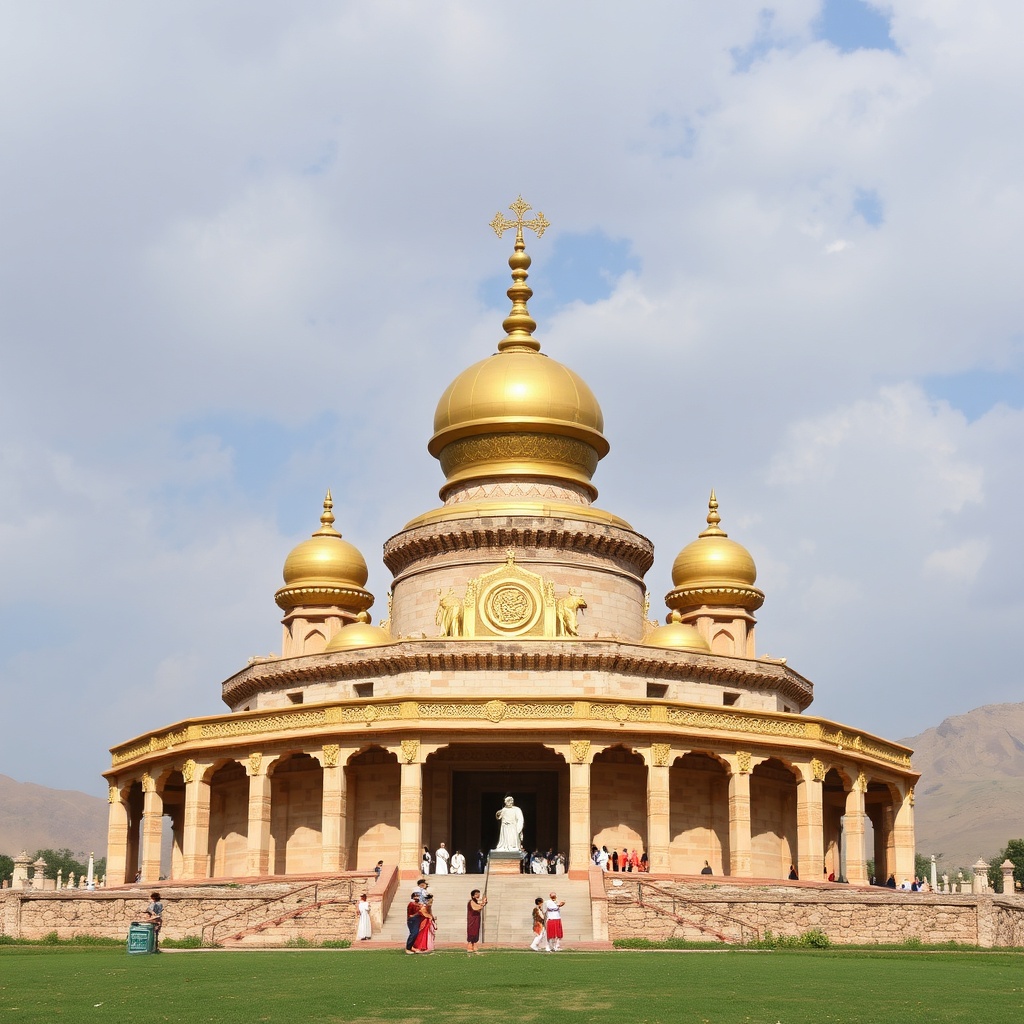
Zoroastrianism, one of the world's oldest monotheistic religions with roots dating back over a millennium before Christ, is a spiritual tradition that has profoundly shaped the religious and philosophical thought of the Middle East and Central Asia. Characterized by its cosmic dualism, ethics focused on truth and justice, and the veneration of Ahura Mazda, Zoroastrianism, although a minority in numerical terms today, possesses a rich historical and cultural heritage.
Zoroastrianism: A Sociological, Historical, and Theological Analysis
As an academic researcher, sociologist of religion, historian, and educator, I propose an in-depth and responsible analysis of Zoroastrianism, addressing its sociological, theological, and historical dimensions with rigor and impartiality. It is fundamental to dissociate this ancient tradition from any deviations or groups that may appropriate religious nomenclature for ulterior motives, a point that will be addressed with due caution and factual foundation.
1. Clear Sociological and Theological Definition
1.1. Theological Definition
From a theological standpoint, Zoroastrianism is a monotheistic religion centered on the figure of Ahura Mazda (Wise Lord), conceived as the supreme creator, omniscient, benevolent, and the source of all cosmic and moral order. Zoroastrian theology is marked by a strong ethical and cosmic dualism. It is not a dualism of gods, but rather of opposing forces in a universe in constant conflict: Asha (Truth, Order, Justice) and Druj (Lie, Disorder, Injustice). Ahura Mazda is the champion of Asha, while Angra Mainyu (Destructive Spirit), or Ahriman, is the personification of Druj. Human beings possess free will and are called to actively choose the side of Asha through good thoughts (Humata), good words (Hukhta), and good deeds (Huvarshta).
Other important theological concepts include:
- Amesha Spentas: Six divine entities emanated from Ahura Mazda, representing aspects of his divinity, such as Vohu Manah (Good Thought), Asha Vahishta (Best Truth), Khshathra Vairya (Desirable Dominion), Spenta Armaiti (Devout Piety), Haurvatat (Integrity), and Ameretat (Immortality).
- Fravashi: The protective force or spiritual guide, often compared to a guardian angel or an ancestral spirit.
- Sacred Fire: One of the most prominent symbols of Zoroastrianism, representing purity, truth, and the presence of Ahura Mazda. It is not worshipped as a deity in itself, but as a symbol of divinity and holiness.
- Final Judgment and Resurrection: The belief in an afterlife, with an individual judgment that determines the soul's destiny, and an eventual general resurrection to a renewed world free from evil.
1.2. Sociological Definition
Sociologically, Zoroastrianism can be defined as a religious tradition that, in its origin, was the religion of significant empires (such as the Achaemenid), shaping the social and political organization of vast territories. Currently, it is a minority religion, with communities scattered globally, but with notable concentrations in India (Parsis) and Iran. Sociologically, we observe:
- Community and Identity: Zoroastrian identity is strongly linked to adherence to a specific set of beliefs and practices, as well as a sense of ancestry and cultural heritage. Maintaining the community is an ongoing challenge, especially in the face of cultural assimilation and declining birth rates.
- Rites of Passage and Community Rites: Rites such as the Navjote (initiation into religious life) and marriage are important for community cohesion and the transmission of values. Funeral rituals, which traditionally involved the Towers of Silence (Dakhma), where bodies were exposed to vultures, reflect beliefs about purity and connection with nature.
- Adaptation and Syncretism: Throughout its history, Zoroastrianism has interacted with other religious traditions, such as Judaism, Christianity, and Islam, influencing them and being influenced by them. Adaptation to new geographical and cultural contexts has been crucial for its survival.
- Role of Leadership: Religious leadership traditionally falls to the priests (Mobeds), who hold knowledge of the sacred texts and the authority to conduct rituals. The leadership structure may vary among different communities, but the figure of the priest is central.
2. Historical Origin, Founders, and Geographical/Cultural Context
Zoroastrianism has its roots deeply intertwined with the history of Ancient Iran. Its founder, the prophet Zoroaster (also known as Zarathustra), is dated variously by scholars, with estimates ranging from 1500 BCE to 600 BCE. The most widely accepted date, based on linguistic and historical evidence, places Zoroaster between 1000 and 600 BCE, in the region of Eastern Persia (modern-day Afghanistan or Central Asia).
The Founder: Zoroaster
Zoroaster was not only a religious reformer but also an ethical and philosophical thinker. It is believed that he received divine visions from Ahura Mazda, who tasked him with guiding humanity away from the prevailing religious practices of the time, which included complex rituals, animal sacrifices, and a pantheon of deities with more tribal and warlike characteristics. Zoroaster's message emphasized the oneness of God, the importance of reason, morality, truth, and justice, and individual responsibility for one's own choices.
Geographical and Cultural Context
The emergence of Zoroastrianism occurred during a period of cultural and religious transition in Central Asia and the Iranian plateau. Indo-Iranian tribes were in the process of settling down and developing more complex social structures. The prophet Zoroaster preached in an environment where polytheism and shamanic rituals were common. His monotheistic and dualistic message represented a significant break from these traditions.
Zoroastrianism became the official religion of several Persian empires, including the Achaemenid Empire (550-330 BCE), the Parthian Empire (247 BCE - 224 CE), and, most prominently, the Sassanid Empire (224-651 CE). During these periods, the religion reached its peak of influence, shaping the culture, art, politics, and legislation of the empires. The expansion of Zoroastrianism also led to its dissemination across vast territories, influencing other religious traditions in the process.
The Islamic conquest of the Sassanid Empire in the 7th century CE marked the beginning of a decline for Zoroastrianism in Iran. Many Zoroastrians were forced to convert to Islam, while others emigrated to maintain their faith. A significant migration occurred to the west coast of India, where they settled and became known as Parsis (referring to Persia).
3. Main Beliefs, Dogmas, Rites, and Practices
The beliefs, dogmas, rites, and practices of Zoroastrianism are multifaceted and have evolved over millennia. However, some central elements remain:
3.1. Fundamental Beliefs
- Monotheism and Ethical Dualism: As mentioned, the belief in a single supreme God, Ahura Mazda, is central. Dualism manifests in the cosmic struggle between good (Asha) and evil (Druj), where humans play an active role through their moral choices.
- Free Will and Responsibility: Zoroastrians believe that human beings possess the capacity to choose between good and evil, and are morally responsible for the consequences of their actions.
- Focus on Truth and Justice: The pursuit of truth (Asha) and the practice of justice are pillars of Zoroastrian ethics. Correct actions are seen as contributions to the final victory of Ahura Mazda over the forces of darkness.
- Afterlife: The belief in an afterlife, where the soul is judged for its actions. The souls of those who chose good cross the Chinvat Bridge to Paradise (Garo Demana), while those who chose evil fall into the Abyss of the Lie (Druj Demana). There is also the belief in a final renewal of the world (Frashokereti), where evil will be eradicated.
- Purity: Purity, both physical and moral, is highly valued. This is reflected in hygiene practices and purification rituals.
3.2. Dogmas
Although Zoroastrianism does not possess a "creed" formalized as rigidly as some other religions, some implicit or explicit dogmas include:
- The divinity of Ahura Mazda and his supremacy.
- The existence of opposing forces (Asha vs. Druj) in a cosmic conflict.
- The importance of human moral choice.
- The belief in resurrection and final judgment.
- The reverence for fire as a symbol of divinity.
3.3. Rites and Practices
- Prayer and Meditation: Daily prayer, often directed toward the sacred fire, is a common practice. Meditation and reflection on Zoroastrian principles are also important.
- Initiation Rituals (Navjote/Sedreh Pooshi): The initiation ceremony, usually performed in childhood or adolescence, marks the formal entry into the Zoroastrian community. Initiates receive a sacred vest (Sedreh) and a sacred cord (Kusti), which are worn daily and require specific tying and untying rituals.
- Fire Ceremonies: Fire temples (Atash Behram and Atash Adarian) house the sacred fire, which is kept burning continuously and is a central place for worship and important rituals.
- Funeral Rites: Traditionally, bodies were taken to the Towers of Silence (Dakhma) to be exposed to the elements and vultures, in an effort to avoid contaminating the earth, water, and fire. This practice has declined in many communities due to sanitary and legal concerns, with cremation or burial being adopted as alternatives.
- Festivals: Zoroastrianism celebrates several festivals throughout the year, many of which are linked to agricultural cycles and the celebration of aspects of creation and divinity. Nowruz (Persian New Year), which coincides with the spring equinox, is one of the most important.
- Daily Ethical Practices: The application of the principles of "good thoughts, good words, good deeds" in daily life is considered the most important religious practice.
4. Organizational Structure and Leadership Profile
The organizational structure of Zoroastrianism is historically decentralized and varied, especially due to its geographical dispersion and the different communities that practice it.
Priestly Leadership:
- Mobeds: Religious leadership is traditionally exercised by priests, known as Mobeds. They are responsible for conducting rituals, teaching religious precepts, preserving sacred texts, and advising the community.
- Heritage and Training: Historically, the priestly position was often hereditary. However, in many modern communities, formal training in Zoroastrian seminaries or theological study is valued. The transmission of knowledge and ritual practice is crucial.
- Hierarchy: There may be hierarchies within the priesthood, with more experienced Mobeds or those with greater ritual authority, such as Dasturs. The exact structure may vary between communities (e.g., between the Parsis in India and the Zoroastrians in Iran).
Community Structure:
- Councils and Associations: In many communities, there are Zoroastrian councils or associations that manage temples, organize community events, manage funds, and represent the community to civil authorities.
- Temples and Centers: Fire temples are the spiritual centers, but community life also develops in cultural and social centers.
- Absence of a Global Central Authority: Unlike some religions with a papacy or a global council, Zoroastrianism does not have a single centralized religious authority that governs all Zoroastrian communities in the world. Each community and its local priestly leadership have a considerable degree of autonomy.
Challenges in Contemporary Leadership:
Zoroastrian leadership faces contemporary challenges, such as the shortage of priestly vocations, the need to adapt teachings to a modern world, and the management of internal tensions over issues such as conversion and religious affiliation (whether the religion is restricted to descendants or open to converts).
5. [WARNING/CONTROVERSIES]: Current Status and Potential Deviations
It is crucial, when addressing any religion or religious term, to distinguish the established tradition and its normal practices from any groups that may deviate from its principles or that are misunderstood. In the case of Zoroastrianism:
Zoroastrianism as a Traditional Religion:
Zoroastrianism, as an ancient religion with established communities, especially the Parsis in India and the Zoroastrians in Iran, is not associated with characteristics of a "destructive cult" in its main body. Traditional Zoroastrian communities are generally peaceful, integrated into their societies, and focused on the preservation of their cultural and spiritual heritage. The challenges they face are typically demographic (declining population), cultural assimilation, and internal debates over the interpretation and practice of the faith.
Absence of Systemic Reports of Abuse or Destructive Character:
Research in academic databases, reports from human rights organizations, and news from reliable sources (such as BBC, Reuters, Associated Press, The Guardian, The New York Times, and websites of religious research institutes) do not indicate that Zoroastrianism as a global tradition or its main communities are characterized by extreme social isolation, massive financial exploitation, coercive mind control, harm to third parties, or recurring police investigations for serious crimes or systemic evil conduct.
Internal Controversies and Debates:
The most significant controversies within Zoroastrianism revolve around issues of identity and adherence:
- Conversion: There is a persistent internal debate over whether the religion should be open to the conversion of non-Zoroastrians. Some communities are stricter in keeping affiliation restricted to descent, while others are more receptive.
- Interfaith Marriage: Questions about the acceptance of non-Zoroastrian spouses and the admission of their children into the community are sources of debate.
- Modern Ritual Practices: The adaptation of rites, such as funeral rites, due to sanitary and environmental considerations, also generates discussions.
These debates, although sometimes heated, are common characteristics of many traditional religions that seek to adapt to modern times and do not indicate a destructive or sectarian character in the negative sense of the expression.
Distinction from Marginal or Misunderstood Groups:
It is fundamental that, when encountering mentions of "cults" or groups that call themselves Zoroastrian, rigorous and independent research be conducted. The term "cult" in the sociology of religion can be neutral, referring to a group that has separated from a larger tradition, but it often acquires a negative connotation when associated with coercive or destructive practices. To date, there is no reliable documentary evidence linking the main body of Zoroastrianism to such characteristics.
6. Social Impact, Cultural Influence, and Contemporary Relevance
Despite being a minority religion in number, Zoroastrianism has had and continues to have a significant social and cultural impact:
6.1. Historical and Philosophical Influence
Zoroastrianism is widely considered one of the first religions to introduce concepts such as:
- Monotheism: The belief in a single supreme God.
- Ethical Dualism: The struggle between good and evil as fundamental forces in the universe.
- Individual and Universal Judgment: The idea that a person's actions determine their destiny after death, and an eventual renewal of the world.
- Free Will: The importance of human moral choice.
- Messianism: The belief in a future savior.
These concepts are frequently cited as possible influences on the development of later Judaism, Christianity, and Islam. Zoroastrian philosophy, with its focus on ethics, justice, and individual responsibility, resonates in many Western and Eastern ethical and religious traditions.
6.2. Cultural and Artistic Legacy
The legacy of Zoroastrianism is visible in the art, architecture, and literature of the Persian empires. Zoroastrian symbols, such as the Faravahar (a winged symbol often interpreted as the human soul or divine glory), continue to be important cultural icons.
6.3. Contemporary Relevance
In an increasingly complex and fragmented world, Zoroastrian principles of ethics, responsibility, truth, and justice offer a valuable perspective. The emphasis on positive action and the pursuit of moral excellence continues to be a relevant call for individuals and societies:
- Environmental Ethics: The Zoroastrian reverence for nature and the belief in the purity of the elements (earth, water, air, fire) echo contemporary environmental movements.
- Interfaith Dialogue: Zoroastrian communities, although small, actively participate in interfaith dialogue, sharing their wisdom and seeking mutual understanding.
- Preservation of Identity: The ongoing struggle of Zoroastrian communities to preserve their religious and cultural identity in a globalized world is a fascinating case study in the sociology of religion regarding resilience and adaptation.
In short, Zoroastrianism, with its deep history and rich theology, remains a spiritual tradition of great importance, whose teachings on ethics, truth, and the cosmic struggle between good and evil continue to inspire and challenge.
References and Research Sources
- Boyce, Mary. A History of Zoroastrianism. 2 vols. Leiden: Brill, 1975-1982.
- Dhalla, Maneckji N. History of Zoroastrianism. Oxford University Press, 1938.
- Hinnells, John R. The Zoroastrian Diaspora: Religion, Community and Identity. Oxford University Press, 2007.
- Insler, Stanley, and Richard T. Macuch. The Gathas of Zarathushtra. Leiden: Brill, 1998.
- Oxford Centre for Hindu Studies (OCHS) - Information on Eastern religions.
- Encyclopædia Iranica - Detailed articles on Zoroastrianism, Persian history, and relevant figures.
- United States Commission on International Religious Freedom (USCIRF) - Reports on religious freedom, which may contain mentions of religious minorities in different countries.
- Academic articles in databases such as JSTOR, Project MUSE, Google Scholar, with terms such as "Zoroastrianism sociology", "Zoroastrianism history", "Parsi community", "Zoroastrianism contemporary issues".





