



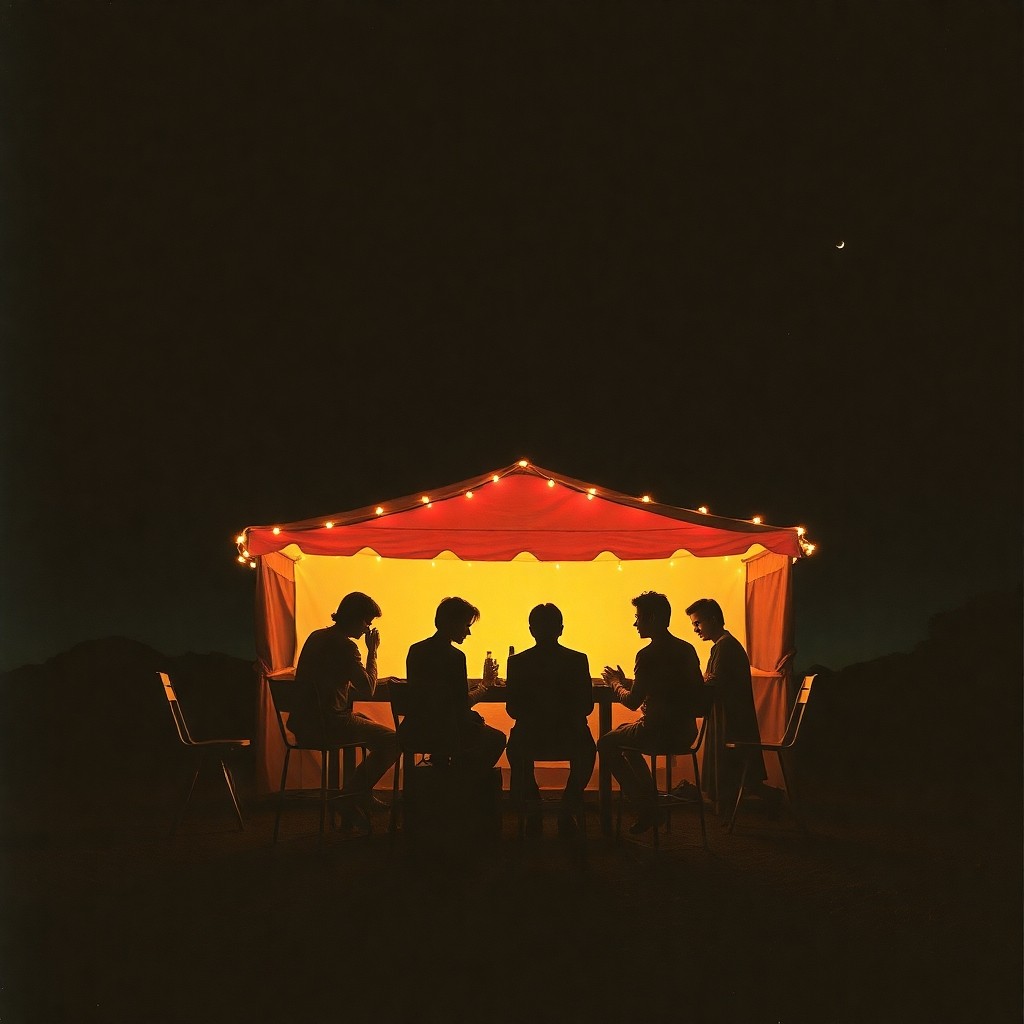
Directed by John Schlesinger and released in 1969, Midnight Cowboy is a watershed moment in American cinema. Blending existential despair with raw urban realism, the feature film not only captured the decay of a New York City on the brink of collapse but also made history by becoming the only production originally rated "X" (for adults 18+) to win the Academy Award for Best Picture, cementing itself as a timeless masterpiece of the New Hollywood era.
Analysis and Plot
In the late 1960s, American cinema was undergoing an aesthetic and thematic revolution. The once-impenetrable veneer of the major Hollywood studios was cracking under the pressure of counterculture movements, the Vietnam War, and the financial failure of traditional formulas. It is in this transitional landscape that Midnight Cowboy emerges, a work that mercilessly deconstructs the foundational myths of the United States: the heroism of the cowboy, the optimism of the "American Dream," and the promise of urban prosperity.
The narrative follows Joe Buck (played by Jon Voight), a young and naive dishwasher from Texas. Wearing a fringed jacket, leather boots, and a shiny cowboy hat, Joe leaves his small hometown for New York City. His ambition is as bizarre as it is tragic: he believes his good looks and virile vigor will make him an extremely successful hustler, paid by wealthy high-society New York women who, according to his fertile imagination, are desperate for "real men." Joe Buck personifies the commodification of American innocence itself, a testosterone-filled doll inflated by mass media and pop music.
Upon arriving at the New York bus terminal, Joe's fantasy violently collides with the gray, noisy, and hostile reality of Manhattan. The Times Square of 1969 is not the clean, policed tourist hub of today, but a den of prostitution, crime, porn theaters, and social decay. Instead of generous socialites, Joe finds indifference, scams, and overwhelming loneliness. He is quickly exploited by a middle-aged woman and finds himself penniless, on the verge of being evicted from his cheap hotel.
It is in this state of vulnerability that Joe meets Enrico Salvatore "Ratso" Rizzo (Dustin Hoffman), a limping, tubercular street hustler who survives on petty scams and illegally inhabits an abandoned, condemned building. Initially, Ratso tricks Joe, stealing twenty dollars from him under the guise of introducing him to a pimp—who turns out to be a psychotic religious fanatic. When Joe encounters Ratso again, initial anger gives way to mutual dependency. Homeless and hungry, the two outcasts form an unlikely alliance for survival.
The relationship that develops between Joe and Ratso is the emotional heart of the film. Schlesinger constructs an intimate portrait of two solitudes that cancel each other out. Joe, the giant with a strong appearance but mentally infantilized and traumatized; Ratso, the scrawny, physically decaying fellow, but gifted with a cynical urban cunning. They begin to share the decrepit space of Ratso's unheated apartment, splitting cans of cold soup and coats to survive the harsh New York winter, while fueling the fanciful dream of escaping to the warmth and abundance of Florida.
To get money, Joe submits to ever-increasing humiliations. He accepts sexual encounters in run-down cinemas for meager sums and gets involved with the city's psychedelic counterculture underworld—illustrated in a famous party scene directly inspired by Andy Warhol's Factory. As Ratso's health rapidly deteriorates due to tuberculosis, Joe realizes his partner is dying. Desperation leads him to commit violent acts of robbery to get the money for bus tickets that will take them to Miami, the promised land where Ratso believes he can recover his health.
The End of the Journey: Demystification and Tragedy on the Bus to Florida
The final third of Midnight Cowboy is one of the most devastating and psychologically rich sequences in cinema history. Aboard an interstate bus bound for Miami, we witness the visual and internal transformation of Joe Buck. During the trip, he decides to get rid of his cowboy clothes—the fringed jacket and hat that represented his fantasized identity—and buys ordinary tourist clothes at a convenience store stop. This act symbolizes the definitive death of "Joe Buck the Cowboy" and the acceptance of reality. He is not a mythical conqueror of the West; he is just an ordinary man, broken and deeply vulnerable.
As the bus moves south and the icy landscape gives way to palm trees and bright sun, Ratso's physical state reaches the point of no return. He loses control of his legs and becomes entirely dependent on Joe to move. In a moment of extreme sensitivity, Ratso wets his pants, and Joe, without any sign of disgust or judgment, cleans his friend with fraternal affection. The subtext of homosexuality and platonic love reaches its peak here: Joe's toxic and performative masculinity is completely dismantled, giving way to a genuine tenderness that transcends the gender roles of the time.
The tragedy is consummated shortly before the bus reaches its final destination. Ratso dies silently in his seat. When Joe realizes his friend's body is cold, he desperately tries to get the attention of the driver and passengers, who react with a mixture of dread and urban coldness. The driver suggests that Joe simply keep the body upright until they reach the terminal to avoid panic. In the final moments, Joe puts his arm around Ratso's lifeless shoulders, staring into the void through the window as the bus enters sunny and indifferent Miami. The contrast between the tropical sun and the cold death seals the tragic fate of characters who never had a place under the sun of the American dream.
Artistic Performance: Jon Voight and Dustin Hoffman in Their Masterpieces
The critical and emotional success of Midnight Cowboy rests almost entirely on the shoulders of its two leads, both nominated for the Academy Award for Best Actor for the film.
Dustin Hoffman, coming off the massive success of The Graduate (1967), shocked the industry by accepting the role of Ratso Rizzo. The studio feared that playing a limping, unsympathetic beggar would ruin his image as a young intellectual heartthrob. Hoffman dove into the role obsessively: to simulate Ratso's limping, painful walk, he put small pebbles inside his left shoe during filming. His nasal voice, heavy New York accent, and hunched posture created a character who is repulsive at first glance, but who gradually wins the viewer's deep empathy through his extreme human fragility.
For his part, Jon Voight delivers a miraculous performance as Joe Buck. The role had been coveted by actors like Michael Sarrazin, but Voight brought a unique mix of physical imposingness and pathetic naivety. He manages to convey the silent pain of a man haunted by flashbacks of past traumas—which suggest childhood sexual abuse by his grandmother and the gang rape of his girlfriend, Crazy Annie. Voight's performance is a study in loneliness; his forced cowboy smile hides a scared boy crying out for affection in a world that only wants to consume him.
Behind the Scenes, Production Secrets, and the Legendary Improvisation
The production of Midnight Cowboy was marked by technical challenges and bold aesthetic choices by John Schlesinger, a British director who looked at New York with the analytical detachment and rawness of the English Free Cinema movement.
- The legendary taxi scene: The most famous line in the film, "I'm walkin' here! I'm walkin' here!", spoken by Dustin Hoffman when a taxi almost hits him in Times Square, was entirely improvised. Schlesinger did not have the budget to close off the streets of New York, so the filming was done "guerrilla-style," with a camera hidden inside a van across the street. The taxi that almost hit Hoffman was a real New York driver who ignored the film crew's signals. Hoffman, staying perfectly in character, yelled at the driver and hit the hood of the car, creating one of the most iconic moments in world cinema.
- Avant-garde editing: Editor Hugh A. Robertson used quick cuts, image overlays, and non-linear transitions to represent the mental traumas and feverish delusions of Joe Buck and Ratso. The use of the song "Everybody's Talkin'", performed by Harry Nilsson, became an anthem of urban melancholy and itinerant loneliness, perfectly tuned to the visual rhythm of the editing.
- The role of Waldo Salt: Screenwriter Waldo Salt, who had been blacklisted in Hollywood during the anti-communist McCarthyism purges of the 1940s and 1950s, found his great artistic redemption in Midnight Cowboy, winning the Oscar for Best Adapted Screenplay.
The Controversial "X" Rating and Cultural Impact
After the film's completion, the Motion Picture Association of America (MPAA) assigned Midnight Cowboy the dreaded "X" rating (prohibited for those under 18). The main reason was not graphic violence, but the nature of the content: the frank approach to male prostitution, implicit and explicit homosexuality, drug use, and the "perverse" atmosphere of certain scenes, such as Joe's encounter with a teenage runaway in a movie theater.
Many film analysts predicted the production's commercial failure, as the "X" rating prevented the film from being advertised in major newspapers or shown in many traditional cinema chains. However, the effect was the opposite. The rating generated immense public curiosity. The film became a smash box-office hit, grossing over 44 million dollars against a modest budget of about 3.2 million dollars.
At the 1970 Oscars, Midnight Cowboy made history by winning three of the main categories: Best Picture, Best Director (John Schlesinger), and Best Adapted Screenplay. To this day, it remains the only production with an original "X" rating to win the Academy's top prize. Years later, without any cuts to the film, the MPAA reclassified the work to "R" (restricted, under 17 requires accompanying parent or adult guardian), acknowledging that society's moral criteria had changed.
| Budget | Global Box Office | Original Rating | Oscars Won |
|---|---|---|---|
| US$ 3.2 million | US$ 44.7 million | X (Adults 18+) | Best Picture, Director, and Adapted Screenplay |
Reception, Criticism, and Legacy in Film History
Critical reception at the time of release was mostly laudatory, although some more conservative critics were uncomfortable with the film's sordid realism. Vincent Canby of The New York Times described the film as "brilliant and devastating," praising Schlesinger's direction for avoiding cheap sentimentality when portraying life in the gutter. Roger Ebert gave the film four stars, noting that despite the repulsive environment, the film managed to be one of the most touching stories of love and friendship ever filmed.
The legacy of Midnight Cowboy is immeasurable. It opened the doors for Hollywood cinema to explore adult, marginal, and LGBTQIA+ themes without the filter of censorship or punitive moralism. The unvarnished portrait of male friendship and the questioning of the American dream influenced generations of filmmakers, from Martin Scorsese (visible in Taxi Driver) to Gus Van Sant (in My Own Private Idaho).
In 1994, the film was selected for preservation in the United States National Film Registry by the Library of Congress for its "cultural, historical, and aesthetic" importance, consolidating its place as one of the most visceral and sincere artistic monuments of the 20th century.
Sources Researched
- American Film Institute (AFI): afi.com/catalog/catalog-midnight-cowboy
- Box Office Mojo (Financial Data): boxofficemojo.com/title/tt0064665/
- Rotten Tomatoes (Critical Reception): rottentomatoes.com/m/midnight_cowboy
- The New York Times Archive (Original 1969 Review by Vincent Canby): nytimes.com
- Roger Ebert Reviews: rogerebert.com/reviews/midnight-cowboy-1969





