



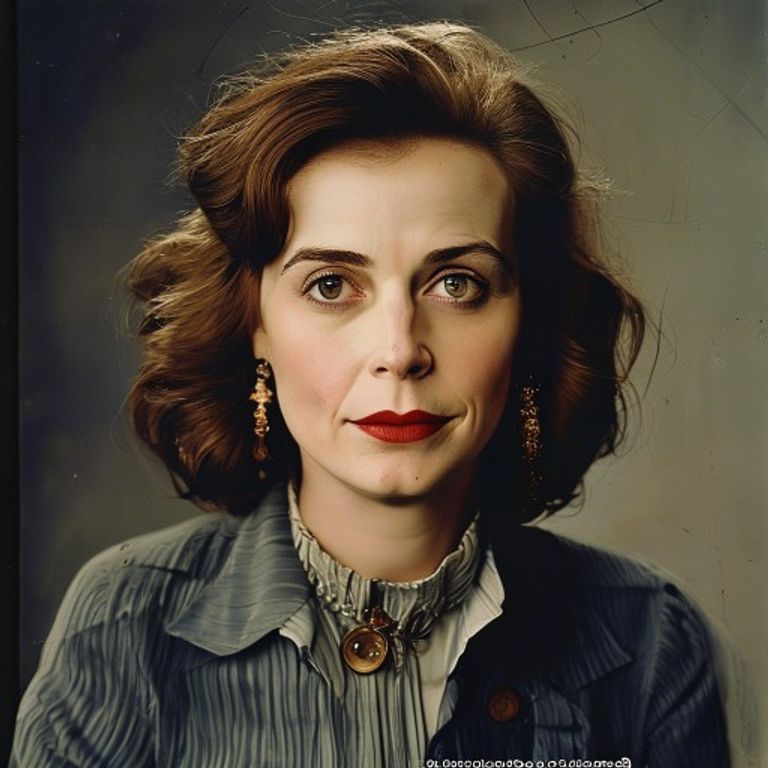
Released in 1939 and officially directed by Victor Fleming, Gone with the Wind is the pinnacle of historical melodrama and the definitive masterpiece of Hollywood's Golden Age. Produced by the obsessive David O. Selznick, the feature film adapted Margaret Mitchell's bestseller for the big screen on a monumental scale, redefining the concept of the blockbuster, setting historic box office records, and shaping—for better or worse—the global cultural imagination regarding the American Civil War.
Analysis and Plot
Gone with the Wind is not just a film; it is a cinematic monument of nearly four hours that chronicles the collapse of the aristocratic American South through the journey of one of the most complex, selfish, and fascinating characters in the history of art: Scarlett O'Hara (Vivien Leigh).
The narrative is sharply divided into two major parts, separated by the devastation of the American Civil War (1861–1865). In the first half, we are introduced to Scarlett, the beautiful, headstrong, and spoiled heiress of the Tara cotton plantation in Georgia. Scarlett is obsessed with Ashley Wilkes (Leslie Howard), a refined and melancholic man who, to her despair, decides to marry his sweet and altruistic cousin, Melanie Hamilton (Olivia de Havilland). During a barbecue at the neighboring Twelve Oaks plantation, Scarlett's rebelliousness catches the eye of Rhett Butler (Clark Gable), a cynical, pragmatic adventurer banned from polite Southern society, who foresees the inevitable defeat of the South in the looming war.
With the start of the conflict, the men leave for combat. To take revenge on Ashley, Scarlett hastily marries Charles Hamilton, Melanie's brother, who dies of pneumonia early in the hostilities without even entering battle. Widowed and bored, Scarlett moves to Atlanta to live with Melanie. As Union forces advance, Atlanta is surrounded and bombed. The climax of this first part is the desperate escape of Scarlett and Melanie (who has just given birth) from a burning Atlanta, guided by Rhett Butler. However, Rhett abandons them on the road to enlist in the dying Confederate army, leaving Scarlett with the mission of guiding the group back to Tara.
Upon arriving at her homeland, Scarlett finds a scene of absolute desolation: her mother has died of typhoid fever, her father has gone insane with grief, the plantation has been looted, and the fields are barren. It is in this moment of extreme misery that the character transitions from a spoiled girl to a ruthless survivor. Under the twilight sky of Tara, she makes her most famous oath: "As God is my witness... I'll never be hungry again!".
The second part details the Reconstruction era. Scarlett takes the reins of Tara with an iron fist. To pay the abusive taxes imposed by the Northern victors, she steals her sister's fiancé, the merchant Frank Kennedy, marrying him for money. She becomes a ruthless businesswoman in the lumber industry, defying the social conventions of the time and drawing the contempt of her peers. After Frank is killed in an armed confrontation resulting from a retaliation by the Southern clan, Scarlett, now widowed for the second time, finally agrees to marry Rhett Butler, who has amassed a huge fortune during the war.
The marriage, although filled with luxury and physical passion, is doomed to failure due to Scarlett's continued obsession with Ashley Wilkes. The couple's dynamic deteriorates drastically after the birth of their daughter, Bonnie Blue Butler. Tragedy strikes the family when little Bonnie dies in a pony accident, breaking the last emotional link that united Rhett and Scarlett. Shortly after, Melanie dies due to complications from a second pregnancy, revealing to Scarlett the painful truth: Ashley always loved only Melanie, and the feeling she harbored for him was merely the illusion of an unfulfilled childish desire. Scarlett realizes, too late, that the true love of her life was always Rhett Butler.
Deconstructing the Ending: Hidden Meanings and the Redemption of the Land
The ending of Gone with the Wind is widely considered one of the most powerful and melancholic in cinema history. Upon realizing she loves Rhett, Scarlett runs to find him at his mansion in Atlanta, only to find him packing his bags to leave permanently. She begs for his forgiveness and love, asking desperately: "If you go, what shall I do? Where shall I go?". Rhett's response is the most iconic line in Western pop culture: "Frankly, my dear, I don't give a damn."
Rhett walks away into the mist, leaving Scarlett crying on the stairs. However, instead of surrendering to absolute defeat, Scarlett's resilient essence resurfaces. She hears the voices echoing from her father, Ashley, and Rhett, reminding her that her strength has always been tied to the red earth of Tara. She lifts her head, wipes away her tears, and proclaims her final words: "After all, tomorrow is another day!".
This conclusion carries deep psychological and thematic meanings:
- The Disillusionment of Victorian Romanticism: The entire film deconstructs the romantic fantasy of the aristocratic South. Ashley Wilkes represents this dying ideal—weak, nostalgic, and unable to adapt to the modern world. By rejecting Ashley and being rejected by Rhett, Scarlett is forced to face reality stripped of her youthful fantasies.
- The Land as the Only Constant: In a narrative where marriages, fortunes, empires, and lives are carried away by the wind of history, only the land (Tara) remains. The land is presented almost as a pagan deity, the source of Scarlett's life force. The return to Tara is not a defeat, but a rite of purification and reconnection with her roots.
- The Ambiguity of Survival: Scarlett survived the war, hunger, and poverty, but the cost of her survival was the loss of her own humanity and the people who truly loved her. The ending leaves open whether she will be able to win Rhett back or if she is condemned to be the lonely queen of an empire of red earth and painful memories.
Cast and Standout Performances
The film's success and longevity are largely due to its perfectly cast ensemble, whose performances defined their careers:
- Vivien Leigh (Scarlett O'Hara): The British actress, until then little known in Hollywood, delivered one of the most visceral performances in cinema. Leigh perfectly captured Scarlett's transition from a frivolous and manipulative young woman to a woman hardened by circumstances, balancing an almost magnetic antipathy with touching vulnerability. Her performance earned her the Oscar for Best Actress.
- Clark Gable (Rhett Butler): The "King of Hollywood" was the public's unanimous choice for the role. Gable brought a rogue charm, sharp wit, and magnetic masculinity that served as the perfect counterpoint to Scarlett's volatility. His vulnerability in the scene where he mourns the loss of his daughter humanized a character who could have been just a cynical scoundrel.
- Hattie McDaniel (Mammy): As the faithful housekeeper of Tara, McDaniel delivered a performance of enormous dignity, warmth, and moral authority, often serving as Scarlett's true ethical compass. Her performance made history by making her the first Black person to be nominated for and win an Academy Award (Oscar for Best Supporting Actress).
- Olivia de Havilland (Melanie Hamilton): In contrast to Scarlett's aggression, de Havilland played the embodiment of kindness, grace, and quiet resilience. Her Melanie is not foolish, but rather a woman of unwavering moral strength, whose unconditional faith in Scarlett acts as the latter's only social and emotional brake.
Troubled Behind-the-Scenes and Trivia
The production of Gone with the Wind was one of the most chaotic, expensive, and obsessive undertakings in the history of entertainment, led by the megalomaniacal producer David O. Selznick.
- The Search for Scarlett: Selznick promoted one of the largest casting campaigns in history, interviewing over 1,400 women and testing dozens of established actresses, including Bette Davis, Paulette Goddard, Lana Turner, and Joan Crawford. The process cost about $100,000 at the time. Vivien Leigh was cast at the last minute, when filming for the iconic Atlanta burning scene had already begun (using stunt doubles).
- The Dance of the Directors: The film had three main directors. George Cukor, the original director, spent two years in pre-production but was fired after a few weeks of filming due to creative conflicts with Selznick and because Clark Gable feared that Cukor (known as a "women's director") would prioritize the actresses over his role. Victor Fleming was brought in to replace him but suffered a nervous breakdown due to exhaustion and pressure from Selznick. During Fleming's absence, Sam Wood took over the director's chair. In the end, Fleming received sole credit.
- Screenplay Writing: The main screenwriter was Sidney Howard, but Selznick, dissatisfied, hired several renowned writers to rewrite parts of the text in secret, including the legendary author F. Scott Fitzgerald.
- Censorship and the "Damn": The Hays Censorship Code strictly prohibited the use of profanity in cinema, including the word "damn." Selznick had to wage an intense battle and pay a $5,000 fine to ensure that Rhett Butler's iconic line remained intact in the final cut.
Controversies, Racism, and the "Lost Cause" Myth
As decades passed, Gone with the Wind became one of the most divisive and debated objects of study in American cultural history, being the target of severe criticism from historians and civil rights activists.
The core of the controversy lies in the way the film idealizes and romanticizes the slave-holding South before the Civil War, propagating the so-called revisionist historical thesis of the "Lost Cause". The film presents the South as an idyllic land of chivalry, honor, and social harmony, deliberately ignoring the systemic brutality, dehumanization, and violence of slavery. The enslaved are portrayed through paternalistic stereotypes: they are docile, submissive, deeply loyal to their "masters," and seem happy with their servile condition.
Although Selznick softened the most explicitly racist elements of Margaret Mitchell's original novel—such as the active participation of characters in the Ku Klux Klan during Reconstruction—the film still perpetuates a caricatured view of the Black population. The character Prissy (Butterfly McQueen) is portrayed as hysterical and ignorant, a representation that the actress herself stated she hated playing.
The peak of this historical contradiction occurred at the 1940 Oscar ceremony itself. Hattie McDaniel, despite making history by winning the Best Supporting Actress award, was forbidden from sitting at the table with her castmates (Vivien Leigh, Clark Gable, and producer David O. Selznick) due to the racial segregation laws of the Ambassador Hotel in Los Angeles, where the ceremony was held. She was relegated to a table at the back of the room.
In recent years, the film has undergone institutional reevaluations. In 2020, amidst global protests for racial justice, the streaming platform HBO Max temporarily removed the film from its catalog, reinserting it weeks later accompanied by a contextualized introduction by film historian Jacqueline Stewart, who discusses the racist representations and the historical context of the slave-holding South.
Reception, Box Office, and Undying Legacy
Despite its heavy ideological controversies, the aesthetic, technical, and commercial impact of Gone with the Wind is undeniable. At the 12th Academy Awards, the film broke records by receiving 13 nominations and winning 10 awards (8 competitive and 2 honorary), including Best Picture, Best Director, Best Adapted Screenplay, Best Actress, and Best Supporting Actress.
In terms of box office, the feature film remains the greatest financial phenomenon in the history of entertainment. When adjusted for global monetary inflation, the box office of Gone with the Wind exceeds the $3.7 billion mark, surpassing modern blockbusters like Avatar and Star Wars: The Force Awakens, establishing itself as the highest-grossing film of all time.
The film set the standards for what we now understand as the "Hollywood epic": the revolutionary use of three-strip Technicolor to paint dramatic landscapes, the sweeping and uninterrupted soundtrack composed by Max Steiner, and the ability to fuse an intimate and romantic narrative with the backdrop of colossal historical transformations. It is a testament to the ambition of the studio era; an imperfect, ideologically problematic work of art, but one of such visual and narrative grandeur that the wind of time has never been able to erase.
Sources Researched
- American Film Institute (AFI) - afi.com
- The Academy of Motion Picture Arts and Sciences (Oscars) - oscars.org
- Box Office Mojo (Adjusted for Inflation Rankings) - boxofficemojo.com
- The Hollywood Reporter (Archives on David O. Selznick) - hollywoodreporter.com
- Encyclopædia Britannica (Gone with the Wind Analysis) - britannica.com
- Turner Classic Movies (TCM) Database - tcm.com





