



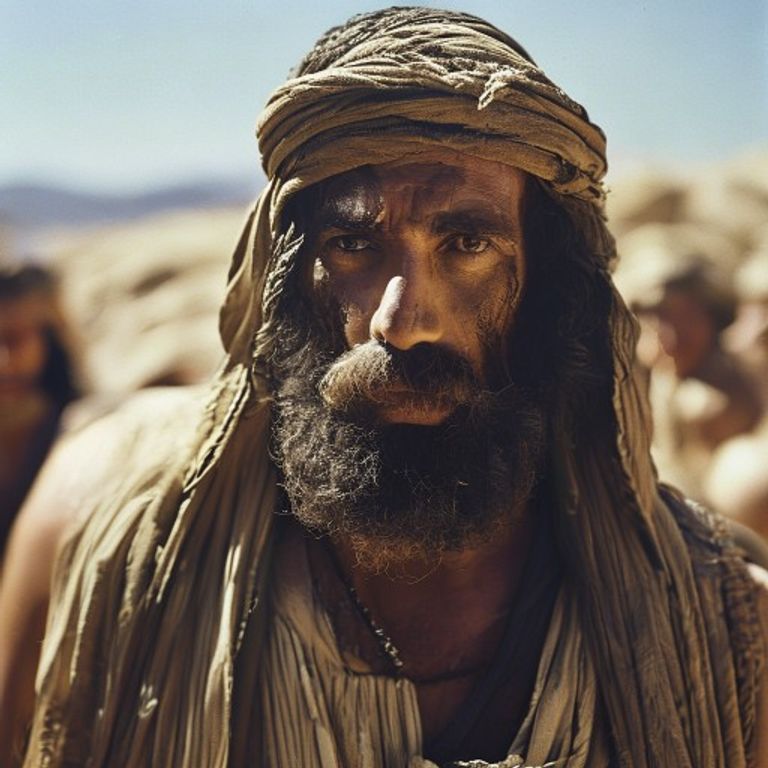
Directed by the legendary William Wyler and starring Charlton Heston, Ben-Hur (1959) represents the pinnacle of classic Hollywood epic cinema. Blending intimate drama of betrayal, colossal action, and a profound narrative of faith and redemption, this masterpiece of the sword-and-sandals genre not only saved Metro-Goldwyn-Mayer (MGM) from imminent bankruptcy but also set a historical record by winning 11 Academy Awards, cementing its cultural and technical impact as one of the greatest milestones in the history of the seventh art.
Analysis and Plot
To understand the impact of Ben-Hur, it is necessary to place it within the context of the cinematic transition of the late 1950s. Hollywood was facing the overwhelming rise of television. To bring audiences back to movie theaters, studios bet on visual spectacle that no home screen could replicate. Filmed in the glorious MGM Camera 65 anamorphic lens format (later Ultra Panavision 70), William Wyler's feature film is the perfect definition of panoramic cinema, where every frame is meticulously filled with thousands of extras, monumental sets built at the Cinecittà studios in Rome, and a sweeping soundtrack composed by Miklós Rózsa.
However, the true triumph of Ben-Hur does not lie solely in its titanic scale, but in Wyler's ability to anchor this grandeur in a deeply human and personal tragedy. The film constantly balances between two axes: the macrocosm of the Roman Empire's expansionism and the microcosm of the protagonist's journey of self-discovery and revenge.
The Plot: From Nobility to the Galleys and the Search for Redemption
The story is set in Judea in the early 1st century AD. Judah Ben-Hur (Charlton Heston) is a wealthy Jewish prince whose life is marked by integrity and love for his family—his mother Miriam (Martha Scott) and his sister Tirzah (Cathy O'Donnell). The balance of his existence is shattered with the return of Messala (Stephen Boyd), his childhood friend who now serves as the new Roman tribune of the region. Initially, the reunion is marked by affection and nostalgia, but the ideological barrier soon asserts itself: Messala demands that Judah betray his own people and reveal the names of the Jewish dissidents who oppose Roman rule. Faithful to his beliefs and his people, Judah categorically refuses.
The definitive rupture occurs in a tragic and accidental way. During the welcoming parade for the new governor of Judea, Valerius Gratus, loose roof tiles from the Ben-Hur house fall, startling the governor's horse, which falls and is seriously injured. Even knowing it was an accident, Messala sees in the tragedy the perfect opportunity to consolidate his political power and send a brutal warning to the Jewish population. He condemns Judah to the galleys as a perpetual slave and imprisons Miriam and Tirzah in the underground dungeons of Jerusalem.
On the way to the galleys, marching under the scorching desert sun, the prisoners are denied water by Roman soldiers in the village of Nazareth. On the verge of dying from dehydration, Judah collapses in the dust. It is at this moment that the first transformative contact with Jesus of Nazareth occurs (whose face is never shown directly in the film). The carpenter offers water to Judah and, with a look of divine authority and compassion, prevents a Roman centurion from striking the prisoner. This act of kindness plants in Judah a seed of resilience that will keep him alive in the following years.
Judah spends three years chained to the oars of the galley of Roman consul Quintus Arrius (Jack Hawkins). During a violent naval battle against Macedonian pirates, Arrius decides to release Judah's shackles, impressed by the slave's willpower. When the vessel is destroyed, Judah saves the life of Arrius, who was attempting to commit suicide believing the battle was lost. Rescued by the Roman fleet, they discover that Arrius was victorious. As a reward, the consul adopts Judah as his legitimate son, granting him Roman citizenship, wealth, and training in military and chariot racing techniques.
Despite the life of privilege in Rome, the desire for justice and the mystery regarding the fate of his mother and sister consume Judah. He returns to Judea. On the way, he meets the generous Sheik Ilderim (Hugh Griffith), an Arab merchant passionate about racehorses who recognizes Judah's skill as a chariot driver. Ilderim proposes that Judah face Messala in the upcoming Jerusalem chariot race—a brutal event where rules are practically non-existent.
Upon arriving in Jerusalem, Judah confronts Messala, demanding to know the whereabouts of his family. Messala orders a search of the dungeons and discovers that Miriam and Tirzah contracted leprosy during their confinement. They are released but exiled to the Valley of the Lepers. To spare Judah from suffering upon seeing them in a state of physical decay, they beg the faithful servant Esther (Haya Harareet), whom Judah loves, to tell him that both died in prison. Destroyed by the pain of grief and consumed by hatred, Judah accepts Sheik Ilderim's challenge to destroy Messala in the arena.
The legendary chariot race is the film's action climax. Messala competes with a Greek chariot equipped with rotating blades on the wheel axles, used to destroy opposing vehicles. In a fierce and deadly nine-lap contest, Messala tries to destroy Judah's chariot but loses control, falls, and is run over and dragged by another quadriga. Judah emerges victorious, but his victory is bitter. On his deathbed, mutilated and agonizing, Messala delivers his final blow of mental cruelty: he reveals to Judah that his mother and sister did not die, but are alive and deformed by leprosy in the valley of the outcasts.
The Revealed Conclusion: Symbolism, Faith, and the End of Revenge
The final third of Ben-Hur moves away from the action epic to delve into a spiritual drama of redemption. Judah locates his mother and sister in the Valley of the Lepers but is prevented by Esther from approaching them to preserve the memory he has of their beauty in the past. Consumed by a blind fury against the Roman Empire, Judah rejects his Roman citizenship and becomes a bitter man, whose hatred threatens to destroy his own soul and drive Esther away.
Esther, who witnessed the peace sermons of Jesus of Nazareth, insists that there is hope beyond revenge. Faced with the despair and the worsening condition of Tirzah, Judah gives in and decides to take his mother and sister to Jerusalem so that the Galilean prophet may heal them. However, they arrive in the city on the very day that Jesus was condemned to death by Pontius Pilate.
Judah witnesses the Via Crucis of Christ. Upon seeing the man who once gave him water in the desert now collapsing under the weight of the cross, Judah tries to return the gesture, offering him water, but is pushed away by Roman soldiers. He follows the crucifixion at Calvary (Golgotha). As Jesus dies on the cross, the sky darkens and a torrential storm breaks over the Earth.
The rain symbolizes the washing away of sins and the spiritual purification of humanity. The blood of Christ mixes with the rainwater and flows across the ground, symbolically reaching the cave where Miriam, Tirzah, and Esther were sheltering from the storm. In a physical and spiritual miracle, the leprosy wounds of Miriam and Tirzah disappear completely, restoring their physical health.
The true miracle, however, occurs within Judah Ben-Hur himself. Upon returning home and finding his family healed, he recounts to Esther the impact of having heard Jesus' last words on the cross ("Father, forgive them, for they do not know what they do"). Judah confesses: "Almost at the moment He died, I heard Him say, 'Father, forgive them, for they do not know what they do.' And I felt His voice take the sword out of my hand."
The film ends with a shot charged with symbolism: a shepherd leading his sheep under the sunlight that shines again after the storm, with the three empty crosses of Calvary in the background. Revenge, represented by the bloody death of Messala, did not bring peace to Judah; only the forgiveness and sacrifice of Christ were able to free him from his psychological and spiritual chains.
Cast and Performances: The Clash of Giants
The cast of Ben-Hur is one of the fundamental factors why the film has not aged as a mere exercise in visual opulence:
- Charlton Heston (Judah Ben-Hur): Heston delivers here the performance of his life, which earned him the Oscar for Best Actor. With his imposing physique, resonant voice, and ability to express iron determination, he perfectly embodies the classic epic hero. What makes his performance exceptional, however, is the emotional transition: from an aristocratic and peaceful prince to a slave hardened by suffering, culminating in a man whose soul is corrupted by hatred, until his final redemption.
- Stephen Boyd (Messala): Boyd delivers a memorable and complex villain. His Messala is not a caricature of pure evil; he is driven by a blind ambition typical of the Roman military machine and by a deep sense of personal rejection. The magnetic intensity of his gaze contrasts perfectly with Heston's more restrained posture.
- Jack Hawkins (Quintus Arrius): Hawkins brings a stoic and aristocratic dignity to the Roman consul. His relationship with Judah serves as a bridge of humanization between Roman brutality and personal honor.
- Hugh Griffith (Sheik Ilderim): Providing the necessary comic relief in such a dense narrative, Griffith delivers an eccentric and charismatic performance that earned him the Oscar for Best Supporting Actor. Although his casting is analyzed today under critical lenses due to the use of makeup to darken his skin (a brownface practice), his performance is undeniably energetic and vital to the pacing of the second half of the film.
- Haya Harareet (Esther): The Israeli actress brings a melancholic serenity and a silent moral strength to the character, functioning as the ethical compass that tries to guide Judah out of the abyss of revenge.
Behind the Scenes, Box Office Numbers, and Saving MGM
The production of Ben-Hur was an all-or-nothing bet for Metro-Goldwyn-Mayer. In the late 50s, the studio was on the verge of bankruptcy due to mismanagement and competition from television. The film's final budget exceeded the astronomical mark of 15 million dollars (the equivalent of more than 150 million dollars adjusted for inflation), making it the most expensive production in cinema history up to that point.
The level of technical grandeur required colossal numbers:
- More than 200 camels and 2,500 horses were used.
- Approximately 10,000 extras participated in the filming.
- The chariot race arena set was built to full scale at the Cinecittà studios, occupying more than 72,000 square meters. It was the largest film set structure built until then, using thousands of tons of sand imported from the Mediterranean.
- The filming of the chariot race lasted about five weeks and was coordinated by second-unit directors Andrew Marton and Yakima Canutt (the latter, a legendary Hollywood stuntman). William Wyler supervised the process closely to ensure that the characters' drama was not lost amidst the action.
MGM's bet paid off exponentially. The film grossed more than 147 million dollars in its original worldwide box office run, saving the studio from bankruptcy and becoming the second-highest-grossing film in history at the time, behind only Gone with the Wind (1939).
Production Controversies: The Homoerotic Subtext and Set Rumors
Like every major production of Hollywood's Golden Age, the behind-the-scenes of Ben-Hur are filled with myths, urban legends, and fascinating artistic controversies.
Gore Vidal's Homoerotic Subtext
The most famous controversy involves the renowned writer and essayist Gore Vidal, who was hired as an uncredited screenwriter to rewrite parts of Karl Tunberg's original script, which Wyler considered unsatisfactory. Vidal proposed a dramatic solution to justify Messala's sudden and excessive fury regarding Judah's refusal to collaborate with Rome. According to Vidal, Messala's violent hostility would make much more sense if there were a component of romantic rejection from a former homoerotic relationship that the two might have had in their adolescence.
Wyler initially hesitated, fearing censorship from Hollywood's rigid Hays Code, but agreed that this subtext would increase the dramatic tension. However, there was an obstacle: Charlton Heston, known for his conservative views, would never agree to play a character with homosexual nuances. Wyler and Vidal's solution was brilliant and bold: they decided to tell the proposal to Stephen Boyd (Messala), who embraced it and decided to play his character with an implicit look of desire and hurt, while Heston (Judah) was kept completely in the dark, acting under the premise of a strictly platonic friendship. Years later, when Vidal publicly revealed this story, Heston vehemently denied the veracity of the facts, sparking a heated debate that lasted for decades in the American cultural press.
Myths of Deaths on Set
For decades, a rumor circulated that one or more stuntmen had died by drowning or being crushed during the filming of the dangerous chariot race, and that these real scenes had been kept in the final cut of the film. This myth is false. Although Charlton Heston's main stunt double, Joe Canutt (son of Yakima Canutt), suffered a severe cut to his chin when his chariot jumped over the wreckage of another vehicle (a scene that is actually in the film and was adapted in the script to show Judah regaining his balance), no fatal accident occurred during the filming of the race, thanks to the rigorous safety measures implemented by the production team.
Critical Reception, Awards, and the Immortal Legacy
The reception of Ben-Hur at its premiere in November 1959 was unanimous acclaim from critics and audiences. The prestigious The New York Times critic, Bosley Crowther, praised the film as "an extremely moving and powerful human drama." Specialized critics highlighted director William Wyler's unparalleled ability to not allow the scale effects to stifle the dramatic performances and the theological questions raised by the narrative.
At the 1960 Academy Awards ceremony, Ben-Hur made history by receiving 12 nominations and winning 11 statuettes, including:
- Best Picture
- Best Director (William Wyler)
- Best Actor (Charlton Heston)
- Best Supporting Actor (Hugh Griffith)
- Best Art Direction (Set Decoration)
- Best Cinematography (Color)
- Best Costume Design
- Best Special Effects
- Best Film Editing
- Best Original Score (Miklós Rózsa)
- Best Sound Mixing
This record of 11 Oscars remained isolated for nearly four decades, being equaled only by Titanic (1997) and The Lord of the Rings: The Return of the King (2003), but never surpassed.
More than sixty years after its release, Ben-Hur remains the greatest example of the grandeur that analog and artisanal Hollywood cinema could achieve. In an era dominated by computer-generated imagery (CGI), the palpable physicality of its chariot race, the dramatic weight of its silences, and the beauty of its cinematography continue to impress new generations of cinephiles and filmmakers, proving that true cinematic art is immune to the passage of time.
Researched Sources
- IMDb: imdb.com/title/tt0052618/
- Rotten Tomatoes: rottentomatoes.com/m/benhur
- Box Office Mojo: boxofficemojo.com/title/tt0052618/
- American Film Institute (AFI): afi.com
- The New York Times Archives: nytimes.com





