



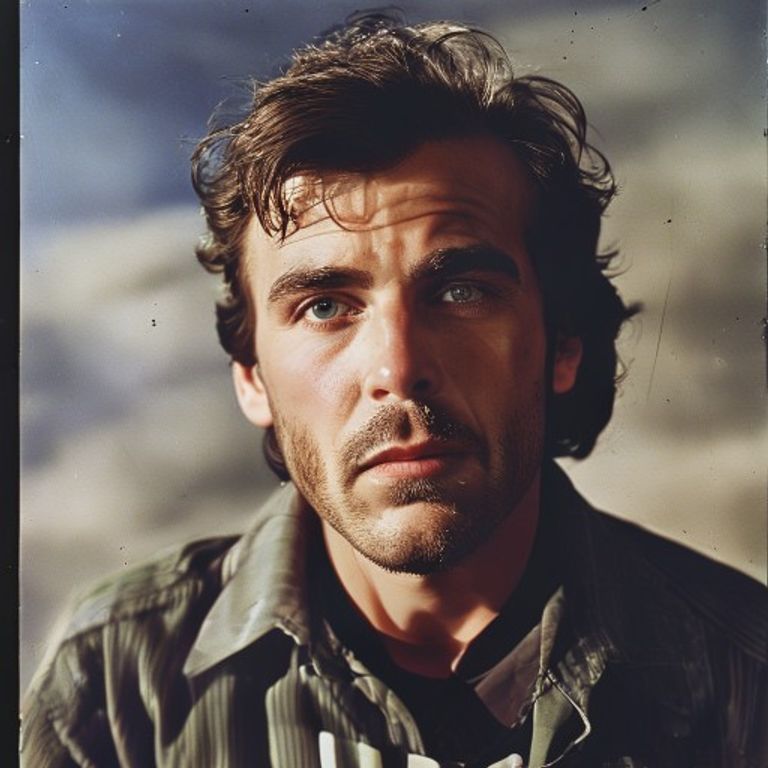
Released in 1955 and directed by Delbert Mann, Marty is a watershed moment in the history of American cinema. This intimate and minimalist drama, written by the legendary Paddy Chayefsky, challenged Hollywood's trend of producing grand epics in favor of a raw and deeply humanistic realism. Winner of four Academy Awards (including Best Picture) and the prestigious Palme d'Or at the Cannes Film Festival, the feature film established itself as the definitive masterpiece on urban loneliness, social pressure, and the beauty of genuine human connections found in the most ordinary corners of daily life.
Analysis and Plot
In the heart of 1950s New York, specifically in the vibrant and sometimes suffocating Bronx neighborhood, we meet Marty Piletti (played with overwhelming vulnerability by Ernest Borgnine). Marty is a 34-year-old Italian-American butcher, burly, plain-looking, and with a heart of gold. He lives with his possessive yet affectionate mother, Mrs. Piletti (Esther Minciotti). Marty carries the invisible weight of being the last of his siblings to remain single, a "status" that in the Italian Catholic community of the time was seen almost as a character flaw or a social tragedy.
The film is structured around Marty's grueling routine and his interactions with his customers and friends—especially his best friend, Angie (Joe Mantell). The dynamic between Marty and Angie is summarized in a dialogue that became one of the most famous catchphrases in pop culture: "What do you want to do tonight, Marty?" "I don't know, Angie. What do you want to do?" This verbal back-and-forth reveals the existential void, boredom, and apathy of working-class young adults who desperately seek meaning beyond the usual bars and street corners.
The narrative gains traction when, under his mother's tiresome insistence, Marty agrees to go to the Stardust Ballroom, a local dance hall known for being a refuge for "bachelors and rejects." It is there that Marty's fate crosses with Clara's (Betsy Blair), a 29-year-old science teacher. Clara is cruelly abandoned by her date for the night, who tries to bribe Marty to take her away so he can be with another woman. Marty, touched by the woman's obvious pain and humiliation, refuses the bribe but approaches Clara to console her.
What follows is one of the most sincere, painful, and beautiful conversations ever written for cinema. Two "rejects" of society—he considered "ugly" and rustic, she coldly labeled as "plain" and destined for spinsterhood—find in each other a mirror of their own insecurities. They walk through the cold streets of the Bronx, talking about their lives, their fears of professional inadequacy, and the shared dread of dying alone. For the first time in years, Marty feels heard and valued, pouring out his frustrations and dreams with an almost childlike enthusiasm, while Clara blossoms before the genuine attention of a man who does not see her as an aesthetic prize, but as a kindred soul.
The Ending and Its Hidden Meanings
The ending of Marty is a lesson in dramatic subtlety and emotional liberation. After a magical night, Marty promises to call Clara the next day at 2:30 PM. However, upon returning home, he is confronted by a drastic change in his mother's behavior. Influenced by the bitterness of her aunt Catherine (Augusta Ciolli)—an elderly widow who feels useless and cast aside by her own family—Mrs. Piletti begins to view Clara with suspicion, labeling her as "an old schoolteacher spinster" who is not Italian and who wants to take Marty away from her home.
To make matters worse, Marty's friends, led by a clearly jealous Angie who resents the possibility of losing his partner in boredom, ridicule Clara, calling her a "dog" (slang of the time for an ugly woman). Pressured from all sides—by family tradition that demands a perfect daughter-in-law and by the toxic machismo of his social circle that demands a trophy wife—Marty hesitates. The 2:30 deadline passes, and he does not call Clara. She, in turn, watches television in the living room with her parents, crying in silence, resigning herself to yet another romantic disappointment.
It is the following night that the film's great catharsis occurs. Reunited again with Angie and his gang on their usual, tedious street corner, Marty hears his friends planning another empty night of chasing women they secretly despise. In a violent and liberating epiphany, Marty realizes the existential trap he is in. He turns to Angie and shouts a memorable monologue:
"You know what I get from listening to you? I spend Saturday night bored to death! (...) Is she ugly? So she's ugly. All I know is I had a wonderful time with her last Saturday. And if I have another wonderful time with her this Saturday, I'm going to get down on my knees and beg her to marry me! (...) What do you want to do tonight? 'I don't know, what do you want to do?' Go to hell! I'm going to call Clara!"
Marty enters the phone booth, closes the door, dials the number, and as the phone rings, the film cuts to the final credits. The hidden meaning of this ending lies in the victory of the individual over the overwhelming collective. The phone booth is not just a space for communication; it is Marty's temple of liberation. By closing that glass door, he isolates himself from the noise of his mother's expectations, the sterile judgment of his friends, and the shackles of his own insecurity. The act of calling Clara does not guarantee a fairy-tale "happily ever after," but it symbolizes the achievement of Marty's emotional maturity and autonomy. He prefers to risk rejection and social judgment than to continue living a life of gray conformity determined by others.
The Cast and Standout Performances
The monumental success of Marty lies almost entirely in the extraordinary alchemy of its supporting cast and, especially, its two leads.
- Ernest Borgnine (Marty Piletti): Before Marty, Borgnine was known in Hollywood almost exclusively for playing brutal and sadistic villains—with Sergeant Fatso Judson in From Here to Eternity (1953) being his most famous role until then. Casting Borgnine to play such a docile, needy, and vulnerable man was a tremendous risk that paid off with interest. He delivers an impeccable physical and emotional performance. His slumped shoulders, his "lost dog" look when rejected, and the almost feverish glow of happiness when talking to Clara create a portrait of sensitive masculinity rarely seen in the cinema of that decade. His performance earned him the Academy Award for Best Actor, beating giants like James Dean and Spencer Tracy.
- Betsy Blair (Clara Snyder): Blair delivers a performance of heartbreaking delicacy. She avoids easy melodrama; her pain is expressed in the tremor of her hands, the low tone of her voice, and the defensive posture of someone accustomed to being ignored or ridiculed. Blair manages to make Clara's intelligence and integrity shine through her apparent "ordinariness," making it totally believable why Marty falls in love with her in just a few hours.
- Joe Mantell (Angie): Mantell serves as the perfect counterpoint to Marty. His performance as Angie is a precise portrait of comfortable mediocrity. He doesn't hate Marty; he just fears being alone in the darkness of his own aimless life. His insistence on "what are we going to do tonight?" is the desperate cry of a man who needs constant validation to avoid facing his own insignificance.
- Esther Minciotti (Mrs. Piletti): Avoiding the caricature of the histrionic "Italian mamma," Minciotti builds a multidimensional mother. She loves Marty fiercely, but this love is also selfish and paralyzing. Her transition from a mother who begs her son to get married to a woman terrified by the loss of her domestic utility is subtle and psychologically precise.
Behind-the-Scenes Trivia and the Blacklist Threat
The production of Marty is surrounded by fascinating stories that reveal much about the political and artistic climate of the United States in the 1950s.
The film was originally written by Paddy Chayefsky as a one-hour television play, broadcast live in 1953 by NBC on The Philco-Goodyear Television Playhouse, starring Rod Steiger in the lead role. When producers Harold Hecht and Burt Lancaster (through their independent production company, Hecht-Lancaster Productions) decided to turn the teleplay into a feature film, they wanted Steiger. However, the actor refused to sign a long-term exclusivity contract with the producers, opening the door for the hiring of Ernest Borgnine.
The biggest behind-the-scenes controversy, however, involved actress Betsy Blair. Known for her progressive and left-wing political views, Blair was on the dreaded "Hollywood Blacklist" during the height of McCarthyism (the anti-communist witch hunt led by Senator Joseph McCarthy). The powerful head of Columbia Pictures and informal financier, or even distributors at United Artists, refused to hire her.
Blair's casting was only possible thanks to the heroic intervention of her then-husband, megastar Gene Kelly. Kelly, who was at the height of his power in Hollywood at MGM, went to the studio executives and threatened to break his lucrative acting and directing contracts, in addition to refusing to participate in future projects, if his wife was not hired for the role of Clara. Faced with the threat of losing one of their biggest stars, the producers gave in, and Blair was able to deliver the performance of her life, which earned her an Academy Award nomination for Best Supporting Actress.
Critical Reception, Box Office, and Legacy
With a modest budget of approximately $343,000, Marty was initially planned by the producers almost as a planned "tax loss" or a low-cost prestige project. To the general surprise of Hollywood, the film was a resounding box office success, grossing over $3 million in the United States alone and becoming extremely profitable.
The critical reception was a flood of praise. The legendary The New York Times critic, Bosley Crowther, hailed the film for its "fidelity to real life" and for capturing the poetry of the common man without condescension or cheap sentimentality. At the 1955 Cannes Film Festival, Marty won the Palme d'Or unanimously, becoming the first American film to achieve such a feat, in addition to winning the international critics' prize (FIPRESCI).
At the 1956 Oscars, the film consolidated its historical status by winning four of the most important categories: Best Picture (becoming, at just 90 minutes, the shortest film in history to win the category at the time), Best Director (Delbert Mann, in his film debut), Best Adapted Screenplay (Paddy Chayefsky), and Best Actor (Ernest Borgnine). Marty remains to this day one of only two films in cinema history to win both the Palme d'Or at Cannes and the Oscar for Best Picture (the other being the South Korean film Parasite in 2019).
The legacy of Marty is immeasurable. It anticipated the social realism movement ("kitchen sink realism") that would dominate British cinema in the late 1950s and early 1960s. By proving that small stories, focused on common characters, workers, and devoid of physical glamour could attract large box office returns and critical acclaim, Marty opened the doors for a more auteur-driven Hollywood, less dependent on the escapism of the major studios and more connected to the true human experience.
Sources Researched
- https://www.afi.com/catalog/ (American Film Institute Catalog)
- https://www.criterion.com/current/posts/ (The Criterion Collection essays and archives)
- https://www.rottentomatoes.com/m/marty/ (Rotten Tomatoes reviews and historical consensus)
- https://www.boxofficemojo.com/ (Box Office Mojo historical data)
- https://variety.com/ (Variety archives on 1955 production and awards)





