



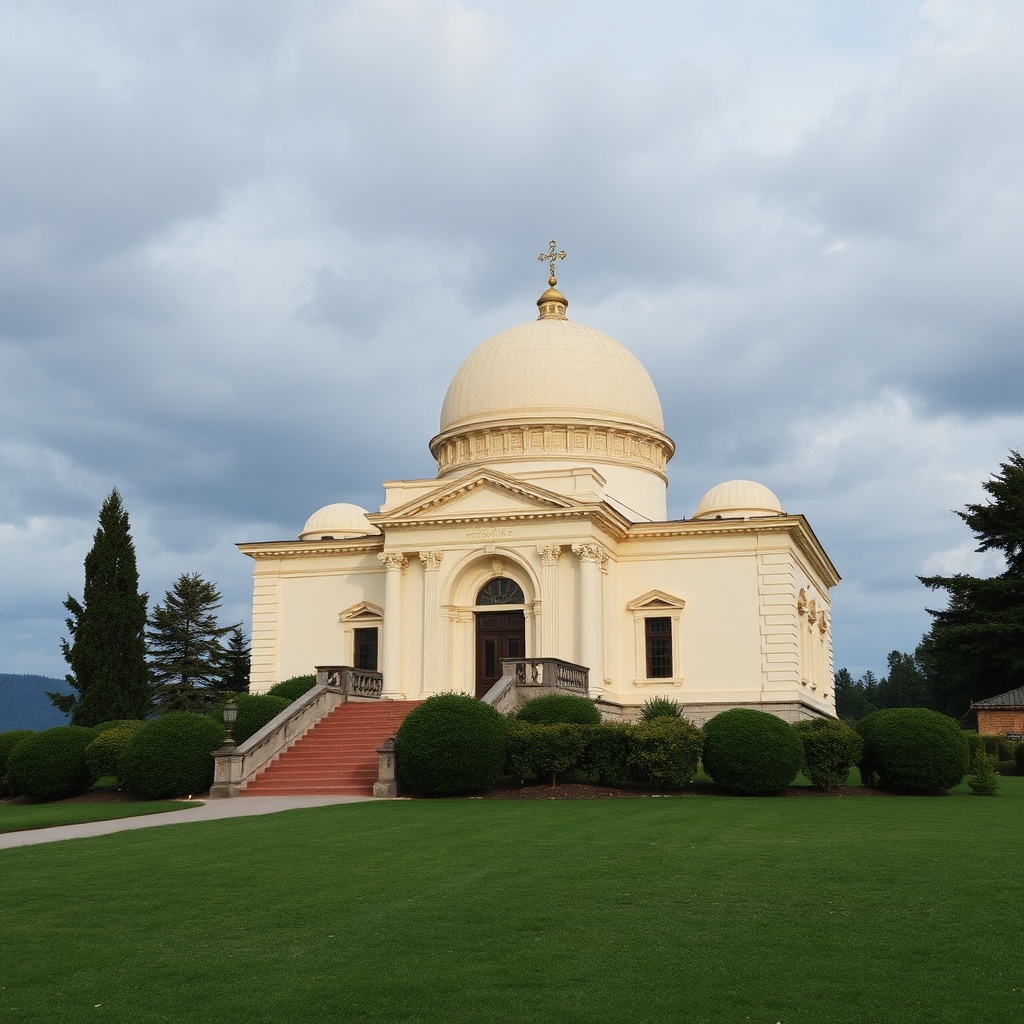
Theosophy, a term that evokes divine wisdom, is a syncretic and esoteric movement that emerged in the 19th century, seeking to synthesize philosophical and religious teachings from various world traditions. Officially founded in New York in 1875, the Theosophical Society proposes a universal brotherhood and the comparative study of religions, philosophies, and sciences, with the goal of revealing the unity underlying all existence.
Origin and Historical Foundation
Theosophy as an organized movement has its roots firmly planted in the spiritual and intellectual fervor of the 19th century, a period marked by growing interest in Eastern spirituality, occultism, and the search for esoteric knowledge that transcended the limitations of traditional Western religions. The Theosophical Society was founded on November 20, 1875, in New York, by Helena Petrovna Blavatsky (HPB), Henry Steel Olcott, and William Quan Judge, among others. Blavatsky, a central and enigmatic figure, is considered the primary articulator of theosophical doctrines. Born in Russia, she traveled extensively, claiming to have studied in Tibetan monasteries and received teachings from spiritual masters known as the "Mahatmas." Henry Steel Olcott, an American former military officer and journalist, became the first president of the Theosophical Society, playing a crucial role in its organization and expansion. William Quan Judge, an American lawyer, was also a prominent figure in the early years. The geographic and cultural context of its emergence was North America and Europe, where the society expanded rapidly, attracting intellectuals, artists, and spiritual seekers who felt disconnected from conventional religious doctrines.
The founding of the Theosophical Society did not arise from a vacuum, but was inserted into a cultural melting pot that included Allan Kardec's Spiritism, the New Thought movement, and a renewed interest in Brahmanism, Buddhism, and other Eastern philosophies, driven in part by the expansion of European colonialism and the translation of sacred texts. Theosophy, in its essence, proposed a synthesis of these diverse currents, seeking to present an "Ancient Wisdom" (Prisca Theologia) that would be the common source of all religions and philosophies. The emphasis on science and the scientific method of the time also influenced the theosophical approach, which sought to present its doctrines as compatible with scientific discoveries, or even as a superior spiritual science.
Sociological and Theological Definition
From a sociological point of view, Theosophy can be classified as a syncretic and esoteric religious movement. Syncretic, because it absorbs and recombines elements from various religious traditions (Hinduism, Buddhism, Zoroastrianism, Gnosticism, Hermeticism, Kabbalah, and esoteric Christianity), seeking a universal truth underlying them all. Esoteric, because it focuses on hidden or secret knowledge, accessible only to initiates or those who dedicate themselves to in-depth study and specific spiritual practices. The Theosophical Society, in its structure, functions as an organization dedicated to the study and dissemination of its ideas, promoting brotherhood and investigation.
Theologically, Theosophy does not have a centralized dogma like traditional religions. Instead, it presents a set of fundamental beliefs that emphasize:
- Divine Unity: The belief in an Absolute, unknowable Principle from which all existence emanates.
- The Doctrine of Evolution: A cosmic and spiritual view of the evolution of life through successive cycles, encompassing mineral, vegetable, animal, and human kingdoms, across multiple incarnations and planets.
- Reincarnation (or Rebirth): The idea that the individual soul goes through a cycle of births and deaths, learning and evolving with each life.
- Karma: The law of cause and effect, where past actions determine present and future circumstances.
- Universal Brotherhood: The belief in the fundamental unity of all life and the need to promote brotherhood among all beings.
- The Masters of Wisdom: The doctrine of the existence of spiritually evolved beings (Mahatmas or Adepts) who guide the evolution of humanity.
Theosophy positions itself as a perennial wisdom, a "religion of religions," which seeks to rediscover and share the esoteric teachings that would have been the foundation of humanity's great spiritual traditions. It is not about founding a new religion, but about presenting the "Single Truth" that would lie behind all religious forms.
Main Beliefs, Dogmas, Rites, and Practices
The main theosophical beliefs, detailed in works such as Helena Blavatsky's "The Secret Doctrine," revolve around complex cosmogenesis and anthropogenesis. Cosmogenesis describes the origin of the universe from an unknowable Absolute, passing through seven cosmic "Rounds" and seven "Root Races" of humanity in each Round. Anthropogenesis explains the evolution of the human being from more primitive stages, with the gradual manifestation of individuality and higher consciousness. A central concept is that of "Manvantara" (period of cosmic manifestation) and "Pralaya" (period of dissolution). The human being is seen as a complex being, composed of multiple bodies and principles, where the "Higher Self" or "Monad" evolves through successive incarnations.
As for rites and practices, Theosophy traditionally does not have a formal liturgical cult or sacraments. The focus is on study, meditation, and the search for self-knowledge and wisdom. Theosophical Society meetings generally include lectures on theosophical themes, study of sacred texts from various traditions, discussions, and moments of silence or meditation. The practice of universal brotherhood is one of the pillars, encouraging tolerance and respect for differences. Members are encouraged to cultivate qualities such as compassion, altruism, and the search for truth in themselves and in the world.
Practices may include:
- Study of Texts: Reading and analysis of classic theosophical works and scriptures from other traditions.
- Meditation and Contemplation: Exercises for the development of consciousness and connection with the Higher Self.
- Altruistic Service: Activities for the benefit of humanity, aligned with the ideal of universal brotherhood.
- Self-Knowledge: A continuous process of self-analysis and moral and spiritual improvement.
The search for truth is considered an individual and continuous process, without the need for priestly intermediaries. "Ancient Wisdom" is seen as knowledge that can be rediscovered by each individual through study and experience.
Organizational Structure and Leadership Profile
The Theosophical Society, as an organization, has a decentralized structure. The International Headquarters of the Theosophical Society is in Adyar, Chennai, India. There are national and local branches (Lodges) in many countries around the world. Leadership is generally exercised by elected presidents and councils, both at the international and national/local levels. The position of president, especially after the death of Helena Blavatsky, was held by figures such as Henry Steel Olcott, Annie Besant, Charles Leadbeater, and George S. Arundale. Succession and leadership, throughout history, have not always been peaceful, with schisms and internal disputes marking some periods.
The leadership profile in Theosophy has historically been complex. Figures like Blavatsky and Annie Besant were charismatic and visionary, but also controversial. Blavatsky was seen by her followers as a spokesperson for the Mahatmas, possessing deep and unusual knowledge. Annie Besant, a British social reformer before dedicating herself to Theosophy, became an influential leader, expanding the Society and getting involved in political causes in India. Charles Leadbeater, a theosophist of great intellectual and spiritual influence for many, was also a polarizing figure, accused of improper conduct by some, but revered by others for his clairvoyance and teachings. The nature of knowledge and authority in Theosophy is often based on the perception of wisdom, clairvoyance, and connection with the Masters, which can lead to a leadership dynamic where personal devotion to charismatic leaders can be prominent.
The relationship with the "Masters" is central to the authority of many theosophical leaders, who claim to receive instructions or teachings directly from these spiritual beings. This dynamic can, in some cases, create a dependency of followers on the interpretation and guidance of the leaders.
[WARNING/CONTROVERSIES] Factual Analysis of Controversies and Ethical Lapses
Theosophy, as a historical movement, has been involved in various controversies and debates throughout its existence. It is crucial to distinguish between the theosophical doctrine itself and the actions of individuals or specific branches of the Theosophical Society. The central doctrine, focused on universal wisdom, brotherhood, and spiritual evolution, is not intrinsically associated with characteristics of a "destructive cult" such as coercive mental control, systematic financial exploitation, or physical harm. However, aspects of history and certain prominent figures have raised serious concerns.
One of the most significant controversies involved the so-called "Mahatma letters" and allegations of fraud. Critics questioned the authenticity of some of the letters attributed to the Masters, suggesting they might have been fabricated or manipulated, possibly by Blavatsky or her associates. Historian and occult expert K. Paul Johnson, in his book "The Masters Revealed," argued that the "Mahatmas" described by Blavatsky could have been known historical figures, such as Madame Blavatsky herself, who projected themselves as spiritual entities to give authority to their teachings. This interpretation, although contested by orthodox theosophists, raises questions about the transparency and nature of spiritual authority at the origin of the movement.
Other controversies involved figures like Charles Leadbeater. Allegations of sexual abuse against minors were made against him in the early 20th century. Although he was exiled from India at the time, he was later readmitted to the Theosophical Society and continued to have considerable influence. The admission and subsequent reinstatement of Leadbeater, despite the serious allegations, led many to question the ethical standards and governance of the Theosophical Society in certain periods. The way these allegations were handled by the Society's leadership is a recurring point of criticism, with some historians arguing that there was a cover-up or minimization of the facts.
It is important to note that the Theosophical Society has gone through different phases and that not all its branches or leaders were associated with such scandals. There are countless theosophists and branches of the Society that operate ethically and transparently, focused on the ideals of brotherhood and study. However, the history of figures like Leadbeater and the controversies surrounding the Mahatma letters raise important warnings about the need for critical scrutiny, even in movements that present themselves as possessors of spiritual wisdom. The dynamic of charismatic leadership and the claim of access to esoteric knowledge can create vulnerabilities to abuses of power and manipulation, characteristics that, when present in a systemic and harmful way, can bring a group closer to the definitions of a "destructive cult."
Factual analysis, therefore, must separate the theosophical doctrine from its historical manifestations and the actions of its followers and leaders. While the doctrine itself proposes a path of spiritual evolution and wisdom, the way the Theosophical Society handled internal crises, accusations, and the maintenance of high ethical standards at certain moments in its history is a field of critical and essential debate for a responsible understanding of the movement.
Social, Cultural Impact, and Contemporary Relevance
Theosophy had a significant social and cultural impact, especially in the late 19th and early 20th centuries. It influenced the development of New Age thought, inspired artists and writers, and contributed to the introduction and popularization of Eastern concepts like karma and reincarnation in the West. Prominent figures in the field of arts and letters, such as Wassily Kandinsky, T.S. Eliot, and Yeats, were influenced by theosophical ideas, seeking in their teachings a spiritual dimension and a new aesthetic and philosophical paradigm.
In the Indian context, the Theosophical Society, under the leadership of Annie Besant, played a role in revitalizing interest in Hindu and Buddhist traditions, and also became involved in the Indian independence movement. The idea of a distinct spiritual and cultural identity gained strength, and Theosophy helped to contextualize and present these values to a wider audience, both in India and abroad.
Currently, Theosophy, as a formal organization, may not have the same media prominence as it once did. However, its ideas continue to circulate and influence contemporary spiritual currents, especially within the New Age movement and in esoteric circles. Many of the notions that were popularized by Theosophy – such as the search for a more holistic spirituality, the belief in subtle energies, the connection between science and spirituality, and the search for hidden knowledge – have become common in various strands of modern spirituality.
The contemporary relevance of Theosophy lies in its ability to offer a conceptual framework for the synthesis of different traditions and for the exploration of spiritual dimensions of existence that transcend materialist approaches. For many, it continues to be a path to self-transformation and to the understanding of a broader and interconnected reality. The Theosophical Society, with its headquarters and branches around the world, still attracts seekers who are drawn to its comprehensive philosophy and its commitment to universal brotherhood. The ability to adapt and the persistence of its ideas, even if in a diluted form in other movements, attest to its enduring influence on the spiritual and intellectual landscape.
References and Research Sources
- Johnson, K. Paul. The Masters Revealed: Madame Blavatsky and the Myth of the Great White Lodge. State University of New York Press, 1994.
- Mehta, Rohit. The Theosophical Movement: A New Beginning. Theosophical Publishing House, 1990. (This author, although a theosophist, addresses criticisms and the history of the Society).
- Lalich, Jan. Bounded Choice: True Believers and Charismatic Cults. University of California Press, 1999. (Although not focused exclusively on Theosophy, it discusses group dynamics that may be relevant to the analysis of controversies).
- Hanegraaff, Wouter J. New Age Religion and Western Culture: Esotericism, Gnosis, and Magic. Brill, 1998.
- Goodrick-Clarke, Nicholas. The Western Esoteric Traditions: A Historical Introduction. Oxford University Press, 2008.





