



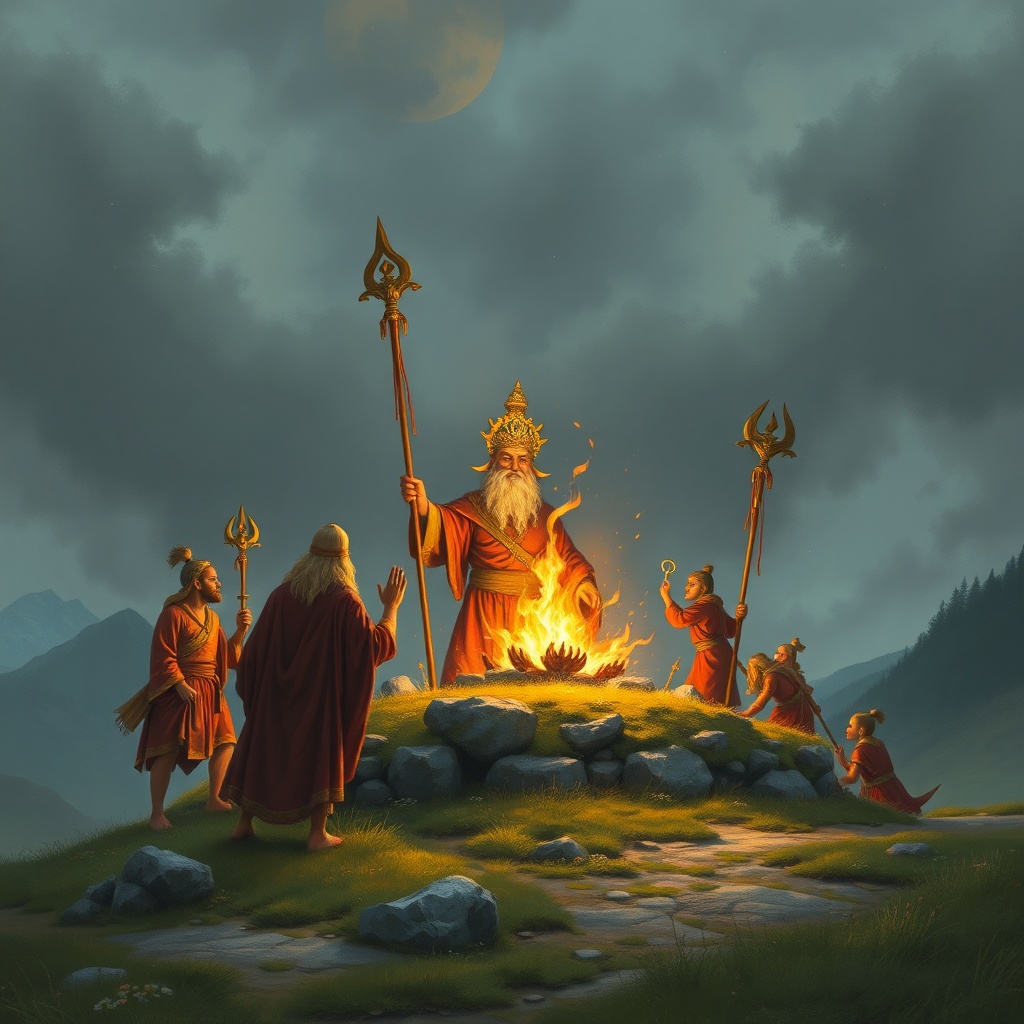
Odinism, also known as Asatru or Vanatru, is a term that encompasses a set of religious beliefs and practices that seek to revive and reconstruct the faith of pre-Christian Germanic and Nordic peoples. Based on myths, legends, and deities such as Odin, Thor, and Freya, the modern Odinism movement differs significantly from its historical roots, presenting a range of interpretations and organizations. This article explores the sociological and theological definition, historical origin, practices, controversies, and contemporary impact of Odinism, with academic rigor and impartiality.
Origin and Historical Foundation
Odinism, in its modern manifestations, is a neopagan movement inspired by the polytheistic religions of the Germanic and Nordic peoples, which flourished in Europe before Christianization. Historically, these beliefs were transmitted orally and through sagas, epic poems, and mythology, without a centralized dogmatic structure or unified sacred texts like those found in Abrahamic religions. Central deities include Odin (the All-Father, god of wisdom, war, and magic), Thor (god of thunder, protector of humanity), Freya (goddess of love, fertility, and war), and other members of the Æsir and Vanir pantheon. The geographical and cultural context spans Scandinavia, the British Isles, and parts of continental Europe during the Viking Age and earlier periods.
The foundation of modern Odinism is complex and multifaceted, without a single founder. It emerged in the 19th century with academic and romantic interest in Norse mythology, gaining momentum with the growth of neopaganism in the 20th century. Important figures in the revival include Ole Julius Bang, a Norwegian writer who coined the term "Asatru" (faith in the Æsir gods), and others who sought to systematize and revive these traditions in a modern context. In 1973, Sveinbjörn Beinteinsson founded the Ásatrúarfélagið in Iceland, the first official organization to be recognized by the government as a religion.
Sociological and Theological Definition
Sociologically, Odinism can be classified as a neopagan religious movement and a revival of ancient Germanic traditions. It is characterized by the reconstruction of religious practices based on historical and archaeological evidence, adapted to contemporary needs and understandings. Theologically, Odinism is polytheistic, recognizing and venerating a pantheon of gods and goddesses. Theology varies among different branches, but generally emphasizes the connection with nature, honor, courage, destiny (Wyrd), and the importance of community.
Different branches of Odinism exist, such as Asatru (focused on the Æsir gods) and Vanatru (focused on the Vanir gods), in addition to more syncretic or individualistic approaches. The diversity of practices and beliefs reflects the lack of a centralized dogma in the original traditions, allowing for broad interpretation and development within the movement.
Main Beliefs, Dogmas, Rites, and Practices
The central beliefs of Odinism revolve around the worship of Norse deities, the belief in Wyrd (a concept of interconnected and inevitable destiny), and the valuing of virtues such as honor, loyalty, courage, hospitality, and the pursuit of wisdom. Norse cosmology, with its Nine Worlds interconnected by the tree Yggdrasil, is also a fundamental element in many branches.
Rites and practices vary, but often include:
- Blóts: Sacrifice rituals, which historically involved the sacrifice of animals (and, in some cases, humans, according to the sagas, although modern practice is mostly symbolic or focused on vegetable and beverage offerings). The modern blót usually involves the blessing of food and drink, shared in community.
- Sumbel: A ritual banquet where participants make oaths and toasts to the deity, ancestors, and themselves, promoting group cohesion.
- Seasonal Festivals: Celebration of solstices, equinoxes, and other significant dates in the pagan calendar, such as Yule (winter solstice) and Midsummer (summer solstice).
- Meditation and Visualization: Practices to connect with deities, nature spirits, or for personal development.
- Evocation and Invocation: Calling upon gods and other spiritual beings to obtain guidance or blessings.
There are no rigid dogmas in modern Odinism, but rather ethical and moral principles derived from mythology and traditions. The emphasis is on personal experience and individual responsibility within the community.
Organizational Structure and Leadership Profile
The organizational structure of modern Odinism is highly diverse. Some branches are highly decentralized, with independent local groups (called "kindreds" or "gothi/gydja" in some traditions) that meet for rites and activities. Others form larger and more formal organizations, such as the Ásatrúarfélagið in Iceland, which is legally recognized and has an administrative structure.
Leadership generally falls to individuals with knowledge of the traditions, ritual skills, and the ability to guide the community. Leaders are often called Gothi (for men) or Gydja (for women), terms that refer to priestly figures or tribal leaders in ancient Germanic societies. The leadership profile tends to value knowledge, wisdom, impartiality, and commitment to the principles of the faith. In more individualistic groups, leadership is less formalized, with each practitioner taking responsibility for their own spiritual journey.
[WARNING/CONTROVERSIES] Factual Analysis of Controversies and Ethical Deviations
It is crucial to address the controversies and potential deviations associated with some interpretations and groups that identify with Odinism. Historically, Norse mythology, rich in themes of war, honor, and power, can be misinterpreted or manipulated by extremist groups. Some branches of modern Odinism, unfortunately, have been co-opted by far-right, white nationalist, and supremacist movements, which distort the original beliefs to promote ideologies of hate and violence.
These groups, often called "folkish Odinism" or "radical Asatru," may exhibit characteristics of "destructive cults." They frequently promote social isolation, the demonization of ethnic and religious minorities, and the glorification of violence. Intelligence reports and academics have documented the link of some of these groups to acts of terrorism and hate crimes. For example, individuals with extremist ideological affiliations linked to distorted interpretations of Odinism have been associated with violent attacks and manifestos. A notorious example is that of the terrorist Anders Breivik, who in his manifestos cited elements of Norse paganism and far-right ideology, although his connection to organized Odinist organizations is debated and complex, reflecting an ideological appropriation rather than a doctrinal adherence to an established religious group.
It is fundamental to distinguish genuine, reconstructionist Odinism, focused on spirituality and culture, from groups that use its symbols and narratives for purposes of racial supremacy or hate. The vast majority of Odinists and Asatru practitioners vehemently reject such ideologies and work to dissociate their faith from the far-right. Serious Asatru organizations around the world have taken a stand against racism and intolerance, emphasizing the universal values of respect, honor, and community.
It is important that researchers and the general public perform a critical and evidence-based analysis, separating the spiritual and cultural movement from its harmful political and ideological appropriations. Organizations that promote hate, violence, or the exploitation of their members, regardless of their nominal religious affiliation, should be treated with due caution and reported, based on concrete facts and documented investigations.
Social, Cultural Impact, and Contemporary Relevance
Contemporary Odinism, in its non-extremist branches, plays a role in the preservation and revitalization of Germanic and Nordic cultural and spiritual heritage. It offers a spiritual alternative for individuals seeking connection with their historical roots and with a polytheistic and animistic worldview.
The movement has a notable cultural impact on art, literature, and music, inspiring works that explore Norse mythology and themes. Furthermore, the organization of cultural events, celebrations, and the publication of educational materials contribute to the dissemination of knowledge about these traditions.
The contemporary relevance of Odinism lies in its ability to provide a sense of identity and belonging in a globalized world, while promoting values that, in their best interpretations, encourage personal responsibility, respect for nature, and the pursuit of wisdom. However, the ongoing challenge is to combat the distortion and appropriation of its traditions by hate groups, ensuring that the peaceful and authentic expression of the Odinist faith prevails.
References and Research Sources
- Jonas, M. (2019). The New Age of Odin: Recruitment and Ideology in Contemporary Heathenry. University of California Press.
- Strmiska, M. F. (2005). Modern Paganism in World History. ABC-CLIO.
- Blain, J., & Smith, E. M. (2016). The Oxford Handbook of Contemporary Paganism. Oxford University Press.
- Ásatrúarfélagið Official Website. (Accessed on [Current Date]). Information on Icelandic Ásatrú.
- Reports and analyses from intelligence agencies and research institutions on extremism and hate groups utilizing neopagan symbols (specific reports may vary and require access to specialized databases).





