



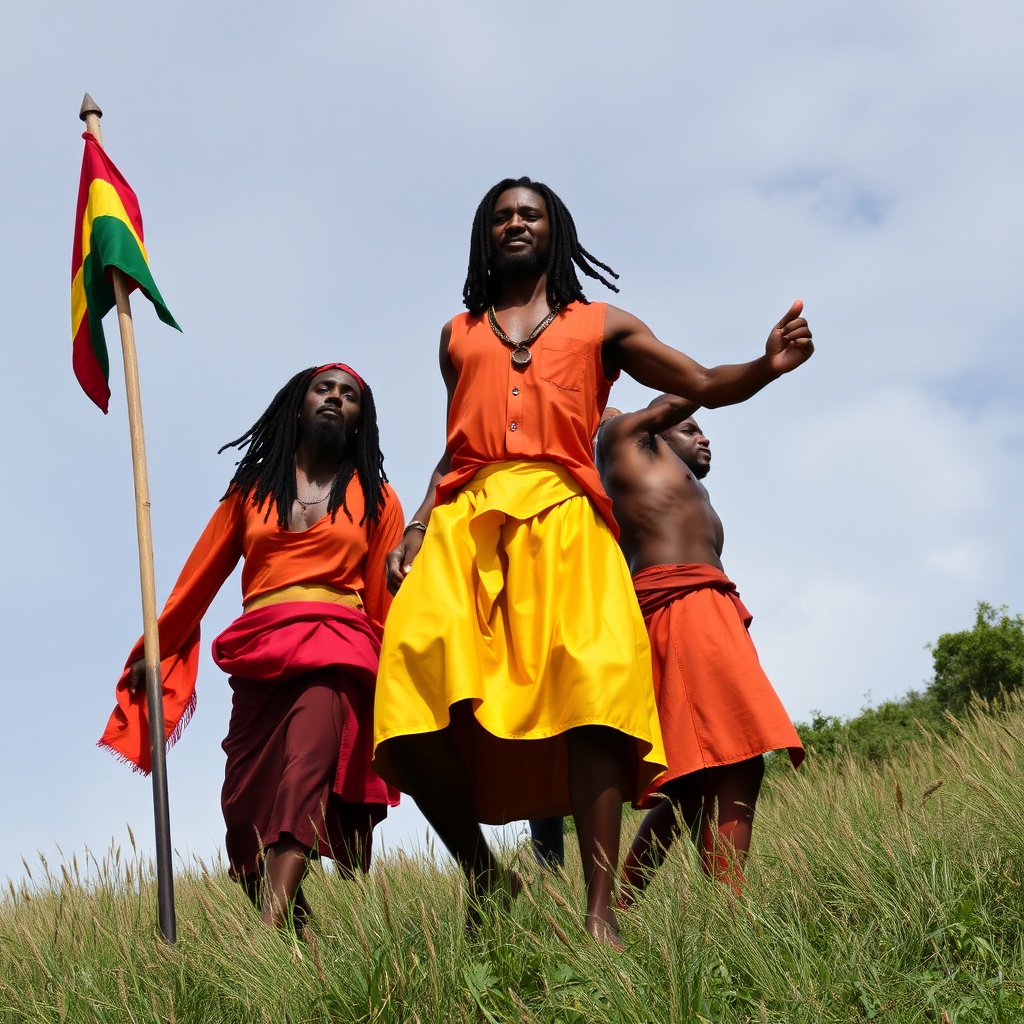
Rastafarianism, a sociocultural and religious movement with deep roots in 20th-century Jamaica, emerges as a complex expression of identity, resistance, and spirituality. Characterized by the veneration of Haile Selassie I as the incarnation of Jah (God) and the aspiration to return to Africa, the movement transcends mere faith, influencing global culture through its music, lifestyle, and philosophy.
Rastafarianism: A Sociological, Historical, and Theological Analysis
Rastafarianism, often misunderstood and stereotyped, constitutes a religious and cultural phenomenon of significant complexity. Its genesis, development, and contemporary manifestations require an in-depth analysis that transcends popular simplifications, addressing it through the lenses of the sociology of religion, history, and cultural studies. This article aims to demystify the movement, presenting its theological foundations, historical trajectory, practices, and, crucially, responsibly examining any controversies or accusations of harmful conduct, always guided by factual rigor and respect for diverse religious traditions.
1. Sociological and Theological Definition
From a sociological point of view, Rastafarianism can be defined as a religious and sociocultural movement that emerged in Jamaica in the 1930s. It manifests as a form of Afrocentric religiosity that seeks to reinterpret African history and spirituality in light of biblical narratives and the diasporic experience. The sociology of religion often categorizes it as a "new religious movement" (NRM) or, more specifically, as a movement of "prophets" or "messiahs," given its strong emphasis on the central figure of Haile Selassie I. It offers its adherents a sense of collective identity, belonging, and a structure of meaning in the face of historical and contemporary oppressions.
Theologically, Rastafarianism is complex and multifaceted, lacking a centralized and universally accepted dogma as in many established religions. However, some theological pillars are widely recognized:
- Jah Rastafari: The belief in a single God, Jah, who is immortal, omnipotent, and omniscient. The figure of Haile Selassie I (1892-1975), the last emperor of Ethiopia, is central to most Rastafarians. They believe that Selassie I was the incarnation of Jah on Earth, the Messiah promised in biblical prophecies (particularly in visions of a "Lion of the Tribe of Judah" who would bring redemption). The coronation of Selassie I in 1930 is seen as the fulfillment of these prophecies.
- Ethiopian Bible and Afrocentric Interpretation: Although they use the Western Bible, Rastafarians often interpret it from an Afrocentric perspective, seeking evidence of their African ancestry and divinity in biblical figures. The Book of Enoch and other apocryphal texts, especially the Ethiopian version, gain relevance.
- Zion and Babylon: The dichotomy between Zion and Babylon is fundamental. Zion represents the Promised Land, Africa, the land of freedom and redemption, where Rastafarians yearn to return (spiritually or physically). Babylon, in contrast, symbolizes the oppressive Western system, capitalism, racism, social injustice, and exploitation, from which Rastafarians seek to free themselves.
- Reincarnation and Afterlife: Some branches believe in reincarnation, while others focus on the promise of eternal life in Zion, especially for the faithful.
- The Divine Nature of Life: There is a deep respect for nature and all forms of life, seen as divine manifestations.
2. Historical Origin, Founders, and Geographic/Cultural Context
Rastafarianism emerged in Jamaica, a Caribbean nation with a history marked by slavery, colonialism, and subsequent struggle for independence. Its genesis is intrinsically linked to the socioeconomic and political conditions of the island in the first decades of the 20th century.
Context: Post-emancipation Jamaica still faced deep racial and economic inequalities, with the majority of the Black population living in conditions of poverty and marginalization. British colonialism and the legacy of slavery created an environment of devaluation of African culture and identity, promoting European cultural assimilation.
Key Figures and Influences: Although there is no single "founder" in the traditional sense, several figures were crucial to the movement's development:
- Marcus Garvey (1887-1940): Considered the "prophet" who foretold the rise of a Black king in Africa. Garvey, a Jamaican Pan-Africanist activist, founded the Universal Negro Improvement Association (UNIA) and preached Black pride, the return to Africa, and the union of African peoples. His ideas and vision of a glorious future for Africa deeply inspired the first Rastafarians. The phrase attributed to him: "Look to Africa, when a Black king shall be crowned, the day of deliverance is near," is frequently cited as a harbinger.
- Leonard Howell (1904-1981): Often considered the "father" of Rastafarianism. Howell was one of the first to interpret the coronation of Haile Selassie I as the fulfillment of Garvey's prophecies. He founded the first Rastafarian "commune" in Pinnacle, St. Catherine, Jamaica, in 1940, where he developed many of the movement's initial doctrines and practices.
- Other Pioneers: Figures such as Joseph Hibbert and Archibald Dunkley were also important in disseminating early ideas, linking Garvey's prophecies to the figure of Selassie I and the Bible.
The Coronation of Haile Selassie I (1930): The coronation of Tafari Makonnen as Emperor Haile Selassie I of Ethiopia was a catalytic event. For many oppressed Black Jamaicans, the rise of an African monarch with a supposedly Davidic lineage (and, therefore, a connection to biblical royalty) represented the realization of hopes for redemption and confirmation of the superiority and divinity of the Black race.
3. Main Beliefs, Dogmas, Rites, and Practices
Rastafarian beliefs, rites, and practices are varied and have evolved over time, but some elements are recurrent:
- Dreadlocks (Jah Locks): The wearing of dreadlocks is one of the most visible symbols of the movement. It is inspired by biblical passages (such as Numbers 6:5 regarding the Nazarites) and symbolizes strength, connection to nature, and the rejection of Western beauty standards. The "locks" are seen as a channel for spiritual energy.
- Ital Diet: The "Ital" diet is a set of dietary principles that emphasizes natural, pure, and unprocessed foods. It generally excludes pork, shellfish, foods with preservatives, and salt. The goal is to keep the body pure and connected to the earth. Many Rastafarians are vegetarian or vegan.
- Use of Ganja (Cannabis): Cannabis is considered a sacred plant, used in rituals of meditation, prayer, and communion. It is seen as a tool to open the mind, promote wisdom, healing, and facilitate connection with Jah. Its use is often compared to the incense used in biblical rituals.
- Music and Nyahbinghi: Music, especially reggae, is a central vehicle for the expression of Rastafarian faith, disseminating its messages of peace, love, justice, and resistance. The Nyahbinghi rhythm, with its drums and chants, is a form of worship and celebration.
- Language and "Iyaric": Rastafarians developed a form of language called "Iyaric" (or "Rasta Patois"), which seeks to subvert the oppressive language of Babylon. The use of the pronoun "I" instead of "me" or "my," and the replacement of words with negative connotations with positive terms, are examples. For instance, "I and I" to refer to oneself and Jah, or "overstand" instead of "understand" to indicate superior comprehension.
- Rejection of Babylon: Criticism of the Western socioeconomic system is constant, manifesting in the rejection of many of its values, such as unbridled consumerism, exploitation, and war.
- Aspiration to Return to Africa (Zion): Although not all Rastafarians seek a physical return to Africa, there is a strong spiritual and cultural aspiration for this land of origin and liberation.
- Ceremonies and Festivals: Celebrations such as "Groundation Day" (April 21, Haile Selassie I's birthday), "Emperor's Birthday" (July 23), and "Rastafari Day" (August 17) are important to the community.
4. Organizational Structure and Leadership Profile
Rastafarianism, in its essence, is decentralized and does not possess a formal ecclesiastical hierarchy like many Western religions. This characteristic is a reflection of its origin as an emerging movement of resistance and self-sufficiency.
Decentralization: There is no "pope" or supreme global leader. Religious authority is often distributed among Elders, Preachers, and individuals who demonstrate wisdom and knowledge of scriptures and traditions.
Groups and "Mansions": Over time, different "mansions" or "houses" have emerged within the Rastafarian movement, each with its own doctrinal nuances and practices. The most well-known include:
- Bobo Ashanti: Founded by Prince Emmanuel Charles Edwards, this mansion is known for its rigor, the use of white robes and turbans, and a strong emphasis on the figure of Emmanuel as a prophet. They tend to be more socially isolated.
- Nyabinghi: Considered by many to be the most traditional, focused on Nyahbinghi drumming and chanting rituals, and the celebration of Selassie I's coronation.
- Twelve Tribes of Israel: Founded by Dr. Vernon Carrington, this mansion organizes Rastafarians into twelve tribes, based on biblical principles. It is known for being more open and inclusive, with a strong focus on education and community development.
Leadership: Leadership is often based on respect for age, knowledge, spiritual wisdom, and the ability to guide the community. Figures such as the aforementioned Leonard Howell, Joseph Hibbert, and later, leaders of each "mansion" (such as Prince Emmanuel Charles Edwards or Dr. Vernon Carrington), emerged as important influences. In popular culture, musicians like Bob Marley, although they did not consider themselves formal religious leaders, became global ambassadors of Rastafarian ideas, playing a significant role in their dissemination and understanding.
5. [WARNING/CONTROVERSIES] Factual Analysis of Potential Legal Controversies, Ethical Deviations, or "Destructive Cult" Characteristics
It is crucial to address with rigor and impartiality any allegations of harmful conduct associated with Rastafarianism. It is important to distinguish between the movement's core practices and beliefs, which are mostly peaceful and focused on spirituality and social justice, and isolated incidents or specific groups that may have deviated from their fundamental principles or engaged in illicit activities.
Rastafarianism as a Traditional Religion: In its vast majority, Rastafarianism is a peaceful and philosophical religion. Its adherents fight for recognition, social justice, and the preservation of their culture. Reggae music, for example, has been a powerful vehicle for disseminating messages of love, peace, and equality, inspired by Rastafarian principles.
Controversies and Specific Groups: However, as in any large-scale religious or ideological movement, controversies and groups that deviate can arise:
- Social Isolation: Some "mansions," such as the Bobo Ashanti, have been described as more socially isolated, with strict rules for their members. While this may be interpreted by some as a withdrawal from society, for the adherents, it can be a way to preserve their identity and community. There is no widespread evidence that this isolation is coercive or harmful on a mass scale.
- Legal Issues Related to Ganja Use: The recreational and ritualistic use of cannabis is a point of legal conflict in many jurisdictions. Decriminalization and legalization in some places have contributed to mitigating these tensions, recognizing the ritualistic use by Rastafarian communities.
- Accusations of Abuse or Exploitation: Although there are no widely documented reports or large-scale police investigations that point to Rastafarianism as a whole (or its main branches) as a "destructive cult" with a proven history of systematic abuse, widespread financial exploitation, coercive mind control, or harm to third parties on a massive scale, it is prudent to remain vigilant. Academic research on emerging religious groups and counterculture movements should always consider the possibility of deviations and abuses in specific groups. The absence of massive complaints or robust police investigations suggests that such behaviors are not characteristic of the movement in its entirety.
- Historical Persecution: Historically, Rastafarians faced discrimination and persecution by Jamaican authorities and society in general, often labeled as marginal or criminal due to their appearance (dreadlocks) and the use of ganja. This persecution, however, is not an indication that the movement is inherently destructive, but rather how it has been stigmatized.
Warning: It is fundamental to base any assessment of the nature of a religious group on concrete facts, reliable investigative reports, legal documents, and academic research. To date, available research and documentation on Rastafarianism in its predominant form do not classify it as a "destructive cult" along the lines of groups that practice systematic sexual abuse, mass violence, large-scale coercive financial exploitation, or that promote social isolation for the purpose of absolute control and physical or psychological harm to its members. If concrete and verifiable evidence of such practices emerges in groups that call themselves Rastafarians, these must be investigated and denounced with the same rigor applied to any other organization.
6. Social, Cultural Impact, and Contemporary Relevance
The impact of Rastafarianism transcends its geographic and religious boundaries, exerting a profound and lasting influence on global culture.
- Reggae Music: Reggae, intrinsically linked to Rastafarianism, has become a global musical phenomenon. Artists like Bob Marley, Peter Tosh, and Bunny Wailer not only popularized the genre but also disseminated Rastafarian messages of peace, love, unity, and resistance to millions of people around the world.
- Black Identity and Afrocentrism: The movement played a crucial role in the revaluation of African identity and the strengthening of Black pride worldwide, especially after the decline of Marcus Garvey's Pan-Africanist movement. It inspired movements of racial and cultural awareness in various parts of the globe.
- Lifestyle and Fashion: Elements of the Rastafarian lifestyle, such as dreadlocks, the Ital diet, the use of vibrant colors (red, gold, and green), and the Afrocentric aesthetic, have become influential in fashion and popular culture.
- Philosophy of Peace and Social Justice: The Rastafarian emphasis on peace, love, social justice, and criticism of consumerism and oppression remains relevant in a world facing significant challenges regarding these issues. Its messages inspire activists and social movements in search of a more equitable world.
- Recognition and Acceptance: Although it still faces some prejudices, Rastafarianism has gained greater recognition and acceptance globally. Academic institutions study the movement, and Jamaica, its birthplace, celebrates its rich cultural heritage, which includes Rastafarianism as a vital component.
In short, Rastafarianism is a testament to human resilience, the search for meaning, and the ability to reinterpret reality in light of hope and spirituality. Its historical trajectory, beliefs, and cultural impact continue to be a fertile field for study and reflection, offering valuable insights into the dynamics of religion, identity, and resistance in contemporary society.
References and Research Sources
- Barrett, Leonard E. The Rastafarians: Sounds of Cultural Dissonance. Beacon Press, 1997.
- Chevannes, David J. Rastafari: Roots and Ideology. Syracuse University Press, 1994.
- Cashmore, Ellis. Rastaman: The Rastafarian Movement in England. George Allen & Unwin, 1979.
- King, Stephen. Reggae, Rastafari, and the Rhetoric of Social Control. University Press of Mississippi, 1998.
- Documentaries such as "Rastafari: A Way of Life" (1979) and "The Rastafari" (1989).
- Academic articles in journals such as the Journal of Rastafari Studies and the Journal of Caribbean Studies.
- Online resources from research institutes on religion and culture, such as the Pew Research Center (for global demographic and religious data, when applicable).
- News and reports from reliable sources such as BBC, The Guardian, The New York Times, which may cover specific events or controversies related to religious groups.





