



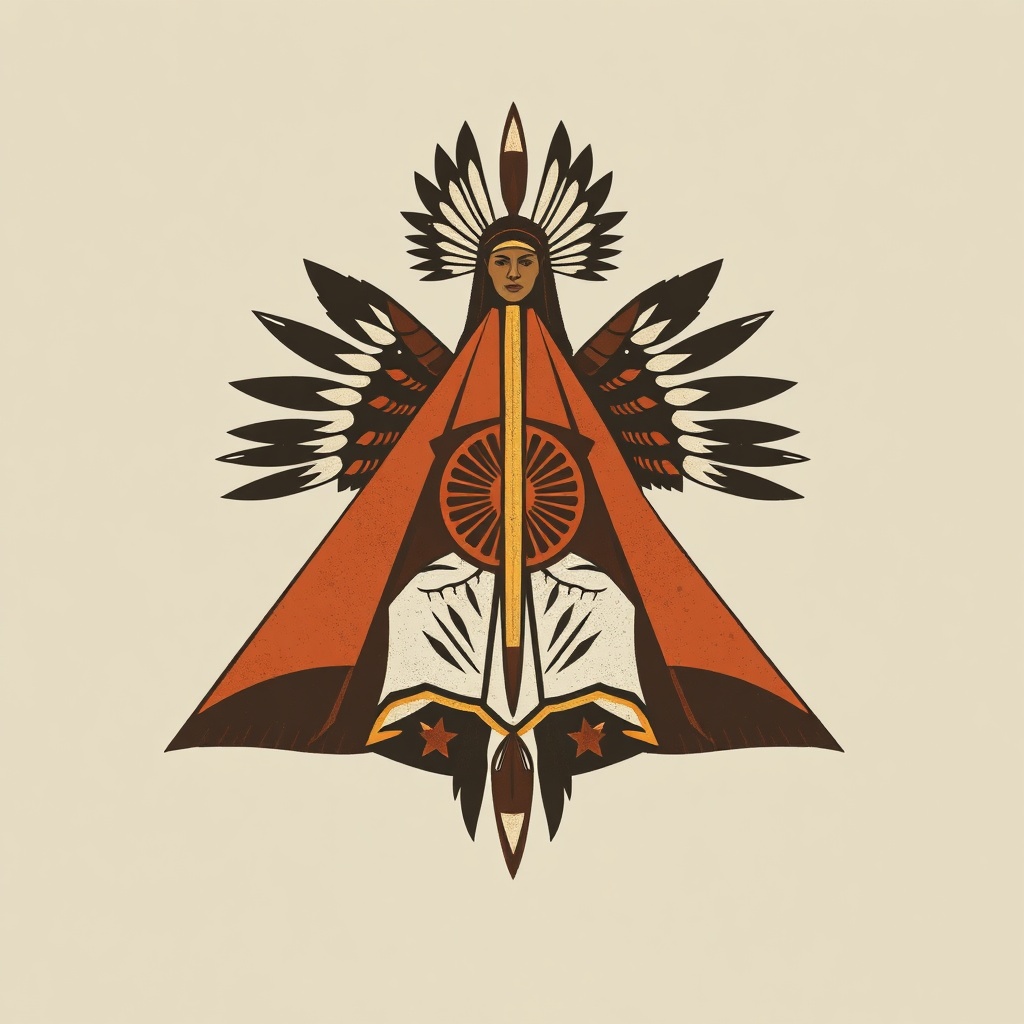
The term "Native American Religions" encompasses a vast and diverse spectrum of belief systems and spiritual practices originating from the native peoples of the Americas. Far from being a monolith, this term represents the complexity and depth of ancient traditions that developed in different geographical and cultural contexts, reflecting a profound connection with nature, ancestors, and the cosmos.
Native American Religions: A Sociological, Historical, and Anthropological Overview
The expression "Native American Religions" is a broad and sometimes simplifying term that seeks to encompass the multiplicity of belief systems, cosmologies, rituals, and spiritual practices developed by the indigenous peoples of the American continent before and after European contact. From a sociological and anthropological perspective, it is fundamental to recognize the immense diversity that this term covers. It is not a single religion, but a set of traditions that share, in many cases, animistic worldviews, the veneration of nature, respect for ancestors, and the belief in an interconnected universe.
1. Sociological and Theological Definition
Sociologically, "Native American Religions" can be understood as systems of beliefs and practices that provide meaning, social cohesion, and identity to specific communities. They often manifest in communal rituals, mythical narratives, and a deep interconnection between the sacred and the profane in daily life. Theology, in the Western sense, may not be directly applicable, as many of these traditions prioritize direct experience and the relationship with the natural and spiritual world, rather than written dogmas or elaborate theologies. They are, in their essence, religions of the earth, of life, and of the community.
In many cases, these traditions are characterized by:
- Animism: The belief that inanimate objects, natural phenomena, and living beings possess a soul or spirit.
- Shamanism: The figure of the shaman as a mediator between the human world and the spirit world, capable of healing, predicting, and interacting with entities.
- Ancestor Worship: The reverence for and communication with ancestors, who are seen as guides and protectors.
- Holistic Cosmologies: The perception that all elements of the universe are interconnected and in constant relationship.
2. Historical Origin and Geographical/Cultural Context
The origins of Native American Religions date back thousands of years, preceding the arrival of Europeans on the continent. Each ethnic group developed its own traditions, shaped by the specific geographical environment, social and historical interactions, and collective experiences. For example:
- North America: Traditions such as those of the Navajo (Diné), Sioux (Lakota, Dakota, Nakota), Iroquois, and the peoples of the Southwest, with their complex cosmologies and rituals adapted to the vast plains, deserts, and forests.
- Mesoamerica: The religions of the Maya, Aztecs, and other pre-Columbian civilizations, with their elaborate pantheons, complex rituals, including sacrifices, and astronomical calendars.
- South America: The beliefs of Andean peoples (Incas and predecessors), Amazonian peoples (Yanomami, Tupi-Guarani, etc.), and those of the Southern Cone, with their deep connections to Pachamama (Mother Earth) and the spirits of nature.
The historical context of their emergence is intrinsically linked to the need to understand the natural world, ensure survival, maintain social order, and deal with the unknown. Orality is a fundamental pillar in the transmission of these traditions, with myths, legends, and songs serving as repositories of knowledge and values.
3. Main Beliefs, Dogmas, Rites, and Practices
It is impossible to generalize dogmas and rites for all "Native American Religions," given their diversity. However, some elements are recurrent:
- Beliefs: The existence of a Great Spirit or Creator, nature spirits (animals, plants, rivers, mountains), the importance of balance and harmony, the belief in life after death, and the interconnection of all things.
- Dogmas: Generally, there are no written or rigid dogmas. Teachings are transmitted through stories, parables, and practical examples. Morality is often defined by harmony with nature and the community.
- Rites: These include rites of passage (birth, puberty, death), healing rituals, sacred dances (such as the Sun Dance in some Plains traditions), harvest ceremonies, purification with smoke from sacred herbs (such as sage, cedar, tobacco), and the use of sacred substances (such as peyote in some Southwest traditions).
- Practices: Meditation, prayer, fasting, oral narratives, singing, dancing, symbolic art, and the construction of sacred spaces (such as stone circles, sweat lodges).
The relationship with the land is central. Agriculture, hunting, fishing, and gathering are not mere subsistence activities, but sacred acts that require respect and reciprocity with the forces of nature. (See works by Vine Deloria Jr. on indigenous cosmology and the relationship with the land).
4. Organizational Structure and Leadership Profile
The organizational structure varies enormously. In many traditional societies, the organization is based on:
- Clans and Extended Families: Lineage and family ties are fundamental to social and religious organization.
- Councils of Elders: Experienced and respected individuals who guide the community in important decisions.
- Spiritual Leadership: Shamans, healers, medicine men/women, or religious leaders who possess knowledge of traditions, healing skills, and the ability to communicate with the spirit world.
The leadership profile is, in general, based on merit, wisdom, spiritual experience, and the ability to serve the community. In most cases, there is no centralized priestly hierarchy as in many Western religions. Leadership is often rotating or based on need and individual vocation, with great emphasis on humility and service.
5. [WARNING/CONTROVERSIES] Factual Analysis of Potential Controversies and Ethical Deviations
It is crucial to address the issue of "destructive cults" with rigor and discernment. The vast majority of traditional Native American Religions are spiritual systems deeply rooted in community values, respect for life, and harmony with nature. However, as in any human group, deviations can occur, and the term "Native American Religions" can be misused or distorted by individuals or groups with malicious intent.
Contemporary Challenges and Internal Debates:
- Cultural Appropriation: One of the most intense debates is about cultural appropriation by non-indigenous people who seek to exploit or commercialize elements of indigenous traditions without proper respect, knowledge, or permission. This includes the sale of "indigenous rituals" by individuals without lineage, the use of sacred symbols in inappropriate contexts, and the commodification of spiritual practices. (Sources such as the book "Native American Religious Traditions" by Lindsay Jones and articles on cultural appropriation in academic publications of anthropology and indigenous studies are relevant here).
- Syncretism and Manipulation: In some cases, elements of indigenous religions were syncretized with Christianity, often forcibly during the colonial period. Today, there may be groups that call themselves "indigenous religions" but that, in practice, resemble cults with characteristics of control and exploitation.
- Specific Warning Cases: It is fundamental to distinguish between authentic traditions and groups that may present themselves as such, but which exhibit characteristics of destructive cults. Research in serious news databases and reports from human rights organizations are essential. For example, although not a "Native American religion" in the strict sense, the case of the "Community of Jesus Christ," whose leaders were accused of sexual abuse and financial exploitation, serves as a reminder of the need for vigilance against abuse in any religious context. Another example, although with distinct roots, but which can be compared in terms of potential for harm, would be the analysis of groups that use peyote outside of the traditional ceremonial context and for exploitative purposes.
- The use of the term "destructive cult": This term should be applied with extreme caution and only when there is robust evidence of systematic abuse, financial exploitation, coercive mind control, physical or psychological harm to its members or third parties, or criminal activities proven by legal bodies. The vast majority of Native American traditions do not fit such a description. The focus should be on the factual analysis of conduct, not on prejudiced generalizations.
It is imperative to base any critical assessment on reliable documentary sources, investigation reports, court proceedings, and verified testimonies, avoiding the propagation of stereotypes or misinformation. Anthropology and the sociology of religion provide the theoretical tools to analyze these phenomena in an ethical and responsible manner. (See works by Massimo Introvigne on new religions and cults, and the distinction he makes between religious groups and destructive cults).
6. Social, Cultural Impact, and Contemporary Relevance
Native American Religions continue to exert a significant impact:
- Cultural and Identity Preservation: For many indigenous peoples, their spiritual traditions are the backbone of their cultural identity and a vital means of resistance against cultural assimilation.
- Connection with Nature and Sustainability: Indigenous cosmologies offer valuable perspectives on the human relationship with the environment, promoting sustainability and respect for biodiversity. In a world increasingly aware of the climate crisis, this ancestral knowledge gains global relevance. (See works on indigenous ecology and traditional knowledge).
- Resistance and Resilience: Throughout centuries of colonization, persecution, and marginalization, indigenous spiritual practices have demonstrated remarkable resilience, adapting and persisting.
- Interreligious Dialogue: The recognition and respect for indigenous religions enrich interreligious dialogue, promoting a broader understanding of human spiritual diversity.
- Health and Well-being: The integration of traditional spiritual practices with modern approaches to mental and physical health has shown positive results in indigenous communities.
In short, "Native American Religions" represent a spiritual and cultural heritage of immense value, whose complexities and depths require careful study, respect, and a continuous commitment to the decolonization of knowledge and the valuing of indigenous voices.
References and Research Sources
- Deloria Jr., Vine. God Is Red: A Native View of Religion. Fulcrum Publishing, 1994.
- Jones, Lindsay. Native American Religious Traditions: An Introduction. Fortress Press, 2000.
- Nabokov, Peter. Native American Mythology: An Encyclopedia of Myths, Legends, and Folk Tales from the Native Peoples of North America. Oxford University Press, 2005.
- Introvigne, Massimo. Sects and New Religious Movements: A Sociological Perspective. Oxford University Press, 2016. (For the distinction between religious groups and destructive cults).
- Academic articles in journals such as: Journal of the American Academy of Religion, American Anthropologist, Native American and Indigenous Studies.
- Reports from human rights organizations and indigenous peoples' rights organizations.
- Investigative documentaries and reports from reliable journalistic sources (e.g., BBC, The Guardian, The New York Times, Associated Press) that address allegations of abuse or criminal conduct in religious groups.





