



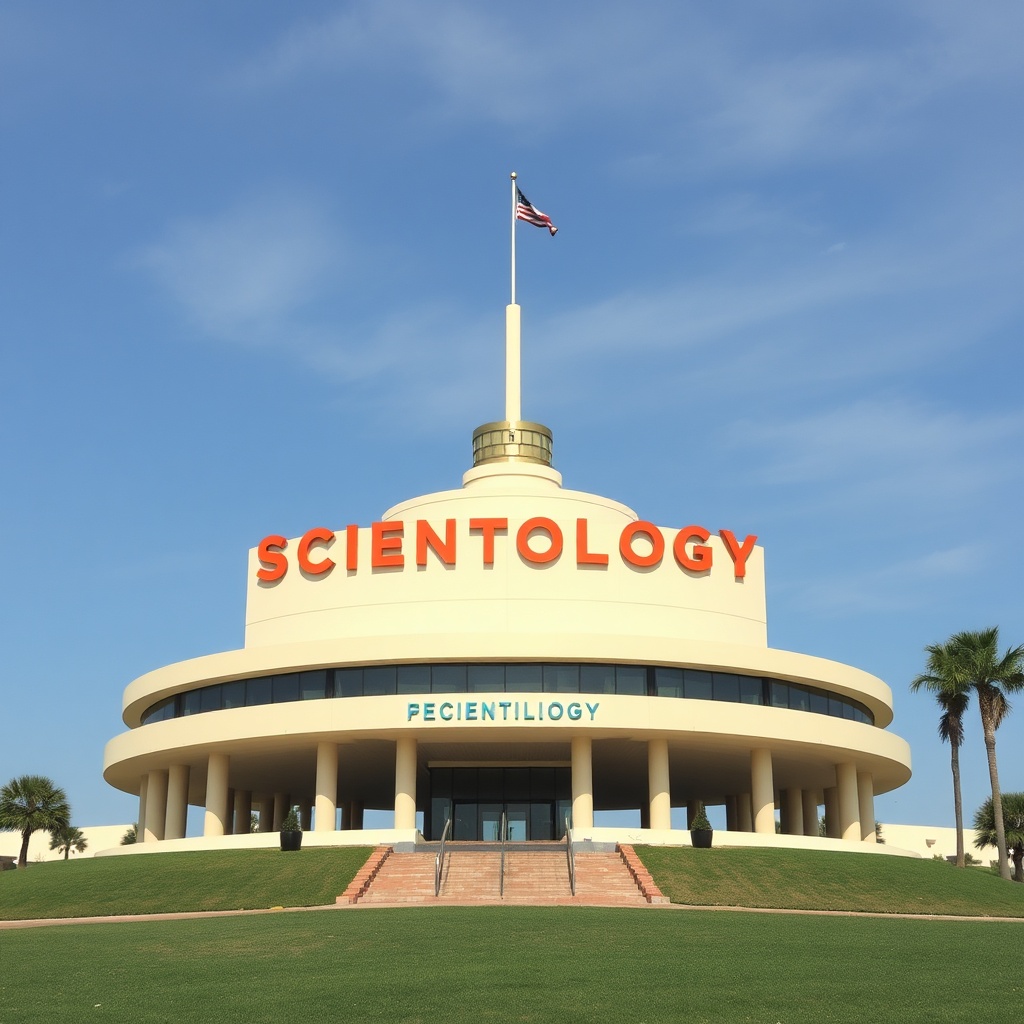
Scientology is a system of beliefs and practices founded in the 20th century, which defines itself as both a religion and an applied philosophy, seeking the spiritual and mental improvement of the individual. Its origin, structure, and the controversies surrounding it make it a complex object of study in social and historical sciences.
Scientology: Sociological, Historical, and Critical Analysis
Scientology is a term that evokes intense and polarized debates, oscillating between its self-definition as a religion and the public and academic perception of a movement with characteristics of a destructive cult. To approach it with the required academic rigor, it is imperative to intertwine the lenses of the sociology of religion, history, and documentary analysis, maintaining a stance of impartiality and respect for individual beliefs, without abdicating factual criticism and necessary warnings in the face of evidence of harm or coercive practices.
1. Sociological and Theological Definition
Sociologically, Scientology can be classified as a new religious movement (NRM) or an alternative religious movement. Its structure and doctrines do not easily fit into the categories of established traditional religions, presenting unique characteristics that challenge classical typologies. Scientology calls itself a "religion" and an "applied philosophy" that aims at the spiritual liberation of the human being through a process of self-knowledge and the development of latent potentials. Its theology, although not based on ancient sacred scriptures in a conventional way, possesses an extensive body of doctrine developed by its founder, L. Ron Hubbard.
Theologically, Scientology postulates the existence of the Thetan, an immortal spiritual entity that is the true "self" of the individual. Thetans are said to have had traumatic experiences over countless lifetimes, accumulating "engrams" (records of painful or traumatic experiences) that limit their perception and capabilities. The goal of Scientology is to clear these engrams through Auditing sessions, a form of spiritual counseling guided by an E-meter, a device that supposedly measures spiritual energy charge. The final goal is to reach the state of Clear and, subsequently, progress through the levels of Operating Thetan (OT), where the individual would recover their full spiritual capabilities.
2. Historical Origin, Founders, and Context
Scientology has its roots in the writings of L. Ron Hubbard (1911-1986), a prolific author of science fiction and adventure. The central doctrine of Scientology was introduced in 1950 with the publication of the book Dianetics: The Modern Science of Mental Health. Dianetics, which in Greek means "through the soul," was initially presented as a "science of the mind" and a therapeutic method for curing mental and physical disorders.
The context of its emergence is the post-World War II United States, a period of intense search for new forms of spirituality, self-help, and answers to existential uncertainties. Dianetics quickly gained popularity, leading to the formation of study and practice groups. In 1953, Hubbard founded the Church of Scientology, expanding the ideas of Dianetics into a more comprehensive religious system. The organization expanded rapidly, establishing churches and training centers in several countries, especially in the United States and Europe. The initial geographic context was predominantly American, with a strong influence from the self-help culture and the scientific-technological thinking of the time, which Hubbard sought to emulate in his language and methodology.
Sources such as the Encyclopædia Britannica and academic studies on New Religious Movements frequently cite L. Ron Hubbard as the founder, detailing the transition from Dianetics to Scientology and the rapid initial dissemination. Hubbard's biography, marked by various controversies and different versions of his life, is a crucial starting point for understanding the genesis of the movement.
3. Main Beliefs, Dogmas, Rites, and Practices
The fundamental beliefs of Scientology revolve around the spiritual nature of the human being (Thetan), the idea of reincarnation, and the accumulation of spiritual traumas (engrams). The goal is to achieve spiritual liberation and the wholeness of being.
- Thetan: The immortal soul, the true identity of the individual.
- Engrams: Records of negative and painful experiences that cause suffering and limitations.
- Auditing: Spiritual counseling sessions with a trained Auditor, using an E-meter to identify and "remove" engrams.
- E-meter: An electronic device that, according to Scientology, measures the body's electrical reactions and helps locate engram charges.
- Clear: The state where an individual is free of engrams and their perception of past negative experiences.
- Operating Thetan (OT): Higher levels of spiritual development where the Thetan recovers its "operational" capabilities and control over life and the environment.
- Bridge to Total Freedom: A progressive path of auditing and training that takes the individual from the state of "non-being" to the state of OT.
- Books and Courses: The intensive study of L. Ron Hubbard's writings is central to the development of the Scientologist.
Rites and practices include Auditing sessions, graduation ceremonies, training courses, and participation in Church of Scientology activities. Obtaining "levels" and "conditions" is a crucial aspect of progression within the system.
4. Organizational Structure and Leadership Profile
Scientology operates through a global hierarchical structure, with the Church of Scientology International (CSI) headquartered in Los Angeles, California, as the parent organization. Below CSI, there are several entities, such as the Church of Spiritual Technology (CST), which holds the copyrights and trademarks of Hubbard's materials, and the Religious Technology Center (RTC), responsible for ensuring the "purity" and "integrity" of the doctrines and practices. The organization is divided into local "churches" and training centers, which offer Auditing services and courses.
Leadership is centralized and rigidly controlled. Historically, L. Ron Hubbard was the central and unquestionable figure. After his death, leadership passed to David Miscavige, who is the current supreme leader of Scientology. Miscavige, as chairman of the Religious Technology Center (RTC), exerts significant control over the global organization. The leadership profile is marked by strong authority, with little tolerance for dissent and an intense focus on maintaining doctrinal orthodoxy and expanding the organization. Miscavige's figure has been the subject of many complaints and investigations, as will be detailed below.
5. [WARNING/CONTROVERSIES] Factual Analysis of Legal Controversies, Ethical Lapses, and "Destructive Cult" Characteristics
Scientology is one of the most controversial religious movements of the 20th and 21st centuries. Factual analysis of its practices reveals a pattern of allegations and evidence that raise serious concerns, leading many authorities, researchers, and former members to classify it as a "destructive cult." It is essential to base this analysis on reliable documentary sources and investigative reports.
Allegations and Evidence of Destructive Practices:
- Financial Exploitation: Critics and former members report that Scientology demands exorbitant sums of money for its courses and Auditing, often leading individuals and families to financial ruin. The "Bridge to Total Freedom" is a progressive path that requires increasing and continuous financial investment.
- Mind Control and Coercion: Consistent reports from former members describe an environment of intense psychological control. The doctrine of "Fair Game," which allowed Scientology to harass and persecute its critics and former members, is an example of coercive tactics. The social isolation of members who leave or question the doctrine is a recurring practice.
- Forced Labor and Mistreatment: The "Sea Org" organization, an elite volunteer arm of Scientology, has been the subject of allegations of forced labor, poor living conditions, and child abuse. Investigative documentaries and reports, such as "Going Clear: Scientology and the Prison of Belief" (HBO, 2015), based on Lawrence Wright's book, presented shocking testimonies from former members about these conditions.
- Family Separation: Critics and former members report that Scientology encourages or demands the breaking of family ties with people who are not members or who have become "disconnected" (critical of the organization). The policy of "disconnection" is one of the most condemned.
- Investigations and Lawsuits: Scientology has faced numerous investigations and lawsuits in several countries. In France, for example, the organization was convicted of fraud and deceptive business practices. In the United States, although it obtained religious status in 1993, the organization continues to be the subject of scrutiny and lawsuits, especially related to allegations of abuse and exploitation.
- Concealment and Disinformation: Scientology is known for its aggressive litigation and public relations tactics to silence criticism and manipulate public perception. The organization frequently disputes critical reports and studies, claiming religious persecution.
The Southern Poverty Law Center (SPLC), an American organization that monitors hate and intolerance groups, classifies Scientology as a harmful group with destructive cult characteristics, citing control over its members, harassment tactics, and financial exploitation as evidence of its harmful nature. The BBC and other major news organizations have produced extensive investigative reports on Scientology's practices, many of which corroborate the allegations of former members.
It is crucial to note that Scientology defends itself against these accusations, claiming they are defamation orchestrated by its enemies. However, the consistency and volume of testimonies from former members, along with the documentation of lawsuits and investigative reports, provide a solid factual basis for the warnings presented here.
6. Social, Cultural Impact, and Contemporary Relevance
The social impact of Scientology is complex. On one hand, the organization claims to have helped millions of people improve their lives. On the other hand, the controversies and allegations of destructive practices generate a significant negative social impact, especially for individuals who have been exploited or harmed by the organization and for their families. Scientology has a notable cultural presence, especially in the United States, through its well-located churches and marketing campaigns.
Culturally, Scientology has influenced pop culture, appearing in movies, TV series, and books, often in a satirical or critical way. The public perception of Scientology is largely shaped by these representations and news about its controversies. The contemporary relevance of Scientology lies in its persistence as a controversial religious movement, its ongoing impact on its followers and former followers, and the continuous debate over its nature as a religion or as an organization with harmful practices.
The analysis of Scientology, therefore, requires a delicate balance: recognizing the freedom of belief and a group's self-definition as religious, while remaining vigilant and critical in the face of documentary and testimonial evidence of harm and abuse. Continuous research, based on credible academic, legal, and journalistic sources, is essential for a deep and responsible understanding of this phenomenon.
References and Research Sources
- Wright, Lawrence. Going Clear: Scientology, Hollywood, and the Prison of Belief. Alfred A. Knopf, 2013.
- Kent, Stephen A. Scientology: The Newest Holy War. Prometheus Books, 2001.
- Encyclopædia Britannica. "Scientology". (Online consultation in reliable academic sources on religion).
- Southern Poverty Law Center (SPLC). Reports and articles on Scientology. (Consultation at splc.org).
- Investigative reports from major media outlets such as the BBC, The New York Times, The Guardian, among others, that have covered Scientology's controversies.
- Investigative documentaries such as "Going Clear: Scientology and the Prison of Belief" (HBO, 2015).





