



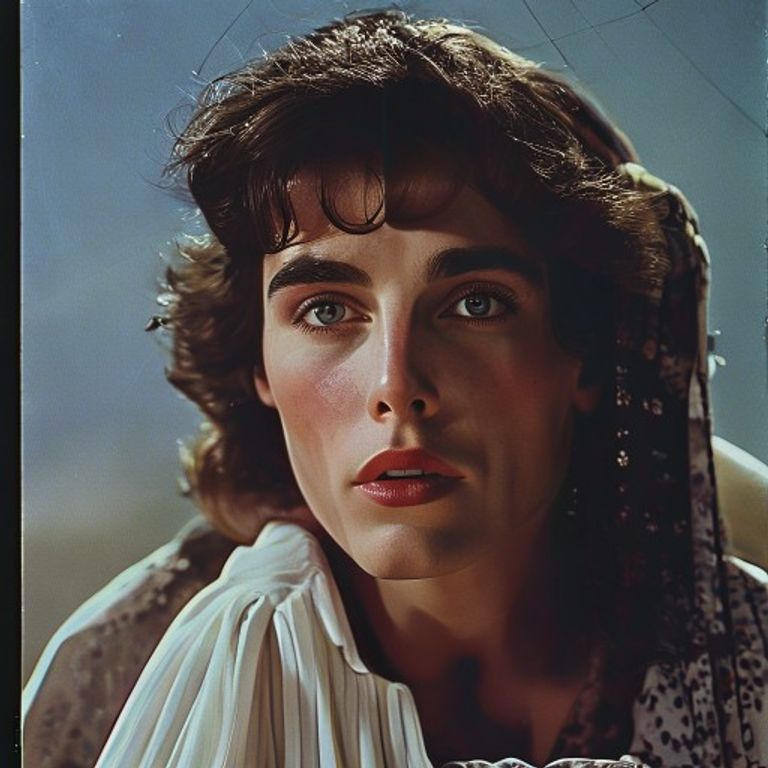
Released in 1961, West Side Story established itself as one of the greatest milestones in the history of musical cinema. Directed by Robert Wise and Jerome Robbins, the feature film transposes the classic Shakespearean tragedy of Romeo and Juliet to the tense and vibrant streets of 1950s New York, where the conflict between rival gangs—the Jets and the Sharks—serves as the backdrop for an impossible romance. Winner of 10 Academy Awards, the film revolutionized audiovisual language by merging dramatic narrative, contemporary dance, and a memorable soundtrack composed by Leonard Bernstein and Stephen Sondheim, leaving an aesthetic and social legacy that still resonates in pop culture today.
Analysis and Plot
West Side Story is a masterpiece of visual dynamism and thematic depth. Set in New York's Upper West Side, the plot exposes the violent territorial rivalry between two teenage gangs: the Jets, composed of young white men of Anglo-Saxon and European descent led by Riff (Russ Tamblyn), and the Sharks, a gang of Puerto Rican immigrants under the leadership of Bernardo (George Chakiris). The tension between the two groups reflects the racial prejudice, xenophobia, and social marginalization that were simmering in post-war America.
The conflict reaches its dramatic turning point during a community dance, intended as neutral territory, but which quickly becomes a catalyst for tensions. It is in this chaotic setting that the fateful meeting occurs between Tony (Richard Beymer), a co-founder of the Jets who was trying to distance himself from gang life, and Maria (Natalie Wood), Bernardo's newly arrived sister. The love at first sight between them is portrayed in a highly stylized way: the surrounding environment fades into a blur of colors and lights, isolating the lovers in a bubble of romantic lyricism.
From that moment on, the couple attempts to live their romance in secret, culminating in the famous fire escape scene (equivalent to Shakespeare's classic balcony scene), where they sing the iconic song "Tonight." However, social pressures and the mutual hatred of the gangs prevent any possibility of peace. Riff and Bernardo schedule a decisive confrontation (the rumble) to fight for ultimate control of the streets. At Maria's request, Tony tries to intervene and pacify the fight under a concrete bridge. His peaceful intervention, however, results in tragedy: distracted by Tony's pleas, Riff is stabbed and killed by Bernardo. Overcome by fury and the pain of losing his best friend, Tony loses control and kills Bernardo.
The third act follows the downward spiral of this tragedy. Maria, despite her deep grief over her brother's death, forgives Tony and plans to run away with him. However, a web of misunderstandings and prejudices seals the lovers' fate. Anita (Rita Moreno), the girlfriend of the late Bernardo, tries to deliver a message from Maria to Tony at Doc's drugstore, one of the few peaceful adults in the story. There, she is harassed, verbally assaulted, and nearly raped by the Jets. In fury and resentment, Anita lies, saying that Chino (Maria's Puerto Rican suitor) discovered the romance and murdered the young woman. Desperate at the false news of his beloved's death, Tony runs through the dark streets of New York, screaming for Chino to kill him too.
The Tragically Redemptive Ending: Meanings and Symbolism
The film's climax occurs in a playground surrounded by iron fences, a perfect visual metaphor for the social imprisonment of those youths. Tony spots Maria alive, but before they can embrace, Chino emerges from the shadows and shoots Tony. He dies in Maria's arms, surrounded by members of both gangs who begin to gather at the scene.
The ending of West Side Story departs from Shakespeare's double tragedy (where both lovers die) to inflict an even more painful punishment: Maria's survival in a world destroyed by hatred. Upon picking up Chino's gun, Maria does not point it at herself, but at the members of the Jets and the Sharks. In a heartbreaking monologue, she screams that they all killed him, and that the true murderer was not Chino's bullet, but the hatred shared by both sides. She asks: "How many can I kill and still have one bullet left for me?".
The symbolism of this scene is overwhelming. The gun, an object of masculine power and tribal violence, becomes an instrument of moral denunciation in the hands of a traumatized immigrant woman. Maria's refusal to pull the trigger interrupts the infinite cycle of violence. The silence that follows is sepulchral. For the first time, the barrier of prejudice is broken: members of the Jets and the Sharks unite to carry Tony's inert body, while Maria walks behind them in a solemn funeral procession. The outcome suggests a bitter redemption. Peace and mutual understanding are finally achieved, but at the intolerable cost of innocence and young lives.
Cast and Performances: Star Power and Casting Controversies
The 1961 cast is a mix of legendary performances and casting decisions that, from a contemporary perspective, generate intense critical debate. The film's great dramatic and performance highlights belong to the supporting roles:
- Rita Moreno (Anita): Moreno's performance is the film's beating heart. She delivers a fierce, proud, sensual, and deeply tragic Anita. Her performance in the song "America" is one of the most iconic in cinema history. Moreno made history by becoming the first Latina woman to win an Oscar (Best Supporting Actress).
- George Chakiris (Bernardo): With a magnetic physical presence and impressive technical precision as a dancer, Chakiris embodied the haughtiness and pain of Bernardo, which earned him the Oscar for Best Supporting Actor.
- Russ Tamblyn (Riff): A former gymnast, Tamblyn brought an acrobatic agility and a rebellious energy essential for leading the Jets on screen, standing out in numbers like "Jet Song" and "Cool."
On the other hand, the lead couple faced mixed reviews. Natalie Wood, although delivering a poignantly emotional performance in the final third, was the target of controversy for being a white actress of Russian descent playing a young Puerto Rican woman. Furthermore, Wood did not actually sing in the film; her voice was entirely dubbed by the legendary Hollywood ghost singer, Marni Nixon, a secret that Wood only discovered after the recordings were completed. Richard Beymer, as Tony, was considered by many critics at the time to be "too sweet" or "lacking the necessary vigor" for a former gang leader, although his visual chemistry with Wood works within the work's idealized romantic premise.
Behind the Scenes, Production Conflicts, and the Dismissal of Jerome Robbins
The production of West Side Story was marked by an intense battle of egos and artistic visions between its two directors. Producer Robert Wise was hired to handle the dramatic sequences and conventional cinematic narrative, while the acclaimed Broadway choreographer, Jerome Robbins, was tasked with directing the musical numbers.
Robbins was a creative genius, but also a relentless and obsessive perfectionist. He demanded that the dancers rehearse exhaustively on the hot asphalt of New York streets, which resulted in numerous physical injuries, including fractured shins and chronic knee problems for the cast. Robbins insisted on shooting dozens of takes from complex angles for every dance step. This obstinate pursuit of perfection caused the film to drastically exceed its budget and fall behind schedule by several weeks.
Faced with financial instability, the producers at the Mirisch Company made the drastic decision to fire Jerome Robbins in the middle of filming. Robert Wise took over full direction of the film, but utilized the detailed notes and rehearsals that Robbins had already prepared for the remaining musical numbers. Despite the humiliating dismissal, Wise insisted that Robbins receive co-director credit, and on the night of the 1962 Oscars, both shared the statuette for Best Director—the first time in history that the award was split by two directors.
The Racial Issue and the "Brownface" Controversy
Although celebrated as a breakthrough in Latino representation at the time, the film carries problematic marks of its era that are now widely analyzed by film historians. The most notorious of these is the practice of "brownface": almost all the actors playing the Puerto Rican Sharks—including Rita Moreno herself, who was born in Puerto Rico—were required to wear extremely dark and uniform facial makeup to "standardize" the group's skin tone under the set lighting. Moreno reported years later how humiliating that process was, questioning the makeup artists about why they all had to look the same if real Puerto Ricans have a huge diversity of skin tones.
Additionally, the original lyrics of the song "America" composed by Stephen Sondheim contained derogatory verses about Puerto Rico (portraying the island as a place of "disease" and "overpopulation"). For the film version, the verses were altered to focus on the socioeconomic difficulties and the prejudice suffered by immigrants in the United States, softening the original xenophobic criticisms.
Reception, Box Office, and Lasting Legacy
Despite behind-the-scenes controversies and latent social tensions, West Side Story was a resounding success at the box office and with critics. Produced with an estimated budget of $6 million, the film grossed over $44 million in its original run alone, becoming one of the highest-grossing films of 1961.
Critics of the time bowed to the film's technical audacity. Daniel L. Fapp's 70mm color cinematography, Thomas Stanford's rhythmic editing, and Boris Leven's production design created a stylized New York, where the expressionism of primary colors reflected the characters' psychological states (cool, bluish tones for the Jets; warm reds, purples, and oranges for the Sharks). At the 34th Academy Awards, the film took home 10 statuettes out of the 11 nominations received, a feat surpassed only by Ben-Hur (1959), Titanic (1997), and The Lord of the Rings: The Return of the King (2003).
The legacy of West Side Story is immeasurable. The film redefined how dance is filmed, using quick cuts and dynamic camera movements that directly influenced the aesthetic of modern music videos in the 1980s and 1990s (such as the iconic video for Michael Jackson's "Beat It"). In 1997, the work was selected for preservation in the United States Library of Congress's National Film Registry for its cultural, historical, and aesthetic significance. In 2021, sixty years after the original's release, Steven Spielberg directed an acclaimed new version of the musical, honoring and expanding the visual and social universe that Wise and Robbins immortalized in 1961.
Sources Researched
- IMDb: https://www.imdb.com/title/tt0055614/
- Rotten Tomatoes: https://www.rottentomatoes.com/m/1023318-west_side_story
- The Academy of Motion Picture Arts and Sciences (Oscars): https://www.oscars.org/
- Box Office Mojo: https://www.boxofficemojo.com/
- Library of Congress - National Film Registry: https://www.loc.gov/programs/national-film-preservation-board/film-registry/
- AFI (American Film Institute): https://www.afi.com/





