



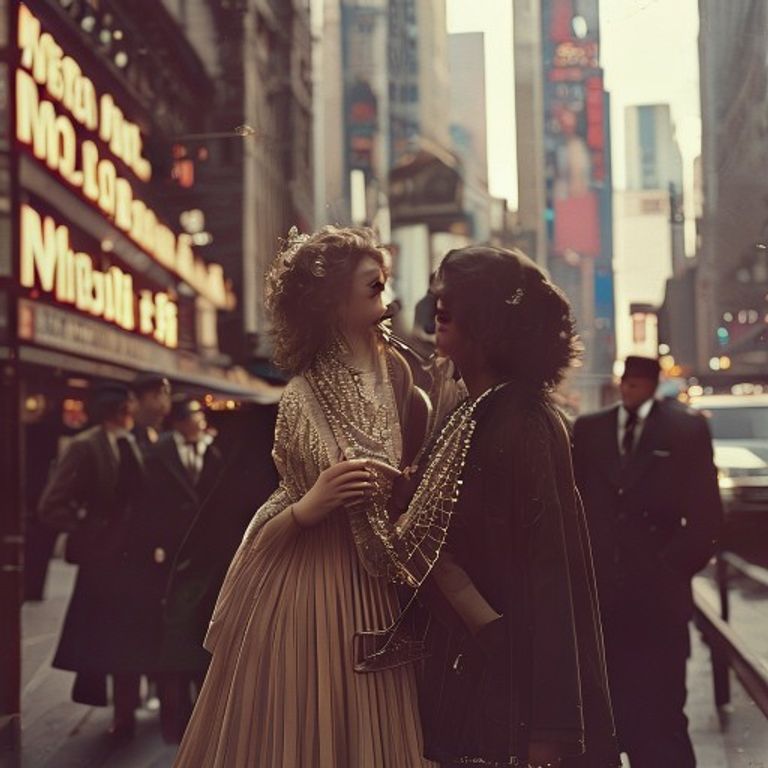
Directed by Harry Beaumont, The Broadway Melody (1929) is a watershed moment in cinema history, being the first musical to win the Academy Award for Best Picture. As MGM's first major sound project, the feature defined the aesthetic of the musical genre and solidified the "backstage musical" format that would dominate Hollywood's golden age.
Synopsis: Dreams and Disillusionment
The plot follows sisters Harriet and Queenie Mahoney, who arrive in New York from vaudeville to try their luck on Broadway. The central focus is the love triangle that emerges when Eddie Kearns, Harriet's boyfriend and a producer, finds himself irresistibly drawn to Queenie's beauty and charisma. The story explores personal sacrifice in the name of professional ambition, serving as a mirror to the tensions of the era between traditional theater and the new sound entertainment format.
Analysis of the Ending and Meanings
The conclusion, where Harriet renounces Eddie so he can be with Queenie, is often interpreted as an example of sacrificial altruism, a common trope in pre-Hays Code cinema. However, modern critics point out that the ending reflects the cultural transition of 1929: the 'old guard' of vaudeville (Harriet) recognizes that her time has passed, while the new generation (Queenie) represents the vitality and modernity demanded by sound musicals.
Cast and Performances
Bessie Love (Harriet) delivered a moving performance, earning an Academy Award nomination for Best Actress for her ability to convey melancholy in a still-experimental medium. Anita Page, as Queenie, provided the necessary visual appeal, while Charles King, despite being a Broadway star, had his performance sometimes criticized for a stiffness that became common among stage actors unaccustomed to the subtlety required by the cinema camera of that period.
Trivia and Behind the Scenes
The film was a technical triumph for MGM, which used the 'Technicolor' system in some sequences, something revolutionary for the time. The production was rushed to capitalize on the novelty of sound, which resulted in technical audio issues. Curiously, the title song 'The Broadway Melody' became an instant hit, proving that cinema could serve as a powerful marketing platform for the recording industry.
Reception and Legacy
Although it may seem dated today due to its rudimentary technique and slow pacing, The Broadway Melody was a massive box-office success. It proved to studios that audiences wanted to hear their idols sing, sparking a frantic race for musicals in Hollywood. The film remains an essential historical document, preserved by the United States National Film Registry.
Researched Sources
https://www.oscars.org/oscars/ceremonies/1930 | https://www.tcm.com/tcmdb/title/69796/the-broadway-melody | https://www.britannica.com/topic/The-Broadway-Melody | https://www.afi.com/catalog/detail/12971/ | https://www.imdb.com/title/tt0019729/





