



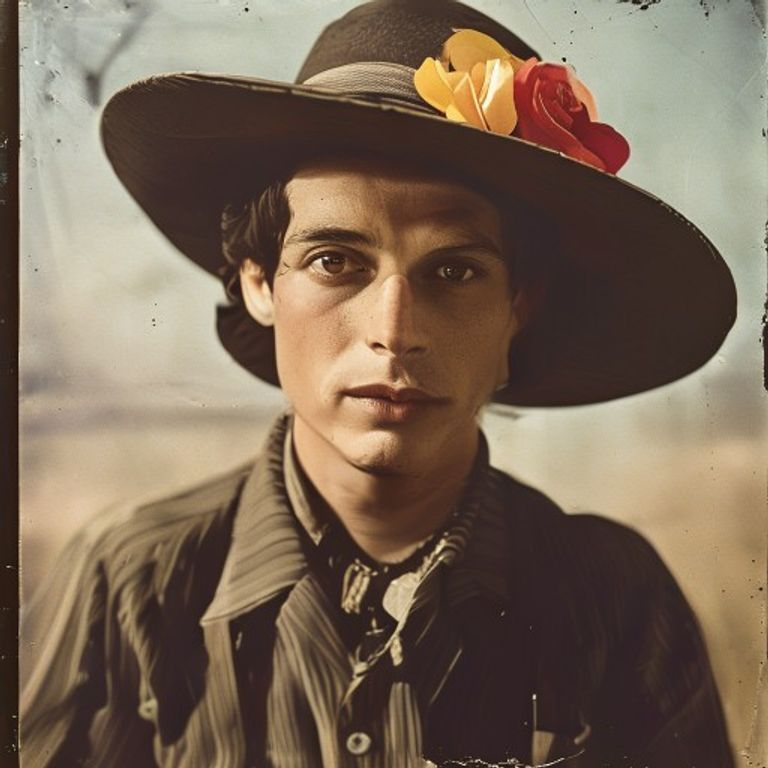
Released in 1931 under the direction of Wesley Ruggles, Cimarron is a monumental epic that made history as the first Western to win the Academy Award for Best Picture. Based on the novel of the same name by Edna Ferber, the film chronicles the saga of Yancey Cravat and his family during the settlement of Oklahoma, exploring themes such as the frontier myth, greed, systemic racism, and the transition from savagery to civilization at the beginning of the 20th century.
Analysis and Plot: The Frontier Saga
Cimarron is not an ordinary Western; it is an epic character study and a social chronicle. The plot begins with the iconic and frantic Land Run of 1889, where thousands of settlers compete for plots of land in the Oklahoma Territory. Yancey Cravat (played by Richard Dix), an idealistic lawyer, newspaper editor, and gunslinger, takes his wife, Sabra (Irene Dunne), to the town of Osage, where they attempt to build a new life.
The narrative spans about forty years, following the evolution of Osage from a rudimentary tent camp to a modern oil metropolis. While Sabra flourishes as a powerful figure in the community—eventually being elected to Congress—Yancey is a restless spirit. He abandons his family repeatedly in search of "new frontiers" and just causes, leaving Sabra to deal with the complexities of raising children, racial prejudice against Native Americans and Jews, and the pressures of sudden wealth brought by oil.
The Ending and its Hidden Meaning
The ending of Cimarron is remarkably melancholic and bittersweet. Yancey, now an old and forgotten man, returns during an accident at an oil field to save a young worker, dying from his injuries. The scene is a symbol of the obsolescence of the "Old West hero" in an era of technology and bureaucracy.
The profound meaning lies in the dichotomy between Yancey and Sabra: Yancey represents the indomitable and unstable spirit of the pioneer who cannot adapt to the "law and order" he helped create; Sabra represents the triumph of tenacity, adaptation, and civilizational conservatism. The film suggests, perhaps unconsciously, that the building of America was done by the hands of those who stayed to build—the women—while the "great men" of the frontier often became hindrances to progress.
Cast and Performances
Richard Dix delivers a grand, theatrical performance, typical of the transition between silent and sound cinema. However, it is Irene Dunne who carries the heart of the film. Her evolution from a submissive wife to an influential matron is the backbone of the narrative. Dunne's performance was acclaimed for its subtlety in a period where cinematic acting was still heavily influenced by stage melodrama.
Behind the Scenes and Controversies
The production was one of RKO Pictures' largest undertakings. The Land Run sequence utilized thousands of extras and hundreds of horses, being an impressive technical feat for 1931. However, the film is not free from modern criticism: the treatment of Native American characters and the stereotypical representation of certain ethnic groups reflect the structural racism of Hollywood's Golden Age. Furthermore, the production was extremely expensive and, despite its prestige, struggled to recoup its costs due to the effects of the Great Depression.
Legacy
For decades, Cimarron was remembered almost exclusively for its academic distinction: it was the first Western to win the Oscar for Best Picture, a feat that would not be repeated for nearly 60 years (until Dances with Wolves in 1990). Although today it is seen as dated in terms of pacing and cultural sensitivity, it remains a fundamental time capsule of how America chose to tell the story of its own territorial expansion.
Sources Researched
- Oscars.org - Official archives of the Academy of Motion Picture Arts and Sciences regarding the 4th ceremony.
- Britannica - Historical entries on the Oklahoma Land Run and the literary impact of Edna Ferber.
- Turner Classic Movies (TCM) - Archive articles on the production of RKO Radio Pictures.
- AFI Catalog - Technical data and box office/production records from the American Film Institute.
- Rotten Tomatoes/Metacritic - Contemporary critic reviews on the film's legacy.





