



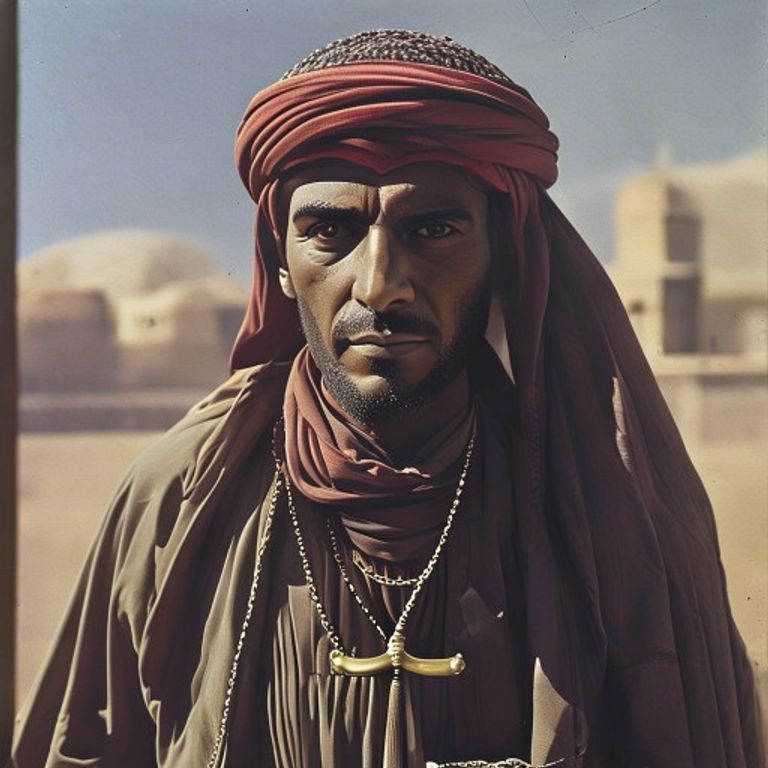
Released in 1962 and enshrined as one of the greatest masterpieces in cinema history, Lawrence of Arabia is a biographical war epic directed by the master David Lean. The film chronicles the complex journey of T.E. Lawrence, a British officer who united Arab tribes against the Ottoman Empire during World War I. Blending a visual scale unprecedented in the Super Panavision 70 format with an intimate and psychologically disturbing character study, the work transcended the historical genre to become a definitive cultural landmark, influencing generations of filmmakers and redefining the limits of cinematic spectacle.
Analysis and Plot
To understand the impact of Lawrence of Arabia, one must strip away the idea that it is a conventional war film. Under the meticulous direction of David Lean and with a sharp screenplay by Robert Bolt and Michael Wilson, the feature film presents itself as a monumental study on megalomania, identity crisis, and the contradictions of Western imperialism. Freddie Young's cinematography transforms the deserts of Jordan and Morocco into a living character, at once beautiful, merciless, and soul-devouring.
The Plot: The Odyssey of the Man Who Wished to Be God
The film's narrative is structured circularly. The projection begins in 1935, with the tragic and almost banal death of Thomas Edward Lawrence in a motorcycle accident on the winding roads of England. At his funeral at Saint Paul's Cathedral in London, opinions about him diverge drastically: to some, he was an incomparable hero; to others, an egomaniacal exhibitionist. From this premise, the film travels back in time through a long flashback that makes up almost the entirety of its nearly four-hour duration.
During World War I, Lawrence is a young British Army lieutenant stationed in Cairo, considered eccentric, insubordinate, and too intellectual by his superiors. Due to his knowledge of Arab culture and language, he is sent by the Secretary of the Arab Bureau, Mr. Dryden, to assess the progress of the Arab Revolt led by Prince Faisal against the Turks, allies of Germany.
In the desert, Lawrence begins a journey of self-discovery and transformation. After witnessing the murder of his guide by Sherif Ali for drinking from a well without permission, Lawrence quickly learns the brutal rules of desert survival. Upon meeting Prince Faisal, he not only fulfills his role as an observer but begins to actively advise the Arab leader. Lawrence proposes an audacious strategy: cross the feared Nefud Desert — considered impassable — to attack the strategic port of Aqaba from the rear, where the Turkish cannons are permanently pointed out to sea.
With only fifty of Faisal's men and the company of Ali, Lawrence accomplishes the impossible crossing. During the journey, he consolidates his near-mythical status by returning alone to the scorching desert to rescue Gasim, a warrior who had been left behind. This act of pure heroism earns him the absolute respect of the Arabs, who begin to call him "El Aurens" and dress him in silk robes typical of the Sherifian nobility.
To take Aqaba, Lawrence needs the support of Auda abu Tayi, the leader of the powerful rival Howeitat tribe. Through diplomacy and promises of British gold, Lawrence manages to unite the tribes. However, on the eve of the attack, a blood feud threatens to destroy the alliance: one of Faisal's men kills a Howeitat. To avoid a civil war between the tribes, Lawrence offers to execute the culprit. To his personal horror, the killer is none other than Gasim, the man he had saved in the desert. Lawrence executes him coldly, a psychological turning point where he discovers a dark pleasure in violence within himself.
Aqaba is successfully conquered, establishing Lawrence as a military force to be reckoned with. He returns to Cairo, crossing the Sinai Desert with almost no supplies, to report the victory to the new British General, Allenby, who agrees to fund and arm the Arab guerrilla force with modern weapons, promising them independence after the war.
The second half of the film focuses on Lawrence's psychological decentralization and the collapse of his dream of a unified Arab nation. He leads guerrilla attacks on Turkish trains, becoming a living legend, but his ego inflates dangerously. His downfall begins when he is captured in Deraa by a Turkish military governor (the Bey) while conducting reconnaissance in disguise. He is tortured and severely abused (sexual violence is implied), a traumatic experience that destroys his illusion of invincibility and confronts him with his own physical and psychological vulnerability.
Broken, Lawrence tries to abandon the cause and asks General Allenby for his discharge, but is persuaded to return to lead the final push on Damascus. Consumed by hatred and the loss of his humanity, Lawrence leads a brutal massacre against a retreating Turkish column, screaming the infamous cry of "No prisoners!".
Damascus is conquered by the Arabs before the arrival of regular British forces, but the political triumph is ephemeral. In the Arab National Council established by Lawrence, ancestral tribal rivalries prevent any form of effective governance. Without electricity, running water, or operational medical services, the Arab coalition collapses into chaos. The British, knowing exactly what they were doing, patiently watch the political collapse of the Arabs to justify the application of the Sykes-Picot Agreement, which divided the region between British and French spheres of influence.
The Moving Conclusion: The Hidden Meaning of the End
The final third of the feature film is a melancholic autopsy of a myth. Lawrence is promoted to colonel and relieved of his duties by General Allenby and Prince Faisal, both now engaged in the cynical diplomacy of the post-war era. Lawrence has become an obsolete cog in the colonialist geopolitical machine. He is sent back home to England.
The last sequence of the flashback shows Lawrence in a British military car being driven out of Damascus. Through the window, he observes with melancholy the desert dust and the Arabs who once idolized him, now distant, barely recognizing him. A group of horsemen rides past the vehicle, leaving him behind in the dust. Lawrence's face, in close-up, reveals an absolute existential void: the man who led armies and rewrote the history of the Middle East no longer belongs to Arabia, nor can he readapt to the quiet British life.
The hidden meaning of his outcome lies in the tragic irony of identity. Lawrence tried to escape his British origin and his own bastardy (he was the illegitimate son of a British baronet) by creating a mystical persona in the desert. By trying to become the savior of the Arabs, he ended up being used as the perfect instrument of his own homeland's colonial domination. His premature death by motorcycle, shown at the beginning of the film, serves as the full stop to an existence that had already been emptied of meaning decades earlier. Lawrence died psychologically in Damascus; the road accident was merely the physical formality of his end.
Cast and Notable Performances
The cast of Lawrence of Arabia is one of the most robust and perfectly cast in cinema history, serving as the foundation for the film's dramatic and operatic tone.
- Peter O'Toole (T.E. Lawrence): In one of the most iconic performances in the history of the seventh art, O'Toole (who was practically an unknown at the time) delivers a magnetic, theatrical, and visceral performance. With his piercing blue eyes and lanky physical presence, he perfectly captures Lawrence's duality: his messianic arrogance combined with an almost childlike fragility and traces of masochism and sadism.
- Omar Sharif (Sherif Ali): In his English-language film debut, Sharif delivers a performance that overflows with charisma and nobility. His character serves as the moral counterpoint and emotional anchor for Lawrence. The evolution of his relationship with Lawrence — from a brutal murder over water at the well to a deep and loyal friendship — is the true heart of the film.
- Alec Guinness (Prince Faisal): Although casting a British actor to play an Arab leader is a highly controversial practice by contemporary standards, Guinness imbues Faisal with an astute and melancholic diplomatic dignity. He embodies the cynical wisdom of a leader who knows he is playing a political game much larger than weapons can solve.
- Anthony Quinn (Auda abu Tayi): Quinn exudes a rustic, exuberant, and almost wild energy as the chief of the Howeitat. His performance is purposefully flamboyant, representing the traditionalist tribal pride that clashes directly with Lawrence's modern methods of war and politics.
- Claude Rains (Mr. Dryden) and Jack Hawkins (General Allenby): Representing the cold pragmatism of the British Empire, both actors are impeccable in portraying the colonialist bureaucracy that views Lawrence as a useful, yet disposable, tool.
Behind-the-Scenes Trivia
The production of Lawrence of Arabia is as legendary and fraught with mishaps as the journey of its protagonist. David Lean's level of obsession and attention to detail turned the set into a field of extreme trials.
- The Pain of Riding: To film the exhausting camel-riding scenes, Peter O'Toole suffered intensely from chafing and back pain. To mitigate the suffering, the actor bought a thick surgical sponge and placed it under his saddle, a practical technique that ended up being adopted by many of the Arab extras.
- The Revelation of Omar Sharif: The scene of Sherif Ali's entrance, appearing slowly like a shimmering mirage on the desert horizon, took days to film. David Lean used an extremely long-focus lens created specifically by Panavision (a 482mm lens) to capture the optical effect generated by the extreme heat.
- Unbearable Heat: Filming took place mainly in the Jordanian desert, under temperatures that often exceeded 45°C (113°F). The 70mm cameras had to be constantly covered with wet cloths and kept in improvised air-conditioned tents to prevent the film stock from melting or bursting due to the heat.
- The Most Famous Transition Cut in Cinema: The transition in which Lawrence blows out a lit match, cutting immediately to the monumental image of the sun rising on the desert horizon, is widely considered one of the most brilliant "match cuts" in the history of film editing.
Behind-the-Scenes Controversies and Conflicting Interpretations
Despite its status as a revered work of art, the film carries a series of behind-the-scenes controversies and questions about its historical and ideological accuracy.
Firstly, the family and closest friends of the real T.E. Lawrence harshly criticized the film after its release. Lawrence's brother, A.W. Lawrence, who held the rights to his brother's writings, refused to allow the film to use the title of Lawrence's autobiographical book, Seven Pillars of Wisdom, claiming that the screenplay turned his brother into a "pretentious and sadistic maniac."
Historians also point out serious inaccuracies in the representation of the Arab Revolt. The film paints the Arab tribes as disorganized, barbaric, and politically incapable hordes, dependent exclusively on the genius and leadership of a white Western man to achieve their victories. This approach to the "white savior" myth is seen today as a reflection of the Eurocentric and paternalistic attitudes of the time the film was produced.
Furthermore, the film's homoerotic subtext and allusions to Lawrence's sexuality have always been subjects of heated debate. The scene depicting his capture and torture in Deraa by the Turkish governor is deliberately ambiguous, maintaining an atmosphere of sexualized violence that challenged the rigid limits of 1960s film censorship. Peter O'Toole himself admitted in later interviews that he deliberately played with the ambiguity of the character's sexuality throughout his performance.
Critical Reception, Box Office, and Immortal Legacy
The impact of Lawrence of Arabia on the global cultural landscape was immediate and overwhelming. The film was a massive box-office success and dominated the 1963 awards season. Nominated for ten Academy Awards, the feature film took home seven golden statuettes, including Best Picture, Best Director (David Lean), Best Original Score (for Maurice Jarre's timeless theme), and Best Cinematography.
Critical reception was, for the most part, reverent. The legendary critic Roger Ebert described the experience of watching the film as proof of the unique power of the cinema screen, stating that the physical vastness of the desert serves as the perfect mirror for the empty vastness of Lawrence's soul. Renowned film critic Bosley Crowther of The New York Times praised the production for its ability to fuse a mass spectacle with deep intellectual analysis.
The legacy of Lawrence of Arabia for pop culture and the language of cinema is immeasurable. Legendary filmmakers such as Steven Spielberg, George Lucas, Martin Scorsese, Ridley Scott, and Christopher Nolan cite the film as one of their greatest sources of technical and narrative inspiration. Spielberg, in particular, revealed that he watches the film before starting the filming of any new production of his to remind himself of what cinema is capable of achieving on its purest and most ambitious scale. The visual aesthetic of the sand plains directly influenced the creation of the planet Tatooine in Star Wars and the visual conception of Arrakis in the Dune franchise.
Decades after its release, Lawrence of Arabia remains intact as the gold standard of epic cinema: a testament to an era when great stories were told with thousands of real extras under the scorching sun, creating an analog magic that modern digital effects will never be able to fully replicate.
Research Sources
- https://www.afi.com (American Film Institute - Catalog of Feature Films)
- https://www.oscars.org (Academy of Motion Picture Arts and Sciences - Official Database)
- https://www.rogerebert.com (Roger Ebert's Ultimate Movie Reviews)
- https://www.bfi.org.uk (British Film Institute - Screenonline and Archive)
- https://www.imdb.com (Internet Movie Database - Production Trivia and Box Office Data)





