



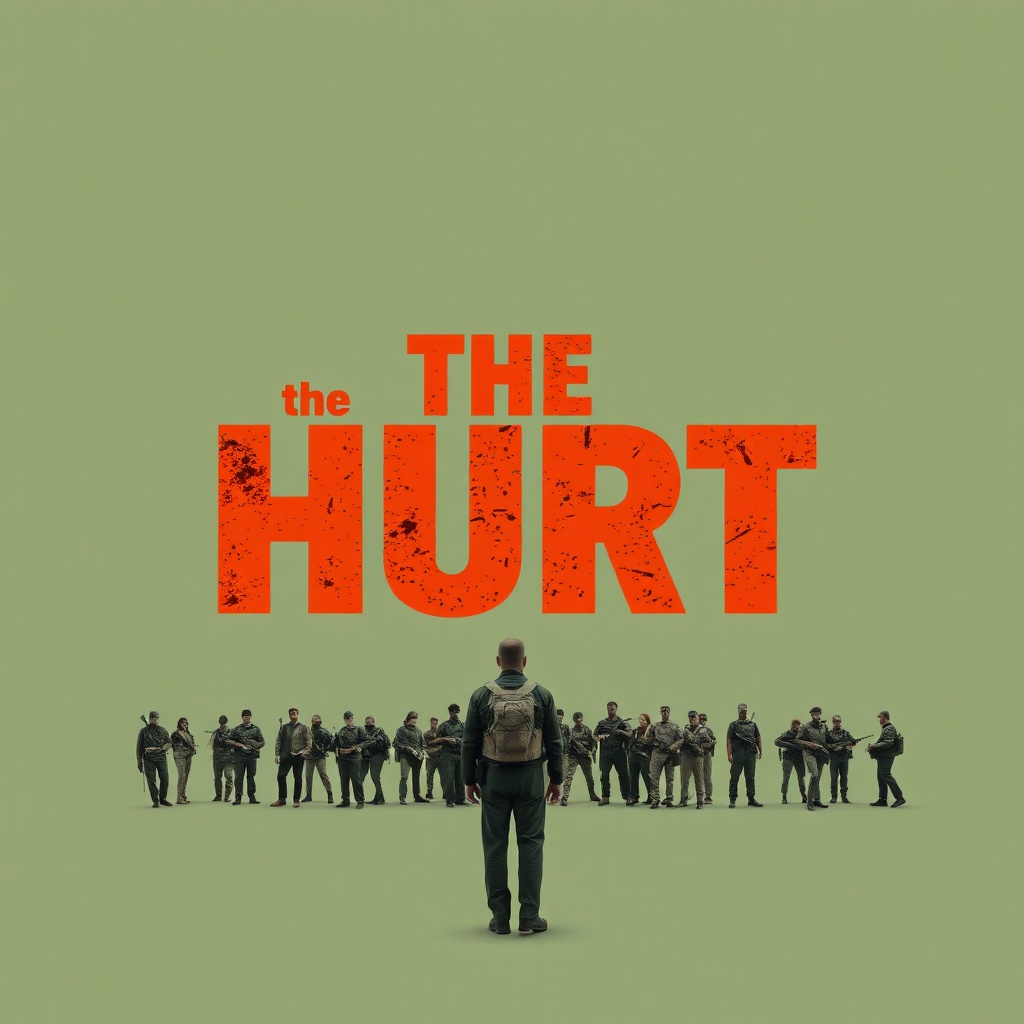
Released in 2009 under the surgical direction of Kathryn Bigelow, The Hurt Locker redefines contemporary war cinema by trading patriotic heroism for the suffocating psychological tension of an elite bomb disposal squad in Iraq. Winner of six Academy Awards—including Best Picture and Best Director, a historic milestone for Bigelow—the film established itself as a visceral masterpiece about the addiction to combat adrenaline and the invisible collateral damage of the human mind.
Analysis and Plot
The Hurt Locker is not structured as a conventional war narrative, endowed with a classic heroic arc or a clear moral journey. Instead, journalist Mark Boal's screenplay adopts an almost episodic structure, emulating the fragmented yet hyper-vigilant routine of the U.S. Army's EOD (Explosive Ordnance Disposal) squad during the 2004 occupation of Baghdad. The film opens with a quote from war correspondent Chris Hedges that sets the tone and the central thesis of the work: "The rush of battle is a potent and often lethal addiction, for war is a drug."
The story follows Sergeant First Class William James (Jeremy Renner), who takes command of a bomb disposal team after the tragic death of his predecessor, Sergeant Matthew Thompson (Guy Pearce), in a controlled explosion gone wrong. James is a highly decorated veteran, but his working method is chaotic and reckless, which immediately creates severe friction with his subordinates: Sergeant J.T. Sanborn (Anthony Mackie), a soldier focused on protocols and self-preservation, and Specialist Owen Eldridge (Brian Geraghty), a young soldier corroded by anxiety and survivor's guilt.
Throughout their remaining 38-day rotation, the team faces a succession of terrifying scenarios: car bombs parked in the middle of busy squares, booby traps hidden under urban rubble, and snipers in the scorching desert. In each of these encounters, the tension is stretched to the physical limit of both the characters and the viewers. James demonstrates an almost pathological disregard for basic safety rules, removing his radio communication cable and heavy bomb suit to operate on pure instinct, which Sanborn and Eldridge initially interpret as a suicidal quest for glory.
The dynamic reaches its peak of strangeness and danger when James adopts an obsessive stance while trying to track down those responsible for placing a bomb inside the body of a young Iraqi boy (nicknamed "Beckham"), with whom the sergeant had befriended. This personal descent into the Baghdad underworld exposes the collapse of his own psychological integrity, culminating in unauthorized night missions that put the entire squad at imminent risk of death.
The Ending and Its Hidden Meanings
The final third of the film completely demystifies the figure of James as an invulnerable hero. After returning home to the United States, where he lives with his wife Connie (Evangeline Lilly) and his infant son, the sergeant finds himself unable to reintegrate into the peaceful and mundane routine of civilian life. The transition is masterfully symbolized in the famous supermarket aisle scene: James, a man accustomed to making life-or-death decisions in fractions of a second in front of complex electrical circuits, appears completely paralyzed and disoriented in front of an infinite wall of identical cereal boxes. The civilized choice has lost all practical meaning for him.
The hidden meaning of his return to Iraq in the final moments of the film lies in the tragic nature of post-traumatic stress and extreme psychological conditioning. While talking to his young son about the toys the baby loves, James confesses: "As you get older, the things you love might not seem so special... By the time you get to my age, maybe it's only one or two things. With me, I think it's one."
The final cut shows James walking again on Iraqi soil, dressed in his bomb suit under the scorching heat, beginning a new 365-day rotation. The ending reveals that war is not just a military obligation or a geopolitical burden for James, but his only functional habitat. He does not return out of patriotism, but because the adrenaline of combat is the only stimulus strong enough to make him feel alive. The "addiction" mentioned at the beginning of the film is consummated as a self-imposed life sentence.
Cast and Notable Performances
The cast of The Hurt Locker was fundamental to the hyper-realistic tone that director Kathryn Bigelow intended to achieve. The decision not to use major Hollywood stars in the lead roles (relegating established actors to brief appearances) was a brilliant artistic choice that increased the sense of constant danger, as the audience had no guarantees of who would survive the next scene.
- Jeremy Renner (Sergeant William James): In his breakout role for global stardom, Renner offers a magnetic and restrained performance. He balances his character's technical arrogance with an almost childlike vulnerability. Renner's gaze conveys the loneliness of a man who only finds peace at the center of an imminent explosion. His performance earned him an Academy Award nomination for Best Actor.
- Anthony Mackie (Sergeant J.T. Sanborn): Mackie serves as the moral and rational anchor of the main trio. He embodies the bureaucratic exhaustion and pragmatic fear of the soldier who just wants to survive to start a family. The contrast of his performance with Renner's unpredictable style generates the film's best moments of psychological drama.
- Brian Geraghty (Specialist Owen Eldridge): Geraghty delivers a devastating portrait of psychological fear. His character functions as the weakest link in the chain, a man who clearly does not belong in that hostile environment and who is consumed daily by the ghost of his own death.
- Special Appearances: The brief presence of high-profile actors like Guy Pearce (Sergeant Thompson), Ralph Fiennes (leader of a British mercenary team), and David Morse (Colonel Reed) serves to destabilize viewer expectations, reinforcing the premise that, in 2004 Iraq, no one is safe—regardless of their narrative importance.
Behind-the-Scenes Trivia
The production of The Hurt Locker was marked by extremely challenging filming conditions and innovative technical choices that were reflected in the raw realism of the final product:
- Extreme Locations: To emulate the Iraqi environment without putting the crew in real danger, the film was shot almost entirely in Jordan, often just a few kilometers from the Iraqi border. The cast had to endure temperatures that often exceeded 44 °C (111 °F), aggravated by the fact that Jeremy Renner had to wear a real bomb suit that weighed about 45 kilograms (100 lbs).
- Documentary Camera Style: Kathryn Bigelow used up to four handheld Super 16mm cameras simultaneously to film each action scene. The camera operators remained hidden in the sets, capturing unpredictable angles. This resulted in over 200 hours of raw footage that was meticulously edited to create the film's fragmented, documentary-like rhythm.
- Real Field Experience: Screenwriter Mark Boal based the entire script on his real experiences as an embedded journalist with an American bomb squad in Iraq in 2004. Many of the extreme tension situations seen in the film were inspired by events Boal witnessed personally.
Controversies and Disputes
Despite its resounding critical success, The Hurt Locker was not free from significant behind-the-scenes controversies and copyright disputes:
Jeffrey Sarver's Lawsuit: Shortly before the 2010 Oscar ceremony, Master Sergeant Jeffrey Sarver, a real bomb disposal technician who served in Iraq, filed a lawsuit against the film's producers and screenwriter Mark Boal. Sarver claimed that the character "Will James" was directly based on his life, personality, and jargon without his permission or financial compensation. The case dragged through American courts until it was finally dismissed by a federal judge in 2011, on the grounds that the film was a work of fiction protected by the First Amendment's right to free speech.
Criticism from Military Veterans: Several war veterans and defense experts criticized the film for its tactical inaccuracies. Military critics pointed out that no bomb disposal team sergeant would operate as undisciplined and solitary as Jeremy Renner's character, arguing that the tactics displayed—such as going on solo missions in Baghdad at night or separating from the squad—would result in immediate court-martial or quick death in reality.
The Suspension of Producer Nicolas Chartier: The film's producer, Nicolas Chartier, was banned from attending the 2010 Oscar ceremony by the Academy after sending mass emails to voting members begging them to vote for his independent film instead of "a 500 million dollar film" (a direct and aggressive reference to the direct competitor, Avatar, directed by James Cameron, Kathryn Bigelow's ex-husband). Although the film won the top prize, Chartier was prevented from taking the stage to receive the statuette.
Reception, Box Office, and Legacy
The Hurt Locker had a modest commercial trajectory but an overwhelming critical reception that redefined the careers of its filmmakers. Made on a lean budget estimated at 15 million dollars, the film grossed just over 49.2 million dollars worldwide. However, its true strength lay in the awards circuit and cultural prestige.
On the review aggregator Rotten Tomatoes, the film boasts an impressive 97% approval rating, with the consensus that it is a harrowing and incredibly well-directed look at modern war. Critics praised Bigelow's refusal to politicize the conflict; she chose to focus entirely on the visceral experience of survival and addiction to danger.
The historical legacy of The Hurt Locker was cemented at the 82nd Academy Awards, where the film won six major categories: Best Picture, Best Director (Kathryn Bigelow, becoming the first woman in history to win the category), Best Original Screenplay, Best Film Editing, Best Sound Editing, and Best Sound Mixing. The feat was even more notable for having defeated the science fiction blockbuster Avatar in a classic cinematic "David vs. Goliath" stylistic battle. To this day, the film is referenced as the gold standard for post-9/11 combat stress dramas, influencing subsequent productions that seek to portray military psychology without the filters of propagandistic romanticism.
Sources Researched
- IMDb: https://www.imdb.com/title/tt0887883/
- Rotten Tomatoes: https://www.rottentomatoes.com/m/hurt_locker
- Box Office Mojo: https://www.boxofficemojo.com/title/tt0887883/
- The Hollywood Reporter: https://www.hollywoodreporter.com
- Variety: https://variety.com





