



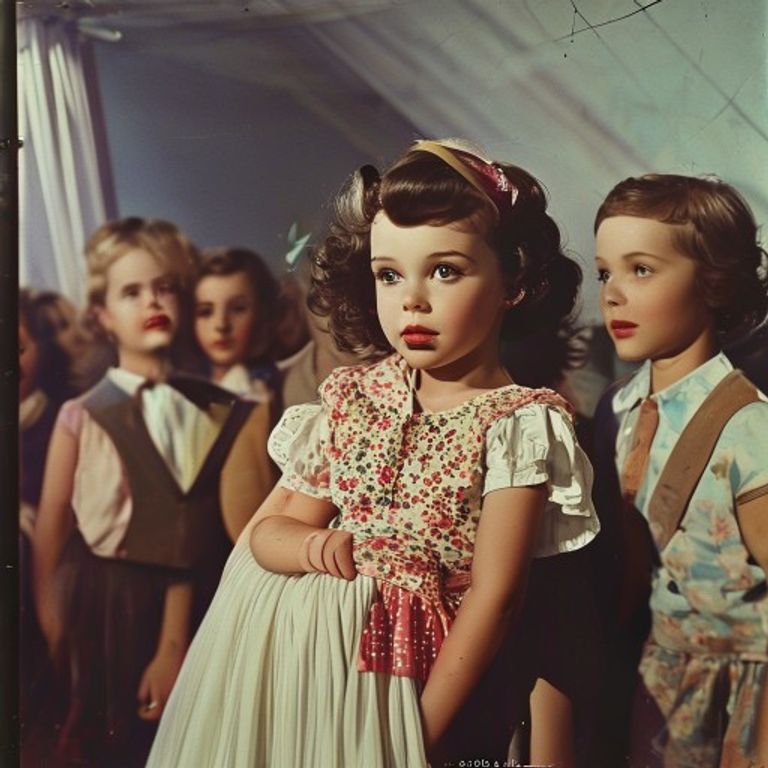
Winner of three Academy Awards—including Best Picture and Best Director for Elia Kazan—Gentleman's Agreement (1947) is a groundbreaking social drama that dared to expose the veiled antisemitism in post-World War II American society. Blending the vigor of investigative journalism with the sensitivity of classic Hollywood melodrama, the feature film challenged the conventions of its time and set a new standard for social and political protest cinema.
Analysis and Plot: The Anatomy of "Polite" Prejudice
In 1947, the world was still trying to digest the horrors of the Holocaust revealed at the end of World War II. Against this backdrop of global trauma, producer Darryl F. Zanuck, head of production at 20th Century Fox, made a bold decision: to adapt Laura Z. Hobson's bestselling novel, which exposed antisemitism not through blackshirts or violent extremists, but within the heart of the so-called liberal "high society" of New York and Connecticut.
The plot follows Philip Schuyler Green (played with sober dignity by Gregory Peck), a widowed and respected journalist who moves to New York with his young son, Tommy (Dean Stockwell), and his elderly mother (Anne Revere). Hired by an influential national magazine, he is tasked with writing a series of articles on antisemitism in the United States. Initially, Phil feels blocked; he realizes that writing from an external point of view, with cold statistics and facts, will not touch the readers' hearts. Inspiration strikes when he decides to adopt an immersive approach: he will spend the next six months pretending to be a Jewish man named "Phil Greenberg."
From the moment he assumes this new literary and social identity, Phil's world changes drastically. He begins to experience a series of microaggressions and systematic exclusions that were previously invisible to him. Secretaries whisper behind his back, doctors refuse to prioritize his care, and luxury hotels claim to have "no vacancies" as soon as they hear the surname Greenberg. However, the most painful conflict occurs in his personal life, particularly in his relationship with his fiancée, Kathy Lacey (Dorothy McGuire), the sophisticated divorcée who originally suggested the story idea to her editor uncle.
Kathy considers herself an enlightened liberal free of prejudice. However, as Phil's charade continues, she becomes deeply uncomfortable with the social consequences of being associated with a Jewish man. She refuses to confront her neighbors in the restricted community of Darien, Connecticut—where Jews are not welcome due to an unwritten "gentleman's agreement" (the film's title). The movie uses this romantic relationship to draw a devastating critique of liberal hypocrisy: the passive prejudice of those who tolerate injustice to maintain their own social status and the comfort of their bubble of privilege.
The Resolution: What Lies Behind the End?
The dramatic climax of Gentleman's Agreement does not come through a physical explosion of violence, but through a moral and ethical revelation that redefines the main characters' relationships. The catalyst for this change is Dave Goldman (John Garfield), Phil's childhood best friend. Dave is an army captain who has just returned from the war in Europe—where he fought for democracy—only to find that he cannot find a place to live with his family in New York due to discriminatory and antisemitic real estate clauses.
When Kathy confides in Dave her suffering over not being able to invite Phil to spend weekends in Darien, revealing that she detests prejudice but prefers silence to avoid "uncomfortable scenes," Dave confronts her with cutting clarity. He explains that the "passive tolerance" and omission of wealthy, educated people like her are, in fact, the foundation that sustains institutionalized discrimination. Kathy realizes that her refusal to act makes her complicit in the segregationist system.
In an act of practical redemption, Kathy decides to rent her house in Darien to Dave Goldman and his family, actively breaking the exclusion pact of her neighborhood. Upon learning of this action through Dave, Phil realizes that Kathy has finally understood the difference between "not being prejudiced" and "actively fighting against prejudice." The film ends with the couple's reconciliation, symbolizing a cautious hope that moral education and individual engagement can gradually illuminate the shadows of social intolerance.
Cast and Performances: The Weight of Conviction
The cast of Gentleman's Agreement delivers performances of immense emotional impact, anchored by a sharp screenplay by Moss Hart. Gregory Peck delivers a performance that would become his signature throughout his career: the man of integrity, morally unshakeable, who serves as the audience's ethical compass (anticipating his iconic role as Atticus Finch in 1962's To Kill a Mockingbird). Although some contemporary critics point out that Peck's Phil Green is sometimes too idealized, his commanding screen presence conveys the urgency necessary for the film's message. Curiously, Peck's agent warned him not to accept the role, fearing that playing a character associated with Judaism would harm his career as a leading man.
Dorothy McGuire does complex psychological work as Kathy. She does not play a caricatured villain; instead, Kathy is a painfully realistic portrait of the progressive upper-middle class that wants an end to racism and antisemitism, as long as it does not require any personal sacrifice or social discomfort.
However, the two performances that most frequently steal the show belong to heavy-hitting supporting actors. Celeste Holm plays Anne Detry, an intelligent, witty, and genuinely tolerant fashion columnist who falls for Phil. Holm brings an effervescent and modern energy to the film, which deservedly earned her the Academy Award for Best Supporting Actress. For his part, John Garfield, who accepted a smaller role precisely because of the political importance of the subject, delivers a raw and visceral performance as Dave Goldman. Being a Jewish actor of humble Bronx origins himself, Garfield channeled his own experiences of discrimination into the character, creating moments of immense dramatic gravity.
Behind the Scenes, Boycotts, and Hollywood Controversies
The production of Gentleman's Agreement was an ideological battlefield behind the scenes of Hollywood's Golden Age. When Darryl F. Zanuck announced the project, he faced strong opposition from his own peers. Ironically, the heads of other major film studios at the time—including giants like Louis B. Mayer (MGM), Harry Cohn (Columbia), and Jack Warner (Warner Bros.), all of whom were Jewish immigrants or children of Jewish immigrants—begged Zanuck to shelve the project. They feared that a film focused directly on antisemitism could provoke a violent reaction from the conservative American public and fuel conspiracy theories about "Jewish control" in Hollywood.
Zanuck stood firm, driven by his own aversion to prejudice and his instinct that the public was ready for more realistic stories in the post-war era. The chosen director, Elia Kazan, was at the beginning of his influential cinematic career and brought the naturalism and intensity of New York theater to the project.
Another significant controversy involved the political context of the time: the rise of McCarthyism and the "Witch Hunt" promoted by the House Un-American Activities Committee (HUAC). Several artists involved in the film were later placed on the infamous "Hollywood Blacklist." Anne Revere (who played Phil's mother) was banned from the industry for refusing to testify before the committee. John Garfield suffered immense political pressure, which ruined his health and resulted in his fatal heart attack at age 39. Director Elia Kazan himself would become a highly controversial figure years later when he cooperated with the HUAC and named former communist colleagues.
Critical Reception, Box Office, and Legacy
Despite the fears of studio moguls, Gentleman's Agreement was a resounding commercial and critical success. The film grossed about $3.9 million in its original U.S. run—an extraordinary box office for the time—demonstrating that the public was hungry for adult, socially conscious dramas.
At the 20th Academy Awards in 1948, the film consolidated its success by winning in three of the main categories:
- Best Picture
- Best Director (Elia Kazan)
- Best Supporting Actress (Celeste Holm)
The production also received nominations for Best Actor (Gregory Peck), Best Actress (Dorothy McGuire), Best Supporting Actress (Anne Revere), Best Screenplay, and Best Film Editing. That same year, the film competed indirectly with Crossfire, another excellent crime feature that also addressed antisemitism directly, but through the lens of film noir. The victory of Gentleman's Agreement sealed the Academy's preference for the social prestige drama.
Over the decades, the film has attracted some criticism from contemporary film theorists, who argue that its pedagogical approach may seem somewhat dated, didactic, or overly moralistic by today's standards. However, the work's historical value and political courage remain unquestionable. By focusing on veiled prejudice and the condescension of the ordinary, well-educated citizen, Gentleman's Agreement offers a timeless lesson on the silent complicity that still echoes strongly in contemporary debates about structural racism and social privilege.
Sources Researched
- American Film Institute (AFI) Catalog of Feature Films: catalog.afi.com
- Turner Classic Movies (TCM) Database: tcm.com
- Academy of Motion Picture Arts and Sciences (Oscars): oscars.org
- The New York Times Movie Reviews Archives: nytimes.com
- Variety Archives & Reviews: variety.com
- Internet Movie Database (IMDb) - Gentleman's Agreement (1947): imdb.com





