



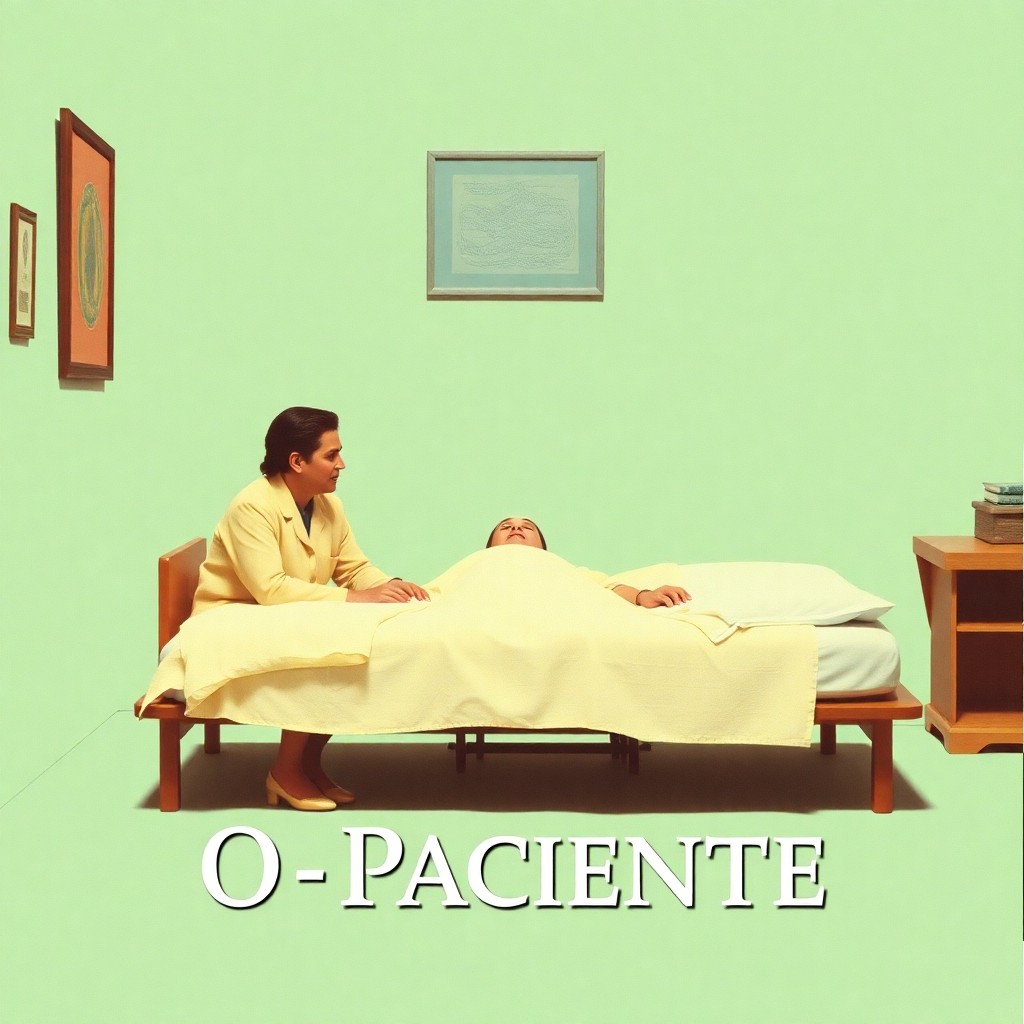
Released in 1996 and honored with nine Academy Awards, The English Patient, directed by Anthony Minghella, is a romantic war drama that redefined the concept of the "modern epic." Adapted from Michael Ondaatje's complex and poetic novel of the same name, the feature film crosses geographical and emotional borders to tell a tragic story of love, betrayal, and lost identity in the Sahara Desert during World War II. With its sweeping visual aesthetic and non-linear narrative, the work established itself as a cultural landmark of the 90s, sparking both fervent acclaim and intense debates regarding its length, pacing, and historical accuracy.
Analysis and Plot
The English Patient is, above all, a meditation on the irrelevance of geopolitical borders in the face of human passion and death. Anthony Minghella constructs the film as a mosaic of memories that fragment and reconstruct themselves through the eyes of a man disfigured by flames, whose true identity is the central mystery of the plot. The narrative masterfully divides itself between two distinct times and spaces: the melancholic and rainy Italy of 1944, in the throes of World War II, and the vast, unforgiving, and hypnotic North African desert in the late 1930s.
The Labyrinth of Memory: Detailed Plot Summary
In the 1944 present, we follow Hana (Juliette Binoche), a young Canadian nurse traumatized by the losses of war. She decides to isolate herself in an abandoned and semi-destroyed monastery in Tuscany to care exclusively for a terminal patient (Ralph Fiennes), whose skin was severely burned in a plane crash. With no memory of who he is, he is treated only as "the English patient" due to his accent and the few belongings he carries, including a heavily annotated volume of Herodotus' Histories.
The peaceful and painful routine of the monastery is interrupted by the arrival of David Caravaggio (Willem Dafoe), a Canadian intelligence agent who had his thumbs severed by Nazi interrogators. Caravaggio is seeking revenge; he suspects that the mysterious patient is not English, but rather the man responsible for betraying the Allies and handing over crucial maps to the Germans, facilitating the fall of Cairo.
As Hana administers doses of morphine to ease the patient's pain, his memories begin to emerge in lyrical and painful flashbacks. We discover that he is, in fact, Count László Almásy, a Hungarian aristocrat and cartographer who led an archaeological expedition in the Libyan and Egyptian desert under the auspices of the Royal Geographical Society. Almásy's life changes drastically with the arrival of a wealthy young British couple: Geoffrey Clifton (Colin Firth) and his sophisticated wife, Katharine (Kristin Scott Thomas).
The attraction between Almásy and Katharine is immediate, violent, and inevitable. Initially hostile toward one another—a mask for their latent sexual tension—they eventually surrender to a clandestine and feverish love affair in the exotic alleys of Cairo and the desert tents. However, the weight of guilt and the imminence of war begin to erode the relationship. When Geoffrey discovers the betrayal, he plans an extreme act of desperation: attempting to crash his plane into Almásy in the desert. The plan fails; Geoffrey dies in the impact, Almásy barely survives, but Katharine is left severely injured within the wreckage.
Almásy carries Katharine to the "Cave of Swimmers" (an archaeological site they had discovered together). Leaving her there with limited water and food, he promises to walk for days across the scorching desert in search of help. Upon reaching the British-controlled town of El Tag, Almásy's accent and foreign name lead him to be mistaken for an enemy spy. He is arrested and prevented from saving the woman he loves. Desperate to return to the cave, Almásy makes a deal with the devil: he trades the detailed desert maps he possessed with the German forces in exchange for a reconnaissance plane. When he finally returns to the cave, Katharine has already passed away, leaving him only the diary where she wrote her final words of love and farewell. While taking off with her body in the plane, he is shot down by German anti-aircraft artillery (which was unaware of his identity), resulting in the crash that disfigured him and led him to the monastery in Italy.
The End of the Journey: Detailed Explanation of the Conclusion
The film's climax intertwines the two timelines in a devastating emotional catharsis. At the monastery, confronted by Caravaggio's accusations, Almásy confesses everything. He does not deny handing the maps to the Germans, but argues that nations and political borders are artificial inventions that only serve to divide people. Caravaggio, realizing that Almásy's pain and guilt are a punishment far worse than death or any physical revenge, decides to spare his life and abandon the plan to assassinate him.
In parallel, Hana's romance with Kip (Naveen Andrews), a young Sikh specialized in bomb disposal in the British army, comes to an end. Kip represents life and the hope of a new post-war world, but he must leave with his troops, leaving Hana heartbroken, yet emotionally healed and ready to move on.
Knowing his time is up, Almásy silently asks Hana to grant him a merciful overdose of morphine. As the drug takes effect, Hana reads to him the last letter Katharine wrote in the Cave of Swimmers. The reading evokes Almásy's final liberation. Katharine's words resonate deeply: "We are the real countries, not the boundaries drawn on maps with the names of powerful men." Almásy dies in peace, freed from the burden of his destroyed body and his guilt.
The film ends with Hana leaving the monastery toward Florence, bathed in sunlight, symbolizing rebirth and the capacity to love again after surviving total destruction. The "Cave of Swimmers" serves as a central metaphor: the bodies painted on the rocky walls, swimming in prehistoric waters in the middle of the driest desert on Earth, represent the fluidity of love and memory, capable of transcending time, geography, and death itself.
Behind the Scenes and Production Trivia
The production of The English Patient was a true cinematic odyssey that almost never left the drawing board due to casting and funding disputes:
- The Funding Crisis: The project was originally developed by 20th Century Fox. However, the studio demanded that the role of Katharine Clifton be played by an American actress with high commercial appeal, suggesting Demi Moore. Director Anthony Minghella and legendary producer Saul Zaentz stood their ground, insisting on the casting of British actress Kristin Scott Thomas. Faced with the refusal, Fox cut the film's funding just days before filming began. The project was saved at the last second by Harvey Weinstein, through Miramax, which secured the $27 million budget.
- Fiennes' Casting: Ralph Fiennes was cast after impressing Minghella with his dramatic intensity in Schindler's List (1993). For the role of the burned Almásy, the actor underwent five hours of prosthetic makeup application daily. Fiennes insisted on applying the makeup to his entire body, even for scenes where only parts of his face would be filmed, to maintain the character's correct physical posture.
- Locations and Climate: Although the plot is set in Egypt, the film was shot primarily in Tunisia (for the desert scenes) and Tuscany, Italy. The production faced real sandstorms that destroyed sets and damaged expensive cameras, in addition to extreme temperatures that challenged the technical crew.
Controversies and Historical Contradictions
Although critically acclaimed, The English Patient was not immune to significant controversies, both on a historical level and in terms of popular cultural impact:
The Romanticization of a Nazi Collaborator
The biggest controversy surrounding the film lies in the representation of the real Count László Almásy. Historians point out that the romanticized and heroic cinematic version differs drastically from historical reality. The real Almásy was a discreet homosexual (which negates the central romance with Katharine Clifton) and worked actively as a spy for the Abwehr (the military intelligence of Nazi Germany) during World War II, helping to infiltrate German agents behind British lines in Egypt. Critics argued that the film softened Almásy's fascist sympathies to turn him into a tragic and apolitical hero.
The "Seinfeld Effect" in Pop Culture
In the realm of pop culture, the film became the center of one of the most famous episodes of the sitcom Seinfeld (Season 8, Episode 17, titled "The English Patient"). In the episode, the character Elaine Benes (Julia Louis-Dreyfus) develops a pathological hatred for the film due to its long duration and slow pace, while everyone around her considers it an unquestionable masterpiece. Elaine's desperation, which leads her to shout in the cinema "Just die already!", perfectly captured the division of the real audience: on one side, lovers of classic art-house cinema; on the other, casual viewers who found the film pretentious and boring.
Reception, Awards, and Legacy
Despite the dissenting voices, the impact of The English Patient on the film industry is indisputable:
Box Office and Critical Reception
The film was a resounding box office success for a prestige drama, grossing over $230 million worldwide from its modest $27 million budget. Critical reception was, for the most part, extremely positive. Renowned critic Roger Ebert gave the film four stars, describing it as "a poetic and sweeping achievement" and comparing its visual grandeur to classics like Lawrence of Arabia.
Oscar Glory
At the 69th Academy Awards, the film dominated the night with 12 nominations and 9 wins, including:
- Best Picture
- Best Director (Anthony Minghella)
- Best Supporting Actress (Juliette Binoche, in a surprising victory over favorite Lauren Bacall)
- Best Cinematography (John Seale)
- Best Original Score (Gabriel Yared)
- Best Art Direction, Costume Design, Film Editing, and Sound
Today, more than two decades after its release, The English Patient remains the pinnacle of a golden age of big-budget independent cinema from Miramax. Although its melodramatic style may seem dated to some contemporary audiences accustomed to faster-paced narratives, its artistic ambition, visceral performances, and Gabriel Yared's unforgettable score ensure its place in the pantheon of the great romantic epics in cinema history.
Research Sources
- Roger Ebert Archives: rogerebert.com/reviews/the-english-patient-1996
- Box Office Mojo: boxofficemojo.com/title/tt0116183/
- The Guardian - History vs Hollywood: theguardian.com/film/2016/nov/23/the-english-patient-20th-anniversary
- Academy of Motion Picture Arts and Sciences: oscars.org/oscars/ceremonies/1997
- The Hollywood Reporter - Behind the Scenes: hollywoodreporter.com/news/general-news/english-patient-making-of-miramax





