



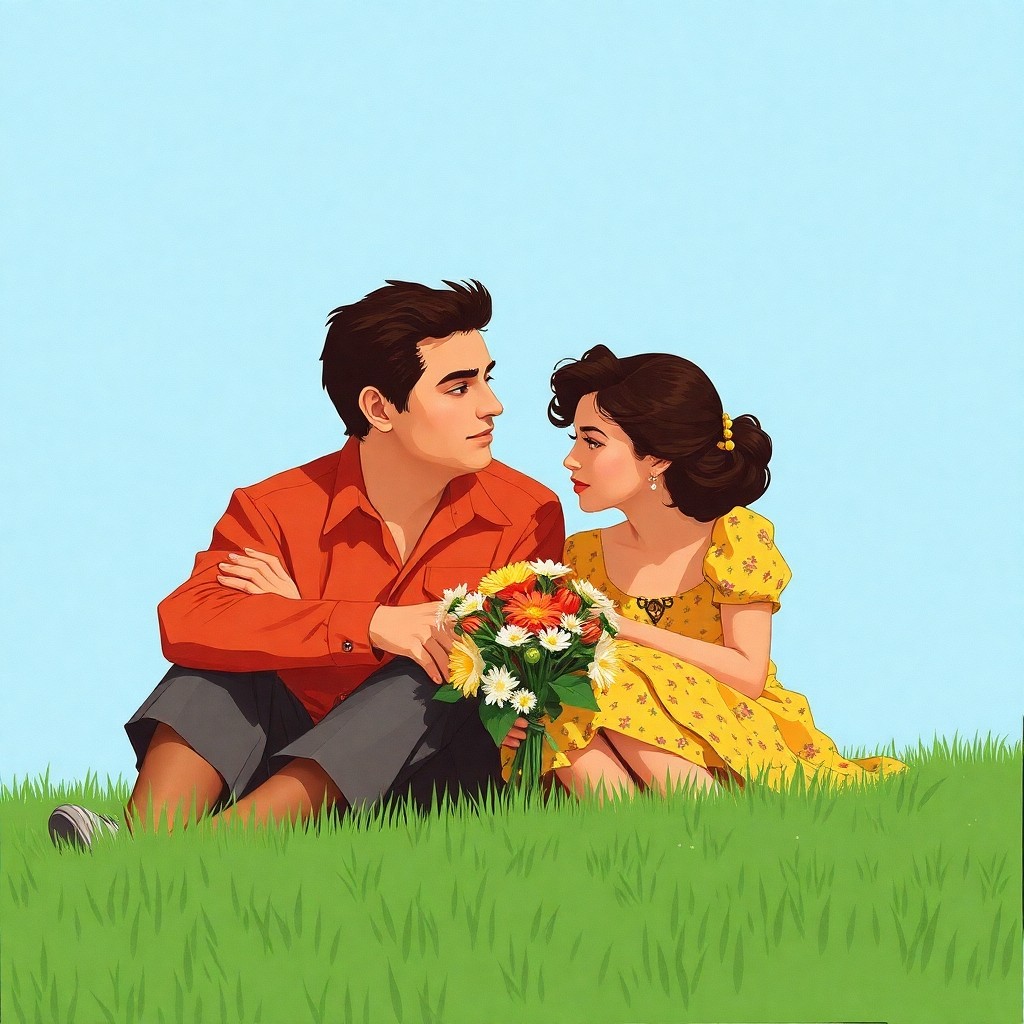
Released in 1995, Braveheart is not just a landmark of action cinema and historical drama, but the masterpiece that solidified Mel Gibson as a top-tier director in Hollywood. Blending visceral brutality with overwhelming romantic lyricism, the feature film revived the sword-and-sandal epic subgenre, winning five Academy Awards (including Best Picture and Best Director) and capturing the global audience's imagination by portraying the struggle of Scottish national hero William Wallace against the tyranny of the English King Edward I in the 13th century.
Analysis and Plot
To understand the impact of Braveheart, one must analyze its narrative structure as a classic operatic tragedy coated in testosterone and nationalist passion. The screenplay by Randall Wallace (who, despite the surname, is not directly related to the protagonist) constructs an archetypal journey of a hero who refuses to be a leader until personal tragedy forces him to take up the sword. The film does not aim to be a historical documentary; instead, it operates in the realm of myth and folklore.
The story begins in late 13th-century Scotland. After the death of King Alexander III without an heir, the cruel and calculating English monarch, Edward I (known as "Longshanks"), takes control of Scotland under the pretext of mediating the succession. Young William Wallace witnesses the betrayal and massacre of the Scottish nobles and, shortly thereafter, loses his father and brother in the resistance against the English. Raised by his uncle Argyle abroad, where he learns Latin, French, and the art of swordsmanship, Wallace returns years later as a peaceful man whose only desire is to farm his land and start a family.
The catalyst for the rebellion is Wallace's forbidden romance with Murron MacClannough. To avoid the humiliating right of "Prima Nocte" (a fictionalized decree in the film that allowed English feudal lords to sexually abuse Scottish brides on their wedding nights), the two marry in secret. However, when a detachment of English soldiers attempts to rape Murron, Wallace defends her, sparking a confrontation. While fleeing, Murron is captured by the local sheriff and publicly executed to serve as an example. The death of his beloved destroys Wallace's desire for peace, turning the peaceful farmer into an unstoppable war machine. He leads a rebellion that quickly spreads through the Highlands, uniting historically rival clans against English oppression.
The film's military climax occurs at the legendary Battle of Stirling (simplified in the film without the famous bridge that gives it its name in reality) and the subsequent invasion of York. As Wallace's legend grows, the Scottish nobility, led by the hesitant and morally divided Robert the Bruce, hesitates to fully support him, preferring to negotiate titles and lands with Longshanks. This political division culminates in the tragic Battle of Falkirk, where Wallace is betrayed by Scottish nobles bribed by the English crown, suffering a devastating defeat and being forced to live as an outlaw using guerrilla tactics.
The Climax and the Meaning of the End
The third act of the film is a profound meditation on martyrdom and the transcendence of the cause of freedom over life itself. Lured to Edinburgh under a false promise of peace negotiations, Wallace is betrayed by Robert the Bruce's father (who acts behind the back of his leprosy-stricken and guilt-ridden son). Captured by the English, Wallace is taken to London, where he is tried for high treason against King Edward I. His response to the court summarizes his character: "I never swore allegiance to him."
The ending of Braveheart is one of the most cathartic and artistically brutal moments in modern cinema history. Wallace is sentenced to be hanged, drawn, and quartered. On the scaffold, before a hostile crowd that gradually falls silent in the face of his physical and spiritual resilience, he is tortured relentlessly to beg for mercy from the King, which would grant him a quick death. Instead of whispering "mercy," Wallace gathers his last strength to let out a guttural scream that echoes through eternity: "Freedom!"
The symbolism of this scene is loaded with Christian and messianic references, a recurring theme in Mel Gibson's later cinematography (as seen in The Passion of the Christ). At the exact moment of his beheading, Wallace has a vision of Murron smiling in the crowd, indicating that his earthly journey of pain is over and he will finally be reunited with his love. The camera focuses on Murron's handkerchief falling from his lifeless hand, an object that symbolized his promise and motivation throughout the war.
The hidden meaning behind the ending is that by killing the man, the English crown immortalized the myth. Wallace's death serves as the ultimate sacrifice that purifies and unifies Scotland. This is realized in the final scene, set years later in 1314 at the Battle of Bannockburn. Robert the Bruce, now King of Scots and fully redeemed from his past weaknesses, leads the Scottish army. Instead of surrendering to the English as planned by the corrupt nobility, Bruce invokes the memory and spirit of William Wallace, throwing his sword toward the enemy lines and leading a desperate but victorious charge that would finally secure Scotland's independence.
Cast and Notable Performances
The dramatic success of Braveheart rests on a sharp cast that balances the theatricality of classic epics with visceral naturalism:
- Mel Gibson (William Wallace): Despite being nearly 40 at the time of filming to play a character who historically began his revolt in his 20s, Gibson delivers a magnetic performance. His transition from a playful, passionate farmer to a wild-eyed, messianic revolutionary leader is absolutely convincing. His physicality in the battle scenes set a new standard for action heroes in the 1990s.
- Patrick McGoohan (King Edward I "Longshanks"): McGoohan delivers one of the coldest, most calculating, and memorable villain performances in cinema. Far from a cartoonish antagonist, his Longshanks is a pragmatic, cruel, and Machiavellian monarch whose military intelligence and total lack of empathy make him a formidable and psychologically terrifying threat.
- Angus Macfadyen (Robert the Bruce): The true moral core of the film. Macfadyen's performance perfectly captures the conflict of a man torn between Wallace's heroic idealism and the cynical political pragmatism imposed by his dying father. His journey of self-discovery and redemption is what gives the film its triumphant conclusion.
- Sophie Marceau (Princess Isabelle of France): Brings a melancholic elegance and quiet strength to the film. The tragic chemistry between her and Gibson acts as a political and poetic bridge in the script, even if historically unfounded.
- Catherine McCormack (Murron): With little screen time, McCormack manages to create an emotional impact so deep that her ghostly presence and memory justify every drop of blood spilled during the nearly three-hour runtime.
Behind the Scenes, Trivia, and the "Magic" of Cinema
The production of Braveheart was a titanic undertaking. Mel Gibson initially did not want to play the lead role, feeling too old for the character; he only wanted to direct the project. However, Paramount Pictures and 20th Century Fox only agreed to finance the ambitious budget of about $72 million if Gibson was in front of the cameras as the film's star.
Although the story is set in Scotland, most of the iconic battle scenes were filmed in Ireland. The main reason was logistical and financial: the Irish government offered attractive tax breaks and allowed Gibson to use members of the Irish Army Reserve (FCA) as extras. About 1,500 soldiers were recruited for the filming, alternating between English and Scottish uniforms to simulate armies of colossal proportions in an era before the dominance of digital visual effects (CGI).
The Battle of Stirling took six weeks to be fully filmed. To create the brutal realism of the combat, complex mechanical prosthetics were used for the horses (avoiding any mistreatment of real animals) and rubber and plastic swords that looked dangerously real on screen. The famous look of Wallace with his face painted blue (using woad, a natural dye from the plant Isatis tinctoria) became one of the most iconic images in cinema history, although it belongs to a completely different historical era.
Major Controversies and Historical Liberties
While artistically the film is a triumph, from a historiographical point of view, Braveheart is often cited by historians as one of the most historically inaccurate films ever produced. Among the biggest discrepancies and controversies are:
- The Use of Kilts: The Scots wear tartan kilts throughout the film. In reality, the pleated kilt was only adopted in Scotland in the 16th or 17th century, hundreds of years after Wallace's death. In the 13th century, Scottish warriors wore yellow-dyed linen tunics (known as léine).
- The Blue Face Paint: War body paint was a practice of the Picts, tribes that inhabited the region of Scotland centuries earlier during the Roman occupation, and had long since fallen out of use by Wallace's time.
- The Romance with Princess Isabelle: In the film, Isabelle of France has an affair with Wallace and becomes pregnant by him, suggesting that the later English royal lineage was of Scottish blood. Historically, Isabelle was about three years old at the time of the Battle of Falkirk and only married Edward II years after Wallace's execution. The two never met.
- The Portrayal of Prince Edward (Edward II): The film portrays the future King of England as a weak, effeminate, and cowardly man. The scene where Longshanks throws the prince's lover (inspired by the historical figure Piers Gaveston) out of a castle window sparked strong protests from LGBTQIA+ rights groups at the time of release, who accused Mel Gibson of latent homophobia and using harmful tropes of villainization and ridicule of gay characters.
- Wallace's Origin: The film portrays him as a poor farmer. In reality, William Wallace belonged to the minor landowning nobility (gentry), being the son of a knight and possessing a refined education from a young age.
Critical Reception, Box Office, and Legacy
Despite fierce criticism from historians and some ideological controversies, Braveheart was a resounding success with audiences and film critics. Legendary film critic Roger Ebert gave the film 3.5 out of 4 stars, praising its epic scale and the rawness of its battles. On the review aggregator Rotten Tomatoes, the film maintains a solid 76% approval rating from critics and an impressive 85% approval rating from the audience.
At the worldwide box office, the film grossed over $210 million, an extremely significant figure for the time, considering its strict rating (R-Rated in the US) due to explicit violence. The commercial success culminated in its consecration at the 68th Academy Awards, where it took 5 awards: Best Picture, Best Director (Mel Gibson), Best Cinematography (John Toll), Best Makeup, and Best Sound Effects.
The legacy of Braveheart is multifaceted. In pop culture, the film redefined the aesthetics of hand-to-hand combat epics, directly influencing productions like Gladiator (2000), The Last Samurai (2003), and even the scale of fantasy battles like The Lord of the Rings trilogy and the TV series Game of Thrones. In politics and tourism, the film caused the so-called "Braveheart Effect," generating an unprecedented boom in Scottish tourism and reigniting modern nationalist debates that paved the way for the creation of the modern Scottish Parliament in 1999.
More than a factual account, Braveheart remains a testament to cinema as a generator of modern myths. It is an imperfect film in its accuracy, but absolute in its ability to provoke pure emotion, visual rapture, and an unwavering belief in the power of the human spirit to fight for its dignity and self-determination.
Research Sources
- https://www.imdb.com/title/tt0112573/
- https://www.rottentomatoes.com/m/braveheart
- https://www.boxofficemojo.com/title/tt0112573/
- https://www.historyextra.com/period/medieval/braveheart-historical-accuracy-william-wallace-scottish-wars-independence/
- https://www.rogerebert.com/reviews/braveheart-1995





