



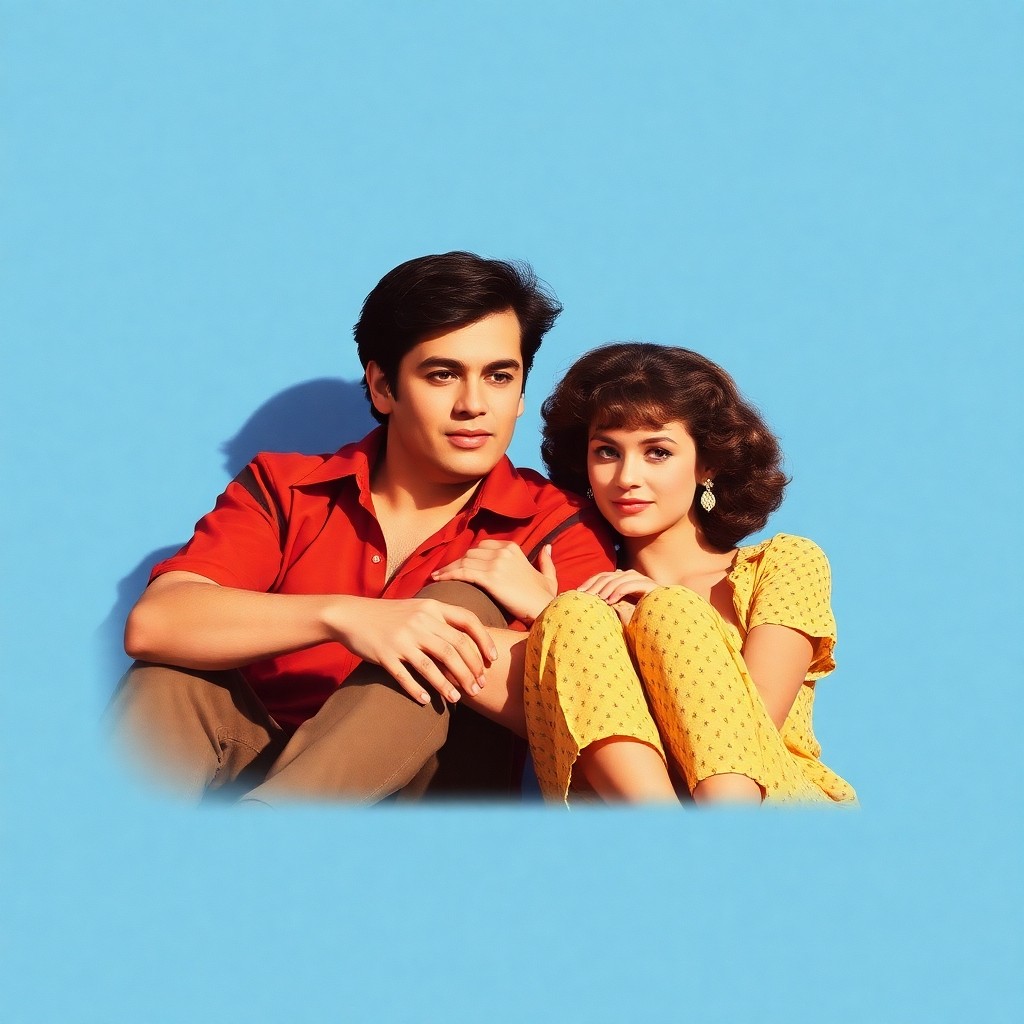
Winner of seven Academy Awards, including Best Picture and Best Director, Out of Africa (1985), directed by the acclaimed filmmaker Sydney Pollack, is one of the most imposing and visually breathtaking masterpieces of the epic melodrama of the mid-1980s. Starring Meryl Streep and Robert Redford, the feature film loosely and poetically adapts the memoirs of Danish writer Karen Blixen, transporting the viewer to the majestic and melancholic beauty of colonial Kenya in the early 20th century, while weaving a sumptuous narrative about the inevitability of loss, the illusion of possession, and the search for individual freedom in a rapidly changing world.
Analysis and Plot
Based primarily on the autobiographical book Out of Africa (published under the pseudonym Isak Dinesen in 1937), the screenplay written by Kurt Luedtke does not merely transcribe Karen Blixen's literary work, but fuses it with other biographies of the author and her lover, Denys Finch Hatton. The narrative introduces us to Karen (Meryl Streep) as a wealthy, aristocratic woman who is, however, single and aimless in 1913 Denmark. In search of a title of nobility and a new life, she proposes a marriage of convenience to her friend and distant cousin, Baron Bror von Blixen-Finecke (Klaus Maria Brandauer). The deal is simple: she finances the start of a life in British East Africa (modern-day Kenya) and, in return, gains the title of Baroness.
However, upon arriving in Africa, Karen discovers that Bror has made unilateral decisions without her consent, buying land for coffee cultivation instead of dairy cattle—a risky agricultural choice unsuitable for the altitude of the Ngong Hills region. Worse than the financial instability is the emotional abandonment: Bror proves to be an absent, unfaithful husband focused exclusively on hunting and worldly pleasures. Karen finds herself forced to take charge of the farm on her own, building a deep bond of respect and cooperation with the native workers of the Kikuyu tribe, led by the loyal butler Farah Aden (Malick Bowens).
It is in this setting of isolation that Karen gradually grows closer to Denys Finch Hatton (Robert Redford), an aristocratic and intensely independent safari hunter whom she had met briefly upon her arrival on the continent. Karen's relationship with Africa and with Denys develops in parallel. Denys represents the antithesis of British utilitarian colonialism; he loves Africa for its untouched, wild nature, refusing to tame or colonize it. The romantic involvement between the two flourishes in an organic and mature way, punctuated by long periods of absence that fuel both Karen's passion and her anguish.
Karen's life suffers a devastating blow when she contracts syphilis from her unfaithful husband. Faced with the severity of the disease, she is forced to return to Denmark to undergo a painful and dangerous mercury-based treatment. Upon returning to Kenya, cured but unable to have children, she permanently expels Bror from her life and begins a more intimate life with Denys. However, Karen's search for emotional security and formal commitment collides head-on with Denys's indomitable spirit, as he refuses to be "possessed" through marriage or social conventions.
The financial decline of the coffee plantation, culminating in a devastating fire that destroys the entire year's harvest, seals Karen's fate on African soil. Bankrupt, she is forced to auction off all her belongings and prepare to return to Europe. Shortly before her departure, the final tragedy occurs: Denys dies in a plane crash when his biplane falls in Tsavo. Karen leaves the continent pregnant with memories and stripped of everything she tried to possess, leaving her only with writing as a way to immortalize her experience.
The End of the Journey: The Meaning of the Finale
The conclusion of Out of Africa carries a profound melancholic and philosophical weight that transcends mere romantic suffering. The burial of Denys Finch Hatton in the Ngong Hills, where lions often lie on his grave, serves as a brilliant metaphor for man's final integration with the nature he loved so much. Denys could never be domesticated in life, and his violent and sudden death ensures that he remains eternally free, merged with the African landscape itself.
The existential climax of the work lies in the painful lesson of detachment that Karen is forced to learn. Throughout the film, she frequently uses possessive pronouns: "my farm," "my Kikuyus," "my Denys." Fate, however, strips her of all her earthly and affective possessions. The coffee harvest fire symbolizes the futility of trying to force the African land to bend to the desires of European capitalism. In the end, by kneeling before the new colonial governor to plead for land for the Kikuyus who worked on her farm, Karen abdicates her aristocratic pride in favor of genuine, humanitarian empathy.
The famous final scene, in which Karen says goodbye to Farah, is one of the most restrained and devastating moments in modern cinema. Farah's refusal to call her "Karen" instead of "Sabu" (mistress) until the very last moment reflects the insurmountable cultural barrier of the time, but the shared look between the two expresses a complicity and love that words cannot convey. Upon returning to Denmark, Karen Blixen never set foot in Africa again. The film suggests that she only truly "possessed" Africa and Denys when she lost them physically and transformed them into art through literature. The act of writing thus becomes the only form of legitimate and imperishable possession.
Cast and Memorable Performances
Meryl Streep's performance as Karen Blixen is widely considered one of the high points of her impeccable career. Streep adopts an impeccable Danish accent, which serves not only as a technical detail but as an extension of her character's own haughty and foreign personality. Her transition from an arrogant and naive young bourgeois woman to a mature woman, calloused by physical and emotional pain but infinitely resilient, is played with magnificent subtlety.
Robert Redford, playing Denys Finch Hatton, brings the classic charm of the stars of Hollywood's golden age. Although his casting was the subject of controversy (discussed below), the magnetic and silent chemistry he establishes with Streep works perfectly for the couple's dynamic. Redford plays Denys with an enigmatic stillness, embodying the man who belongs everywhere and nowhere.
Austrian actor Klaus Maria Brandauer delivers a brilliant and surprisingly three-dimensional performance as Baron Bror Blixen. In less skilled hands, Bror could easily have become a one-dimensional, detestable villain. However, Brandauer infuses the character with an irresistible charisma and a hedonistic lightness that make it understandable why, despite everything, Karen maintains a genuine affection for him over the years. The supporting cast, led by Michael Kitchen as Berkeley Cole and Malick Bowens as Farah, lends authenticity and emotional depth to the ecosystem of characters orbiting Karen's life.
Behind the Scenes and Controversies: The Other Side of the Savanna
The production of Out of Africa was monumental, but not without behind-the-scenes friction and controversial creative decisions that still resonate in debates about the film today:
- Robert Redford's Accent: Originally, director Sydney Pollack wanted Denys Finch Hatton to be played with the British aristocratic accent that the historical character actually possessed. Redford even trained and began filming with the accent, but Pollack realized the performance sounded artificial and that the audience might distance themselves from the character. The director made the bold decision to have Redford act with his natural American accent, which drew harsh criticism from historical purists at the time of release.
- Tension Between Stars: Although the on-screen chemistry is undeniable, behind-the-scenes rumors suggested that Meryl Streep's working method (extremely focused, detailed, and rehearsed) occasionally clashed with Robert Redford's more intuitive, relaxed, and rehearsal-averse style. Furthermore, the difficult filming conditions in Africa, with intense heat and logistical restrictions, raised stress levels for the entire crew.
- Real Danger with Animals: Sydney Pollack valued realism, which led to situations of genuine danger on set. In the famous scene where Karen Blixen is attacked by a lion and must defend herself with a whip, the animal used was real and not restrained by invisible cables. The lion ended up approaching Meryl Streep much faster than the trainers had planned. The panic visible on the actress's face in the final scene is, in large part, real.
- Critique of the Colonialist Gaze: The most enduring controversy surrounding Out of Africa lies in its representation of colonialism. Contemporary critics and historians point out that the film strongly romanticizes the British occupation of Africa, painting the period with nostalgic and bucolic lenses ("Soft Colonialism"). Native Kenyans are often portrayed through the lens of the "noble savage," exotic and submissive figures who serve only as a backdrop for the existential and romantic dramas of wealthy white colonizers. Although the film shows Karen's respect for the Kikuyus, it does not deeply question the ethical legitimacy of the expropriation of native lands by the British Empire.
Critical Reception, Box Office, and Legacy
Despite some critical reservations at the time regarding its slow pace and nearly three-hour runtime, Out of Africa was a resounding success in terms of both box office and critical acclaim. Produced with an estimated budget of $28 million, the film grossed over $227 million worldwide, establishing itself as one of the biggest commercial successes of 1985 and proving the commercial appeal of prestigious adult dramas.
At the 58th Academy Awards, the film dominated the night, receiving 11 nominations and winning 7 golden statuettes:
- Best Picture
- Best Director (Sydney Pollack)
- Best Adapted Screenplay (Kurt Luedtke)
- Best Art Direction (Stephen B. Grimes and Josie MacAvin)
- Best Cinematography (David Watkin)
- Best Original Score (John Barry)
- Best Sound
David Watkin's cinematography, which predominantly used natural light and warm lenses to capture the golden vastness of the African savanna, set a new aesthetic standard for period films. Similarly, John Barry's majestic score became one of the most iconic and instantly recognizable compositions in cinema history, capable of evoking melancholy, grandeur, and romance with just a few notes of woodwinds and strings.
Nearly four decades after its release, Out of Africa remains the last great gasp of an era in which Hollywood bet big on large-scale epic romances, filmed on real locations and sustained by the magnetism of charismatic superstars. It is a cinematic monument to nostalgia, the wild beauty of Kenya, and the painful realization that the most beautiful things in life are those we can never truly possess.
Sources Researched
- https://www.imdb.com/title/tt0089755/
- https://www.rottentomatoes.com/m/out_of_africa
- https://www.boxofficemojo.com/title/tt0089755/
- https://www.rogerebert.com/reviews/out-of-africa-1985
- https://variety.com/1985/film/reviews/out-of-africa-1200426743/
- https://www.nytimes.com/1985/12/18/movies/screen-out-of-africa-starring-meryl-streep.html





