



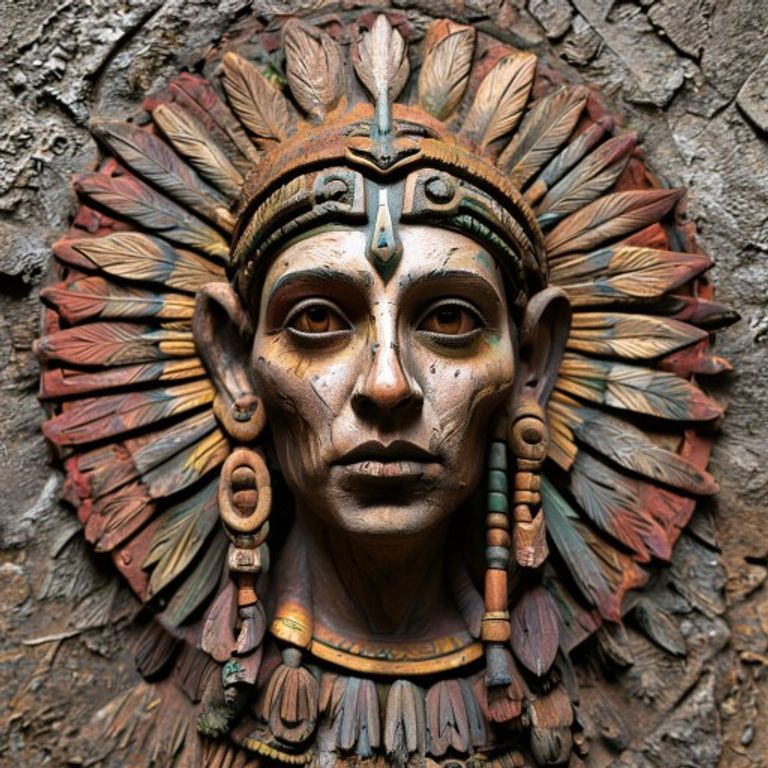
A small terracotta sculpture with Roman features found in a pre-Columbian tomb in Mexico, suggesting transoceanic contact long before the arrival of Columbus.
⚠️ Research conducted with the aid of Deep Research is subject to referential ambiguity.
🖥️ Clean HTML code using a proprietary tool.
👥 Research by Guilherme Felipe, Curation by Sílvio Lôbo
The Enigma of the Tecaxic-Calixtlahuaca Head: A Legacy of Mystery and Investigation
The history of archaeology and criminology is filled with enigmas that defy simple explanations. Among them, the case of the "Tecaxic-Calixtlahuaca Head" (also known as the "Calixtlahuaca Head") stands out as one of the most persistent and intriguing in Mexico. An artifact of unknown origin, with anomalous characteristics, that has disturbed the scientific community and fueled speculation for decades.
1. The Context and the Incident: Where, When, and How the Mystery Began
The mystery began in 1933, in an area known as Tecaxic-Calixtlahuaca, near the city of Toluca, in the State of Mexico. During archaeological excavations conducted by the renowned Mexican anthropologist and archaeologist Dr. Jorge Acosta, a peculiar object was unearthed. Initially, it was believed to be a fragment of ancient pottery, but its shape and material soon revealed something much more unusual.
The artifact in question is a head sculpted from a material similar to clay or terracotta, but with a quality and finish that some have described as "too modern" for the era and culture that was supposed to have originated it. The lack of clear archaeological context and the absence of other similar artifacts associated with its discovery have added layers of complexity to the mystery since it was found.
2. Timeline of Events
- 1933: Discovery of the "Tecaxic-Calixtlahuaca Head" during archaeological excavations led by Dr. Jorge Acosta in Tecaxic-Calixtlahuaca.
- 1930s-1950s: The artifact is examined by various experts. Its cultural and chronological origin becomes the subject of intense debate.
- Subsequent Years: The head is exhibited in museums and becomes the subject of articles and academic discussions, generating different interpretations and theories.
- 21st Century: The case continues to intrigue researchers and enthusiasts, with new analyses and the persistence of unanswered questions.
3. The Main Theories
The enigmatic nature of the "Tecaxic-Calixtlahuaca Head" has given rise to a myriad of theories, ranging from measured scientific explanations to hypotheses that flirt with the fantastic.
Scientific and Archaeological Theories
- Unusual Pre-Hispanic Origin: The most conservative theory suggests that the head is, in fact, a pre-Hispanic artifact, but from a lesser-known culture or period, with production techniques more refined than those commonly associated with the region. It could represent an isolated artistic style or elite production. The lack of context may have led to its initial exclusion from cultural classifications.
- Post-Conquest Work with Ancient Style: Another hypothesis is that the head may have been created after the arrival of the Spanish, by indigenous artisans attempting to imitate pre-Hispanic styles to sell to collectors or for ceremonial purposes. The skill in manufacturing would be explained by the continuity of artisanal techniques.
- Forgery or Misinterpretation: This theory, although less popular among proponents of the mystery, suggests that the object may be a deliberate forgery created later to deceive archaeologists or collectors, or that its importance was exaggerated due to the lack of contextual information.
Alternative and Paranormal Theories
- Time Travel: One of the most speculative theories associates the head with time travelers from the future who left the object in the past. The "modern" appearance and the quality of the piece would be evidence of this temporal intervention.
- Evidence of Ancient Advanced Civilizations: Similar to the time travel theory, this hypothesis proposes that the head is a remnant of an ancient civilization with technology and knowledge far superior to what we know, possibly of extraterrestrial origin.
- Connection to Unexplained Phenomena: Some enthusiasts connect the head to other unexplained phenomena or UFO reports in the region, suggesting a paranormal or alien origin.
It is crucial to note that scientific and archaeological theories are based on material and contextual analyses (even if limited), while alternative theories lack empirical evidence and are based on more speculative interpretations.
4. Controversies and Blind Spots
The case is permeated by controversies and blind spots that hinder a definitive resolution:
- Lack of Detailed Archaeological Context: The main controversy lies in the absence of precise information about the exact location and circumstances of the discovery. Excavation reports from the time, although they exist, may not have the analytical depth required by modern standards, leaving gaps regarding stratigraphy and associated artifacts.
- Conflicting or Vague Testimonies: Over the years, different accounts regarding the discovery and handling of the head have emerged, some more detailed than others, but not always converging on all points. Human memory and time may have distorted crucial information.
- Contested Expertise and Analyses: The scientific analyses performed on the head, especially regarding the composition of the material and the manufacturing technique, have not always been conclusive or universally accepted. The quality of the tools and analysis methods of the time may have limited the scrutiny.
- Possible Loss of Evidence: As in many historical mystery cases, there is concern that other evidence, which could have clarified the context of the discovery, may have been lost over time due to a lack of proper conservation or unintentional disposal.
5. Curiosities and Legacy
The "Tecaxic-Calixtlahuaca Head" has transcended the academic realm to become a cultural icon in the popular imagination, especially in Mexico. Its image is recurrent in publications about mysteries, urban legends, and even in debates about ufology.
The artifact, which is now in the National Museum of Anthropology in Mexico City, continues to attract visitors and provoke discussions. Despite countless theories and analyses, the case remains officially an unsolved mystery. The lack of new, compelling evidence and the complexity inherent in interpreting archaeological finds without clear context keep the enigma alive.
The persistence of the "Tecaxic-Calixtlahuaca Head" case is a testament to human fascination with the unknown and the constant search for answers that challenge our understanding of the past and present. It is a reminder that, even in an increasingly mapped world, certain enigmas remain, inviting reflection and continuous investigation.





