



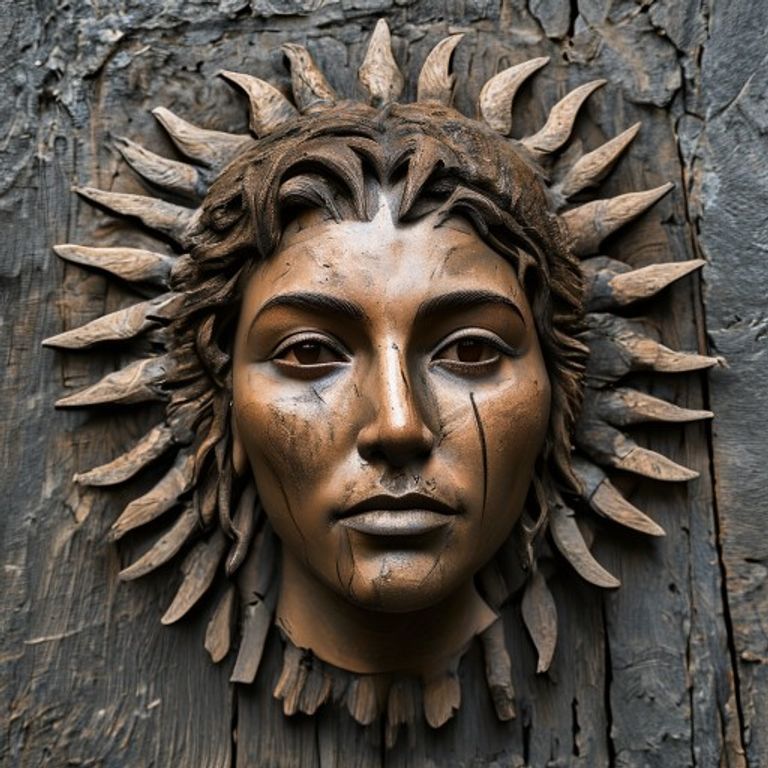
Enormous statues of deities and kings built on a mountain top in Turkey two thousand years ago, whose transport techniques and the exact purpose of the sanctuary still intrigue archaeologists.
⚠️ Research conducted with the aid of Deep Research is subject to referential ambiguity.
🖥️ Clean HTML code using a proprietary tool.
👥 Research by Guilherme Felipe, Curation by Sílvio Lôbo
The Enigma of Nemrut Dağ: Where Did the Heads Disappear To?
In the heart of Turkey, rising majestically above the arid landscapes, lies Mount Nemrut, a sanctuary of colossal stone statues erected in the 1st century B.C. by King Antiochus I of Commagene. This archaeological site, classified as a UNESCO World Heritage site, holds not only the grandeur of an imperial past but also a mystery that defies explanation: the inexplicable disappearance of the heads of its deities and the statue of the king himself. What happened to these stone monuments that, for over two millennia, adorned the mountain summit?
This article delves into the Case of the Nemrut Dağ Heads, unraveling the historical context, reconstructing the events, exploring the most plausible and fantastic theories, and questioning the gaps left in investigations and interpretations. The narrative is built upon the few proven facts, carefully separating them from the speculation that haunts this secular enigma.
1. The Context and the Incident: A Legacy Abruptly Interrupted
Mount Nemrut, at an altitude of 2,150 meters, was chosen by King Antiochus I to build a monumental tomb and a sanctuary dedicated to himself and the Greco-Persian gods. The complex, dating between 69 and 34 B.C., consists of a funerary mound and an east and west terrace, adorned by gigantic limestone statues. These figures, which once boasted majestic heads approximately 2 meters tall, represented deities such as Zeus-Oromasdes, Apollo-Mithras, Artagnes-Heracles, and the goddess Tyche, in addition to the figure of King Antiochus.
The "incident" in question does not refer to a single, violent event in the modern sense, but rather to the state in which the statues were found in the mid-19th century. Explorers and archaeologists who visited the site from then on noted the absence of the original heads, which lay fallen and fragmented at the feet of the columns that supported them. The question hanging in the air is: when and why were these heads separated from their bodies?
The first detailed report of the presence of the statues and their fragmented condition was made by the German consul Karl Sester in 1881. However, earlier reports from explorers and travelers in the 1830s already mentioned the existence of colossal statues at the site, albeit with fewer details about their state. The mystery lies in the cause of this disfigurement and the time lapse between their construction and their fragmented discovery.
2. Timeline of Events
The chronological reconstruction of essential facts is crucial to understanding the magnitude of the mystery:
- 1st Century B.C.: King Antiochus I of Commagene orders the construction of the sanctuary and tomb on Mount Nemrut, with the erection of the imposing statues.
- Uncertain Time Period (between the 1st Century B.C. and the 19th Century A.D.): The heads of the statues, originally fixed to the bodies or seated on pedestals, were separated from their original positions. The exact date and cause of this event remain unknown.
- 1830s (approximately): First mentions by travelers and explorers of the existence of colossal statues on Mount Nemrut, already indicating a state of disfigurement.
- 1881: German consul Karl Sester provides the first detailed description of the site, documenting the presence of the fragmented statues and their fallen heads.
- 1950s onwards: Beginning of systematic archaeological excavations and restoration efforts at the site, including attempts to remount the heads in their original locations or in more stable positions.
- 1987: Mount Nemrut is declared a UNESCO World Heritage site, highlighting the historical and cultural importance of the site, but also the need for its preservation and continuous study.
3. The Main Theories
The disappearance of the Nemrut Dağ heads has given rise to a myriad of theories, ranging from the scientific to the mystical:
3.1. Scientific and Archaeological Theories (the most likely)
- Earthquakes and Weathering: The mountainous location and exposure to the elements over millennia make this theory the most plausible. It is believed that frequent earthquakes in the region may have shaken the columns and the head mounts, leading to their fall. Furthermore, the erosive action of wind, rain, and temperature variations over centuries may have weakened the rock and the fixing mechanisms. Geological reports of the region corroborate historical seismic activity. The way the heads were found, toppled and broken, suggests the action of an external force, such as a seismic tremor.
- Structural Collapse: Even without a major earthquake, the very structure of the statues and altars could have become unstable over time. Erosion of the bases, wear of the original fixing materials, or even flaws in the initial engineering could have led to the gradual collapse of the heads. Gravity, acting on large stones for extended periods, is an implacable force.
- Ancient Human Actions (Ritual Destruction or Looting): Although there is no direct evidence of intentional vandalism that would motivate the separation of the heads, one cannot rule out the possibility that later peoples, perhaps in periods of conflict or with different beliefs, deliberately disfigured the monuments. However, the absence of signs of crude cutting tools or looting of valuable materials (the heads were carved from stone, not precious metal) makes this hypothesis less likely for the separation itself, but possible for the state of subsequent fragmentation.
3.2. Alternative and Speculative Theories
- Looting and Sale of Relics: A branch of the human action theory suggests that, at some point in history, organized groups of looters could have removed the heads with the intention of selling them as relics to private collectors or as building materials. The difficulty of transporting such heavy pieces and the fact that the heads are stone, with artistic and historical value but not intrinsically valuable in terms of material, weaken this hypothesis. However, history is full of examples of artifacts removed from their original locations for commercial reasons.
- Deliberate Dismantling for Change of Beliefs: It is possible that, with the rise of new religions or philosophies, the statues were seen as pagan idols and deliberately dismantled to erase the memory of the previous cult. This hypothesis aligns with the history of the destruction of religious iconography in various cultures and periods.
3.3. Paranormal and Conspiracy Theories
- Supernatural Energies or Extraterrestrial Interference: Some more fantastic theories postulate that unknown forces, cosmic energies, or even interference from advanced civilizations could have been responsible for the separation of the heads. These hypotheses lack any scientific or material evidence and are based purely on speculation and fascination with the inexplicable. The absence of reports of anomalous phenomena at the time of the disfigurement weakens these ideas.
- Concealment of Ancient Knowledge: In conspiracy lines of thought, it is argued that the removal of the heads could have been a way to hide some kind of knowledge or ancestral secret contained in the facial features of the statues or in some ritual associated with them. Again, this theory is based on speculation and the belief in occult knowledge.
4. Controversies and Blind Spots
Despite centuries of exploration and conservation efforts, the Case of the Nemrut Dağ Heads still presents significant gaps that fuel the mystery:
- Exact Dating of the Disfigurement: The main blind spot is the absence of a precise date for the event that led to the fall of the heads. Initial reports only document the state in which they were found, but not the moment the disfigurement occurred. This makes it difficult to identify historical events that could have triggered the fall.
- Evidence of Geological Impact: Although the seismic theory is the most accepted, the lack of detailed geological studies correlating specific seismic events with the destruction of the statues leaves a vacuum. Forensic analysis of the fractures in the stones could reveal more about the nature of the force that caused them.
- Incomplete Official Reports: Initial reports from explorers and archaeologists, while valuable, may have been less rigorous in their methodology than modern standards. The lack of complete and detailed documentation on the exact conditions of each fragment and its original positioning may have led to the loss of crucial clues.
- Alleged Disappearance of Evidence: As in many historical cases, rumors circulate about the disappearance of artifacts or documents that could have clarified the mystery. However, the veracity of these claims is rarely proven, and they are often lost in the nebula of speculation.
- Divergent Interpretations by Archaeologists: Different teams of archaeologists and historians may have interpreted the remains in different ways, leading to conflicting conclusions about the chronology and causes of the disfigurement. The complexity of the site and the fragmentation of the evidence contribute to this divergence.
5. Curiosities and Legacy
The Case of the Nemrut Dağ Heads has transcended the academic realm to become a symbol of human fascination with the unknown and the lost grandeur of the past:
- Cultural Impact: The images of the colossal heads, fallen and fragmented, have become iconic and represent the ephemerality of human work in the face of time and the forces of nature. The Nemrut Dağ site attracts thousands of tourists annually, many of them moved by the curiosity to witness this historical enigma in person.
- Restoration Efforts: Over the decades, significant efforts have been made to remount the heads and stabilize the structures. However, many of the original heads are in such an advanced state of fragmentation that their complete reconstitution becomes a monumental challenge. Some of the best-preserved heads have been collected and are on display in museums, such as the Adıyaman Archaeological Museum.
- Current Status: The case, in the sense of an ongoing criminal or official investigation, is closed. The mystery is no longer a "case" to be solved by security forces, but rather a historical and archaeological enigma under constant study and debate. UNESCO continues to monitor the conservation status of the site, ensuring that the remains are preserved for future generations and so that research continues to shed light on this intriguing chapter of history.
- Fascination with the Inexplicable: The mystery of the Nemrut Dağ heads serves as a reminder that, even with all our scientific and technological advancement, the past still holds secrets that challenge our understanding, inviting us to contemplate the transience of existence and the enduring power of mystery.
Mount Nemrut remains a silent witness to a forgotten kingdom and a mysterious collapse. The heads, once guardians of a divine kingdom, now rest in silence, their stories lost in the sands of time, perhaps awaiting a revelation that, for now, remains in the realm of speculation and eternal enigma.





