



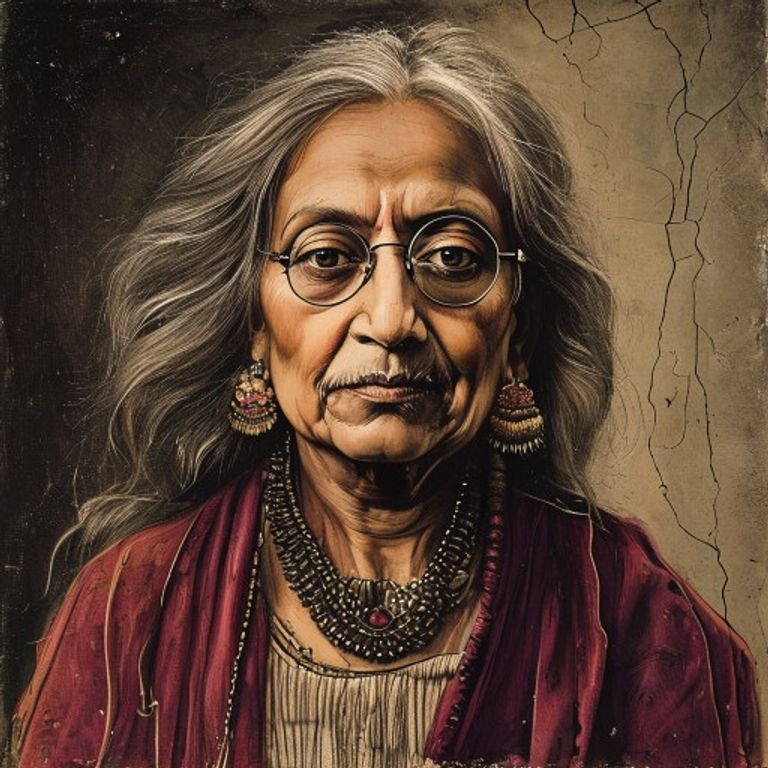
The 1984 assassination of the Prime Minister of India by her own bodyguards, which sparked a wave of sectarian violence across the country.
⚠️ Research conducted with the aid of Deep Research is subject to referential ambiguity.
🖥️ Clean HTML code using a proprietary tool.
👥 Research by Guilherme Felipe, Curation by Sílvio Lôbo
The Silence of the Triggers: Unraveling the Mystery of Indira Gandhi's Death
On October 31, 1984, one of the most prominent figures in world politics was brutally silenced. The Prime Minister of India, Indira Gandhi, was assassinated in her garden in New Delhi by two of her own Sikh bodyguards. What should have been an isolated act of terror turned into one of the darkest enigmas in Indian history, permeated by persistent questions and theories that echo to this day. This article aims to delve into the depths of this case, separating fact from speculation in search of the truth hidden beneath the veil of a macabre mystery.
1. The Context and the Incident: Where, When, and How the Mystery Began
The assassination of Indira Gandhi did not occur in a political vacuum. Months earlier, India was experiencing a climate of intense religious and political tension, exacerbated by Operation Blue Star. In June 1984, the Indian army invaded the Golden Temple in Amritsar, the holiest site for Sikhs, to flush out armed separatists led by Sant Jarnail Singh Bhindranwale. The operation, while successful in its military objective, left a trail of destruction and deep resentment within the Sikh community, alienating a large portion of its followers and strengthening the Khalistan separatist movement.
It was in this volatile scenario that Indira Gandhi, viewed by many Sikhs as responsible for the desecration of their holy site, became a target. On the morning of October 31, 1984, while heading to an interview with British journalist Peter Ustinov at 1, Safdarjung Road, her official residence, she was confronted by two of her bodyguards, Satwant Singh and Beant Singh. Armed with pistols and a Sten submachine gun, they fired mercilessly at the Prime Minister, who fell lifeless under a hail of bullets. The act shocked the world and triggered a wave of anti-Sikh violence throughout India.
2. Timeline of Events
- June 1984: Operation Blue Star at the Golden Temple, Amritsar.
- September 1984: Initial reports of threats to the life of Indira Gandhi directed at her and her son, Rajiv Gandhi.
- October 31, 1984, morning: Indira Gandhi leaves her residence for an interview.
- October 31, 1984, approximately 9:15 AM: Bodyguards Satwant Singh and Beant Singh fire at the Prime Minister.
- October 31, 1984, 9:30 AM: Indira Gandhi is declared dead at the All India Institute of Medical Sciences (AIIMS) Hospital.
- October 31, 1984, night: Start of anti-Sikh pogroms in New Delhi and other parts of India.
- October 31, 1984, early morning: Rajiv Gandhi is sworn in as the new Prime Minister of India.
- November 1984: Satwant Singh and Beant Singh are captured (Beant Singh dies during capture), interrogated, and tried.
- 1986: Satwant Singh is sentenced to death.
- 1989: Satwant Singh is executed.
3. Main Theories
The official investigation, while identifying the direct perpetrators, left many questions unanswered, fueling fertile ground for various speculations and theories:
Official and Police Theories (Proven Facts and Logical Deductions)
- Main Theory: Sikh Revenge and Separatism. The most direct and widely accepted explanation is that the assassination was an act of retaliation for Operation Blue Star and an attempt to pressure for the creation of the independent state of Khalistan. The assassins, Satwant Singh and Beant Singh, were Sikhs, and it is believed they acted in response to the perceived attack on the heart of their faith. The capture and conviction of Satwant Singh, along with the motives stated by him and others involved (though the latter were less detailed due to the death of Beant Singh), anchor this theory in concrete evidence.
- Connection to the Separatist Movement. The official investigation sought to draw links between the assassins and Sikh separatist organizations, both inside and outside India. Reports suggest they were in contact with individuals involved in the Khalistan movement, who could have planned or encouraged the act.
Alternative and Conspiracy Theories (Speculation and Lack of Concrete Evidence)
- Internal Conspiracy Theory (Involvement of Security Agencies). A speculative strand suggests that elements within Indian security agencies may have known about the plot and failed to act to stop it, or even facilitated it. The logic behind this theory lies in questions about the apparent security failure that allowed two bodyguards to have such direct access to the Prime Minister. Rumors point to possible motivations to destabilize the government or promote the rise of another leader. However, there is a lack of substantial evidence to corroborate this hypothesis.
- External Provocation Theory (Involvement of Foreign Agencies). Some speculations point to the possible involvement of foreign powers that could benefit from instability in India. Neighboring countries or other nations with strategic interests in the region were occasionally mentioned, but without any documented proof.
- Rajiv Gandhi "Opportunism" Theory. A darker theory, though unfounded in facts, suggests that the Gandhi family might have had some prior knowledge of the attack, aiming to remove Indira Gandhi from power and accelerate the rise of Rajiv Gandhi. This theory is widely dismissed by the serious investigative community due to the lack of any evidence and the shocking nature of the accusation.
- Paranormal or Supernatural Theories. In a case of such commotion, it is not uncommon for theories that transcend rationality to emerge. Reports of omens, premonitory dreams, or other inexplicable events related to the assassination have circulated, but they are, by definition, outside the scope of fact-based journalistic investigation.
4. Controversies and Blind Spots
The official investigation, while leading to the conviction of one of the assassins, was not free from controversies and blind spots that continue to fuel the mystery:
- The Death of Beant Singh: The death of Beant Singh during his capture, while justified as the result of a shootout, raised questions. The absence of his full testimony prevented the official investigation from thoroughly exploring possible accomplices or masterminds.
- The Silence of Satwant Singh: Despite his conviction and execution, Satwant Singh's statements were considered incomplete or vague regarding a possible larger plot. He claimed he acted for religious reasons, but details about who else might have been involved were rarely explored in depth by the media or declassified reports.
- Security Failure: The fragility of the security surrounding such an important figure as the Prime Minister remains a question mark. How did two bodyguards have such unimpeded access to commit such an act? Official reports on the investigation into the security failure are scarce or inaccessible.
- The Anti-Sikh Pogroms: The violent uprising that followed the assassination, with thousands of Sikhs killed, is a dark chapter that, for many, suggests deliberate government complicity or inaction. The investigation into these pogroms was also considered insufficient by many human rights activists.
- Ignored or Missing Clues: As in many high-profile cases, there are persistent rumors that important clues may have been ignored or even intentionally suppressed. The declassification of files on the case has been slow, which prevents a complete and independent analysis.
5. Curiosities and Legacy
The assassination of Indira Gandhi left a deep scar on Indian history, with a lasting cultural and political impact:
- The Legacy of an Era: Indira Gandhi was an iconic figure, nicknamed the "Iron Lady" of India. Her death marked the end of an era of strong and charismatic leadership, but it also paved the way for the turbulent political period that followed.
- Fear and Violence: The assassination triggered a cycle of unprecedented sectarian violence, the ramifications of which were felt for years. Fear and distrust between religious and ethnic communities became palpable.
- Current Status of the Case: The case, in judicial terms, was closed with the execution of Satwant Singh. However, from the perspective of a historical mystery and a case not fully resolved, persistent questions and alternative theories continue to keep the flame of investigation alive in the minds of many. There are no indications that the case has been officially reopened, but the fascination and the need for complete answers keep it alive in the popular imagination and in academic and journalistic debates.
- National Trauma: The image of a wounded Indira Gandhi and the subsequent wave of anti-Sikh violence are etched into the Indian collective memory, a constant reminder of the fragilities of a democracy in times of extremism.
The silence of the triggers that took the life of Indira Gandhi continues to echo, not only as a tragic event but as an enigma that, despite the years, still seeks its complete resolution. The search for truth, in cases like this, is an arduous journey, full of shadows and whispers, but essential for understanding history and preventing the mistakes of the past from being repeated in the future.





