



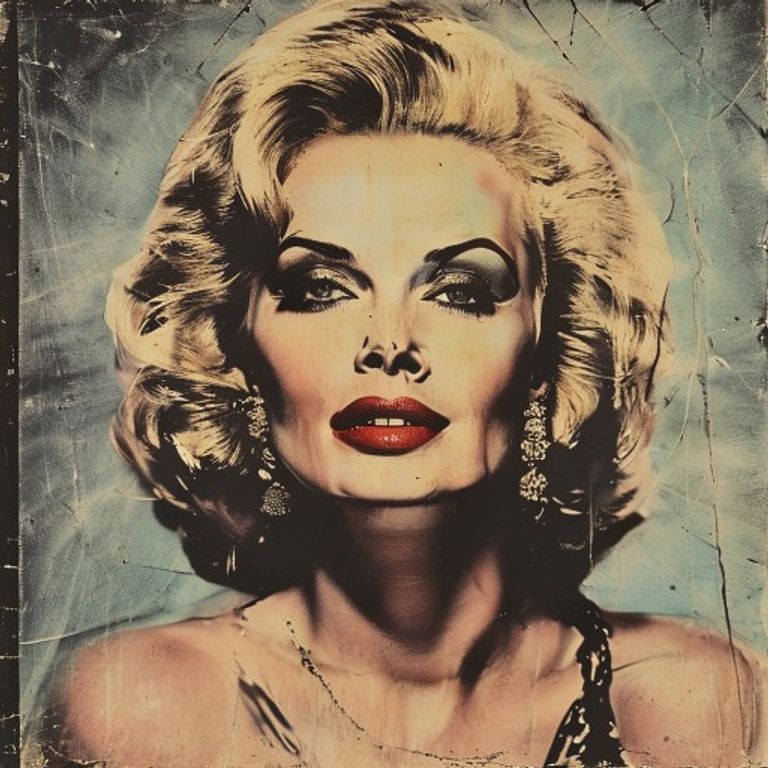
The star's fatal overdose in 1962, which remains shrouded in mystery due to missing records and her proximity to influential government figures.
⚠️ Research prepared with the aid of Deep Research is subject to referential ambiguity.
🖥️ Clean HTML code using a proprietary tool.
👥 Research by Guilherme Felipe, Curation by Sílvio Lôbo
The Enigma of Norma Jeane: Unraveling the Case of Marilyn Monroe's Death
August 5, 1962, marked the abrupt departure of one of Hollywood's greatest stars, Marilyn Monroe. Her body was found in her residence in Los Angeles, California, under circumstances that, to this day, fuel fervent debate and a trail of mystery. What appeared to be a personal tragedy quickly turned into one of the most enigmatic cases of the 20th century, filled with theories, speculations, and questions without a definitive answer.
1. The Context and the Incident: Where, When, and How the Mystery Began
In the early hours of August 5, 1962, the world was caught by surprise by the news of Marilyn Monroe's death. The 36-year-old actress was found in her bed at her home in Brentwood, Los Angeles. Beside her body was a bottle of chloral hydrate pills, a strong sedative. The first official version, widely reported at the time, pointed to a barbiturate overdose, classified as "probable suicide." However, the speed with which the scene was handled and the inconsistencies in the initial reports quickly planted the seeds of doubt that persist to this day.
2. Timeline of Events: A Chronological Reconstruction
- July 31, 1962: Marilyn Monroe films her final scene for the movie "Something's Got to Give."
- August 4, 1962, night: Reports indicate that Marilyn spent the night talking on the phone, including with her psychiatrist, Dr. Ralph Greenson, and her lawyer, Milton Rudin.
- August 5, 1962, early morning: Marilyn's housekeeper, Eunice Murray, finds her body and calls Dr. Greenson.
- August 5, 1962, morning: The Los Angeles police arrive at the scene. The body is removed, and the cause of death is preliminarily determined as a barbiturate overdose.
- August 8, 1962: Marilyn Monroe's funeral, in a closed casket, is held at Westwood Village Memorial Park Cemetery.
- 1982: The report by investigator Thomas Noguchi, the Los Angeles County Medical Examiner, reopens the investigation, but the official conclusion remains "probable suicide."
3. The Main Theories: From Probable to Paranormal
The ambiguity surrounding Marilyn Monroe's death gave rise to a myriad of theories, each with its own set of arguments and contradictions:
Theory 1: Accidental or Intentional Suicide (Official Hypothesis)
The most direct explanation, initially accepted by authorities. It is based on the presence of barbiturates and Marilyn's history of mental health issues and drug use. The logic is that she could have ingested a fatal amount of medication, either intentionally or through a dosage error in a moment of despair.
Theory 2: Murder - Political and Family Connections
This is perhaps the most popular theory, shrouded in speculation. It suggests that Marilyn was murdered to silence her, possibly due to her alleged relationships with powerful figures, such as brothers John F. Kennedy and Robert F. Kennedy. The idea is that she possessed compromising information that could shake the Kennedys' public image and political careers. Possible motivations range from blackmail to the removal of a risk.
- Hypothesis: Murder orchestrated by agents linked to the Kennedys.
- Alleged Motives: Fear of state secrets leaking, public scandal, or Marilyn's threat to reveal information about the relationships.
Theory 3: Induced Overdose (Unintentional or Induced)
A variation of the murder theory, suggesting that someone administered the fatal dose of drugs to Marilyn, either by accident during an attempt to "save" her from a previous overdose, or purposefully to cause her death while masking it as suicide. Dr. Greenson and housekeeper Eunice Murray are frequently cited as central figures in this theory, given their proximity and the way the event unfolded.
Theory 4: The Paranormal Factor
Although less anchored in factual evidence, some theories suggest paranormal or energetic influences as a contributing factor to Marilyn's death. These hypotheses generally arise from interpretations of strange events occurring around her death or beliefs in occult forces.
4. Controversies and Blind Spots: Where the Truth Was Lost
The official investigation, from its inception, was marked by inconsistencies and lapses that fueled conspiracy theories:
- The Crime Scene: Marilyn's house was cleaned before the police could conduct a full forensic examination. The body was removed in haste.
- Phone Records: Marilyn's phone records from the night before her death mysteriously disappeared.
- Conflicting Testimonies: Key witness accounts, such as those of Eunice Murray and Dr. Greenson, showed significant inconsistencies at crucial moments, especially regarding when Marilyn was found and who found her.
- Lack of Notification: There was no immediate notification to the police by the medical team that arrived at the scene, which is unusual in cases of suspicious death.
- Forensic Report: The initial report by coroner Dr. Thomas Noguchi indicated the presence of an exceptionally high amount of chloral hydrate in Marilyn's blood and tissues. However, how these drugs entered her body and the absence of injection marks in other reports raised questions.
- Loss of Evidence: The alleged loss of crucial evidence, such as the aforementioned phone records, is a point of strong suspicion.
5. Curiosities and Legacy: The Myth That Lives On
The case of Marilyn Monroe's death transcended mere celebrity news to become an indelible element of popular culture. Her status as an icon of beauty and vulnerability, combined with the mystery of her death, perpetuates her fascination.
- Cultural Impact: The image of Marilyn, her life, and her death continue to be the subject of films, documentaries, books, and debates, fueling an interest that does not diminish with time.
- Current Status of the Case: Despite re-openings and the efforts of independent investigators over the years, the case remains officially classified as "probable suicide." However, the lack of definitive answers ensures that the mystery of Marilyn Monroe will continue to haunt and intrigue generations.
- The Hollywood "Blacklist": Persistent rumors associate Marilyn with other mysterious deaths of Hollywood celebrities who were also allegedly silenced for similar reasons, though without concrete proof.
The case of Marilyn Monroe is a poignant reminder of how the truth sometimes hides in the shadows, defying attempts to uncover it and remaining an eternal enigma—a testament to the fragility of fame and the complexity of human life.





