



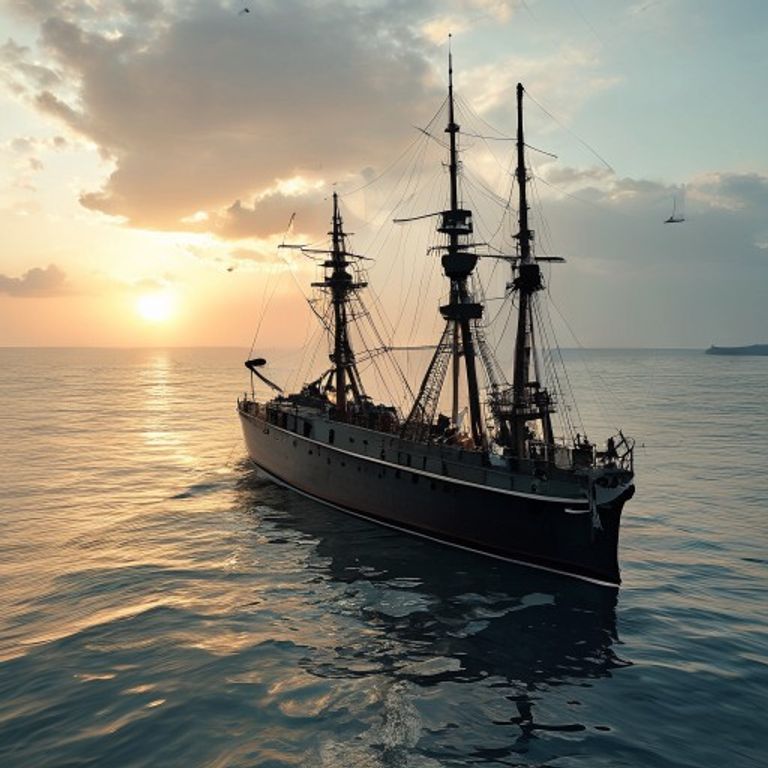
The sinking of an Argentine cruiser by a British submarine during the 1982 Falklands War, being one of the most debated episodes of the conflict.
⚠️ Research conducted with the aid of Deep Research is subject to referential ambiguity.
🖥️ Clean HTML code using a proprietary tool.
👥 Research by Guilherme Felipe, Curation by Sílvio Lôbo
The Ghost of the South Atlantic: The Enigmatic Sinking of the General Belgrano
The cold, deep waters of the South Atlantic hold secrets that defy reason. Among them, the sinking of the Argentine heavy cruiser General Belgrano, which occurred on May 2, 1982, during the Falklands War, transcends military tragedy to become one of the most persistent and controversial naval mysteries of the 20th century. It is not just a sunken ship, but an event shrouded in uncertainty, contradictory allegations, and a veil of silence that, decades later, has still not been completely lifted.
The Context and the Incident: An Act of War Far from the Limelight
The General Belgrano, a former United States Navy ship that had served Argentina since 1951, was an integral part of the Argentine fleet mobilized to retake the Falkland Islands (Malvinas, to the Argentines) in April 1982. Located approximately 150 nautical miles southwest of the Falklands, outside the 200-nautical-mile maritime exclusion zone imposed by the United Kingdom, the ship was conducting defensive maneuvers. It was at that exact moment, in the pitch black of night, that the British nuclear submarine HMS Conqueror fired three torpedoes at the Argentine cruiser. Two of them struck the hull, causing a devastating fire and rapid flooding. The third torpedo was never located, adding an initial layer of mystery to the event.
The sinking resulted in the death of 323 Argentine sailors, most due to the intense cold after the hasty evacuation into precarious life rafts. The incident marked a critical turning point in the Falklands War, leading Argentina to withdraw its fleet and intensifying the British offensive.
Timeline of Events: The Night the Giant Sank
- May 1, 1982, night: The General Belgrano sails outside the British maritime exclusion zone, with the crew on alert due to rumors of imminent attacks.
- May 2, 1982, approximately 16:00 (local time): The British submarine HMS Conqueror detects the General Belgrano.
- May 2, 1982, approximately 16:30: British Commander Chris Parsons requests permission to attack. After an internal debate in London, permission is granted.
- May 2, 1982, approximately 17:00: The HMS Conqueror fires three Mark 8 torpedoes at the General Belgrano.
- May 2, 1982, after the torpedo impact: The Argentine cruiser suffers catastrophic damage. Chaos ensues on board, and evacuation efforts begin.
- May 2, 1982, night: The General Belgrano sinks. Hundreds of sailors are left adrift in the freezing waters.
- May 3, 1982: Rescue operations begin, but hypothermia has already claimed the lives of many survivors.
Main Theories: Deciphering the Whispers from the Depths
The nature and circumstances of the General Belgrano sinking have given rise to various theories, ranging from explanations based on military logic to darker speculations.
Official Theory and British Point of View: Legitimate Defense of an Exclusion Zone
The official British narrative maintains that the General Belgrano posed an imminent threat to the British fleet and the islands. The decision to sink it was made based on intelligence that the ship was part of a broader attack plan and that its presence outside the exclusion zone did not exempt it from being a legitimate military target. The logic here is that of war: identify an enemy and neutralize them as quickly as possible to protect one's own forces and strategic objectives.
Argentine Theory: An Act of Unnecessary Cruelty?
On the Argentine side, the prevailing interpretation is that the attack was disproportionate and unjustified. It is argued that the General Belgrano was sailing toward the Argentine coast, moving away from the Falklands and British forces, and did not represent an immediate threat. The main controversy lies in the decision to attack a ship that was outside the declared exclusion zone, raising questions about the interpretation of the rules of engagement.
The "Third Lost Torpedo" Theory: An Additional Enigma
The claim that a third torpedo fired by the HMS Conqueror was never found fuels speculation. Some theories suggest that this torpedo may have struck the ship at a different point, causing additional damage that accelerated the sinking, or that it could have hit another target, leading to an even more complex incident. Official reports, however, do not confirm the existence of a third torpedo that hit the Belgrano or had an uncertain destination. The possibility of it missing the target or being a confusion in the count of launches are more pragmatic explanations, but the mystery persists.
Conspiracy Theories and Political Speculation: The Battle of Narratives
In the realm of conspiracy theories, hypotheses arise ranging from an alleged British intention to inflict maximum losses on the Argentine navy to undermine the country's morale, to the suggestion that the intelligence used to justify the attack may have been manipulated. These theories, although lacking concrete evidence, reflect the distrust and the search for deeper answers in conflict scenarios where the truth can be obscured by political and military interests.
Paranormal or Supernatural Theories: The Myth at the Heart of the Tragedy
Although less supported by any kind of evidence, in some circles there are mentions of possible inexplicable phenomena associated with the sinking. Rumors of sightings of strange lights or alleged presences at the site of the sinking, while popular in mystery narratives, remain in the domain of folklore and personal belief, without any basis in credible investigations.
Controversies and Blind Spots: Cracks in the Official Narrative
The General Belgrano case is full of question marks that fuel the debate to this day:
- The Interpretation of the Exclusion Zone: The main controversy lies in the British interpretation of the maritime exclusion zone. If the ship was clearly outside it, what was the justification for the attack? Declassified reports and testimonies suggest that the British strategy aimed to create a broader "battlefield," justifying the anticipation of threats.
- The Cause-Effect Relationship of the Torpedoes: Investigations into the exact cause of the sinking and the speed at which the ship sank are complex. The number and location of the torpedo impacts, along with internal explosions and flooding, make it difficult to determine with precision the sequence of events that led to the sinking.
- The "Third Torpedo": The persistence of the myth of the third torpedo, even without official confirmation of its impact, raises questions about the transparency of the information released and the possibility of secrets still being kept.
- Evacuation and the Cold: The conditions under which survivors were rescued and the number of deaths from hypothermia are a tragic and controversial aspect. Criticisms have been raised about the delay and effectiveness of the rescue operations, although the nature of the battle and the constant threat of attacks were determining factors.
- Conflicting Reports and Testimonies: Over the years, discrepancies have emerged between accounts from Argentine and British crew members, and even within the navies themselves, regarding the events that preceded and followed the attack. The declassification of some British military documents revealed nuances, but also left room for new interpretations.
Curiosities and Legacy: The Echo of a Shipwreck
The sinking of the General Belgrano left an indelible mark on the military and cultural history of Argentina. It became a symbol of the war and the human cost of conflicts, being the subject of films, books, and heated debates.
- The Human Cost: The 323 lives lost represent the largest naval loss in a single incident since World War II. The mourning and memory of the dead remain present in Argentine society.
- A Turning Point: The sinking of the Belgrano is widely considered a crucial moment that changed the course of the Falklands War, forcing Argentina to rethink its naval strategy and paving the way for the British victory.
- The Historical Debate: The case continues to be a subject of study and debate among historians, military personnel, and naval history enthusiasts, with new information and perspectives emerging as archives are declassified.
- Current Status: The case of the General Belgrano sinking has not been officially reopened as a criminal case. However, the historical discussion and the search for a complete understanding of the events remain active, fueled by the need to honor the victims and learn from the mistakes of the past. The ship rests at the bottom of the ocean, but its mystery continues to navigate the murky waters of history.





