



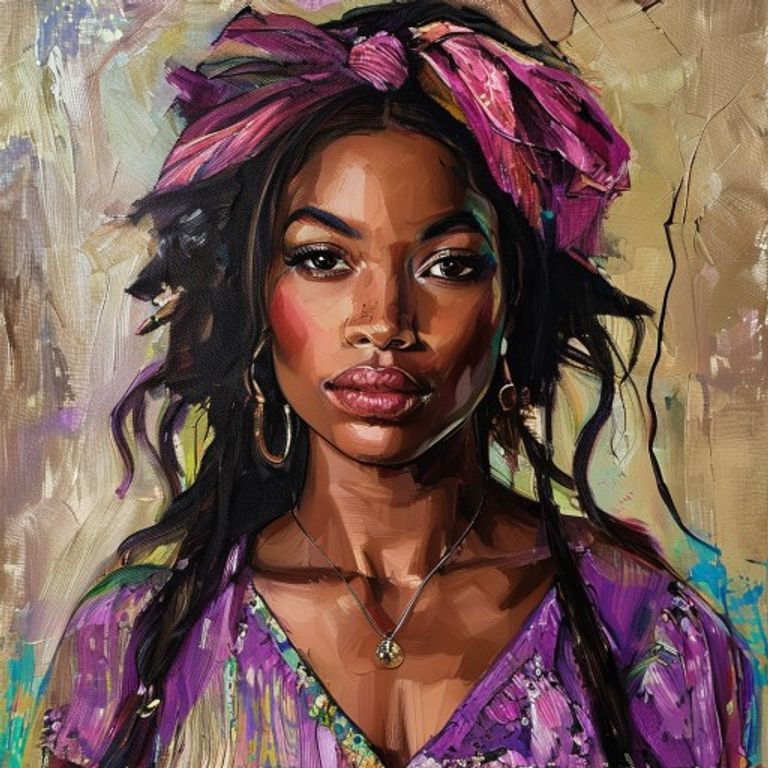
The death of a Black paramedic during a police operation at her home in 2020, which became one of the sparks for global protests against police violence.
⚠️ Research prepared with the aid of Deep Research is subject to referential ambiguity.
🖥️ Clean HTML code using a proprietary tool.
👥 Research by Guilherme Felipe, Curation by Sílvio Lôbo
The Mystery of Breonna Taylor: A Shadow in the Night of Louisville
On March 13, 2020, the city of Louisville, Kentucky, witnessed a night that would become a turning point in the recent history of the United States. The death of Breonna Taylor, a 26-year-old emergency medical technician, in her own home during a police operation, triggered a whirlwind of protests, debates on racial justice, and a mystery that, for many, remains without full resolution.
This article aims to unravel the layers of this complex case, separating proven facts from speculation and seeking to understand the nuances surrounding the tragic night that took the life of Breonna Taylor.
1. The Context and the Incident: Where, When, and How the Mystery Began
The incident occurred at Breonna Taylor's apartment, located at 300 Springfield Drive, in Louisville. On the night of March 12 to 13, 2020, a team of officers from the Louisville Metro Police Department (LMPD) executed a search warrant based on suspicions of drug trafficking involving her ex-boyfriend, Jamarcus Glover. The officers, acting under a "knock and announce" warrant, entered the residence around 12:45 AM on March 13.
What followed was an exchange of gunfire that resulted in the death of Breonna Taylor. She was struck by multiple bullets, not being directly involved in the criminal activities that led to the operation. Breonna's boyfriend at the time, Kenneth Walker, stated that, believing intruders were in their apartment, he fired once with his weapon, striking one of the officers. The officers' response was lethal.
The initial mystery lay in the conflicting narrative of events, the number of shots fired, the lack of success in seizing drugs at the scene, and, crucially, the death of an innocent woman in her bed.
2. Timeline of Events: A Chronological Reconstruction
- February 2020: The investigation leading to the search warrant against Jamarcus Glover is initiated.
- Early March 2020: The search warrant is obtained by the LMPD.
- March 12, 2020 (Night): Officers prepare to execute the warrant at Breonna Taylor's apartment.
- March 13, 2020, 12:45 AM (approx.): The police team invades the apartment.
- 12:45 AM - 12:50 AM (approx.): The exchange of gunfire occurs. Kenneth Walker fires once. The officers fire dozens of times.
- March 13, 2020 (Morning): The death of Breonna Taylor is confirmed.
- March - May 2020: The media begins covering the case, generating public outrage.
- May 23, 2020: Breonna Taylor's name gains national prominence with the murder of George Floyd.
- September 2020: A grand jury presents charges, but not against the officers directly involved in Breonna's death; rather, against one officer for wanton endangerment.
- September 2020: Officer Brett Hankison is fired. He would later be indicted.
- March 2021: Two of the three officers involved (Joshua Jaynes and Kelly Haney) are indicted on federal charges related to the acquisition of the warrant.
- August 2022: The U.S. Department of Justice announces federal charges against the officers involved.
3. Main Theories
The explanations for the tragedy and the circumstances surrounding it are diverse, ranging from official narratives to broader speculations.
3.1. Official and Police Theory: The Execution of the Warrant and Self-Defense
The official narrative, supported by police testimony and initial reports, argues that the officers acted within the limits of the law when executing the warrant, even if there were flaws in the "knock and announce" procedure. The primary justification for the officers' shots is the perception that their lives were in danger after Kenneth Walker fired toward them. The police stated that Breonna Taylor was not the intentional target of the shots, but rather a collateral victim.
Evidence that supports (partially):
- The search warrant, although later questioned regarding its acquisition.
- The testimonies of the officers involved stating that shots were fired at them.
- Ballistics forensics confirming that Kenneth Walker fired once.
3.2. Theory of Investigation Failure and Warrant Acquisition: The Fragile Foundation
This theory focuses on the irregularities in obtaining the warrant. Subsequent official investigation revealed that the information leading to the search warrant for Breonna Taylor's apartment was inaccurate and incomplete. Allegations that Jamarcus Glover was using Breonna's apartment as a base for his activities were questioned, and the connection to Breonna proved fragile.
Evidence that supports:
- The fact that no drugs were found in Breonna Taylor's apartment.
- Officer Joshua Jaynes admitted to obtaining information from an informant who later denied providing the specific details used to justify the warrant at Breonna's address.
- Federal charges against the officers for falsifying information to obtain the warrant.
3.3. Theory of Excessive Force and Police Abuse: The Violation of Civil Rights
For many, the death of Breonna Taylor is a clear example of excessive police force and how the life of a Black citizen was treated with negligence. The decision to invade the apartment without a firm guarantee that Glover would be present, combined with the overwhelming number of shots fired by the officers, is seen as a disproportionate violation of the rights of Breonna and Kenneth Walker.
Arguments in favor:
- The number of shots fired by the officers (over 30) against a single shot from Walker.
- The fact that Breonna Taylor was not the primary target of the operation and was unarmed.
- The inconsistency in the application of police protocols in similar cases.
3.4. Alternative and Conspiracy Theories (Speculative)
Although there is no concrete evidence to support these theories, they arise in a context of distrust toward institutions and the search for complete answers.
- "Staging" or "Planting" Evidence Theory: Some speculate that evidence could have been planted after the operation to justify police actions. This theory lacks direct proof.
- Secret Motivation Theory: There might be a hidden motivation behind the operation that was not publicly revealed, perhaps linked to other investigations or a specific target that was not Glover. Again, without empirical basis.
- Paranormal Theories: In cases of deep mystery, the supernatural is sometimes invoked. However, there are no elements in this case that suggest a paranormal explanation.
4. Controversies and Blind Spots
The Breonna Taylor case is marked by numerous controversies and blind spots that fuel the persistence of the mystery and dissatisfaction with official investigations.
- The "Knock and Announce": The police claimed to have knocked and announced, but witnesses and Kenneth Walker claim the invasion was abrupt. The police audio recording is not clear on this point.
- The "Primary Target" of the Warrant: The strength of the evidence connecting Jamarcus Glover to Breonna Taylor's apartment was questionable, raising doubts about why her address was included in the search warrant.
- Lost or Ignored Evidence: There were allegations that the body camera of one of the officers involved was not working or that crucial footage was missing.
- The Ballistics Expert: The credibility of the expert who determined that the officers' shots came from a specific direction was questioned, as Walker's shots came from another.
- The Charges: The delay in filing charges against the officers and the nature of the initial charges (which did not include murder) generated frustration.
- The Settlement Agreement: The city of Louisville reached a civil settlement of $12 million with Breonna Taylor's family, a step that, for some, hastened the closure of other proceedings.
5. Trivia and Legacy
The case of Breonna Taylor transcended local headlines and became a symbol of the fight for racial justice and police reform worldwide.
- The "Say Her Name" Slogan: Breonna Taylor's name became a rallying cry in protests, highlighting the need for visibility for victims of police violence who are women, especially Black women.
- Cultural Impact: Her image appeared on murals, t-shirts, and in various forms of art, turning her into an icon of the fight for justice.
- Police Reform: The case was a catalyst for the debate on the militarization of police, the use of force, and the need for external oversight and accountability.
- Current Status: Although the officers directly involved in the shots that killed Breonna Taylor did not face direct criminal charges of murder, the U.S. Department of Justice indicted federal agents on charges related to obtaining the search warrant, including falsification of records. Federal investigations continue, adding another layer to the complex legacy of the case. The civil case with Breonna's family has been settled.
The story of Breonna Taylor remains an open wound, a somber reminder of how tortuous the search for justice can be and how fragile the lines between the law and tragedy can be on a fateful night in Louisville.





