



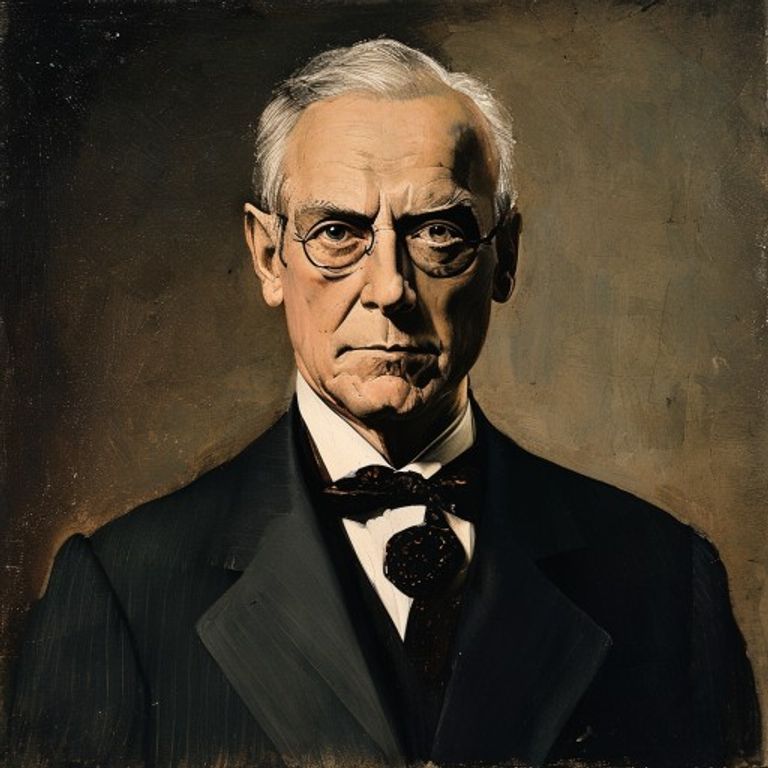
A film director killed in 1922; the crime exposed the Hollywood underworld and the drug use of stars of the era, remaining one of cinema's greatest mysteries.
⚠️ Research conducted with the aid of Deep Research is subject to referential ambiguity.
🖥️ Clean HTML code using a proprietary tool.
👥 Research by Guilherme Felipe, Curation by Sílvio Lôbo
The Murder of William Desmond Taylor: The Shadow That Remains Over Hollywood
Los Angeles, 1922. A time when silent film reigned supreme, shaping dreams and creating legends. At the epicenter of this magic, one man stood out: William Desmond Taylor, a respected film director known for his kindness and popularity. His life, however, would be tragically cut short, plunging Hollywood into one of its greatest unsolved mysteries. The Taylor case, a tangle of secrets, scandals, and elusive clues, continues to haunt the annals of criminal history, a grim reminder that even under the spotlight, shadows can hide terrible truths.
The Context and the Incident: A Night That Changed Hollywood
William Desmond Taylor, born William Cunningham Deane-Tanner in Ireland, was a prominent figure in the Los Angeles film industry. On February 2, 1922, his body was discovered in his bungalow at 1114 Bentley Avenue, in Westlake Park. The body was found by his housekeeper, Mrs. Mildred Fisher, who alerted the authorities. Taylor had a fatal gunshot wound to his lower abdomen. The crime scene initially suggested a robbery, but the complexity of the case soon began to emerge.
Timeline of Events
- January 1922: Rumors and tensions grow around Taylor, involving alleged relationships and threats.
- February 1, 1922, night: Taylor's last known contacts. Witnesses report seeing a man leaving his residence.
- February 2, 1922, morning: Mrs. Mildred Fisher discovers Taylor's body in his home. Police are called.
- February 2, 1922: Start of the police investigation. The crime scene is examined, and the first suspects are identified.
- February - March 1922: Testimonies are collected, and the investigation deepens, revealing Taylor's secret life and the dangerous connections he maintained.
- 1922 - Later Years: The case generates enormous media attention, with countless speculations and theories emerging, but no suspect is formally charged with conclusive evidence.
The Main Theories: A Mosaic of Hypotheses
The absence of a defined culprit allowed a myriad of theories to flourish, fueled by the scandalous nature of Taylor's life and the atmosphere of secrecy surrounding Hollywood at the time. The hypotheses range from more grounded explanations to the most fantastic:
Most Likely Police and Scientific Theories:
- The Robbery Gone Wrong: The initial theory, which suggested a burglary that escalated into murder. The presence of an open safe and the disorder in the living room supported this line. However, the lack of obvious missing valuables weakened this hypothesis.
- A Failed Romantic Encounter: Taylor, although married, had relationships with several women. A heated argument with a lover or a rejected suitor could have culminated in violence. Several women were investigated, including prominent actresses of the time.
- Personal or Professional Revenge: Taylor's career, while successful, may have generated enemies. Financial disputes, professional rivalry, or personal resentment are possibilities to be considered.
Alternative and Conspiracy Theories:
- Murder by a Prohibition Agent: Rumors suggested that Taylor was involved in illegal activities related to alcohol during Prohibition. A corrupt officer or a frustrated agent could have silenced him.
- The Organized Crime Connection: Some speculations point to Taylor's possible link to figures in the Los Angeles underworld, whose interests could have been threatened by him.
- The Mystery of the "Lady in Red": Witnesses reported seeing a woman dressed in red leaving Taylor's property on the night of the crime. This mysterious figure was never identified, fueling theories of an orchestrated murder or a crime of passion.
More Exotic Paranormal and Conspiracy Theories:
- Taylor's Ghost and Posthumous Revenge: Although less factually grounded, the inexplicable nature of the case inspired narratives about the haunting of Taylor's bungalow, with some believing his spirit still seeks justice.
- Film Industry Conspiracy: In more conspiratorial circles, it is suggested that the murder was covered up by the industry itself to protect its interests and avoid a larger scandal.
Controversies and Blind Spots: The Failures in the Investigation
The official investigation, conducted by the Los Angeles Police Department, was marked by a series of failures and inconsistencies that left the case open:
- The Ignored Lead of Mary Miles Minter's Mother: Charlotte Shelby, mother of the young actress Mary Miles Minter, with whom Taylor allegedly had a relationship, was one of the main suspects. Charlotte Shelby owned a gun compatible with the one used in the crime and lied about her whereabouts on the night of the murder. However, public pressure and the influence of the film industry may have interfered with the investigation, leading to her unofficial acquittal or the abandonment of the case against her.
- Lost or Missing Evidence: Reports indicate that some crucial evidence may have been mishandled or lost over time, making it difficult to accurately reconstruct the events.
- Conflicting Testimonies: The confusion surrounding Taylor's last movements and the possible intruders in his residence generated contradictory testimonies, increasing the complexity of the investigation.
- The Murder Weapon Not Found: The fatal weapon was never recovered, preventing a definitive link between a suspect and the murder.
- Haste in Closing the Case: Some historians and investigators suggest that the police, under pressure to solve the case quickly and avoid further scandals in Hollywood, may have closed the investigation prematurely, without exploring all leads thoroughly.
Curiosities and Legacy: The Perpetual Shadow
The William Desmond Taylor case became a landmark in Hollywood history, reverberating far beyond crime circles:
- The Fatty Arbuckle Scandal: Taylor's murder occurred amidst the scandal involving comedian Roscoe "Fatty" Arbuckle, who was accused of rape and murder. The combination of these dark events cast a negative light on the film industry, leading to a call for greater moralization in Hollywood.
- Inspiration for Works of Fiction: The Taylor mystery inspired countless books, articles, and even films, perpetuating the fascination surrounding the unsolved murder. The case became an archetype of the "Hollywood mystery."
- Current Status: Officially, the William Desmond Taylor case remains unsolved. Although informal investigations and speculations continue, there is no new official development or reopening of the case in the Los Angeles police records. The shadow of Taylor, as well as that of the truth about his death, continues to hover over the corridors of cinematic history.
The murder of William Desmond Taylor is a testament to the fragility of fame and the persistence of secrets. A real-life drama, whose actors and twists continue to intrigue and challenge, proving that some historical mysteries, no matter how much time passes, never lose their ability to provoke and remind us that not all stories have a happy ending or a clear conclusion.





