



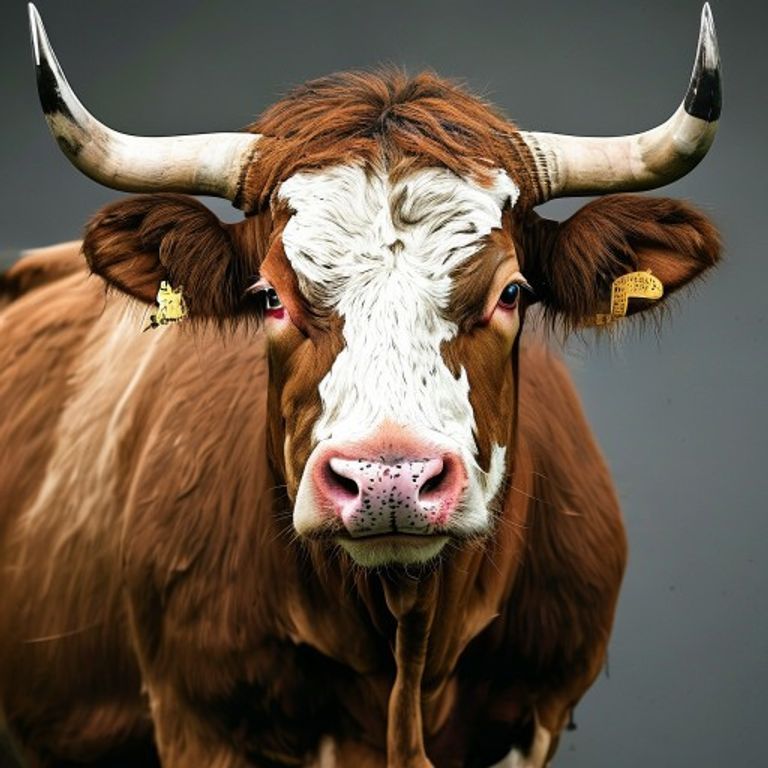
The health crisis in the nineties caused by an infectious protein in cattle, which led to the culling of millions of animals and global restrictions on the beef trade.
⚠️ Research prepared with the aid of Deep Research is subject to referential ambiguity.
🖥️ Clean HTML code using a proprietary tool.
👥 Research by Guilherme Felipe, Curation by Sílvio Lôbo
The Enigma of Spongiform Encephalopathies: A Documentary on the "Mad Cow Disease Case"
For decades, the specter of Bovine Spongiform Encephalopathy (BSE), popularly known as "Mad Cow Disease," haunted global food safety. What began as a veterinary enigma turned into a public health crisis, unraveling complex scientific webs and generating a whirlwind of theories—some anchored in concrete facts, others delving into the realm of speculation and fear. This article investigates the origins, developments, and controversies of one of the most impactful scientific and sanitary mysteries of the 20th century.
1. The Context and the Incident: Where, When, and How the Mystery Began
The year 1986 marks the official emergence of the mystery. In England, veterinarians from the Ministry of Agriculture, Fisheries and Food (MAFF) began recording an increasing number of cases of a devastating neurological disease in cattle. The animals exhibited alarming symptoms: tremors, unusual aggression, difficulty walking, and progressive deterioration of brain functions, invariably leading to death. The disease was named Bovine Spongiform Encephalopathy (BSE) due to the characteristic vacuolated (pore-like) lesions observed under a microscope in the brain tissue of affected animals, giving it a spongy appearance.
The origin of the outbreak, however, was uncertain. The way the disease spread rapidly and its unprecedented nature generated apprehension. The scientific community and health authorities found themselves facing an unknown pathogen, challenging existing understandings of prion diseases.
2. Timeline of Key Events
- 1985-1986: First cases of BSE detected in the United Kingdom.
- 1987: The MAFF confirms the existence of BSE and begins investigations to identify the cause.
- 1988: The UK bans the feeding of ruminants with meat and bone meal from ruminants, a common practice at the time that became one of the main focuses of investigation.
- 1990: Preliminary reports link BSE to the ingestion of feed contaminated with material derived from sheep infected with Scrapie, another prion disease.
- 1995: The first human case of a new variant of Creutzfeldt-Jakob Disease (vCJD) emerges in the UK. Investigators begin to suspect a direct link between the consumption of contaminated bovine products and vCJD.
- 1996: The British government publicly confirms the link between BSE and vCJD, triggering panic and a crisis of public confidence. The number of human vCJD cases increases.
- 1997: The European Union imposes an embargo on the import of beef from the UK.
- 2000s onwards: Global monitoring and surveillance efforts are intensified. Stricter regulations are implemented in several countries to prevent the spread of BSE. The incidence of BSE and vCJD decreases significantly.
3. The Main Theories
The nature of the "Mad Cow" mystery gave rise to a range of explanatory theories, each with its own logical and evidentiary basis.
3.1. Scientific and Investigative Hypotheses (Most Likely)
- Theory of Prion Contamination via Animal Feed: This is the predominant and scientifically accepted theory. It is believed that BSE was triggered by the ingestion of animal feed contaminated with prions (infectious proteins) from sheep infected with Scrapie. The process of recycling animal waste in the manufacture of meat and bone meal is thought to have disseminated the infectious agent. The reintroduction of bovine material into these feeds would have amplified the problem.
- Evidence: Laboratory studies have demonstrated the ability of prions to survive feed manufacturing processes. The ban on contaminated feed led to a drastic drop in BSE cases. The similarity of the neurological lesions to those of other prion diseases strengthens this hypothesis.
- Theory of Spontaneous Mutation (Less Likely): An alternative, less accepted hypothesis suggests that the prion causing BSE could have arisen spontaneously in a bovine, without a direct relationship to Scrapie. However, the rapid spread and initial prevalence in the UK make this theory less plausible.
3.2. Alternative, Conspiracy, or Paranormal Theories
- Theory of Genetic Engineering or Biological Warfare: Less substantiated speculations suggest that BSE could have been an accidental or intentional byproduct of genetic engineering experiments or even a form of biological weapon.
- Logic: The novelty of the disease and the initial difficulty in identifying its origin fueled this type of thinking.
- Counterpoint: There is no concrete evidence to support this theory, and the scientific community largely dismisses it.
- Government Conspiracy Theory: Some conspiracy theorists claim that governments, both British and others, had prior knowledge of the danger of BSE and its transmission to humans but chose to cover up the information to avoid panic or economic damage.
- Logic: The delay in publicly acknowledging the link between BSE and vCJD at certain times may have fueled this distrust.
- Counterpoint: Official reports, although criticized for their slowness in some phases, detail the investigations and measures taken, even if retrospectively flawed in some aspects.
- Paranormal or Supernatural Theories: Although rarely mentioned in serious scientific or journalistic contexts, in less rigorous forums, speculations about negative energy influences or inexplicable phenomena were occasionally raised, without any factual basis.
4. Controversies and Blind Spots
The investigation and management of the "Mad Cow" crisis were not free of controversies and blind spots:
- Slowness in Initial Response: Critics point out that British authorities were slow to recognize the severity of the disease and its potential transmission to humans, prioritizing the economy over public health in the initial phases.
- Failures in Monitoring: The lack of a robust surveillance system for prion diseases before the outbreak hindered early identification and containment of the epidemic.
- Initial Scientific Divergences: At the beginning, there was considerable debate within the scientific community about the nature of the infectious agent and its mode of transmission.
- Ignored Clues: Speculations arose about whether the practice of reusing animal waste in cattle feed, a central factor in the predominant theory, should have been more rigorously monitored and controlled before the outbreak.
- Conflicting Testimonies and Missing Evidence: Although there are no widespread allegations of "missing evidence" on a large scale, as in some murder cases, the difficulty in tracking the exact origin of each batch of feed and the extent of the initial contamination created uncertainties that were exploited by alternative theories.
5. Curiosities and Legacy
The "Mad Cow Disease Case" left an indelible legacy in the history of public health and food safety:
- Cultural Impact: "Mad Cow Disease" became a widely known term, associated with fear and distrust regarding animal-derived foods. It generated works of fiction, documentaries, and heated debates about food production.
- Advances in Prion Research: The outbreak significantly boosted research into prion diseases, leading to a deeper understanding of their mechanism and the identification of other prion agents in different species.
- Strengthening of Global Regulation: In response to the crisis, countries around the world implemented stricter regulations for food traceability, the prohibition of the use of meat and bone meal in feed, and disease monitoring.
- Current Status: Although the incidence of BSE has decreased drastically due to control measures, surveillance continues. The case has not been "reopened" in the traditional police sense, but scientific understanding and food safety policies continue to evolve. The original mystery regarding the exact origin and the speed of the initial spread remains a fundamental case study in epidemiology and public health crisis management.
The legacy of "Mad Cow Disease" serves as a constant reminder of the complex interaction between science, economy, and public health, and the importance of transparency and rigorous surveillance in protecting human well-being.





