



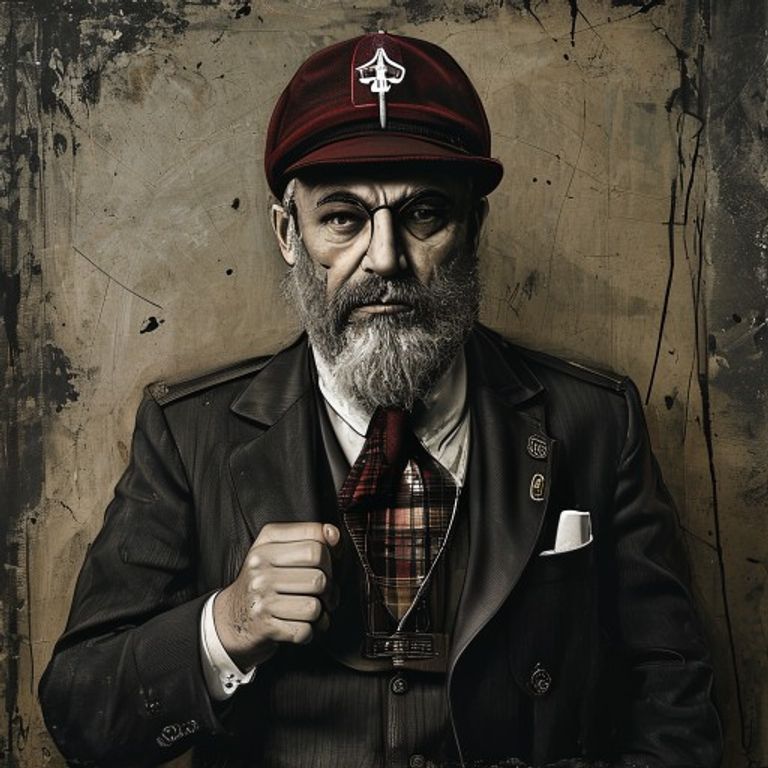
The 2015 terrorist attack in Paris against the headquarters of a satirical newspaper, sparking global debates on freedom of expression and religious extremism.
⚠️ Research conducted with the aid of Deep Research is subject to referential ambiguity.
🖥️ Clean HTML code using a proprietary tool.
👥 Research by Guilherme Felipe, Curation by Sílvio Lôbo
The Bloody Dawn in Paris: Unraveling the Mystery of the Charlie Hebdo Attack
The morning of January 7, 2015, in Paris, dawned stained with horror and blood. Unprecedented barbarity erupted at the offices of the satirical newspaper Charlie Hebdo, a publication known for its controversial cartoons and irreverent style. What followed was not just a terrorist attack, but the beginning of a complex investigative puzzle, the pieces of which, even years later, still seem scattered, fueling an endless debate between proven facts and persistent speculation.
1. The Context and the Incident: Where, When, and How the Mystery Began
The attack took place at the Charlie Hebdo headquarters, located on Rue Nicolas Appert, in the 11th arrondissement of Paris. The target, a publication that had published caricatures of the Prophet Muhammad, was already known for receiving threats and having suffered an arson attack in 2011. On that fateful January 7, 2015, around 11:30 AM, two masked men armed with AK-47 rifles stormed the newsroom shouting "Allahu Akbar." What unfolded in a few minutes was a brutal massacre, claiming 12 lives, including renowned cartoonists such as Charb, Cabu, and Wolinski, as well as police officers.
The modus operandi, the jihadist rhetoric, and the subsequent claims of responsibility by Al-Qaeda in the Arabian Peninsula and the Islamic State directed initial investigations toward Islamic extremism. However, the complexity of the events, the series of subsequent actions, and the inconsistencies that gradually emerged opened space for questions and theories that go beyond the official narrative.
2. Timeline of Events: A Chronological Reconstruction of Key Facts
- January 7, 2015, ~11:30 AM: Attack on the Charlie Hebdo newsroom.
- January 7, 2015, after the attack: The Saïd and Chérif Kouachi brothers flee the scene. A police car attempting to intercept them is hit.
- January 7, 2015, ~12:30 PM: A municipal police officer, Ahmed Merabet, is coldly executed by the Kouachi brothers while lying wounded on the sidewalk.
- January 8, 2015: A new attack occurs in Montrouge, where a municipal police officer is killed. The suspect, Amedy Coulibaly, and his accomplice, Hayat Boumedienne, are identified.
- January 9, 2015: Coulibaly takes hostages at a kosher supermarket (Hypercacher) at Porte de Vincennes, Paris.
- January 9, 2015, afternoon: Police carry out simultaneous operations in Dammartin-en-Goële, where the Kouachi brothers had taken refuge, and at the kosher supermarket.
- January 9, 2015, afternoon: Saïd and Chérif Kouachi are killed in Dammartin-en-Goële after a confrontation with security forces.
- January 9, 2015, afternoon: Amedy Coulibaly is killed at the kosher supermarket, and 4 hostages are freed (and 4 killed). Hayat Boumedienne manages to escape.
3. Main Theories: Presenting Possible Explanations
The official French investigation, conducted by the Central Directorate of the Judicial Police (DCPJ) and the Anti-Terrorism Department (DTPN), concluded that the attack was orchestrated and executed by an Islamic extremist group with ties to international terrorist networks.
-
Main Theory (Organized Islamic Extremism):
This is the official thesis, widely accepted by authorities and international media. It is based on the claims of terrorist groups, the known ties of the Kouachi brothers and Amedy Coulibaly to jihadist networks, and the analysis of the modus operandi. The logic here is straightforward: the publication of Charlie Hebdo provoked the wrath of radicals who, inspired by extremist ideologies, carried out a planned attack to spread fear and retaliate against what they considered blasphemy. Reports from French and international intelligence, such as the DGSI (General Directorate for Internal Security), corroborate this line.
-
Alternative and Conspiracy Theories:
-
The Role of Intelligence Agencies ("False Flag"):
A speculative strand suggests that the attack could have been a "false flag" operation, orchestrated or manipulated by Western intelligence agencies (such as the CIA or Mossad) to justify greater repression of extremism, strengthen national unity around Western values, or influence international policies. The logic behind this theory lies in the search for a "common enemy" that unifies the population and justifies stricter government security actions. Critics point to the speed with which "jihadist ideology" was identified as the sole motivation and to alleged "inconsistencies" in the timeline.
-
The Influence of Third Parties or Unknown Interests:
Other speculations suggest that, although the Kouachi brothers and Coulibaly may have been the executors, the motivation and funding could have come from third parties with hidden interests that go beyond Islamic radicalization. This theory, vague by nature, points to the possibility of more complex political or economic games being at play, using extremism as a facade. The lack of concrete evidence, however, keeps this hypothesis in the realm of mere conjecture.
-
-
Paranormal or Supernatural Theories:
Although rarely discussed in serious investigative circles, in a context of mystery and shocking events, theories involving the inexplicable always arise. However, for the Charlie Hebdo case, there is no factual or testimonial evidence that even suggests a paranormal explanation. The logic here would be purely based on the apparent impossibility of some events or the search for hidden meanings, detached from any rational analysis.
4. Controversies and Blind Spots: Inconsistencies in Official Investigations
Despite the rapid outcome with the neutralization of the main suspects, the Charlie Hebdo case is permeated by controversies and points that, for some observers and theorists, remain "blind spots" in the official narrative:
- Failure to Protect Vulnerable Targets: How could a press organization known for publishing controversial content and receiving threats have such precarious security? Security experts questioned the insufficiency of protection measures at the newspaper's headquarters.
- The Role and Escape of Hayat Boumedienne: Coulibaly's accomplice, Hayat Boumedienne, managed to escape and is believed to have taken refuge in Syria. Her whereabouts and the level of her involvement remain a question mark, fueling speculation about her possible influence or prior knowledge.
- Conflicting or Missing Evidence: Witness reports about the number of attackers at different moments of the attack, or the apparent lack of certain crucial evidence at crime scenes, have been pointed out by some as inconsistencies. However, most of these allegations have not been corroborated by official forensics.
- Speed of Suspect Identification: The rapid identification of the Kouachi brothers and Coulibaly, based on an identity document found in the car abandoned by the attackers, raised questions about the possibility of prior preparation or a facilitated "handover." However, the French police are renowned for their forensic analysis capabilities.
- Armament and Training: The sophistication of the weaponry used by the attackers raised doubts about the origin and level of training, suggesting more elaborate preparation than expected from individuals "radicalized" in isolation.
5. Curiosities and Legacy: Cultural Impact and Current Status
The Charlie Hebdo attack shocked the world and triggered a wave of global solidarity under the slogan "Je Suis Charlie". The event sparked a heated debate about freedom of expression, censorship, Islamophobia, and peaceful coexistence in multicultural societies.
- Cultural Impact: The cartoons and the spirit of Charlie Hebdo became symbols of resistance to tyranny and the defense of freedom of thought. The publication, despite the losses and continuous threats, continued its work, reaffirming its commitment to satire.
- Security Changes: The attack led to a significant reinforcement of security measures in public places and against organizations considered potential targets in France and throughout Europe.
- New Attacks and the "Lone Wolf" Phenomenon: The Charlie Hebdo case is frequently cited as a milestone that preceded a series of other terrorist attacks in Europe, many of which were attributed to "lone wolf" individuals inspired by extremist ideologies.
- Current Status of the Investigation: The main case, referring to the direct executors, was considered "closed" with the death of the suspects. However, broader investigations into support networks, funding, and possible accomplices continued for years. New developments and trials of individuals accused of complicity occurred subsequently.
The mystery of Charlie Hebdo lies not only in the identity of the perpetrators, which was widely confirmed by the official investigation, but in the deeper layers of motivation, organization, and, for skeptics, in the possible omissions or manipulations that may have shaped the narrative. The raw brutality of the event, combined with its profound implication for democratic values, ensures that this dark chapter of Parisian history continues to be dissected and to generate questions.





