



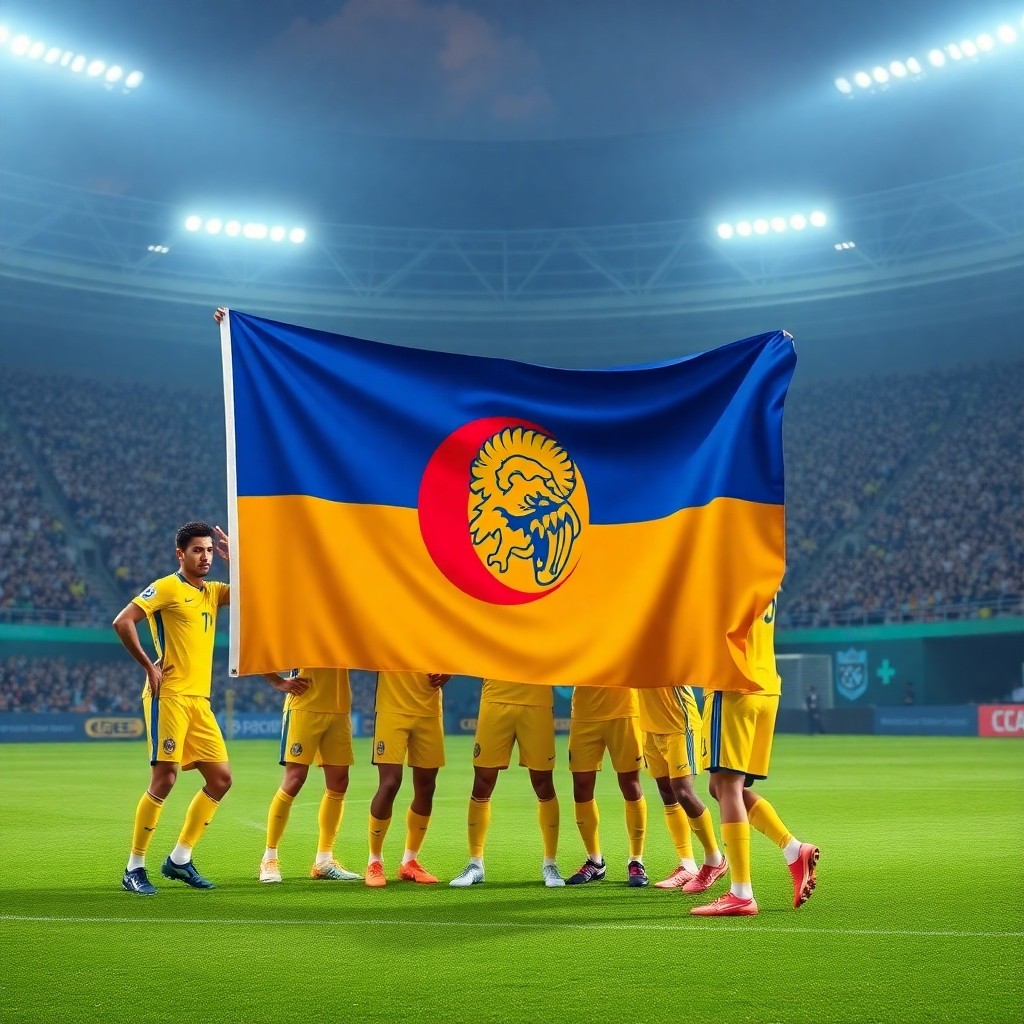
In the vast, deep blue of the Western Pacific Ocean, where the International Date Line almost touches the limits of American sovereignty, emerges one of the most unique scenarios in global football. Guam, an unincorporated territory of the United States in Micronesia, carries an identity shaped by Spanish colonization, American military occupation, the brutality of World War II, and the resilience of its indigenous people, the Chamorros. On the pitch, this complex geopolitical patchwork translates into the national team known as the "Matao" — a term referring to the noble warrior class of traditional Chamorro society. Far from being just another participant in the FIFA rankings, the Guam national team has, over the last decade, starred in one of the most fascinating stories of rise, professionalization, and subsequent structural crisis in Asian football. This dossier analyzes the inner workings of a federation that challenged continental giants, structured a recruitment model for athletes in the American diaspora, faced corruption scandals that echoed in Zurich, and today fights to rediscover its tactical and competitive identity amidst geographic and economic isolation.
1. Origins and Formation of National Identity
To understand football in Guam, it is imperative to decipher the complex geopolitical web surrounding the island. With just over 540 square kilometers and a population of approximately 170,000, Guam is a crucial strategic military outpost for the United States, housing naval and air bases of extreme importance in the Pacific. This strong American presence historically prioritized sports like baseball, American football, and basketball in the daily lives of local youth. Association football, or soccer, remained for decades a marginal activity, practiced almost exclusively by European, South American, and East Asian expatriates.
The Founding of the GFA and the First Steps in the Mud
The Guam Football Association (GFA) was founded in 1975 by a small group of local enthusiasts and military personnel who sought to structure recreational competitions on the island. In the early years, the practice was purely amateur, with matches held on adapted baseball fields or irregular military grounds. Affiliation with the Asian Football Confederation (AFC) occurred in 1991 as an associate member, and the long-dreamed-of full FIFA membership was achieved in 1996. However, entering the international scene exposed the enormous technical disparity between Guam and the rest of the world.
Guam's first years under the FIFA umbrella were marked by humiliating defeats that became legendary in international football. In 2000, during the Asian Cup Qualifiers, the team traveled to face Asian powerhouses without any proper physical or tactical preparation. The result was catastrophic: a 19-0 loss to China, followed by a crushing 21-0 defeat to Tajikistan. At that time, Guam's players consisted of university students, firefighters, police officers, and civil servants who balanced training time with their regular work shifts. Guam football was synonymous with extreme fragility, an official punching bag of the Asian continent.
Identity Reconstruction: The Rise of the "Matao"
The cultural turning point occurred in the early 2010s, when the federation realized that to compete, it was necessary to reclaim national pride and the ancestry of the Chamorro people. Until then, the team was treated with apathy by the local population, who saw it as a foreign project with no connection to the island's roots. In 2012, under the leadership of new managers and with the consultation of local historians, the team officially adopted the nickname "Matao."
In the ancient Chamorro social structure, the Matao were the leaders, navigators, and noblest warriors, responsible for protecting the community and navigating canoes through the treacherous waters of the Pacific. By wearing the national jersey, the players did not just represent an overseas territory of the United States; they carried the spirit of resistance of a people who survived centuries of colonization and attempts at cultural erasure. Before each match, the team began performing the "Inifresi," a solemn oath in the Chamorro language to protect the land, culture, and people of Guam. This psychological transformation was the foundation for the tactical and technical professionalization that was to come.
2. Golden Era, Great Campaigns, and Eternal Idols
The period between 2012 and 2016 is widely recognized as the "Golden Era" of Guam football. The catalyst for this revolution goes by the name of Gary White. The charismatic English coach, known for his ability to restructure teams from peripheral nations (having previously worked in the Bahamas and the British Virgin Islands), took charge of the Matao in 2012 with a clear mission: to transform a band of amateurs into a competitive and feared tactical unit in Asia.
The Gary White Effect and Diaspora Recruitment
White quickly identified that Guam's local semi-professional league could not provide athletes with the physical and tactical level required for international football. The solution was to exploit American citizenship legislation. As U.S. citizens, Guam residents hold American passports, and any American player with direct Guam ancestry (parents or grandparents) was eligible to represent the Matao.
The coach began a meticulous search across the United States, monitoring NCAA university leagues, Major League Soccer (MLS), and the American lower divisions (USL). White's argument to convince these professional athletes to represent Guam was romantic, yet highly professional: the real opportunity to play in World Cup qualifiers against Asian powerhouses and build a lasting legacy for a developing nation.
The Historic 2015 Qualifiers
The peak of this process occurred in June 2015, during the second round of the Asian Qualifiers for the 2018 World Cup. Guam was drawn into a theoretically impossible group alongside Iran, Oman, India, and Turkmenistan. For a team that years earlier suffered double-digit goal defeats, the external expectation was mere participation.
On June 11, 2015, at the modest GFA National Training Center in Dededo, in front of just over 3,000 spectators squeezed into temporary stands, Guam shocked the continent by beating Turkmenistan 1-0, thanks to an own goal forced by the Matao's intense physical pressure. But the real miracle happened four days later, on June 16. Guam faced India, a nation of over 1.2 billion people with a rapidly expanding football league.
With an impeccable tactical display, based on ultra-fast offensive transitions and impressive defensive solidity, Guam beat India 2-1, with goals from Brandon McDonald and Travis Nicklaw. The final whistle triggered scenes of tears and historic celebration in Dededo. For the first time, Guam led a World Cup qualifying group, reaching its best-ever position in the FIFA rankings: 146th place. The former "punching bag" now demanded respect from all of Asia.
The Eternal Idols of the Matao
This golden era consecrated figures who became living legends in Guamanian sport:
- Jason Cunliffe: The eternal captain and top scorer in the team's history. Cunliffe represents the local soul of Guam football. A midfielder of refined technique and unquestionable vocal leadership, he was the fundamental link between the island-born players and the athletes recruited from the American diaspora.
- A.J. DeLaGarza: The defender who made history at the LA Galaxy in MLS, playing alongside stars like David Beckham and Robbie Keane. DeLaGarza's decision to represent Guam, after having played unofficial friendlies for the U.S. senior team, instantly raised the defensive level of the Matao, bringing elite game reading and extreme professionalism to training sessions.
- Ryan Guy: A dynamic midfielder with a notable stint at the New England Revolution in MLS and in European football. Guy introduced an aggressive, high-physical-intensity style of play that became the trademark of Guam's midfield under Gary White.
- Dallas Jaye: The goalkeeper who provided the necessary security during moments of greatest pressure. His miraculous saves against India and Oman secured precious points that put Guam on the international football map.
3. Rivalries, Crises, and Behind-the-Scenes Power
Despite sporting success on the pitch, the behind-the-scenes of Guam football have always been complex, marked by regional geopolitical rivalries and one of the biggest corruption scandals in Asian sports history, which almost ruined years of structural development.
The Micronesian Rivalry and the Marianas Cup
In the microcosm of Oceania and East Asian football, Guam's great rivalry is against the Northern Mariana Islands. It is a rivalry that transcends the four lines, steeped in geopolitical and historical nuances. Although both archipelagos share Chamorro culture, Guam has been a U.S. territory since the Spanish-American War of 1898, while the Northern Marianas opted to become a commonwealth under American sovereignty much later, after World War II.
Annually, the two teams compete for the "Marianas Cup," a tournament that stirs intense passion in local populations. For Guam, beating the Northern Marianas is an affirmation of its sporting supremacy and its political and economic leadership in the Micronesia region. The matches are characterized by extreme physical virility and a hostile atmosphere, where losing to the northern neighbor is considered an unacceptable failure for the federation.
The Richard Lai Scandal: The Political Earthquake
In April 2017, Guam's reputation suffered a devastating blow. Richard Lai, who had presided over the Guam Football Association since 2001 and was an influential member of the FIFA Audit and Compliance Committee, pleaded guilty before a federal court in New York to charges of wire fraud and conspiracy to commit money laundering. Lai admitted to receiving over $1 million in bribes from Asian Football Confederation officials to use his political influence and votes in FIFA and AFC presidential elections.
The scandal revealed that, beneath the surface of a heartwarming sporting success story, the GFA was being used as a pawn in international corruption schemes aimed at keeping political oligarchies in charge of Asian football. The impact on the island was devastating: local sponsors withdrew investments, the federation's credibility plummeted, and FIFA temporarily froze development fund transfers for internal auditing. The institutional reconstruction process required a complete overhaul of GFA governance practices, later led by Valentino San Gil, who took over the presidency with a promise of absolute transparency and independent audits.
4. The Current Moment: Tactics, Generation, and Challenges
After Gary White's departure in 2016 and the administrative turmoil resulting from the Richard Lai case, Guam football entered an inevitable period of transition and technical decline. Currently, the Matao struggle to remain competitive in an Asia that is developing by leaps and bounds, facing the end of their golden generation's cycle and the difficulty of renewing the squad.
Tactical Transition and Loss of Identity
Under subsequent coaches, such as Australian Karl Dodd and South Korean Sang Hoon Kim, the team attempted to migrate from the direct, physical, and fast-transition style of the White era to a game model based on structured ball possession and build-up from the defensive sector. However, this tactical transition ran into the technical limitations of athletes playing in the local league and the lack of joint training time for players based in the United States.
Currently, Guam's preferred tactical scheme oscillates between 4-2-3-1 and 4-5-1 in a low block. In matches against top-tier Asian opponents, the team focuses almost exclusively on defensive compactness, reducing central spaces and trying to exploit long balls to the isolated target striker. This ultra-defensive stance, while necessary to avoid historic thrashings, has drastically reduced the Matao's firepower, leading to long periods without finding the back of the net in official competitions.
The New Generation and Diaspora Dependency
With the international retirement of icons like Jason Cunliffe and A.J. DeLaGarza, the Guam team is looking for new leaders. Players like Marcus Lopez, an experienced striker with experience in Asian football, and Devan Mendiola have taken on leading roles, but the dependence on the American diaspora remains the team's Achilles' heel and, at the same time, its only salvation.
Recruiting new talent in the United States has become more complex. The competitive level of MLS and USL has risen considerably, and young American players with Chamorro ancestry often hesitate to commit to the Guam team early, maintaining hope of playing for U.S. youth national teams. Without a constant flow of professional athletes trained in the American system, the Guam team risks regressing to the purely amateur level of the early 2000s.
5. Talent Development, Structure, and Future
The future of football in Guam depends fundamentally on its ability to generate talent sustainably within its own geographic territory, reducing external dependence and creating sports infrastructure that withstands the island's economic limitations.
The GFA National Training Center and the Local League
The jewel in the crown of local football is the GFA National Training Center, located in Dededo. Built with substantial aid from FIFA Forward program funds, the complex features state-of-the-art synthetic grass fields, medical facilities, a high-performance gym, and modern administrative offices. It is here that the Budweiser Soccer League (GSL), the first division of Guam football, takes place.
The GSL is a semi-professional league composed of historic teams like the Guam Shipyard, Quality Distributors, and NAPA Rovers. Although the competition is organized and features streaming for the local community, the technical level is still comparable to European or South American amateur divisions. Most players do not live exclusively from football, balancing night training with day jobs in hotels, ports, or government offices.
The Robbie Webber Youth League: The Heart of Grassroots Football
The real hope for long-term development lies in the Robbie Webber Youth League. Held every Saturday at the GFA complex, the youth league brings together over 3,000 children and adolescents of both genders, making football one of the most popular sports in terms of youth participation in Guam.
This massive grassroots football program aims to identify talent early and insert them into GFA elite academies, which operate under modern training methodologies imported from partner federations, such as Japan and South Korea. The great challenge, however, occurs in the transition of these youths to adulthood. Due to the lack of a fully professional league on the island and the scarcity of international scouts in Micronesia, Guam's best talents must migrate to the United States university system if they want to continue evolving competitively.
Perspectives for the Future on the Asian Scene
For the next World Cup and Asian Cup qualifying cycles, Guam's prospects are immensely challenging. The expansion of the World Cup to 48 teams starting in 2026 has increased the number of spots for Asia, but it has also intensified competitiveness among the continent's medium and small nations, which are investing millions in infrastructure and athlete naturalization.
To dream again of historic nights like those of 2015, the Guam Football Association needs to focus on three strategic pillars:
- Strengthening International Scouting: Re-establish and professionalize the network for recruiting athletes of Chamorro descent in American university leagues, ensuring no eligible talent goes unnoticed.
- Technical Exchange Partnerships: Expand agreements with the Japan Football Association (JFA) and the South Korean K-League to allow young Guam prospects to undertake training internships in high-professional-demand environments in East Asia.
- Financial Sustainability and Compliance: Maintain rigorous and transparent financial management, ensuring that every dollar sent by FIFA and the AFC is fully reinvested in improving community fields and training local coaches.
The path of the Matao is paved with obvious geographic difficulties and demographic limitations. However, for an island that learned to navigate the most dangerous waters on the planet using only the stars and the strength of its arms, giving up in the face of adversity has never been an option. Guam football will continue to be, above all, a manifesto of pride, cultural sovereignty, and unwavering passion for the world's most popular sport.





