



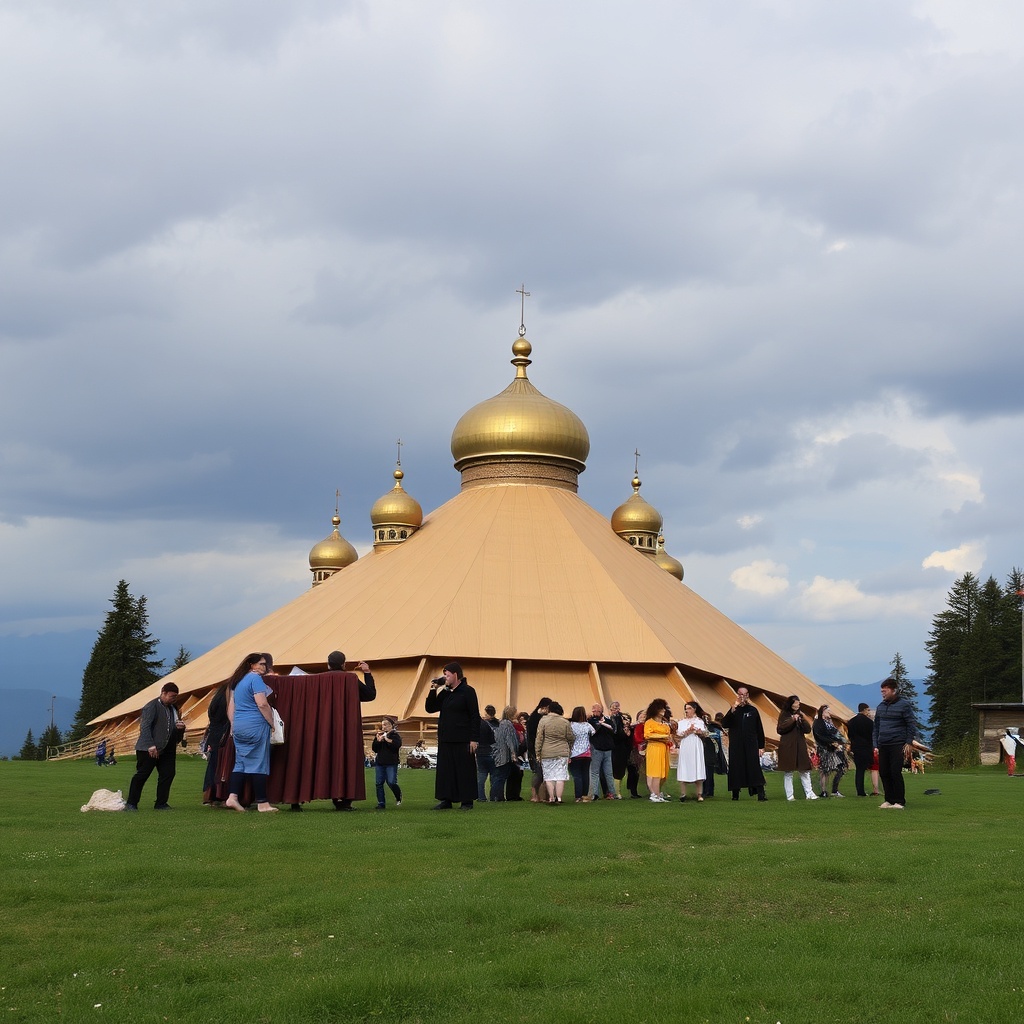
Raelianism, also known as the Raelian Movement, is a religious and philosophical movement that identifies itself as an atheistic religion, with origins in 1970s France. Founded by Claude Vorilhon, who later adopted the name Rael, the movement proposes a cosmology based on the belief that life on Earth was created by advanced extraterrestrial scientists known as the Elohim. The central doctrine revolves around the idea that humanity is at an evolutionary stage that will lead it to a future of peace and scientific knowledge, guided by these beings.
Raelianism: A Sociological, Historical, and Critical Analysis
Raelianism, as a religious and social phenomenon, requires a multifaceted analysis that integrates historical rigor, a sociological perspective, and critical scrutiny. This article aims to demystify the movement by presenting its origins, beliefs, structure, and, crucially, addressing the controversies surrounding it, based on documentary and academic evidence.
1. Sociological and Theological Definition
Sociologically, Raelianism can be classified as a new religious movement (NRM), characterized by its recent origins, flexible organizational structure, and a set of beliefs that diverge significantly from traditional religions. It presents itself as an "atheistic" religion in the sense that it rejects the notion of a supernatural creator in favor of scientific and technological creation by extraterrestrial beings. Theologically, its central doctrine is the belief in the Elohim, beings who, according to Rael's teachings, are extraterrestrial scientists who created life on Earth through genetic engineering and cloning. These beings were allegedly mistaken for gods by ancient civilizations. Salvation, in the Raelian view, is not of a spiritual nature, but rather a process of scientific and technological evolution, culminating in immortality through cloning and consciousness transfer. The movement emphasizes world peace, scientific education, and individual responsibility as pillars for the progress of humanity.
2. Historical Origin, Founders, and Geographic/Cultural Context
Raelianism began in France in 1973, when Claude Vorilhon (born in 1946) reported having an encounter with extraterrestrial beings. According to his narrative, an Elohim contacted him at a volcano in France and revealed the true origin of life on Earth. Vorilhon then adopted the name Rael, which means "the messenger," and began to disseminate his visions. The cultural context of the time, marked by the "space race," growing interest in ufology, and speculation about extraterrestrial life, may have contributed to the initial receptivity of his ideas. France, with its tradition of critical thinking and diverse philosophical movements, served as the cradle for the spread of Raelianism. Initially, the movement gained followers through lectures, publications, and a newspaper called "Planète." Over time, Raelianism expanded internationally, establishing itself in several countries, with a notable presence in North America, Europe, and Asia.
3. Main Beliefs, Dogmas, Rites, and Practices
The fundamental beliefs of Raelianism include:
- The Elohim: Scientifically advanced extraterrestrial beings who created life on Earth. They are described as corporeal, not supernatural, beings.
- Scientific Creation: Life on Earth is the result of genetic experiments and cloning performed by the Elohim. Biblical figures such as Adam and Eve are interpreted as the first humans created in a laboratory.
- Immortality: Achieving immortality is a central goal, which is expected to be reached through science, specifically through cloning and consciousness transfer. Raelians believe the Elohim have already achieved this immortality.
- Non-Violence and World Peace: The movement preaches peace, free love, individual responsibility, and the overcoming of all forms of discrimination.
- Scientific Reincarnation: They believe that reincarnation is not a spiritual process, but rather the possibility of having a new life through cloning, using the DNA of a deceased person.
- The Human Body as Sacred: The body is seen as a temple, and sexuality is considered a vital energy to be expressed in a free and consensual manner.
Rites and practices include:
- Reincarnation Ceremony: A ceremony where new members are symbolically "reincarnated," receiving a Raelian name and an identification number.
- Meditation: Meditative practices to achieve mental clarity and well-being.
- Adoption of a Healthy Lifestyle: They emphasize the importance of a vegetarian diet and abstinence from drugs and alcohol.
- Activism for Peace and Science: The movement is dedicated to promoting world peace, scientific education, and the dissemination of its ideas through conferences, publications, and projects such as the construction of an embassy for the Elohim.
4. Organizational Structure and Leadership Profile
The Raelian Movement is led by Rael, who is considered the prophet and spiritual guide. Its structure is global and decentralized, with local "guides" and "masters" responsible for the organization and promotion of the movement in their respective regions. There is an informal hierarchy, but the emphasis is on the active participation of members and the dissemination of Raelian ideas. Rael, as the central figure, maintains a strong influence over the doctrine and direction of the movement. He is the main spokesperson and author of the fundamental works of Raelianism. Leadership is, therefore, strongly centralized around his figure.
5. [WARNING/CONTROVERSIES] Factual Analysis of Potential Legal Controversies, Ethical Deviations, or "Destructive Cult" Characteristics
Raelianism has been the subject of considerable controversy and public scrutiny, with allegations that align it with characteristics of a "destructive cult" in some of its practices and statements. It is crucial to analyze these controversies based on facts and reports:
- Human Cloning and Ethical Controversies: The belief in human cloning as a path to immortality has been one of the most controversial points. In 2002, the Raelian Movement announced it had created the first cloned baby, named Eve. This claim sparked global outrage and was met with skepticism by the scientific community. Subsequent investigations and the lack of concrete evidence led the scientific community to dismiss the veracity of the claim. The Raelian company Clonaid, associated with the movement, was the target of accusations of fraud and exploitation. (Source: Scientific articles and reports from news agencies such as the Associated Press, Reuters, and publications like The Guardian and The New York Times at the time.)
- Financial Exploitation: There are reports and accusations that the movement exerts financial pressure on its followers to contribute to the funding of projects, such as the construction of the embassy for the Elohim, and to support the organization. The voluntary nature of donations is defended by the movement, but critics point to persuasion tactics that may border on coercion.
- Mind Control and Social Isolation: Although Raelianism promotes individual freedom and non-violence, some critics and former members have reported experiences of psychological pressure and a certain degree of social isolation, where adherence to Raelian beliefs and practices is strongly encouraged, potentially leading to a distancing from non-adherent family and friends. However, it is important to note that extreme social isolation and coercive mind control, defining characteristics of destructive cults, do not appear to be systemic and universal among all followers, but rather points of concern raised by some.
- Controversial Statements by Rael: Rael has made several public statements that have sparked controversy, including comments on sexuality, politics, and religion, which were interpreted by many as shocking or irresponsible. For example, his views on free sexuality and polygamy have been widely criticized.
- Accusations of Sexual Abuse: There have been allegations of sexual abuse against Rael, which he has always denied. These allegations, while not leading to criminal convictions, have contributed to the controversial image of the leader and the movement. (Source: Investigative documentaries and investigative media reports in various countries.)
It is fundamental to differentiate between philosophical beliefs and the possible occurrence of abusive practices. While beliefs about extraterrestrials and cloning are part of the doctrine, allegations of fraud, exploitation, and possible abuse require a critical analysis based on factual evidence. The absence of large-scale criminal convictions against the movement as a whole, compared to other organizations classified as destructive cults, may indicate complexity in the assessment, but the mentioned controversies raise serious red flags.
6. Social, Cultural Impact, and Contemporary Relevance
Raelianism, despite not being a mass movement, has had a notable cultural impact in specific niches, especially regarding ufology and the debate on cloning. Its emphasis on science and technology as paths to the future resonates with a portion of contemporary society. The movement continues to promote its ideas through its online presence, events, and publications. Its contemporary relevance lies in its ability to stimulate discussions on topics such as the origin of life, the future of humanity, the ethics of cloning, and the possibility of extraterrestrial life. The persistence of the movement, even in the face of controversy, demonstrates the resilience of new forms of spirituality and the human search for meaning and transcendence, even through unconventional paths.
References and Research Sources
- Barker, Eileen. "New Religious Movements: A Sociological Introduction." Oxford University Press, 1989. (General reference on new religious movements.)
- Dawson, Lorne L. "Comprehending Cults: The Sociology of New Religious Movements." Oxford University Press, 2006. (Sociological analysis of new religious movements and the debate on cults.)
- International news sources and agencies (Associated Press, Reuters, BBC, The Guardian, New York Times) for reports on human cloning allegations and other controversies.
- Investigative documentaries on the Raelian Movement (to be identified and cited specifically if used).
- Works published by the Raelian Movement and by Rael (e.g., "The Book Which Tells the Truth," "Intelligent Design").
- Academic articles on ufology, religious movements, and the ethics of cloning.





