



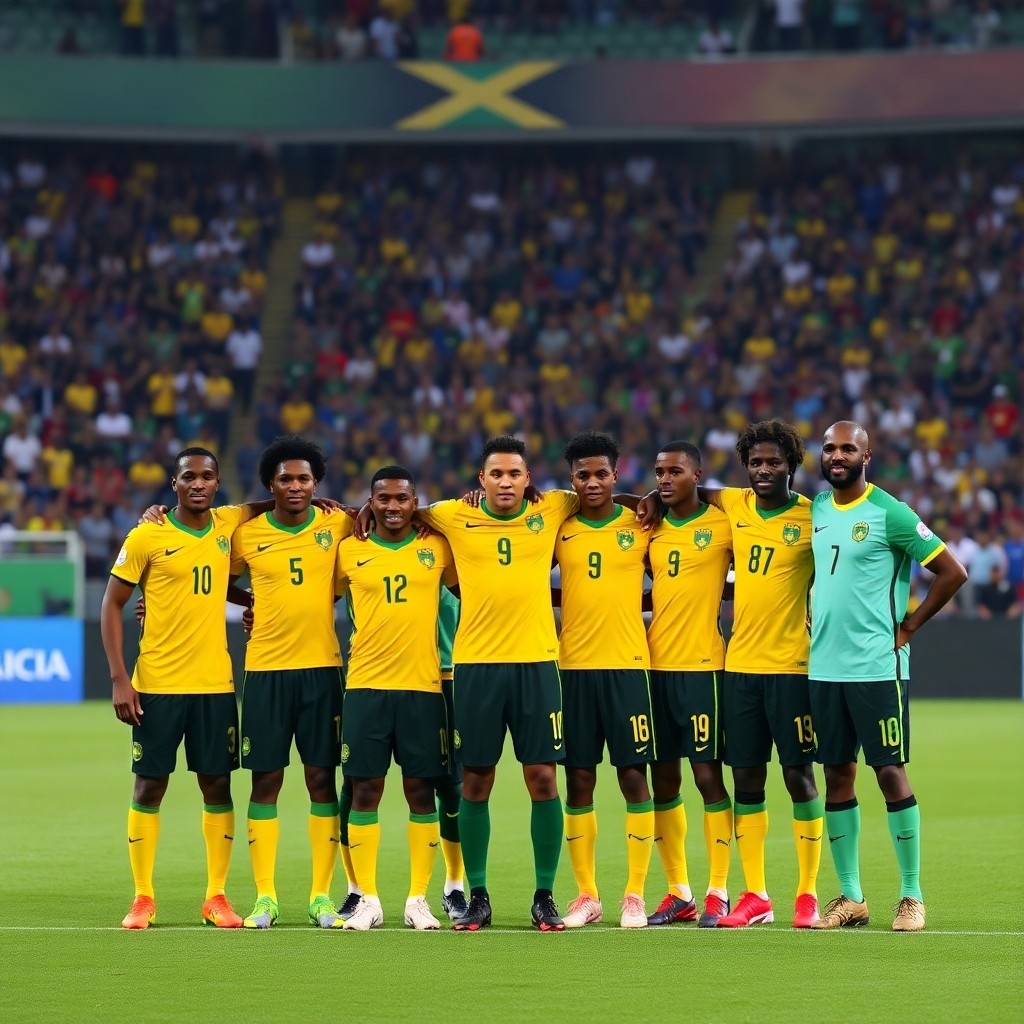
Football in Jamaica is a phenomenon that transcends the four lines of the pitch; it is a direct manifestation of a national identity shaped by resistance, cultural syncretism, and an incessant quest for global emancipation. Known worldwide by the nickname "Reggae Boyz," the Jamaican national team carries the weight of representing not only an island of just under three million inhabitants but also a vast and influential diaspora spread across the United Kingdom and North America. Historically situated between natural athletic brilliance and chronic administrative disorganization, Jamaica currently finds itself at a defining crossroads. With the expansion of the 2026 World Cup and the consequent absence of CONCACAF giants (United States, Mexico, and Canada) from the direct qualifiers, the Caribbean nation faces its greatest historical opportunity since the mythical qualification for the 1998 World Cup. This dossier analyzes the inner workings of a team seeking to harmonize the flair of its cultural roots with the tactical pragmatism of modern European football.
1. Origins and Formation of National Identity
To understand the genesis of football in Jamaica, it is imperative to analyze the landscape of colonization and the subsequent social stratification that defined the Caribbean island under the rule of the British Empire. Introduced in the late 19th century, football arrived in Jamaica via British military personnel, sailors, and colonial administrators. However, unlike cricket, which was quickly adopted by local elites as an instrument of social distinction and cultural mimicry of the metropole, football found its most fertile ground among the popular and urban classes of Kingston. While cricket clubs maintained rigid racial and class barriers, the dirt pitches of the Jamaican capital became spaces of resistance and self-affirmation for the Black population.
The founding of the Jamaica Football Federation (JFF) in 1910 marked the beginning of an attempt to organize the sport on the island, but it was only with the country's independence on August 6, 1962, that football began to be seen as a vector for building national identity. Under the government of leaders like Michael Manley in the 1970s, the sport was used as a tool for social integration and cultural diplomacy. Manley, a democratic socialist who promoted Pan-Africanism, saw football as a form of empowerment for the marginalized masses. It was during this period that Rastafarian culture and reggae began to merge inseparably with street football.
Bob Marley, the most iconic figure of Jamaican culture, was a passionate football fan, often associating the rhythm of reggae with the cadence of the game. For Marley and the Rastafarian community, football was not just a pastime, but a spiritual and physical expression of freedom. This philosophy directly influenced the local style of play: a football characterized by improvisation, explosive speed, physical vigor, and an almost rhythmic relationship with the ball. However, this cultural and technical richness contrasted sharply with the lack of infrastructure and the absence of a professionalized league, which limited the tactical development of the national team during the first decades post-independence.
The transition from a purely recreational and community-based game to a structured sport faced immense economic barriers. Jamaica, plagued by external debt crises and structural adjustment policies imposed by the International Monetary Fund (IMF) starting in the late 1970s, saw its investments in public sports infrastructure dwindle. Local talents emerged spontaneously in Kingston ghettos like Trenchtown and Tivoli Gardens, but the lack of grass pitches, basic sports equipment, and qualified physical trainers created an invisible ceiling for the development of local athletes. Jamaican football, therefore, developed under a duality: the aesthetic richness and physical power of its players versus the precariousness of its support structures.
2. Golden Era, Great Campaigns, and Eternal Idols
The pinnacle of Jamaican football history occurred in the 1990s, a period that culminated in the historic qualification for the 1998 FIFA World Cup in France. The great architect of this feat was the Brazilian coach René Simões, hired in 1994 by the JFF under the presidency of the charismatic and controversial Captain Horace Burrell. Simões quickly understood that although Jamaican players possessed extraordinary athletic ability, they lacked tactical discipline, off-field professionalism, and, above all, competitive exchange. It was Simões who coined the nickname "Reggae Boyz," humanizing and promoting the national team's brand globally.
To overcome the technical limitations of the local squad, René Simões adopted a revolutionary and bold strategy: recruiting English players of Jamaican descent who played in the top divisions of British football. This search within the diaspora brought fundamental names such as Robbie Earle, Marcus Gayle, Fitzroy Simpson, Deon Burton, and Paul Hall. The fusion of these athletes, molded in the tactical and physical rigor of English football, with the island's native talents—such as the skillful midfielder Theodore "Tappa" Whitmore, the fast striker Walter Boyd, and the reliable goalkeeper Warren Barrett—created a unique synergy.
The 1998 World Cup qualifying campaign was a national epic. In a dramatic final hexagonal in CONCACAF, Jamaica managed to secure the confederation's third spot, behind only Mexico and the United States. November 16, 1997, the day Jamaica drew 0-0 with Mexico at Independence Park (the famous "National Stadium" or "The Office") in Kingston, mathematically securing the spot, was declared a national holiday by Prime Minister P.J. Patterson. The entire nation stopped to celebrate the unprecedented achievement.
In France, Jamaica was drawn into Group H alongside Argentina, Croatia, and Japan. The debut against the strong Croatian side ended in a 3-1 defeat, but it was marked by Robbie Earle's historic goal, Jamaica's first in World Cups. After a tough 5-0 loss to Gabriel Batistuta and Ariel Ortega's Argentina, the Reggae Boyz bid farewell to the tournament in glorious fashion on June 26, 1998, by defeating Japan 2-1 at the Stade de la Beaujoire in Nantes. Both goals were scored by Theodore Whitmore, who definitively established himself as the country's greatest football hero. That 1998 team not only introduced Jamaica to the football world but also set a standard of charisma, unity, and national pride that was never fully replicated in the following decades.
Beyond the 1998 generation, Jamaica had other moments of continental prominence, reaching the CONCACAF Gold Cup finals in two consecutive editions: 2015 and 2017. Under the command of German coach Winfried Schäfer in 2015, the Jamaicans shocked the region by eliminating the United States in the semifinals in Atlanta, winning 2-1, before falling to Mexico in the final. In 2017, led on an interim basis by Theodore Whitmore, the Reggae Boyz repeated the feat of reaching the decider, eliminating Mexico in the semifinal with an anthological free-kick goal by Kemar Lawrence, but were ultimately defeated by the United States in the final. These runner-up finishes consolidated Jamaica as the primary force in Caribbean football in the 21st century, overcoming the historic rivalry with Trinidad and Tobago.
3. Rivalries, Crises, and Behind-the-Scenes Power
The trajectory of Jamaican football is inseparable from the intense political disputes, financial struggles, and governance crises that have plagued the Jamaica Football Federation (JFF) over the decades. Jamaica's main regional rivalry is against Trinidad and Tobago, a duel known as the "Caribbean Clásico." This rivalry is not limited to the pitch; it reflects a geopolitical and cultural struggle for economic and cultural supremacy in the Anglophone Caribbean. During the 1990s and 2000s, clashes between the two teams were marked by extreme physical and psychological tension, fueled by power struggles behind the scenes of the Caribbean Football Union (CFU), then controlled by the controversial Trinidadian official Jack Warner.
At the CONCACAF level, Jamaica developed a fierce rivalry with the United States and Mexico. Playing at Independence Park in Kingston became a nightmare for the region's giants due to the stifling heat, extreme humidity, the hostile and vibrant atmosphere created by the fans, and the quality of the pitch, often left long on purpose to slow down the technical game of the opponents. The nickname "The Office" arose precisely from the premise that, at that stadium, Jamaica was "working" and opponents would be duly dispatched.
However, the greatest enemies of Jamaican football's progress have often been within its own federation. The management of Captain Horace Burrell, while successful in the 1998 qualification, was marked by a centralizing and autocratic style. After his death in 2017, the JFF plunged into a leadership vacuum and a chronic financial crisis. Cases of resource mismanagement, delays in paying player bonuses, and a lack of logistical planning became routine. The relationship between the federation and the national team players has always been highly conflictual, resulting in several strike threats and boycotts.
One of the most emblematic episodes of this tension occurred in 2021, when a group of key players, including Leon Bailey and Damion Lowe, used social media to publicly denounce the JFF's lack of professionalism. The athletes reported exhausting economy-class flights before decisive matches, a lack of proper training equipment, low-quality hotels, and the failure to honor financial agreements. This internal rift sabotaged the 2022 World Cup qualifying campaign in Qatar. Administrative disorganization also drastically affected the women's team, the "Reggae Girlz," who, despite making history by qualifying for the 2019 and 2023 World Cups, had to resort to crowdfunding campaigns organized by Bob Marley's daughter, Cedella Marley, to cover their travel and training costs, exposing the JFF leadership's negligence and incompetence to the world.
Key Recent Conflicts and Crises
- Bonus Strike (2020-2021): Men's national team players refused to sign representation contracts due to what they considered paltry amounts offered by the JFF for the World Cup Qualifiers.
- The Leon Bailey Case: The team's biggest star had several disagreements with the coaching staff and the JFF board, eventually requesting a temporary leave from the national team, claiming the federation did not offer a minimum professional standard of structure.
- The Dismissal of Theodore Whitmore (2021): The country's greatest idol was fired from his position as head coach after a string of poor results in the Qualifiers, in a process surrounded by a lack of transparency and public criticism of his tactical ability by board members.
4. The Current Moment: Tactics, Generation, and Challenges
The contemporary scenario of the Jamaican national team is characterized by an accelerated process of technical and tactical modernization, driven by the hiring of Icelandic coach Heimir Hallgrímsson in 2022 (famous for taking Iceland to the quarterfinals of Euro 2016 and the 2018 World Cup) and, subsequently, the experienced English coach Steve McClaren in 2024. The arrival of these European professionals reflects the JFF's desire to inject collective organization, positional rigor, and defensive discipline into a team historically dependent on individual flashes and physical transitions.
Tactically, Jamaica has sought to transition from a traditionally reactive style, based on fast counter-attacks down the wings, to a more sustained and proactive model of play. Under McClaren's command, the team has been structured mostly in a 4-2-3-1 or 4-4-2 system in a mid-to-low block. The team's backbone is composed almost entirely of players who play in the English Premier League and other elite leagues in Europe. The goal is protected by Andre Blake, goalkeeper for the Philadelphia Union and widely considered one of the best in Major League Soccer (MLS). The defensive line relies on the solidity and experience of Ethan Pinnock (Brentford) and the leadership of Damion Lowe (Al-Okhdood), offering formidable aerial and physical protection.
The great leap in quality for the team, however, lies in the attacking sector. Jamaica currently possesses one of the fastest and most vertical attacking lines in international football. The trio composed of Leon Bailey (Aston Villa), Michail Antonio (West Ham), and Demarai Gray (Al-Ettifaq, formerly of Everton) gives the team devastating firepower in fast offensive transitions. Bailey prefers to play wide on the right wing, using his speed and tight dribbling to cut inside and finish with his left foot. Gray offers creativity and link-up play on the left, while Antonio acts as the central physical reference, capable of holding the ball with his back to the opposing defense, playing as a pivot, and creating space for midfielders to infiltrate.
Despite the enormous technical potential of this squad, the great tactical challenge for the coaching staff is finding balance in midfield. Defensive transition and recovery without the ball have been the team's Achilles' heel. Players like Bobby Decordova-Reid (Leicester City) and Kasey Palmer (Coventry City) must work double-time to ensure defensive support while simultaneously fueling the attack. The lack of a world-class holding midfielder who can dictate the pace of the game and organize the exit of the ball under pressure remains an evident gap in the Jamaican squad.
Another crucial challenge is group management. The coexistence between players born and raised in Jamaica and those born in the UK (often called "UK-born") requires cultural sensitivity from the coaching staff. Although integration is much more professional and harmonious today than in the 1990s, there are still disparities in terms of youth development and infrastructure expectations. The ability to unify these two realities under a single collective identity is what will determine the success or failure of Jamaica's sporting project in the short and medium term.
5. Talent Development, Structure, and Future
The future of Jamaican football depends fundamentally on the reform of its youth structures and the strengthening of its domestic league, the Jamaica Premier League (JPL). Historically, Jamaica does not have a professionalized club academy system similar to those in Europe or South America. Instead, the main engine for talent discovery on the island is the school football system, specifically the Manning Cup (for schools in the Kingston metropolitan area) and the daCosta Cup (for rural schools). These school competitions are immensely popular, attracting thousands of fans to stadiums and receiving extensive local media coverage.
However, while school football is excellent for community engagement and the initial detection of physically gifted athletes, it presents serious deficiencies in long-term tactical and technical training. Young athletes play on precarious pitches, under often outdated training methodologies, and without the nutritional and physiological monitoring necessary for high-performance sports. When these players reach 18 or 19 years old, they often find themselves tactically behind their European or North American peers.
To mitigate this problem, Jamaica has served as an export hub for Major League Soccer (MLS) and the United Soccer League (USL) in the United States. North American clubs conduct constant monitoring on the island, recruiting young standouts directly from school football or local clubs like Harbour View, Arnett Gardens, and Waterhouse. The MLS functions as a "finishing school" for the Jamaican player, where they finally receive elite tactical instruction, scientific physical preparation, and exposure to the international market.
The great strategic goal of the Jamaica Football Federation is the 2026 World Cup. With the expansion of the tournament to 48 teams and the automatic qualification of the United States, Mexico, and Canada as host countries, three additional direct spots and two for the intercontinental playoffs have opened up in CONCACAF. For Jamaica, failing to qualify for the 2026 World Cup would be considered a catastrophic failure of historical proportions, given the quality of the current squad and the favorable political situation in the confederation.
The path to consolidating Jamaica as a mid-tier global power involves the definitive professionalization of the JPL, the creation of modern national training centers, and the maintenance of a high-level international coaching staff that can continue the work of tactical organization. If the federation can align its administrative management with the extraordinary physical and technical raw material of its athletes, the Reggae Boyz will cease to be just a charismatic and folkloric attraction of world football and become a feared and respected competitor on any stage on the planet.





