



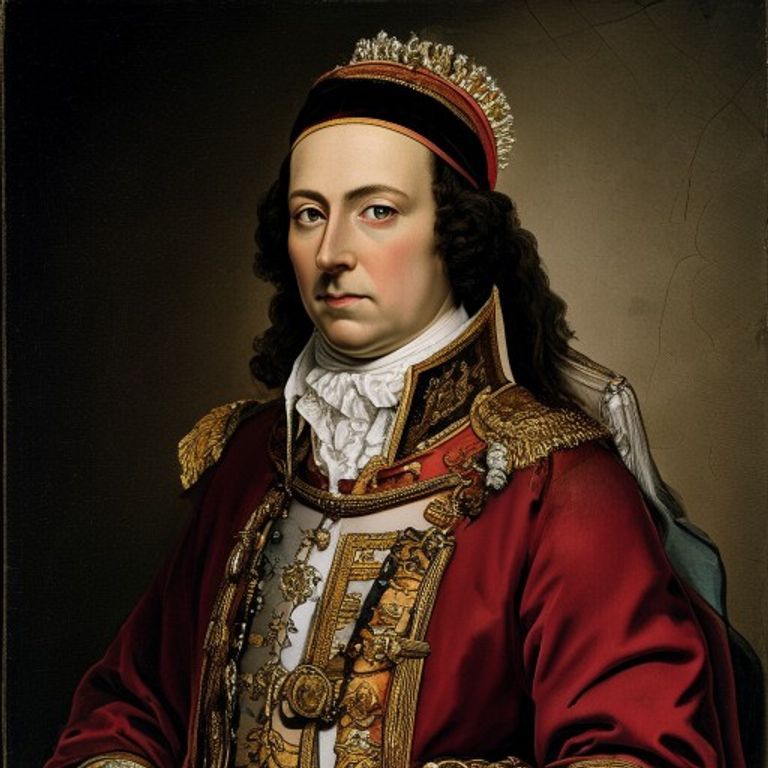
COMMENTED BY NAPOLEON BONAPARTE
Introduction
As Second Chancellor of Florence, Machiavelli had a very active political life. It was a time of change, the feudal system was being replaced by capitalist production, sovereignties were being absorbed by monarchies, and there was a centralization of power in Europe, except in Italy.
Machiavelli, then, participated in meetings with foreign courts to make political agreements. The experience of his life is recounted in this book, showing the common man the true intentions of an ambitious ruler.
Niccoló Machiavelli - To the Magnificent Lorenzo, son of Piero de Medici
Princes always receive good gifts, which are worthy of them, but I have found nothing among my possessions other than the experiences I have gained throughout my life, which I now send to Your Magnificence, reduced to a small volume.
Therefore, I accept this small gift, and in reading this work, my desire is that it may help you achieve that greatness which fortune and other qualities assure you.
Chapter I - Of the kinds of principalities, and of the many ways they are acquired
States can be republics or principalities, which were either inherited by blood or recently acquired. The new ones, such as Milan with Francesco Sforza, or such members joined to a state that receives a prince by inheritance, like the kingdom of Naples to the king of Spain. These acquired dominions are subject to a prince or are free, and they are acquired by foreign or one's own troops.
Chapter II - Of hereditary principalities
I will not discuss republics, but only principalities, and I will try to show how hereditary principalities can be governed and maintained. States tied to their prince's family are less difficult to govern than new ones, for it is enough not to abandon the predecessors' customs, and if the prince is intelligent, he will remain in power.
In Italy, for example, we have the Duke of Ferrara, who resisted the attack of the Venetians in 1484, and that of Pope Julius in 1510, solely because his family's dominion was ancient, and it was evident that he would become more beloved.
Chapter III - Of mixed principalities
The greatest difficulty lies in new principalities, which can also be states joined to hereditary ones, which we could call mixed principalities. This is because the populace revolts against the new prince who had to offend his new subjects with his troops and through other offenses that a recent conquest provokes.
Then, all those who were harmed by the occupation of the principalities will be his enemies, and his friends will be those who put him there because they were dissatisfied. And even if he is strengthened, he cannot be violent against them because he needs the goodwill of the inhabitants. This was the mistake of Louis XII, King of France, when he occupied Milan; the same people who opened the gates turned against him when they realized they were mistaken about the good that prince would bring.
States conquered and added to an ancient state, being in the same province and of the same language, are easily subdued, especially if they are not accustomed to living free.
For states with different languages but the same customs, the conqueror, to preserve them, must aim for two rules: first, to extinguish the language of the former prince; second, not to modify laws and taxes.
Now, in a province with a different language, customs, and legislation, the most effective way to conquer it is for the prince to reside there, so he can put an end to disorders as soon as they arise; otherwise, by the time the news reaches him, it will be too late to act. Another way is to establish colonies in some places in the conquered province.
The Romans organized colonies in conquered provinces; look in the province of Greece, Rome fostered the Achaeans and Aetolians, subdued the kingdom of the Macedonians, and expelled Antiochus.
The desire for conquest is a natural and common thing, and men who can satisfy it will always be praised and never blamed. But if they cannot and want to do so anyway, then they are mistaken and deserve censure.
Chapter IV - The reason why the kingdom of Darius, conquered by Alexander, did not revolt against his successors
The fact that Alexander the Great conquered Asia in a few years and then died soon after, and the people did not revolt against his successors, is astonishing. Of the principalities we recall, there are two ways of governing: either by princes assisted by ministers, or by a prince and barons.
Such barons have their own domains and subjects, who recognize them as lords and bear them natural affection.
Now, considering the nature of Darius's government, it is similar to that of the Sultan of Turkey. If it was necessary for Alexander to defeat the enemy en masse after victory, then after Darius's death, the state was secure. And Alexander's successors, had they maintained unity, could have idly enjoyed that kingdom; there were no other disturbances than those they themselves provoked.
The conquest of a people is not solely the merit of the conqueror, but of the differences among the subjugated peoples.
Chapter V - Of the method of holding cities or principalities which, before they were occupied, lived by their own laws
Explanation of how to preserve governments with inherent ideologies. Even if new ideologies are infiltrated, the old laws of the principality will persist until the new principality transgresses the old rules and declares new rules, as long as it allows '...the memory of lost freedom to rest.'
Chapter VI - Of new principalities acquired by one's own arms and by virtue Cites examples of Moses, Theseus, among others, who became princes by their own virtue.
Chapter VII - Of new principalities acquired by the arms and fortune of others The author discusses Cesare Borgia, son of Pope Alexander VI, whose conquests were driven by his father's powerful position and, later, by alliances with stronger individuals than himself, such as Remiro de Orco.
Chapter VIII - Of those who have attained a principality by crime
In this chapter, the author deals with the act of reaching a principality through '...wicked or nefarious deeds...'. It is worth highlighting the way Machiavelli proposes that injuries to the people should be dealt with, according to him, '...all at once, so that, lasting a short time, they are felt less...'. It is also interesting how benefits to the people should be dispensed: '...little by little, so that they may be better savored...'.
Chapter IX - Of the civil principality
What can be called a civil principality, as it does not require great valor or fortune, but rather cunning. This is achieved through the favor of the nobles or the people. In cities, these two dispositions are found: the people do not want to be oppressed by the nobles, and the nobles desire to command and oppress the people. These two appetites produce effects: the principality, liberty, or anarchy.
The principality is the work of the people or of the nobles, depending on the opportunity seized by one or the other. The nobles, realizing they cannot oppose the people, begin to promote the reputation of a member of the populace and make him prince. This prince faces difficulties in maintaining power. On the other hand, the people, realizing their inability to oppose the nobles, grant prestige to someone and make him prince, so that he may defend them with his authority. This prince helps the people without difficulty, as he is surrounded by others who seem equal to him.
On the other hand, he who attains the condition of prince thanks to the people finds himself alone, with no one or few around him who are not ready to obey him. He can honestly and without prejudice to others satisfy the nobles, but he can certainly satisfy the people, for they have a more honorable desire than the nobles: the nobles wish to oppress, and the people do not want to be oppressed.
The worst a prince can expect from a hostile populace is to be abandoned by it; but hostile nobles must not only fear abandonment but also attack. This prince must always live with the same people, but not always with the same nobles.
For a prince, it is necessary to count on the people's friendship, otherwise, there will be no solutions in adversity. A wise prince must think of a way by which his citizens, always and in all circumstances, will depend on the State and on him, and thus they will always remain loyal to him.
Chapter X - How the forces of all principalities ought to be measured
Princes capable of maintaining themselves alone, who, by abundance of men and money, can constitute a strong army and face any assailant. These armies must be governed by laws. In this way, this principality will have a fortified city, but one that does not make itself hated.
Human nature obliges man to reciprocate benefits received. It can be concluded that it will not be difficult for a prudent prince to secure himself from his people.
Chapter XI - Ecclesiastical principalities
For these, all sorts of obstacles appear, because they are obtained by merit or fortune, but they are maintained by the routine of religion. These are so strong that they can keep their princes regardless of how they live. By this power, such principalities are considered secure and happy.
It is to be expected that some have made the Papacy powerful by arms. May the current pontiff, through his goodness and many other virtues, make it stronger and more revered.
Chapter XII - Of the kinds of militias and of mercenary soldiers
It is necessary for a prince to have solid foundations; such as good laws and principles. Since good laws do not exist where there are no arms, therefore, the forces by which a prince preserves his state are either his own, mercenary, auxiliary, or mixed. Mercenary and auxiliary forces are useless and dangerous, as they are not truly bound to the prince, are ambitious, undisciplined, unfaithful, insolent to friends, and cowardly to enemies; they do not fear God, nor do they trust men. Thus, the prince only delays his own ruin.
The prince must make himself a captain; the Republic will send one of its citizens for this role, but if he is unsuccessful, he must be immediately replaced. But if he proves his worth, the Republic must secure his duties through laws.
The captains kept away from themselves and their soldiers the fear and the work, sparing themselves in battles and allowing themselves to be captured without ransom. Everything was permitted to them in their military code, which aimed to avoid work and dangers. In this way, they enslaved and infamized Italy.
CHAPTER XIII - Of auxiliary, mixed, and native troops
Auxiliary troops are sent by powerful allies to your aid. These can be good and useful, but in case of defeat, you are defeated, and in case of victory, you become their prisoner. Mercenary forces, after a victory, need more time to cause harm, as they were organized and paid by you.
All prudent princes repelled this type of troops, the auxiliary ones, always preferring their own troops to achieve a true victory.
With this observation of different troops, it is concluded that without possessing one's own troops, no prince is guaranteed against setbacks. Own forces are composed of subjects or citizens, or of servants; all others are mercenary or auxiliary.
CHAPTER XIV - Of the duties of a prince towards his troops
CHAPTER XV - Of the reasons why men, and especially princes, are praised or blamed
CHAPTER XVI - Of liberality and parsimony
CHAPTER XVII - Of cruelty and clemency—whether it is better to be loved than feared
CHAPTER XVIII - In what manner princes should keep faith
The prince should have no other aim or thought than war, its conduct, and its discipline, for that is the only art attributed to those who command. It is of such power that it not only maintains those who were born princes but often elevates citizens of humble condition to that quality. A prince not versed in military affairs, besides other misfortunes, as has been said, cannot have the esteem of his soldiers nor rely on them.
A wise prince should consider the histories of other countries and meditate on the actions of illustrious men, study the reasons for their defeats and victories, and never be idle in times of peace; rather, he should intelligently build up resources from which he can draw advantage in adversity, so as to be prepared to resist them at any time.
Princes become notable for the qualities that bring them blame or praise. Anyone will recognize that it would be very commendable for a prince to possess all the qualities considered good; but the condition of man is such that it does not allow for the complete possession of them; the prince must be so prudent that he knows how to avoid the defects that would cause him to lose his government and practice the qualities that would guarantee him its possession.
Liberality, used so that your fame of being liberal may spread, is not a virtue; if it is practiced virtuously and as it should be, it will be ignored and you will not escape the ill repute of its opposite. Therefore, not being able to use this virtue without prejudice to himself, he must, being prudent, despise the stigma of being a miser, for with time, he will be able to show that he is always more liberal, for the people will see that the prince's parsimony makes his revenue sufficient for him to defend himself against those who wage war against him, and thus he is liberal to all those from whom he takes nothing, which are many, and stingy to those to whom he gives nothing, which are very few. It is more prudent to have a reputation for being stingy, which brings ill repute without hatred, than to incur the reputation of being extravagant in order to have a reputation for liberality, which brings odious infamy.
Every prince should wish to be considered pious and not cruel; nevertheless, he must take care to use this piety appropriately. He should not, therefore, care about the stigma of cruelty to keep his subjects united and faithful, because, with few exceptions, he is more pious than, by excessive clemency, he allows disorders to arise, which can lead to murders or robberies. For such consequences harm the entire people, and executions harm only one.
It is much safer to be feared than loved when one is forced to fail in one of the two. Men hesitate less to offend those who make themselves loved than those who make themselves feared. The prince should make himself feared in such a way that, if he is not loved, he at least avoids hatred, for it is easy to be both feared and not hated. Therefore, a wise prince loves men as they wish to be loved, and being feared by them as he wishes, he must establish himself in what is his and not in what belongs to others. In short, he must only avoid being hated.
There are two ways of fighting: one by laws, the other by force. The former is natural to man, the latter to animals. It is necessary, however, for the prince to know how to employ both the animal and the man appropriately, and one without the other leads to instability. A prince of prudence cannot, nor should, keep his word when it is detrimental to him and when the reasons that moved him to give it no longer exist. A prince cannot adhere to all things considered good, often being forced to act against charity, faith, humanity, and religion. In the actions of men, especially of princes, only the good or bad outcome matters. Let him therefore strive to conquer and maintain the state, for the means he employs will always be judged honorable and praised, because the vulgar are swayed by appearances and by the consequences of accomplished facts, and the world is made up of the vulgar, and there will be no place for the minority if the majority does not find a place to support itself.
Chapter XIX - How a prince should avoid being despised and hated
The prince should seek to avoid things that make him hated or despised, and whenever he acts thus, he will fulfill his duty and will encounter no danger from other defects. What makes him especially hated is being rapacious and usurping the property and women of his subjects. It makes him despised to be considered fickle, frivolous, effeminate, cowardly, and irresolute. Such things should be avoided as a navigator avoids a rock. He should make his actions demonstrate greatness, courage, gravity, and fortitude, and concerning the private actions of his subjects, he should make his presence irrevocable, behaving in such a way that no one thinks of deceiving him or changing his mind.
He should defend himself from these with good arms and good allies, and having arms, he will always have good friends. Internal affairs, in turn, will be stabilized if external affairs are stabilized, except for those that are already disturbed by a conspiracy. Regarding subjects, one should fear that they may always conspire in secret, and if he has managed to make the populace satisfied with him.
A prince should care little about conspiracies if he is loved by the people, for if they are his enemy and hate him, he should fear everything and everyone. He should esteem the powerful, but not become hated by the people.
And it should be noted that hatred is acquired either by good or bad actions. Therefore, a prince wishing to preserve his state is often forced not to be good, because when the majority, whether people, senate, or nobles, on whom he believes he needs to rely to stay in power, is corrupt, it is convenient to follow their thinking to satisfy them, and thus, good deeds are harmed.
It should be noted at this point that assassinations, deliberately carried out by obstinate men, are impossible for Princes to avoid because anyone who does not fear death can carry them out; however, the Prince should not be frightened, as they are very rare. He should only avoid grievously insulting any of the people he employs and has by his side in the service of his government, as did Antoninus. He had unjustly killed the brother of that centurion, and still threatened the latter daily, but nevertheless kept him in his guard, which was a reckless thing and capable of ruining him, as indeed happened.
However, whoever observes what has been narrated will understand that hatred and contempt were the reasons for the ruin of many emperors and will also know the reasons why some of them, acting in one way and others in a contrary manner, some ended well and others had a sad end.
Chapter XX - Whether fortresses and other things which princes often have built are useful or not
Some Princes, to secure their states, have disarmed their subjects, others have divided conquered cities by fostering factions to fight each other, others have fueled animosities against themselves, others have sought the support of those who were suspicious of them at the beginning of their reign, and still others have built fortresses.
Taking away arms, primarily to offend them, implies distrust or cowardice. Any of these opinions will generate hatred against you. No prince in a new principality has always organized armed forces, but a prince who conquers a new state, to be annexed to his dominion, then it is necessary to disarm that state, except for those who helped conquer it; and even these, over time, must be made apathetic and soft, so that all the arms of that state are with your soldiers, who lived with you in the old state.
Often, the services of former adversaries serve a prince better than those of men who, due to excessive security, neglect the prince's interests.
Considering all these things, we will praise those who build fortresses and also those who do not build them, and we will lament those who, relying on such means of defense, do not concern themselves with the fact that the people hate them.
Chapter XXI - What a prince must do to be esteemed
Nothing makes a prince so esteemed as great enterprises and rare examples of himself. A prince must be careful not to ally himself with a more powerful one, unless absolutely necessary, because, if he wins, he will be indebted to the ally; and princes must avoid being at the mercy of another at all costs.
A prince must show himself a lover of virtues and honor those who excel in any art.
Chapter XXII - Of the secretaries of princes
The choice of his ministers is not a matter of little importance. For a prince to know his minister well, there is this unfailing method: when you notice that the minister thinks more of himself than of you, and that in all his actions he seeks personal gain, you can be sure that he is not good, and you can never trust him; he who manages the affairs of state should never think of himself, but always of the prince, and never remind him of things outside the sphere of the state.
The prince, to secure himself from his minister, should think of him, honoring him, making him rich, making him incur obligations to you, making him participate in honors and positions, so that his many honors do not lead him to desire others.
Chapter XXIII - How flatterers are to be avoided
There is no other way to protect oneself from flattery than to make men understand that they do not offend you by speaking the truth; however, when everyone can tell you the truth, you will lack respect. A prudent prince should, therefore, behave in a third way, choosing wise men in his state and granting only to them the right to tell him the truth about matters, but only about those things he inquires about.
A prince should always seek advice, but only when he judges it appropriate, not when others wish it. Even if he believes someone is not telling him the truth out of fear, the prince should not fail to show his displeasure. It follows from this that good advice, wherever it comes from, originates from the prince's prudence, and not the prince's prudence from good advice.
Chapter XXIV - Why the princes of Italy have lost their states
A new prince is much more scrutinized in his actions than a hereditary one, and when these actions show virtue, they attract men more and oblige them more than the antiquity of blood. This is because men are much more attached to present things than to past ones, and when they find good in the former, they are content and seek nothing more; indeed, they will defend the prince if he does not fail in his other promises.
Thus, these princes of ours, who, for many years, possessed their principalities, only to lose them afterwards, should not blame fortune, but their own ignominy; because, having never in good times thought that times could change (and it is common for men not to worry in calm weather about storms), when adverse times arrived, they thought of fleeing and not defending themselves, and waited for the populations, tired of the insolence of the victors, to recall them.
You do not wish to fall simply because you believe you will find someone to lift you up. This either does not happen, or when it does, it will not bring you security, because it is a weak means of defense that does not depend on you. And the means of defense that depend on oneself and one's own valor are always good, certain, and lasting.
Chapter XXV - How much fortune can do in human affairs and in what way one should resist it
I am not unaware that many have had and still have the opinion that the affairs of the world are directed by fortune and by God, so that human prudence cannot correct them, nor can it even provide any remedy for them. This is what happens with impetuous rivers that, when they become enraged, flood the plains, destroy trees, buildings, everything yields to their impulse, without being able to stop them; but it is no less true that men can, when the river calms down, build dikes so that, in the next raging of the river, it will flow through channels that will certainly contain part of the damage. The same happens with fortune: its power manifests itself where there is no organized resistance.
Regarding the paths that lead men to the goals they seek, they can be diverse. It is noted that two individuals, to reach the same objective, can act in completely different ways; on the other hand, two men acting in the same way may not achieve the same results. But certainly, in whatever way a man behaves, he must modify his conduct according to the time and circumstances.
I conclude, therefore, by saying that, as fortune changes, and men obstinately maintain their way of proceeding, they are happy as long as this way of acting and the particular circumstances of the time align. When they do not align, they will be unhappy.
Chapter XXVI - An exhortation to the prince to liberate Italy from the barbarians
Thus, having been left almost lifeless, Italy awaits one who can heal its wounds and end the plunder of Lombardy, the tribute of the kingdom of Naples and Tuscany, and cure its long-festering sores. It is clear that it begs God to send someone to redeem it from such cruelties and insolence of foreigners. It is even seen that it is ready and willing to follow a banner, provided there is someone to raise it. There is great valor in the people, although there is a lack of leaders. Observe, in duels and tournaments, how superior Italians are in strength, skill, and intelligence. However, when it comes to armies, these qualities do not manifest themselves. And all this stems from the weakness of the leaders, for those who know are not obeyed and everyone believes they know a lot, with no one having emerged so far whose valor or fortune is so outstanding that it compels others to clear the way for him. It is for this reason that in so much time, in so many wars that have occurred in the last twenty years, any entirely Italian army has always performed poorly.
It is therefore necessary to prepare arms, to be able to defend oneself against foreigners with Italian bravery itself. And although Swiss and Spanish infantry are considered formidable, both have flaws, so that a third power, which were to be created, could not only oppose them but also have confidence in victory. It is possible, therefore, by knowing the flaws of these two infantries, to organize a third that resists cavalry and does not fear its rival. And from this will come the formation of a generation of warriors and the alteration of methods. And it is these things that, reorganized, give reputation and greatness to a new prince.
Therefore, this opportunity must not be missed, so that Italy, after so long, may find a redeemer. This domination of barbarians already stinks to everyone. Take, therefore, your illustrious house this task with that spirit and that faith with which good causes are espoused, so that, under your banner, this homeland may be ennobled, and under your auspices may be fulfilled that expression of Petrarch.
APPENDIX - Letter from Machiavelli to Francesco Vettori
Magnificent Ambassador. The graces of God are never too late. I say this because it seemed to me that I had not lost, but weakened, your favor, having you remained so long without writing to me, and I was in doubt as to where the reason might come from. And to all the reasons that came to my mind I gave little importance, except to the one by which I doubted that you had stopped writing to me, because you had been told that I was not a good keeper of your letters; and I knew that, except for Felippo and Pagolo, no one else had seen them from me. I cannot, therefore, wishing to repay you equally, tell you in this letter anything other than about my life, and if you judge that I should exchange it for yours, I would be satisfied to change it. And as Dante said, one cannot have the science of one who has not kept what he has heard - I note what I have gained from your conversation and have composed a small treatise DE PRINCIPATIBUS, where I delve as deeply as I can into the thoughts of this subject, discussing what a principality is, of how many kinds there are, how they are conquered, how they can be maintained, why they are lost; and if any fancy of mine has ever pleased you, this one should not displease you. And my faith should not be doubted, for I have always kept faith, and I will not break it now; and whoever has been faithful and good for forty-three years, which is how old I am, should not be able to change his nature; and my poverty is a testament to my faith and goodness. Therefore, I wish that you would still write to me what you think on this subject, and I commend myself to you.
Extracts from Machiavelli's Discourses on Livy
[Commented by Napoleon Bonaparte]
I - It is difficult for a people accustomed to living under the rule of a prince, having by some chance fallen under a republican government, to remain in it.
II - A corrupted people in a republican state is maintained with great difficulty.
III - When a monarchical state has begun well, a weak prince can maintain himself in it, but there is no kingdom that can sustain itself when the successor of that prince is as weak as himself.
Princes are weak when they are not always ready to wage war.
IV - The prince who enters a new state must renew it entirely.
Whoever becomes prince of a state, or province, particularly when he is weakly established in them. It is necessary to establish new governments, like new names for cities, a new authority, and new men, as David did when he became king: he must build new cities, destroy old ones, move inhabitants from one place to another, that is, leave nothing unaltered in that province.
He who wishes to reign over a new province, neglecting this wise alternative of living as a private citizen, must do this evil if he wishes to maintain himself.
V - The mob is audacious, but at heart it is weak.
I am certain, therefore, that the good or bad disposition of a people should be taken into little account if you are in a position to contain it and to ensure that you are not offended by any individual, whether well or ill disposed.
The bad dispositions arising from these causes are formidable and require greater remedies to suppress and contain them, while this is easier in other bad dispositions, provided that the people do not have leaders to whom they can turn.
For this reason, a rebellious mob that wishes to avoid such dangers should choose a leader and think about its defense, as the Roman masses did. When the plebs do not take such precautions, what Titus Livy said happens to them: that all together they are audacious, and then each one becomes cowardly and weak when he begins to think about the danger that threatens him.
I do not believe it can be said that among those born of humble condition who have risen to wield a scepter, there was at least one who did so through force and weakness.
What princes need to do for their elevation is also necessary in new republics, until they have become powerful and only need strength to sustain themselves.
VI - Whoever rises from a low condition to the highest elevation achieves much more through fraud than with force.
VII - The prince who, through his deference to the governed, believes he can temper their audacity, generally deceives himself.
It has often been observed that this word is not only useless but harmful, especially when exercised with insolent men who, out of envy or other motives, hate you.
A prince, therefore, should never allow himself to be degraded from his position nor abandon anything, unless he cannot or believes he cannot retain what is required of him to yield. It is almost always the case, when the matter has reached a point where it cannot be yielded willingly, that it is better to let it be taken by force than to let it be stolen through it. When you yield out of fear to avoid a war, and often, you cannot yield willingly, it is better to let it be taken by force than to let it be stolen through it. When you yield out of fear to avoid a war, and often, you do not avoid it. He to whom, out of visible cowardice, you have granted what he wanted, will not stop there.
VIII - How dangerous it is for a prince, as well as for a republic, not to punish affronts committed against a nation or an individual.
One can perceive how much indignation caused by the impunity of the guilty must occasion harm if one considers what happened to the Romans for not punishing the perfidy of their three ambassadors concerning the Gauls to whom they had been sent to Clusium.
The Gauls, learning that those who deserved simple punishment were honored, viewed this conduct as offensive and ignominious to themselves and, indignant and angry, they rushed upon Rome and took it, except for the Capitol.
This misfortune did not happen to the Romans solely because they had failed in justice, but because their ambassadors, who should have been punished for having acted criminally against the law of nations, were showered with honors for this infamy. Therefore, let princes be careful; for if they are gravely offended by someone, individual or state, and receive no satisfaction, they will take revenge in a manner that is fatal to the state.
A prince should never underestimate any of his subjects who believes that, by adding his own injury to that which one of them may have inflicted upon him, whether private individual or courtier, he will have the idea of taking revenge on the prince, even if it means bringing misfortune upon himself.
IX - Fortune blinds men's minds when it does not want them to oppose its designs.
If one considers the course of human affairs, one will recognize that accidents often occur against which the heavens did not wish men to be able to guard themselves.
Nothing is truer than this conclusion: men whose lives have been formed by great adversity or by perennial prosperity deserve neither censure nor praise.
When fortune wishes great things to be done, it works competently by choosing a man of great genius to recognize the occasions it will present to him and of sufficient worth to take advantage of them.
It is true that men can assist fortune; they can guide, not cut, the thread of its operations. However, they should never despair, because, not knowing the end to which it leads and walking along controversial and unknown paths, they should always hope and, consequently, sustain themselves with hope, without any critical or uncomfortable circumstances in which they find themselves.
X - A government should avoid entrusting offices or administrations of some importance to those whom it has offended.
This truth is so evident that it is enough to present here the example that Roman history provides.
When we see how much resentment influences a Roman citizen in times when Rome was not corrupt, we must foresee how much it can do in a citizen of a state where corruption has taken root and where souls are devoid of all ancient Roman magnanimity.
XI - Why the French were and still are regarded, at the beginning of a combat, as more than men and less than women when it is prolonged.
To demonstrate my opinion, I must observe that there are some types of armies: the first is one in which order is combined with fury, and in which fury and valor stem from the reigning order; such was the effect that the Romans observed in their armies.
Another type of army is one in which there is neither natural fury nor occidental order; such are the Italian armies of our time, which are for this reason absolutely useless.
XII - Of the genius of the French
The French genius perceives the benefits and harms of the moment so quickly that it retains little memory of past goods and evils and is little concerned with future goods or evils.
XIII - A portrayal of affairs in France
The French are, by nature, more fiery than daring or skillful, and when someone resists their fury in the first assault, they become humble and lose so much valor that they become as cowardly as women.
They do not tolerate narrowness and lack of comfort, and time wears them down so much in campaign that, if it is possible to make them wait, they disband and then it is easy to defeat them... Therefore, whoever wishes to triumph over them, let him contain them in their first assault, let him entertain them to gain time, and he will defeat them. For this reason, Caesar said that the French - Gauls - were, initially, more than men and, in the end, less than women.
XIV - Details of Castruccio Castracani, Lord of Lucca
In a terrible battle that Castruccio Castracani sustained against the Florentines, seeing that it had lasted long enough for them to be as tired as his own troops, he ordered a thousand infantrymen to advance through his ranks and ordered those in the vanguard to open up and make a retrograde movement, some to the right and others to the left, as if retreating.
Castruccio used to say that men should experience everything and be surprised by nothing; that God loves valiant men, considering that we should punish the weak through them.
He ordered the execution of a citizen of Lucca who had contributed to his rise, and when it was thrown in his face that he had killed a friend, he replied that they were mistaken, as he had ordered the death of only a new enemy.
Bibliography
MACHIAVELLI, Niccolò. O Príncipe; commented by Napoleão Bonaparte; translation by Torrieri Guimarães. São Paulo: Hemus-Livraria Editora Ltda., 1977
• [H2]The Prince - Machiavelli (COMMENTED BY NAPOLEON BONAPARTE, Analysis and Summary)[/H2]
[H3]Introduction[/H3]
As Second Chancellor of Florence, Machiavelli had a very active political life. It was a time of change, the feudal system was being replaced by capitalist production, sovereignties were being absorbed by monarchies, and there was a centralization of power in Europe, except in Italy.
Machiavelli, then, participated in meetings with foreign courts to make political agreements. The experience of his life is recounted in this book, showing the common man the true intentions of an ambitious ruler.
[H3]Niccoló Machiavelli - To the Magnificent Lorenzo, son of Piero de Medici[/H3]Princes always receive good gifts, which are worthy of them, but I have found nothing among my possessions other than the experiences I have gained throughout my life, which I now send to Your Magnificence, reduced to a small volume.
Therefore, I accept this small gift, and in reading this work, my desire is that it may help you achieve that greatness which fortune and other qualities assure you.
[H3]Chapter I - Of the kinds of principalities, and of the many ways they are acquired[/H3]States can be republics or principalities, which were either inherited by blood or recently acquired. The new ones, such as Milan with Francesco Sforza, or such members joined to a state that receives a prince by inheritance, like the kingdom of Naples to the king of Spain. These acquired dominions are subject to a prince or are free, and they are acquired by foreign or one's own troops.
[H3]Chapter II - Of hereditary principalities[/H3]I will not discuss republics, but only principalities, and I will try to show how hereditary principalities can be governed and maintained. States tied to their prince's family are less difficult to govern than new ones, for it is enough not to abandon the predecessors' customs, and if the prince is intelligent, he will remain in power.
In Italy, for example, we have the Duke of Ferrara, who resisted the attack of the Venetians in 1484, and that of Pope Julius in 1510, solely because his family's dominion was ancient, and it was evident that he would become more beloved.
[H3]Chapter III - Of mixed principalities[/H3]The greatest difficulty lies in new principalities, which can also be states joined to hereditary ones, which we could call mixed principalities. This is because the populace revolts against the new prince who had to offend his new subjects with his troops and through other offenses that a recent conquest provokes.
Then, all those who were harmed by the occupation of the principalities will be his enemies, and his friends will be those who put him there because they were dissatisfied. And even if he is strengthened, he cannot be violent against them because he needs the goodwill of the inhabitants. This was the mistake of Louis XII, King of France, when he occupied Milan; the same people who opened the gates turned against him when they realized they were mistaken about the good that prince would bring.
States conquered and added to an ancient state, being in the same province and of the same language, are easily subdued, especially if they are not accustomed to living free.
For states with different languages but the same customs, the conqueror, to preserve them, must aim for two rules: first, to extinguish the language of the former prince; second, not to modify laws and taxes.
Now, in a province with a different language, customs, and legislation, the most effective way to conquer it is for the prince to reside there, so he can put an end to disorders as soon as they arise; otherwise, by the time the news reaches him, it will be too late to act. Another way is to establish colonies in some places in the conquered province.
The Romans organized colonies in conquered provinces; look in the province of Greece, Rome fostered the Achaeans and Aetolians, subdued the kingdom of the Macedonians, and expelled Antiochus.
The desire for conquest is a natural and common thing, and men who can satisfy it will always be praised and never blamed. But if they cannot and want to do so anyway, then they are mistaken and deserve censure.
[H3]Chapter IV - The reason why the kingdom of Darius, conquered by Alexander, did not revolt against his successors[/H3]The fact that Alexander the Great conquered Asia in a few years and then died soon after, and the people did not revolt against his successors, is astonishing. Of the principalities we recall, there are two ways of governing: either by princes assisted by ministers, or by a prince and barons.
Such barons have their own domains and subjects, who recognize them as lords and bear them natural affection.
Now, considering the nature of Darius's government, it is similar to that of the Sultan of Turkey. If it was necessary for Alexander to defeat the enemy en masse after victory, then after Darius's death, the state was secure. And Alexander's successors, had they maintained unity, could have idly enjoyed that kingdom; there were no other disturbances than those they themselves provoked.
The conquest of a people is not solely the merit of the conqueror, but of the differences among the subjugated peoples.
[H3]Chapter V - Of the method of holding cities or principalities which, before they were occupied, lived by their own laws[/H3]Explanation of how to preserve governments with inherent ideologies. Even if new ideologies are infiltrated, the old laws of the principality will persist until the new principality transgresses the old rules and declares new rules, as long as it allows '...the memory of lost freedom to rest.'
[H3]Chapter VI - Of new principalities acquired by one's own arms and by virtue[/H3]Cites examples of Moses, Theseus, among others, who became princes by their own virtue.
[H3]Chapter VII - Of new principalities acquired by the arms and fortune of others[/H3]The author discusses Cesare Borgia, son of Pope Alexander VI, whose conquests were driven by his father's powerful position and, later, by alliances with stronger individuals than himself, such as Remiro de Orco.
[H3]Chapter VIII - Of those who have attained a principality by crime[/H3]In this chapter, the author deals with the act of reaching a principality through '...wicked or nefarious deeds...'. It is worth highlighting the way Machiavelli proposes that injuries to the people should be dealt with, according to him, '...all at once, so that, lasting a short time, they are felt less...'. It is also interesting how benefits to the people should be dispensed: '...little by little, so that they may be better savored...'.
[H3]Chapter IX - Of the civil principality[/H3]What can be called a civil principality, as it does not require great valor or fortune, but rather cunning. This is achieved through the favor of the nobles or the people. In cities, these two dispositions are found: the people do not want to be oppressed by the nobles, and the nobles desire to command and oppress the people. These two appetites produce effects: the principality, liberty, or anarchy.
The principality is the work of the people or of the nobles, depending on the opportunity seized by one or the other. The nobles, realizing they cannot oppose the people, begin to promote the reputation of a member of the populace and make him prince. This prince faces difficulties in maintaining power. On the other hand, the people, realizing their inability to oppose the nobles, grant prestige to someone and make him prince, so that he may defend them with his authority. This prince helps the people without difficulty, as he is surrounded by others who seem equal to him.
On the other hand, he who attains the condition of prince thanks to the people finds himself alone, with no one or few around him who are not ready to obey him. He can honestly and without prejudice to others satisfy the nobles, but he can certainly satisfy the people, for they have a more honorable desire than the nobles: the nobles wish to oppress, and the people do not want to be oppressed.
The worst a prince can expect from a hostile populace is to be abandoned by it; but hostile nobles must not only fear abandonment but also attack. This prince must always live with the same people, but not always with the same nobles.
For a prince, it is necessary to count on the people's friendship, otherwise, there will be no solutions in adversity. A wise prince must think of a way by which his citizens, always and in all circumstances, will depend on the State and on him, and thus they will always remain loyal to him.
[H3]Chapter X - How the forces of all principalities ought to be measured[/H3]Princes capable of maintaining themselves alone, who, by abundance of men and money, can constitute a strong army and face any assailant. These armies must be governed by laws. In this way, this principality will have a fortified city, but one that does not make itself hated.
Human nature obliges man to reciprocate benefits received. It can be concluded that it will not be difficult for a prudent prince to secure himself from his people.
[H3]Chapter XI - Ecclesiastical principalities[/H3]For these, all sorts of obstacles appear, because they are obtained by merit or fortune, but they are maintained by the routine of religion. These are so strong that they can keep their princes regardless of how they live. By this power, such principalities are considered secure and happy.
It is to be expected that some have made the Papacy powerful by arms. May the current pontiff, through his goodness and many other virtues, make it stronger and more revered.
[H3]Chapter XII - Of the kinds of militias and of mercenary soldiers[/H3]It is necessary for a prince to have solid foundations; such as good laws and principles. Since good laws do not exist where there are no arms, therefore, the forces by which a prince preserves his state are either his own, mercenary, auxiliary, or mixed. Mercenary and auxiliary forces are useless and dangerous, as they are not truly bound to the prince, are ambitious, undisciplined, unfaithful, insolent to friends, and cowardly to enemies; they do not fear God, nor do they trust men. Thus, the prince only delays his own ruin.
The prince must make himself a captain; the Republic will send one of its citizens for this role, but if he is unsuccessful, he must be immediately replaced. But if he proves his worth, the Republic must secure his duties through laws.
The captains kept away from themselves and their soldiers the fear and the work, sparing themselves in battles and allowing themselves to be captured without ransom. Everything was permitted to them in their military code, which aimed to avoid work and dangers. In this way, they enslaved and infamized Italy.
[H3]CHAPTER XIII - Of auxiliary, mixed, and native troops[/H3]Auxiliary troops are sent by powerful allies to your aid. These can be good and useful, but in case of defeat, you are defeated, and in case of victory, you become their prisoner. Mercenary forces, after a victory, need more time to cause harm, as they were organized and paid by you.
All prudent princes repelled this type of troops, the auxiliary ones, always preferring their own troops to achieve a true victory.
With this observation of different troops, it is concluded that without possessing one's own troops, no prince is guaranteed against setbacks. Own forces are composed of subjects or citizens, or of servants; all others are mercenary or auxiliary.
[H3]CHAPTER XIV - Of the duties of a prince towards his troops[/H3] [H3]CHAPTER XV - Of the reasons why men, and especially princes, are praised or blamed[/H3] [H3]CHAPTER XVI - Of liberality and parsimony[/H3] [H3]CHAPTER XVII - Of cruelty and clemency—whether it is better to be loved than feared[/H3] [H3]CHAPTER XVIII - In what manner princes should keep faith[/H3]The prince should have no other aim or thought than war, its conduct, and its discipline, for that is the only art attributed to those who command. It is of such power that it not only maintains those who were born princes but often elevates citizens of humble condition to that quality. A prince not versed in military affairs, besides other misfortunes, as has been said, cannot have the esteem of his soldiers nor rely on them.
A wise prince should consider the histories of other countries and meditate on the actions of illustrious men, study the reasons for their defeats and victories, and never be idle in times of peace; rather, he should intelligently build up resources from which he can draw advantage in adversity, so as to be prepared to resist them at any time.
Princes become notable for the qualities that bring them blame or praise. Anyone will recognize that it would be very commendable for a prince to possess all the qualities considered good; but the condition of man is such that it does not allow for the complete possession of them; the prince must be so prudent that he knows how to avoid the defects that would cause him to lose his government and practice the qualities that would guarantee him its possession.
Liberality, used so that your fame of being liberal may spread, is not a virtue; if it is practiced virtuously and as it should be, it will be ignored and you will not escape the ill repute of its opposite. Therefore, not being able to use this virtue without prejudice to himself, he must, being prudent, despise the stigma of being a miser, for with time, he will be able to show that he is always more liberal, for the people will see that the prince's parsimony makes his revenue sufficient for him to defend himself against those who wage war against him, and thus he is liberal to all those from whom he takes nothing, which are many, and stingy to those to whom he gives nothing, which are very few. It is more prudent to have a reputation for being stingy, which brings ill repute without hatred, than to incur the reputation of being extravagant in order to have a reputation for liberality, which brings odious infamy.
Every prince should wish to be considered pious and not cruel; nevertheless, he must take care to use this piety appropriately. He should not, therefore, care about the stigma of cruelty to keep his subjects united and faithful, because, with few exceptions, he is more pious than, by excessive clemency, he allows disorders to arise, which can lead to murders or robberies. For such consequences harm the entire people, and executions harm only one.
It is much safer to be feared than loved when one is forced to fail in one of the two. Men hesitate less to offend those who make themselves loved than those who make themselves feared. The prince should make himself feared in such a way that, if he is not loved, he at least avoids hatred, for it is easy to be both feared and not hated. Therefore, a wise prince loves men as they wish to be loved, and being feared by them as he wishes, he must establish himself in what is his and not in what belongs to others. In short, he must only avoid being hated.
There are two ways of fighting: one by laws, the other by force. The former is natural to man, the latter to animals. It is necessary, however, for the prince to know how to employ both the animal and the man appropriately, and one without the other leads to instability. A prince of prudence cannot, nor should, keep his word when it is detrimental to him and when the reasons that moved him to give it no longer exist. A prince cannot adhere to all things considered good, often being forced to act against charity, faith, humanity, and religion. In the actions of men, especially of princes, only the good or bad outcome matters. Let him therefore strive to conquer and maintain the state, for the means he employs will always be judged honorable and praised, because the vulgar are swayed by appearances and by the consequences of accomplished facts, and the world is made up of the vulgar, and there will be no place for the minority if the majority does not find a place to support itself.
[H3]Chapter XIX - How a prince should avoid being despised and hated[/H3]The prince should seek to avoid things that make him hated or despised, and whenever he acts thus, he will fulfill his duty and will encounter no danger from other defects. What makes him especially hated is being rapacious and usurping the property and women of his subjects. It makes him despised to be considered fickle, frivolous, effeminate, cowardly, and irresolute. Such things should be avoided as a navigator avoids a rock. He should make his actions demonstrate greatness, courage, gravity, and fortitude, and concerning the private actions of his subjects, he should make his presence irrevocable, behaving in such a way that no one thinks of deceiving him or changing his mind.
He should defend himself from these with good arms and good allies, and having arms, he will always have good friends. Internal affairs, in turn, will be stabilized if external affairs are stabilized, except for those that are already disturbed by a conspiracy. Regarding subjects, one should fear that they may always conspire in secret, and if he has managed to make the populace satisfied with him.
A prince should care little about conspiracies if he is loved by the people, for if they are his enemy and hate him, he should fear everything and everyone. He should esteem the powerful, but not become hated by the people.
And it should be noted that hatred is acquired either by good or bad actions. Therefore, a prince wishing to preserve his state is often forced not to be good, because when the majority, whether people, senate, or nobles, on whom he believes he needs to rely to stay in power, is corrupt, it is convenient to follow their thinking to satisfy them, and thus, good deeds are harmed.
It should be noted at this point that assassinations, deliberately carried out by obstinate men, are impossible for Princes to avoid because anyone who does not fear death can carry them out; however, the Prince should not be frightened, as they are very rare. He should only avoid grievously insulting any of the people he employs and has by his side in the service of his government, as did Antoninus. He had unjustly killed the brother of that centurion, and still threatened the latter daily, but nevertheless kept him in his guard, which was a reckless thing and capable of ruining him, as indeed happened.
However, whoever observes what has been narrated will understand that hatred and contempt were the reasons for the ruin of many emperors and will also know the reasons why some of them, acting in one way and others in a contrary manner, some ended well and others had a sad end.
[H3]Chapter XX - Whether fortresses and other things which princes often have built are useful or not[/H3]Some Princes, to secure their states, have disarmed their subjects, others have divided conquered cities by fostering factions to fight each other, others have fueled animosities against themselves, others have sought the support of those who were suspicious of them at the beginning of their reign, and still others have built fortresses.
Taking away arms, primarily to offend them, implies distrust or cowardice. Any of these opinions will generate hatred against you. No prince in a new principality has always organized armed forces, but a prince who conquers a new state, to be annexed to his dominion, then it is necessary to disarm that state, except for those who helped conquer it; and even these, over time, must be made apathetic and soft, so that all the arms of that state are with your soldiers, who lived with you in the old state.
Often, the services of former adversaries serve a prince better than those of men who, due to excessive security, neglect the prince's interests.
Considering all these things, we will praise those who build fortresses and also those who do not build them, and we will lament those who, relying on such means of defense, do not concern themselves with the fact that the people hate them.
[H3]Chapter XXI - What a prince must do to be esteemed[/H3]Nothing makes a prince so esteemed as great enterprises and rare examples of himself. A prince must be careful not to ally himself with a more powerful one, unless absolutely necessary, because, if he wins, he will be indebted to the ally; and princes must avoid being at the mercy of another at all costs.
A prince must show himself a lover of virtues and honor those who excel in any art.
[H3]Chapter XXII - Of the secretaries of princes[/H3]The choice of his ministers is not a matter of little importance. For a prince to know his minister well, there is this unfailing method: when you notice that the minister thinks more of himself than of you, and that in all his actions he seeks personal gain, you can be sure that he is not good, and you can never trust him; he who manages the affairs of state should never think of himself, but always of the prince, and never remind him of things outside the sphere of the state.
The prince, to secure himself from his minister, should think of him, honoring him, making him rich, making him incur obligations to you, making him participate in honors and positions, so that his many honors do not lead him to desire others.
[H3]Chapter XXIII - How flatterers are to be avoided[/H3]There is no other way to protect oneself from flattery than to make men understand that they do not offend you by speaking the truth; however, when everyone can tell you the truth, you will lack respect. A prudent prince should, therefore, behave in a third way, choosing wise men in his state and granting only to them the right to tell him the truth about matters, but only about those things he inquires about.
A prince should always seek advice, but only when he judges it appropriate, not when others wish it. Even if he believes someone is not telling him the truth out of fear, the prince should not fail to show his displeasure. It follows from this that good advice, wherever it comes from, originates from the prince's prudence, and not the prince's prudence from good advice.
[H3]Chapter XXIV - Why the princes of Italy have lost their states[/H3]A new prince is much more scrutinized in his actions than a hereditary one, and when these actions show virtue, they attract men more and oblige them more than the antiquity of blood. This is because men are much more attached to present things than to past ones, and when they find good in the former, they are content and seek nothing more; indeed, they will defend the prince if he does not fail in his other promises.
Thus, these princes of ours, who, for many years, possessed their principalities, only to lose them afterwards, should not blame fortune, but their own ignominy; because, having never in good times thought that times could change (and it is common for men not to worry in calm weather about storms), when adverse times arrived, they thought of fleeing and not defending themselves, and waited for the populations, tired of the insolence of the victors, to recall them.
You do not wish to fall simply because you believe you will find someone to lift you up. This either does not happen, or when it does, it will not bring you security, because it is a weak means of defense that does not depend on you. And the means of defense that depend on oneself and one's own valor are always good, certain, and lasting.
[H3]Chapter XXV - How much fortune can do in human affairs and in what way one should resist it[/H3]I am not unaware that many have had and still have the opinion that the affairs of the world are directed by fortune and by God, so that human prudence cannot correct them, nor can it even provide any remedy for them. This is what happens with impetuous rivers that, when they become enraged, flood the plains, destroy trees, buildings, everything yields to their impulse, without being able to stop them; but it is no less true that men can, when the river calms down, build dikes so that, in the next raging of the river, it will flow through channels that will certainly contain part of the damage. The same happens with fortune: its power manifests itself where there is no organized resistance.
Regarding the paths that lead men to the goals they seek, they can be diverse. It is noted that two individuals, to reach the same objective, can act in completely different ways; on the other hand, two men acting in the same way may not achieve the same results. But certainly, in whatever way a man behaves, he must modify his conduct according to the time and circumstances.
I conclude, therefore, by saying that, as fortune changes, and men obstinately maintain their way of proceeding, they are happy as long as this way of acting and the particular circumstances of the time align. When they do not align, they will be unhappy.
[H3]Chapter XXVI - An exhortation to the prince to liberate Italy from the barbarians[/H3]Thus, having been left almost lifeless, Italy awaits one who can heal its wounds and end the plunder of Lombardy, the tribute of the kingdom of Naples and Tuscany, and cure its long-festering sores. It is clear that it begs God to send someone to redeem it from such cruelties and insolence of foreigners. It is even seen that it is ready and willing to follow a banner, provided there is someone to raise it. There is great valor in the people, although there is a lack of leaders. Observe, in duels and tournaments, how superior Italians are in strength, skill, and intelligence. However, when it comes to armies, these qualities do not manifest themselves. And all this stems from the weakness of the leaders, for those who know are not obeyed and everyone believes they know a lot, with no one having emerged so far whose valor or fortune is so outstanding that it compels others to clear the way for him. It is for this reason that in so much time, in so many wars that have occurred in the last twenty years, any entirely Italian army has always performed poorly.
It is therefore necessary to prepare arms, to be able to defend oneself against foreigners with Italian bravery itself. And although Swiss and Spanish infantry are considered formidable, both have flaws, so that a third power, which were to be created, could not only oppose them but also have confidence in victory. It is possible, therefore, by knowing the flaws of these two infantries, to organize a third that resists cavalry and does not fear its rival. And from this will come the formation of a generation of warriors and the alteration of methods. And it is these things that, reorganized, give reputation and greatness to a new prince.
Therefore, this opportunity must not be missed, so that Italy, after so long, may find a redeemer. This domination of barbarians already stinks to everyone. Take, therefore, your illustrious house this task with that spirit and that faith with which good causes are espoused, so that, under your banner, this homeland may be ennobled, and under your auspices may be fulfilled that expression of Petrarch.
[H3]APPENDIX - Letter from Machiavelli to Francesco Vettori[/H3]Magnificent Ambassador. The graces of God are never too late. I say this because it seemed to me that I had not lost, but weakened, your favor, having you remained so long without writing to me, and I was in doubt as to where the reason might come from. And to all the reasons that came to my mind I gave little importance, except to the one by which I doubted that you had stopped writing to me, because you had been told that I was not a good keeper of your letters; and I knew that, except for Felippo and Pagolo, no one else had seen them from me. I cannot, therefore, wishing to repay you equally, tell you in this letter anything other than about my life, and if you judge that I should exchange it for yours, I would be satisfied to change it. And as Dante said, one cannot have the science of one who has not kept what he has heard - I note what I have gained from your conversation and have composed a small treatise DE PRINCIPATIBUS, where I delve as deeply as I can into the thoughts of this subject, discussing what a principality is, of how many kinds there are, how they are conquered, how they can be maintained, why they are lost; and if any fancy of mine has ever pleased you, this one should not displease you. And my faith should not be doubted, for I have always kept faith, and I will not break it now; and whoever has been faithful and good for forty-three years, which is how old I am, should not be able to change his nature; and my poverty is a testament to my faith and goodness. Therefore, I wish that you would still write to me what you think on this subject, and I commend myself to you.
[H3]Extracts from Machiavelli's Discourses on Livy[/H3] [H4][Commented by Napoleon Bonaparte][/H4] [H5]I - It is difficult for a people accustomed to living under the rule of a prince, having by some chance fallen under a republican government, to remain in it.[/H5] [H5]II - A corrupted people in a republican state is maintained with great difficulty.[/H5] [H5]III - When a monarchical state has begun well, a weak prince can maintain himself in it, but there is no kingdom that can sustain itself when the successor of that prince is as weak as himself.[/H5]Princes are weak when they are not always ready to wage war.
[H5]IV - The prince who enters a new state must renew it entirely.[/H5]Whoever becomes prince of a state, or province, particularly when he is weakly established in them. It is necessary to establish new governments, like new names for cities, a new authority, and new men, as David did when he became king: he must build new cities, destroy old ones, move inhabitants from one place to another, that is, leave nothing unaltered in that province.
He who wishes to reign over a new province, neglecting this wise alternative of living as a private citizen, must do this evil if he wishes to maintain himself.
[H5]V - The mob is audacious, but at heart it is weak.[/H5]I am certain, therefore, that the good or bad disposition of a people should be taken into little account if you are in a position to contain it and to ensure that you are not offended by any individual, whether well or ill disposed.
The bad dispositions arising from these causes are formidable and require greater remedies to suppress and contain them, while this is easier in other bad dispositions, provided that the people do not have leaders to whom they can turn.
For this reason, a rebellious mob that wishes to avoid such dangers should choose a leader and think about its defense, as the Roman masses did. When the plebs do not take such precautions, what Titus Livy said happens to them: that all together they are audacious, and then each one becomes cowardly and weak when he begins to think about the danger that threatens him.
I do not believe it can be said that among those born of humble condition who have risen to wield a scepter, there was at least one who did so through force and weakness.
What princes need to do for their elevation is also necessary in new republics, until they have become powerful and only need strength to sustain themselves.
[H5]VI - Whoever rises from a low condition to the highest elevation achieves much more through fraud than with force.[/H5] [H5]VII - The prince who, through his deference to the governed, believes he can temper their audacity, generally deceives himself.[/H5]It has often been observed that this word is not only useless but harmful, especially when exercised with insolent men who, out of envy or other motives, hate you.
A prince, therefore, should never allow himself to be degraded from his position nor abandon anything, unless he cannot or believes he cannot retain what is required of him to yield. It is almost always the case, when the matter has reached a point where it cannot be yielded willingly, that it is better to let it be taken by force than to let it be stolen through it. When you yield out of fear to avoid a war, and often, you cannot yield willingly, it is better to let it be taken by force than to let it be stolen through it. When you yield out of fear to avoid a war, and often, you do not avoid it. He to whom, out of visible cowardice, you have granted what he wanted, will not stop there.
[H5]VIII - How dangerous it is for a prince, as well as for a republic, not to punish affronts committed against a nation or an individual.[/H5]One can perceive how much indignation caused by the impunity of the guilty must occasion harm if one considers what happened to the Romans for not punishing the perfidy of their three ambassadors concerning the Gauls to whom they had been sent to Clusium.
The Gauls, learning that those who deserved simple punishment were honored, viewed this conduct as offensive and ignominious to themselves and, indignant and angry, they rushed upon Rome and took it, except for the Capitol.
This misfortune did not happen to the Romans solely because they had failed in justice, but because their ambassadors, who should have been punished for having acted criminally against the law of nations, were showered with honors for this infamy. Therefore, let princes be careful; for if they are gravely offended by someone, individual or state, and receive no satisfaction, they will take revenge in a manner that is fatal to the state.
A prince should never underestimate any of his subjects who believes that, by adding his own injury to that which one of them may have inflicted upon him, whether private individual or courtier, he will have the idea of taking revenge on the prince, even if it means bringing misfortune upon himself.
[H5]IX - Fortune blinds men's minds when it does not want them to oppose its designs.[/H5]If one considers the course of human affairs, one will recognize that accidents often occur against which the heavens did not wish men to be able to guard themselves.
Nothing is truer than this conclusion: men whose lives have been formed by great adversity or by perennial prosperity deserve neither censure nor praise.
When fortune wishes great things to be done, it works competently by choosing a man of great genius to recognize the occasions it will present to him and of sufficient worth to take advantage of them.
It is true that men can assist fortune; they can guide, not cut, the thread of its operations. However, they should never despair, because, not knowing the end to which it leads and walking along controversial and unknown paths, they should always hope and, consequently, sustain themselves with hope, without any critical or uncomfortable circumstances in which they find themselves.
[H5]X - A government should avoid entrusting offices or administrations of some importance to those whom it has offended.[/H5]This truth is so evident that it is enough to present here the example that Roman history provides.
When we see how much resentment influences a Roman citizen in times when Rome was not corrupt, we must foresee how much it can do in a citizen of a state where corruption has taken root and where souls are devoid of all ancient Roman magnanimity.
[H5]XI - Why the French were and still are regarded, at the beginning of a combat, as more than men and less than women when it is prolonged.[/H5]To demonstrate my opinion, I must observe that there are some types of armies: the first is one in which order is combined with fury, and in which fury and valor stem from the reigning order; such was the effect that the Romans observed in their armies.
Another type of army is one in which there is neither natural fury nor occidental order; such are the Italian armies of our time, which are for this reason absolutely useless.
[H5]XII - Of the genius of the French[/H5]The French genius perceives the benefits and harms of the moment so quickly that it retains little memory of past goods and evils and is little concerned with future goods or evils.
[H5]XIII - A portrayal of affairs in France[/H5]The French are, by nature, more fiery than daring or skillful, and when someone resists their fury in the first assault, they become humble and lose so much valor that they become as cowardly as women.
They do not tolerate narrowness and lack of comfort, and time wears them down so much in campaign that, if it is possible to make them wait, they disband and then it is easy to defeat them... Therefore, whoever wishes to triumph over them, let him contain them in their first assault, let him entertain them to gain time, and he will defeat them. For this reason, Caesar said that the French - Gauls - were, initially, more than men and, in the end, less than women.
[H5]XIV - Details of Castruccio Castracani, Lord of Lucca[/H5]In a terrible battle that Castruccio Castracani sustained against the Florentines, seeing that it had lasted long enough for them to be as tired as his own troops, he ordered a thousand infantrymen to advance through his ranks and ordered those in the vanguard to open up and make a retrograde movement, some to the right and others to the left, as if retreating.
Castruccio used to say that men should experience everything and be surprised by nothing; that God loves valiant men, considering that we should punish the weak through them.
He ordered the execution of a citizen of Lucca who had contributed to his rise, and when it was thrown in his face that he had killed a friend, he replied that they were mistaken, as he had ordered the death of only a new enemy.
[H3]Bibliography[/H3]MACHIAVELLI, Niccolò. O Príncipe; commented by Napoleão Bonaparte; translation by Torrieri Guimarães. São Paulo: Hemus-Livraria Editora Ltda., 1977
•





