



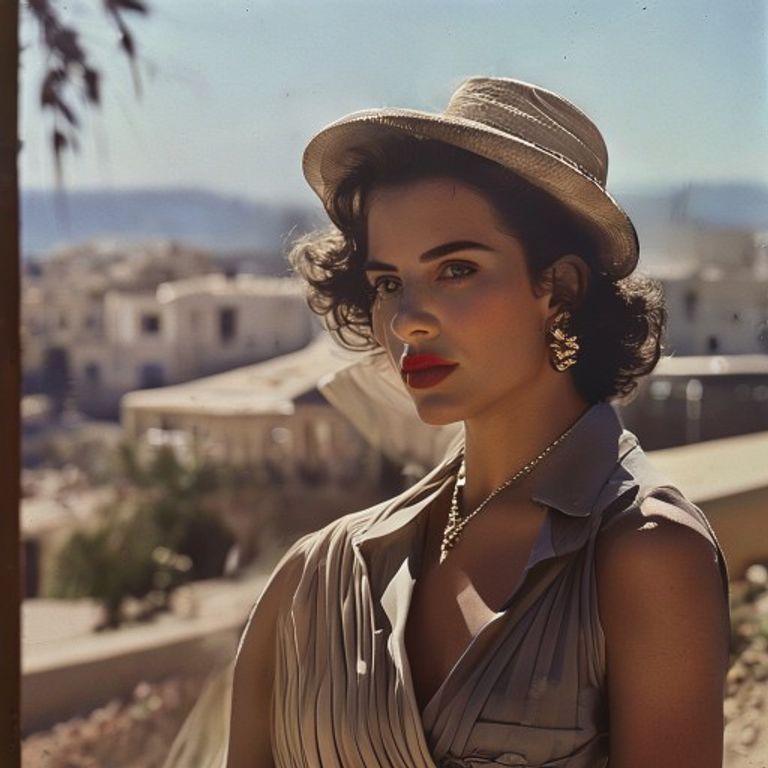
Directed by classic cinema master Michael Curtiz, Casablanca (1942/1943) is the pinnacle of wartime romantic drama, a true cinematic miracle that transcended its genesis as Allied propaganda to become the most iconic film of Hollywood's Golden Age. Starring Humphrey Bogart and Ingrid Bergman, the feature perfectly weaves elements of film noir, political melodrama, and tragic romance, establishing itself as an immortal masterpiece that has shaped Western pop culture tropes for over eight decades.
Analysis and Plot: The Purgatory of Casablanca
Set in December 1941, days before the Japanese attack on Pearl Harbor, the film transports us to the Moroccan city of Casablanca, then controlled by Vichy France—a regime theoretically neutral but heavily subservient to Nazi Germany. This geographical setting functions as a perfect metaphor for an existential purgatory: a claustrophobic transition point where refugees from all over occupied Europe wait desperately for visas to escape toward Lisbon and, eventually, freedom in the United States.
The epicenter of this microcosm of despair and intrigue is Rick's Café Américain, a high-class nightclub that houses everything: from German generals and corrupt French officials to con artists, pickpockets, and fleeing patriots. The owner of the establishment is Rick Blaine (Humphrey Bogart), a cynical, bitter American expatriate seemingly indifferent to the anti-fascist cause, whose life philosophy is summed up by the iconic line: "I stick my neck out for nobody."
The narrative gains traction when the small-time crook Ugarte (Peter Lorre) arrives at the club carrying two "letters of transit" (documents that guarantee free passage through occupied Europe, signed by French General Charles de Gaulle). Before being arrested by the local police led by the charming and pragmatic Captain Louis Renault (Claude Rains), Ugarte entrusts the valuable letters to Rick. The fate of the world—and Rick's own—changes drastically when the doors of his café open to reveal Victor Laszlo (Paul Henreid), a legendary leader of the Czech Resistance, accompanied by his wife, Ilsa Lund (Ingrid Bergman). Ilsa is the woman who, years earlier in Paris, broke Rick's heart, abandoning him at the train station in a torrential downpour at the exact moment German troops were invading the French capital.
From this reunion, the film skillfully splits between geopolitical suspense and romantic melodrama. Rick is confronted with his painful past and must decide whether to maintain his facade of selfish neutrality or use the valuable letters of transit to save the man who represents the hope of the free world and the woman he never stopped loving.
Endgame: A Deep Analysis of the Conclusion and Its Hidden Meanings
The climax of Casablanca, set on a runway shrouded in dense, melancholic fog, is arguably one of the most analyzed sequences in film history. Rick forces Ilsa, at gunpoint, to board the plane with her husband, Victor Laszlo. When Nazi Major Heinrich Strasser tries to intervene to stop the takeoff, Rick shoots him dead. Upon arriving at the scene with his guards, Captain Renault decides to protect Rick, uttering the legendary order: "Round up the usual suspects."
This ending carries deep layers of geopolitical and existential subtext:
- The Allegory of American Isolationism: Rick Blaine is the direct representation of the United States before Pearl Harbor. He is individualistic, wealthy, self-sufficient, and refuses to join the fight ("I'm a citizen of the world," he says early in the film). When he gives up his personal happiness with Ilsa for the greater good of Laszlo's cause, the film sends a clear message to the 1943 American audience: isolationism must die for freedom to prevail. Rick's personal sacrifice symbolizes the U.S. entry into World War II.
- Renault's Moral Redemption: Captain Louis Renault represents Vichy France itself. He is morally ambiguous, corrupt, and bends with the wind of the dominant power (tossing a bottle of Vichy-brand French mineral water into the trash right after Strasser's murder, a symbolic act of rejection of the collaborationist regime). By protecting Rick and suggesting they both join the Resistance in Free French Africa, Renault regains his nationalistic honor.
- The Meaning of the Fog: The fog covering the airport (created artificially by the production to disguise the limitations of a small-scale cardboard plane) serves as a visual metaphor for the uncertain future of humanity in 1942. There are no easy happy endings or absolute clarity in war; tomorrow is a gray and unknown territory.
- "The Beginning of a Beautiful Friendship": The iconic final line spoken by Rick to Renault establishes that, in times of global crisis, human connections based on high moral purposes outweigh individual romantic passions. Romance dies so that solidarity and camaraderie may flourish.
Cast and Memorable Performances
The enduring success of Casablanca is largely due to the almost alchemical chemistry of its cast, led by figures at the height of their dramatic capabilities:
- Humphrey Bogart (Rick Blaine): Before Casablanca, Bogart was predominantly cast as the tough, ruthless gangster in B-movies. The role of Rick redefined his cinematic persona, injecting a romantic vulnerability beneath his cynical armor. He inaugurated the era of the modern anti-hero: the world-weary man who still possesses an unwavering moral compass.
- Ingrid Bergman (Ilsa Lund): Michael Curtiz's camera revered Bergman's face, illuminating her with an almost divine softness (often using special filters to capture the glint of her tears). Her performance is masterful because it is built on ambiguity. Since the actress did not know until the end of filming which of the men her character would end up with, she played her scenes looking at both with the same level of genuine devotion, enriching the mystery of the love triangle.
- Claude Rains (Captain Renault): Rains delivers the most entertaining and charismatic performance in the film. His cynical quips provide the necessary comic relief to balance the film's dramatic weight. His delivery of the line about being "shocked, shocked to find that gambling is going on in here" while collecting his own roulette winnings is pure comedic genius.
- Dooley Wilson (Sam): As Rick's pianist and confidant, Wilson brought a rare dignity to Black actors in 1940s Hollywood. Although he was actually a drummer who didn't know how to play the piano (he mimed the movements of a pianist hidden behind a curtain), his warm performance of "As Time Goes By" became the emotional heart of the soundtrack compiled by Max Steiner.
Behind the Scenes, Production Secrets, and Tensions
Contrary to what its status as an absolute classic suggests, the production of Casablanca was chaotic, uncertain, and marked by last-minute improvisations. The film was based on an unproduced play called "Everybody Comes to Rick's," acquired by Warner Bros. for a record sum at the time.
Script Written in the Heat of the Moment: Screenwriters Julius J. Epstein, Philip G. Epstein, and Howard Koch rewrote script pages daily. There was a constant struggle over tone: the Epstein brothers wanted more comedy and snappy dialogue, while Koch focused on the political and propagandistic aspects. Michael Curtiz tried to balance it all on set. Rick's famous line, "Of all the gin joints, in all the towns, in all the world, she walks into mine," was polished behind the scenes to perfectly summarize the desperation of fate.
The Bogart Height Trick: Ingrid Bergman was noticeably taller than Humphrey Bogart. To create the illusion that the male lead physically dominated the romantic scenes, Bogart had to wear wooden blocks attached to his shoes or sit on extra cushions during intimate dialogue with the Swedish actress.
The Real Emotion of "La Marseillaise": One of the most chilling scenes in the film occurs when Nazi officers sing "Die Wacht am Rhein" and are drowned out by the café patrons singing the French national anthem, "La Marseillaise," fervently. Many of the extras and supporting actors who participated in this scene were real refugees from Nazi Germany and occupied Europe. Witnesses from the time reported that the set was flooded with genuine tears of pain and patriotic hope during the filming of that sequence.
The Hays Code Censorship: The Hollywood censorship committee (Hays Code) imposed severe restrictions on the script. It was forbidden to openly show that Captain Renault traded exit visas for sexual favors with young refugees, although the film manages to suggest this extremely elegantly through double-entendre dialogue. Furthermore, Ilsa could not abandon her legitimate husband (Victor) to be with Rick at the end, as adultery was not tolerated by the morality guidelines of the time.
Reception, Historical Legacy, and Pop Mythology
Released commercially in early 1943 to capitalize on the Allied invasion of North Africa (which put the real city of Casablanca in world headlines), the film was an immediate box-office success, grossing about $3.7 million in its original run—an excellent mark for the time.
At the 16th Academy Awards, held in 1944, Casablanca consolidated its prestige by winning three of the most important categories of the night: Best Picture, Best Director (Michael Curtiz), and Best Adapted Screenplay.
Over the decades, Casablanca's reputation has only grown. The film set the standard for how pop culture handles nostalgia, sacrifice, and tragic romance. Curiously, many of the film's most quoted lines are often misremembered by popular culture. The famous line "Play it again, Sam" is never said that way in the film; Ilsa says, "Play it once, Sam, for old times' sake," and Rick later orders only: "Play it!".
In lists organized by the American Film Institute (AFI), Casablanca consistently ranks among the top three American films of all time, rivaling directly with Citizen Kane and The Godfather. It is the ultimate proof that, sometimes, the industrial gears of Hollywood, operating under extreme pressure of time and war, can conspire to create pure, timeless art.
Sources Researched
- American Film Institute (AFI) Catalog - https://catalog.afi.com
- Roger Ebert's Great Movies Review - https://www.rogerebert.com
- The Hollywood Reporter Archives - https://www.hollywoodreporter.com
- The British Film Institute (BFI) Screenonline - http://www.screenonline.org.uk
- Box Office Mojo Historical Data - https://www.boxofficemojo.com





