



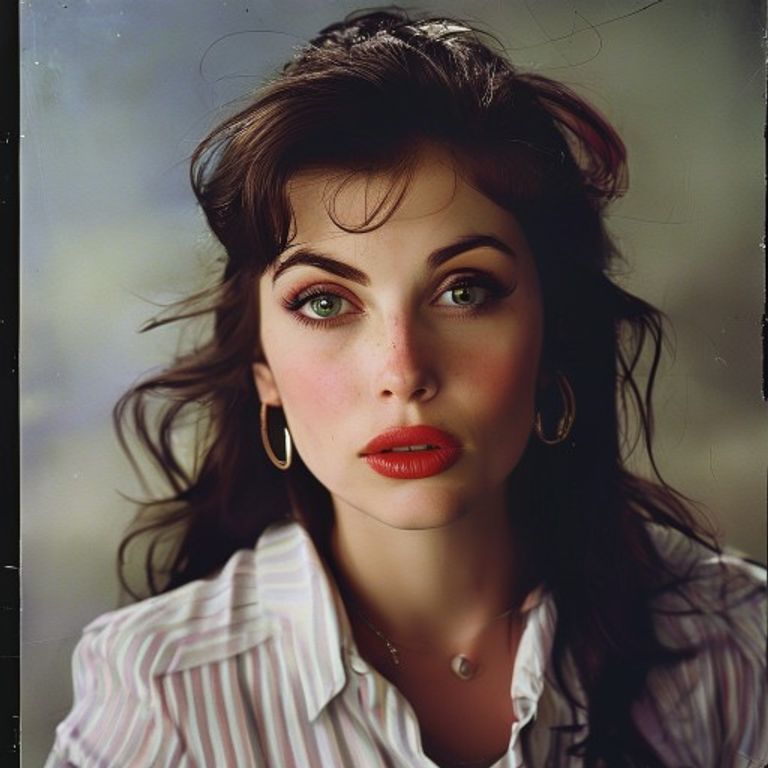
Directed by the master Vincente Minnelli, Gigi (1958) is an opulent musical romantic comedy that captures the splendor, vanity, and complex social dynamics of the Parisian Belle Époque. The film, which serves as the swan song of the golden age of Metro-Goldwyn-Mayer (MGM) musicals, adapts the famous novel of the same name by French writer Colette to create a visually stunning narrative that, while celebrated with nine Academy Awards, now oscillates between nostalgic enchantment and ethical discomfort under the gaze of contemporary criticism.
Analysis and Plot
Set in turn-of-the-century Paris, Gigi introduces us to a highly stratified society governed by appearances, gossip, and financial arrangements disguised as romance. The narrative is driven by the cynical yet charismatic perspective of Honoré Lachaille (Maurice Chevalier), an aging playboy who celebrates worldly pleasures and the ephemerality of love. The true protagonist of the plot is his nephew, Gaston Lachaille (Louis Jourdan), a young and extremely wealthy heir who suffers from chronic existential boredom, tired of the empty intrigues of high society and the demands of his gold-digging mistresses.
Gaston's only refuge from monotony is the modest residence of Madame Alvarez (Hermione Gingold), affectionately called Mamita. There, Gaston meets young Gigi (Leslie Caron), Mamita's granddaughter. Gigi is an expansive, tomboyish teenager, free from social conventions and not yet corrupted by the hypocrisy of the Parisian aristocracy. The relationship between the two is purely platonic and fraternal: they play cards, eat sweets, and laugh without the constraints of etiquette.
However, behind the scenes of this apparent innocence, a family mechanism is in motion. Mamita and her sister, the stern and aristocratic Aunt Alicia (Isabel Jeans), belong to a lineage of elite courtesans. For them, marriage is a bourgeois and unprofitable illusion; a woman's true financial security lies in becoming the kept mistress of a wealthy and influential man. Gigi, therefore, is being quietly prepared, or "trained," by Aunt Alicia for this profession. She learns to distinguish real jewels from imitations, to eat lobster with elegance, to walk with poise, and to cultivate the art of seductive conversation.
The turning point occurs when Gaston, after another public scandal involving his latest mistress, decides to take a trip to Trouville and brings Gigi and Mamita with him. During this trip, and upon their return to Paris, Gaston begins to realize that the awkward girl is transforming into a young woman of stunning beauty. Upon noticing the change, and under the subtle pressure of Mamita and Alicia, Gaston realizes he desires Gigi in a different way. He proposes a formal contract for Gigi to become his kept mistress, offering her luxury, carriages, and jewels.
To everyone's surprise, Gigi initially refuses the proposal. In a moment of surprising lucidity and self-defense, she explains that she does not wish to be just another temporary conquest in Gaston's life, destined to be discarded and forgotten when his boredom returns. She prefers to maintain the pure friendship they had rather than enter into an arrangement that will destroy her dignity. However, realizing Gaston's suffering and the family pressure, she yields temporarily, accepting the agreement only to make him happy.
The Ending Explained: Transition, Respectability, and the Weight of Conventions
The film's climax occurs when Gaston takes Gigi, now dressed spectacularly, to her official debut in society at the famous Maxim's restaurant. Gigi performs perfectly as the ideal courtesan: she attracts all eyes, tolerates the gossip, and behaves with cold elegance. Gaston, however, feels deeply disturbed to see the girl he loved for her spontaneity transformed into a decorative object, a commodity displayed for the validation of his peers.
Unable to bear the commodification of Gigi and the role he himself was playing in her loss of innocence, Gaston abruptly removes her from the restaurant and takes her home. He walks alone through the streets of Paris, in an introspective sequence that culminates in his decision-making. Gaston realizes that his feelings for Gigi transcend the rules of the Belle Époque social game. He does not want a mistress; he truly loves her.
The conclusion shows Gaston returning to Mamita's house. Instead of demanding the fulfillment of the courtesan contract, he bows, assumes a posture of extreme humility, and formally asks for Gigi's hand in marriage. The film ends with Honoré Lachaille watching the young couple strolling in the Bois de Boulogne, now as respectable husband and wife.
Beneath the surface of the typical Hollywood "happy ending," the conclusion of Gigi carries a fascinating ideological ambiguity. On one hand, it can be interpreted as the triumph of true love over the cynicism and commodification of human relationships. Gaston chooses to defy the conventions of his class—which dictated that men of his status did not marry young women of dubious origins—to give Gigi the security of matrimony. On the other hand, modern analysts point out that the ending represents a mutual capitulation to patriarchal institutions: Gigi escapes the fate of being a courtesan only to be integrated into the bourgeois respectability of marriage, while Gaston clears his conscience by transforming his desire into a contract socially acceptable by the Hays Code of censorship of the time.
Cast and Notable Performances
The success of Gigi rests directly on the charisma of its international cast. Leslie Caron, who had already charmed audiences in An American in Paris (1951), delivers a magnificent transition performance. She manages to be convincing both as the foul-mouthed tomboy of the beginning and as the sophisticated young woman of the final third. Although Caron was 26 at the time of filming, her physical expressiveness gives Gigi the necessary dose of youth and vulnerability.
Louis Jourdan embodies the weary aristocrat to perfection. His classic beauty and velvety voice prevent Gaston from seeming merely a wealthy predator; he manages to convey the melancholy and existential void of a man who has everything but possesses nothing of real value. The chemistry between Caron and Jourdan is palpable, moving from childish complicity to romantic tension with delicacy.
However, it is the supporting performances that give the film its comedic and dramatic texture. Maurice Chevalier shines as the narrator Honoré. With his famous song "Thank Heaven for Little Girls" and his nostalgic duet "I Remember It Well" with Hermione Gingold (who plays Mamita with a warm dignity), Chevalier anchors the film in the tradition of French vaudeville. Finally, Isabel Jeans delivers a memorable performance as Aunt Alicia, embodying the pragmatic coldness of an era where love was treated strictly as a high-risk business.
Behind the Scenes and Trivia
- The Choice of Gigi: Although Audrey Hepburn had played Gigi with enormous success in the 1951 Broadway stage version (being personally discovered by Colette herself), she turned down the role in the film. This paved the way for Leslie Caron to take on the character that would define her career in musical cinema.
- Singing Dubbing: Despite being a talented dancer and actress, Leslie Caron did not have a singing voice considered strong enough for Frederick Loewe's complex score. Her songs were dubbed by singer Betty Wand, although Caron had recorded the original tracks and was frustrated by not being used in the final version.
- Authentic Locations: Unlike many musicals of the time filmed entirely on MGM soundstages, Vincente Minnelli insisted on filming on location in Paris. Iconic scenes were shot in the Bois de Boulogne, the Palais de Glace, and the legendary Maxim's restaurant, which gave the production an atmosphere of unparalleled authenticity and luxury.
- Costumes by Cecil Beaton: The legendary designer Cecil Beaton created over 150 costumes for the film. His meticulous and historically accurate work in reconstituting the fashion of the Belle Époque earned him the Oscar for Best Costume Design and set a new standard for visual opulence in Hollywood.
Controversies and the Contemporary Gaze
Over the decades, Gigi has become one of the most debated and polarizing films in the history of musical cinema due to its underlying themes. From a contemporary perspective, the film's premise deals directly with the concept of grooming. The systematic preparation of a teenager to become a courtesan for older men is an extremely delicate theme that generates discomfort in modern audiences.
The opening song, "Thank Heaven for Little Girls," sung by Maurice Chevalier, which at the time was seen as an innocent and paternal celebration of women growing up, is now often interpreted with strangeness and ethical objections. Contemporary critics point to the voyeuristic subtext of an elderly man singing about the physical maturation of young girls for the pleasure of men.
Another point of historical tension was the adaptation of Colette's text. In the original novel, the French author was much more acidic and less romantic regarding the sexual and power transactions of the Belle Époque. To circumvent the Hays Code censorship in the United States—which prohibited the sympathetic or profitable depiction of prostitution and concubinage—screenwriter Alan Jay Lerner had to soften the narrative, turning Colette's cynical pragmatism into a sugary fairy tale where marriage sanitizes all previous moral transgressions.
Critical Reception, Box Office, and Legacy
In 1958, Gigi was a resounding critical and commercial success. The film grossed over 13 million dollars in the United States (a massive box office for the time) and was acclaimed for its sophistication, art direction, and unforgettable soundtrack. Critics praised the successful transition from the theatrical style to the purely cinematic language that Minnelli imposed on the work.
The peak of its recognition occurred at the 31st Academy Awards in 1959. Gigi was nominated for 9 Academy Awards and won in every category it was nominated for, setting a record at the time. Among the statuettes won were Best Picture, Best Director (Vincente Minnelli), Best Adapted Screenplay, and Best Original Score.
Today, the legacy of Gigi is seen as the end point of an era. It represents the zenith and subsequent decline of the great MGM studio musical, which would soon lose ground to more realistic productions and the emergence of New Hollywood in the 1960s. Despite modern controversies over its gender and age themes, the film remains preserved in the National Film Registry of the United States Library of Congress for its undeniable cultural, aesthetic, and historical relevance.
Sources Researched
- AFI Catalog of Feature Films: www.afi.com/catalog/
- Internet Movie Database (IMDb): www.imdb.com/title/tt0051658/
- Rotten Tomatoes (Classic Section): www.rottentomatoes.com/m/gigi/
- Turner Classic Movies (TCM) Archive: www.tcm.com/tcmdb/title/76313/gigi/
- The Criterion Collection Essays on Vincente Minnelli: www.criterion.com/





