



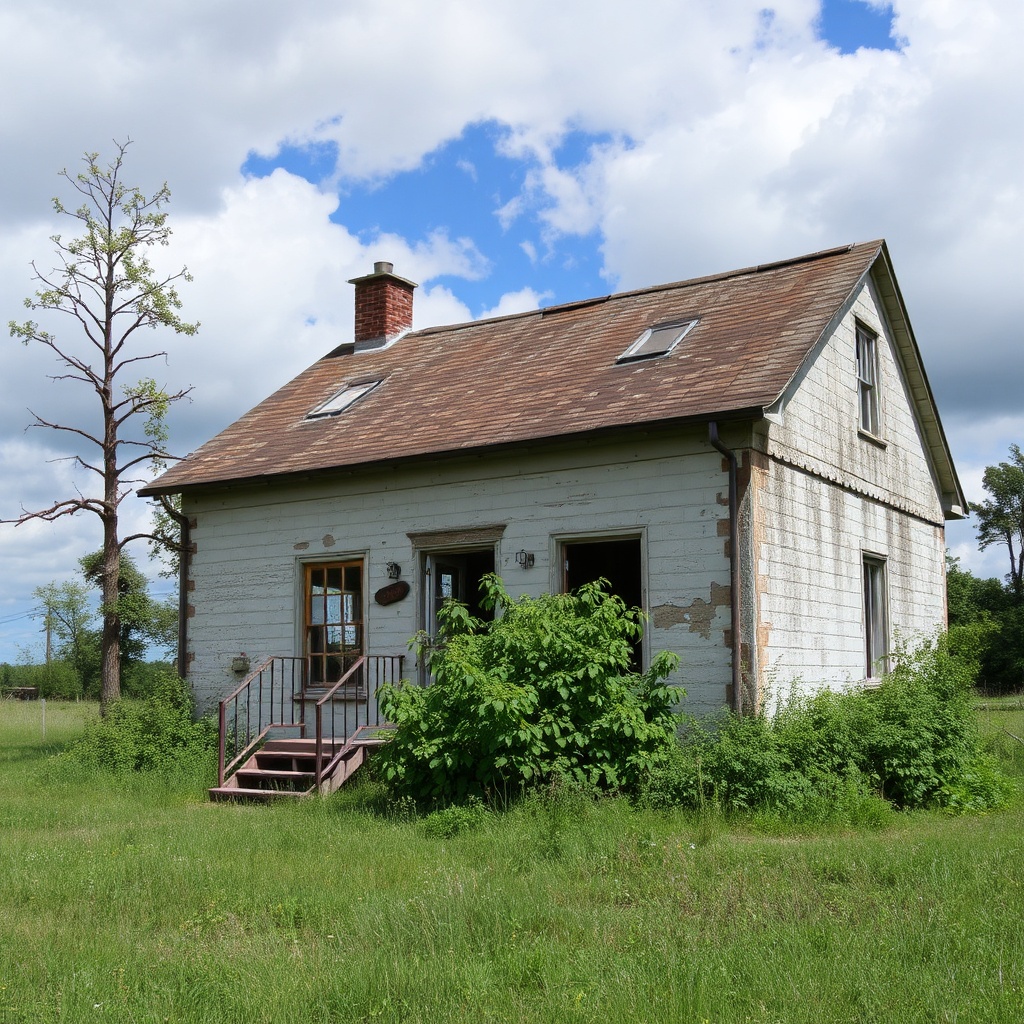
The legal concept of res derelicta, or abandoned property, is primarily situated within the scope of Civil Law (Property Law) and has significant implications in Criminal Law. It refers to movable or immovable property whose owner manifests an unequivocal intention to divest themselves of their ownership (animus derelinquendi), making it subject to original acquisition by another party through occupation, or, in the case of real estate, to collection by the public entity after the expiration of a legal period.
1. Concept, Legal Nature, and Ontological Distinctions
The Latin expression res derelicta designates property abandoned by its owner with the intention of no longer possessing it. In the domestic legal system, the legal nature of abandonment is that of a unilateral non-receptive legal act, through which the owner renounces their real right of ownership. For res derelicta to be characterized, the conjunction of two fundamental elements is required: the corpus (the material act of relinquishing possession) and the animus derelinquendi (the deliberate will to abandon).
It is imperative to distinguish res derelicta from related concepts, under penalty of error in the application of the law:
- Res nullius: Property that has never had an owner (e.g., wild animals in their natural habitat). Res derelicta had an owner, but they abandoned it.
- Res amissa: Lost property. It differs from abandoned property by the absence of the volitional element of renunciation. Res amissa continues to belong to its owner, and its misappropriation may constitute a criminal offense (Art. 169, sole paragraph, II, of the Penal Code).
- Res desperdicta: Forgotten property. Similar to lost property, it does not authorize occupation as a mode of acquiring ownership.
2. Historical and Doctrinal Evolution
The genesis of the institute dates back to Roman Law, specifically to the mode of original acquisition called occupatio. In Antiquity, the divergence between the Sabinian and Proculeian schools shaped the classical understanding: for the Sabinians, ownership was extinguished at the exact moment of abandonment; for the Proculeians, the loss of ownership only occurred when a third party occupied the property. The 1916 Civil Code and the current 2002 Statute aligned with the view that abandonment, in itself, is a cause for the extinction of ownership, regardless of subsequent occupation.
3. Legal Provisions in the Brazilian Legal System
The 2002 Civil Code (Law No. 10,406/2002) regulates the matter in several provisions, the most prominent being:
- Art. 1,263: Establishes occupation as a mode of acquiring movable property: "Whoever takes possession of ownerless property immediately acquires ownership thereof, provided such occupation is not prohibited by law." (Applies to res derelicta).
- Art. 1,275, item III: Expressly lists abandonment as one of the causes for the loss of ownership.
- Art. 1,276: Deals with the abandonment of real estate. Abandoned property may be collected as vacant property and pass to the ownership of the Municipality or the Federal District (if urban) or the Union (if rural), after three years, provided the owner is not in possession and does not pay fiscal charges.
4. Practical Application and Jurisprudential Understanding
The jurisprudence of the Superior Courts, notably the Superior Court of Justice (STJ), has addressed the topic through the prism of atypicality of conduct in Criminal Law and environmental civil liability.
4.1. Criminal Sphere: Atypicality of Theft
In Criminal Law, the subtraction of res derelicta does not constitute the crime of theft (Art. 155, CP), since the criminal type requires the property to be "of another." If the asset has been abandoned, it lacks an owner, making the conduct atypical due to the absence of an element of the offense. The STJ has precedents reaffirming that, once animus derelinquendi is proven, there is no criminal atypicality (e.g., items discarded in household trash or debris on public roads).
4.2. Civil and Environmental Sphere: Limits to Abandonment
Contemporarily, the principle of the Social Function of Property (Art. 5, XXIII, CF/88) imposes limits on the freedom to abandon. In Environmental Law, the abandonment of hazardous waste or industrial machinery does not exempt the former owner from strict civil liability for environmental damage. Established jurisprudence (STJ Precedent 618 and the polluter-pays principle) holds that abandonment cannot be used as a subterfuge to evade environmental liabilities.
5. Doctrinal Divergences and the Presumption of Abandonment
One of the main academic discussions lies in the proof of abandonment. The majority doctrine, led by names such as Francisco Amaral and Flávio Tartuce, maintains that the abandonment of real estate is presumptive under the terms of §2 of Art. 1,276 of the Civil Code, when acts of possession and tax payments cease. However, part of the doctrine criticizes the constitutionality of this presumption, arguing that the loss of ownership without due process of law (disguised confiscation) would violate the fundamental right to property.
Another point of note is the distinction between abandonment and renunciation. While renunciation is a formal act (requiring a public deed for real estate valued above 30 minimum wages, according to Art. 108 of the Civil Code), abandonment is a material and informal act, although both produce the effect of discharging ownership.
6. Contemporary Relevance and Impacts on the Legal System
The study of res derelicta gains new contours with the circular economy and solid waste management (Law No. 12,305/2010). The disposal of goods (e-waste, for example) constitutes legal abandonment, allowing recycling companies to acquire original ownership of these materials through occupation. Furthermore, in the civil procedural scope, the characterization of an asset as abandoned is crucial for defining legitimacy in adverse possession (usucapio) and repossession lawsuits.
Legal and Jurisprudential References
- BRAZIL. Constitution of the Federative Republic of Brazil of 1988. Art. 5, items XXII and XXIII.
- BRAZIL. Law No. 10,406, of January 10, 2002 (Civil Code). Arts. 1,263, 1,275, and 1,276.
- BRAZIL. Decree-Law No. 2,848, of December 7, 1940 (Penal Code). Arts. 155 and 169.
- SUPERIOR COURT OF JUSTICE. REsp 1,120,620/RJ (Reporting Justice Herman Benjamin) – Addresses environmental liability even in the face of property abandonment.
- SUPERIOR COURT OF JUSTICE. AgRg in AREsp 532,556/SP – Discussion on criminal atypicality and the characterization of abandoned property.
- PONTES DE MIRANDA. Treatise on Private Law. Volume XI. São Paulo: RT, 2012.





