



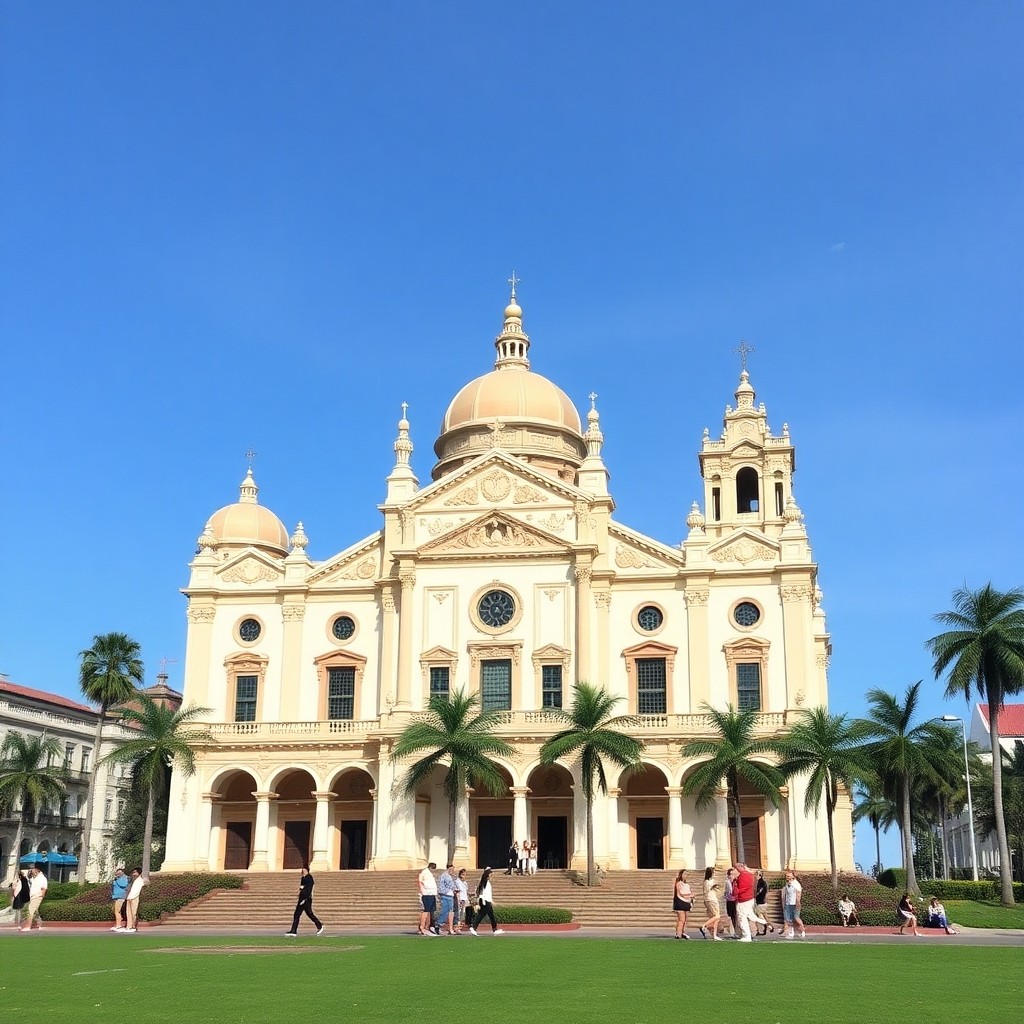
The Club Atlético San Martín de San Juan, affectionately known throughout Argentina as "El Verdinegro" or "El Santo", is the ultimate expression of football in the province of San Juan, located in the historic Cuyo region. Currently competing in the Primera Nacional (the second division of Argentine football), the club is undergoing a period of institutional and sporting reconstruction under the technical leadership of Raúl Antuña, consistently appearing in the top positions of its zone and fighting stubbornly for a return to the elite of national football, from which it departed in 2019.
Club History: From the Origins of Esquina to the Identity of a Province
To understand the genesis of Club Atlético San Martín de San Juan, one must go back to the beginning of the 20th century, when football was taking its first steps outside the port region of Buenos Aires. On September 27, 1907, at the corner of 25 de Mayo and General Acha streets in Concepción (one of the oldest neighborhoods in San Juan), a group of young enthusiasts decided to formalize their passion for the British sport.
The name chosen for the association was a direct tribute to the hero of Hispanic-American independence, General José de San Martín. The choice was no mere coincidence: the province of San Juan played a crucial logistical and human role in the crossing of the Andes by the Army of the Andes, led by San Martín. Thus, the club was born deeply intertwined with a sense of patriotic and regional identity.
The club's colors — green and black — carry a strong symbolism of the era. Green represents hope and the fertile fields of Concepción (known for agricultural production amidst the arid Cuyo landscape), while black evokes respectful mourning, sobriety, and the seriousness with which the institution would conduct its sporting destiny. The club's first president was the young Amador Izasa, who organized the first friendly matches against local teams and those from neighboring provinces like Mendoza and San Luis.
San Martín's development was severely tested by history. On January 15, 1944, a devastating earthquake destroyed more than 90% of the city of San Juan. The club lost its first facilities, and many of its members and athletes were actively involved in the rescue and reconstruction tasks of the province. The resilience demonstrated during this period consolidated the community character of the Verdinegro, which rose from the ashes in parallel with the urban reconstruction of the city of San Juan.
Golden Eras and Historic Campaigns
For decades, San Martín reigned within the Liga Sanjuanina de Fútbol, winning dozens of local titles. However, the leap to the national stage was consolidated during crucial moments in the history of Argentine football:
The Debut in the 1970 Nacional
The first major national milestone occurred in 1970. By winning the Regional Tournament, San Martín de San Juan earned the historic right to compete in the prestigious Primera División National Championship. For the first time, the giants of Argentine football had to travel to San Juan to face El Santo. Although the campaign did not culminate in titles, the 2-1 victory against San Lorenzo de Almagro and the draw against Independiente on San Juan soil proved that interior football had the strength to compete on equal terms.
The Epic Promotion of 2007: Tonelotto's Goal in the 98th Minute
After years of oscillating in the lower divisions, the 2006/2007 Primera B Nacional season held the most dramatic chapter in the club's history. Under the technical command of Fernando "Teté" Quiroz, the team reached the promotion playoff final (Promoción) against the historic Huracán.
After a defeat in the first leg in Buenos Aires, the return match in San Juan seemed to be heading toward a sporting tragedy. The clock marked the end of regulation time, and the score still did not favor the Verdinegro. However, in the 8th minute of stoppage time (98 minutes of play), center-forward Luis Tonelotto scored the winning goal for a 3-1 victory, sealing the club's unprecedented access to the Primera División under the modern tournament format (Apertura and Clausura). The celebration in the streets of San Juan lasted for days and turned Tonelotto into an eternal legend.
The 2011 Miracle and Consolidation
In 2011, under the baton of Daniel Garnero, San Martín achieved another feat by defeating the traditional Gimnasia y Esgrima de La Plata in the Promoción. The 1-1 draw in La Plata, following a victory in San Juan, ensured their return to the elite. This period inaugurated the club's most stable era in the Primera División, where it remained for several consecutive seasons, playing on equal terms with the country's biggest clubs.
The Historic 6-1 against Boca Juniors (2013)
On April 13, 2013, the Estadio Hilario Sánchez was the stage for the greatest football display in the province's history. For the 9th round of the Final Tournament, San Martín de San Juan hosted the powerful Boca Juniors, then led by the legendary coach Carlos Bianchi.
In an inspired afternoon for Colombian striker Humberto Osorio (author of three goals), idol Sebastián Penco, Lucas Landa, and Claudio Riaño, the Verdinegro handed a humiliating 6-1 thrashing to the Buenos Aires side. This result remains to this day one of the biggest defeats suffered by Boca Juniors in its modern era of professional football.
Current Moment and Recent Context (2023-2024)
Since the relegation suffered in 2019, San Martín de San Juan has had the absolute and obsessive goal of returning to the Liga Profesional de Fútbol (LPF). The club has demonstrated balanced financial management under the influence of historic leaders like Jorge Miadosqui, avoiding the serious financial crises that plague other traditional teams in the Argentine interior.
In the 2023 season, the club had a remarkable campaign in the Copa Argentina, reaching the quarterfinals after eliminating elite opponents like Vélez Sarsfield and Argentinos Juniors, falling with dignity against San Lorenzo de Almagro in a hard-fought match.
Currently, in the 2024 Primera Nacional season, the club is managed by Raúl Antuña. With a squad characterized by defensive solidity and the offensive power of names like Federico González and midfield leadership, San Martín is fighting point-by-point for the lead of Zone A against San Martín de Tucumán. The institution's clear goal is to secure a direct spot in the promotion final or, alternatively, consolidate its position for the Torneo Reducido playoffs.
The Temple of Cuyo: Estadio Hilario Sánchez
The Estadio Hilario Sánchez, located in the historic Concepción neighborhood, is the club's fortress. Inaugurated on June 16, 1951, the stadium bears the name of one of the most emblematic presidents in the institution's history, Engineer Hilario Sánchez, who led the club's physical reconstruction efforts after the 1944 earthquake.
With a capacity for approximately 19,000 spectators, the stadium underwent severe renovations and expansions to meet the requirements of the Primera División in 2007 and 2011, including the construction of new popular stands and modern broadcast booths. The pitch at the Hilario Sánchez is historically known for its dimensions and the proximity of the fans to the field, creating an atmosphere of intense pressure nicknamed "The Cauldron of Cuyo."
Main Idols and Notable Coaches
The rich history of the Santo Sanjuanino was written by men who demonstrated unquestionable dedication and talent in the green and black jersey:
- Luis Ardente: The goalkeeper and captain who became a contemporary legend. In addition to his miraculous saves in over 200 official matches for the club, Ardente was the official penalty taker, converting several decisive goals in the national football elite.
- Sebastián Penco: A center-forward with grit and an implacable presence in the box. Author of crucial goals in promotion campaigns and a tormentor of big teams. The nickname "Motola" is synonymous with goals in Concepción.
- Luis Tonelotto: The man of the 2007 miracle. His stoppage-time goal against Huracán immortalized him in the club's gallery of legends.
- Emmanuel Mas: Developed in the youth divisions of San Martín de San Juan, the left-back represented the excellence of the club's training. His great performances led him to San Lorenzo (where he won the Copa Libertadores), Boca Juniors, and the Argentine National Team.
- Daniel Garnero (Coach): The tactical architect of the 2011 promotion. Garnero gave San Martín an offensive and attractive playing identity that earned praise from the entire Argentine press.
- Rubén Forestello (Coach): Known as "Yagui," he led the team in different stages with success, standing out for his ability to build highly competitive teams focused on remaining in the elite.
Fiery Rivalries: The Sanjuanino Classic and the Cuyo Classic
Football in San Juan is lived with extreme passion, and this passion translates into two historic rivalries of deep sociocultural relevance.
The Sanjuanino Classic: San Martín vs. Sportivo Desamparados
It is the city classic par excellence, which divides the province of San Juan. The rivalry with Club Sportivo Desamparados dates back to the first decades of the 20th century and carries a strong component of class identity and urban geography:
- Historical Context: While San Martín was born in the Concepción neighborhood (traditionally linked to the first aristocratic families and agricultural landowners in the north of the city), Desamparados emerged in the western zone (Puyuta), associated with the working classes of the region that developed around the old railway.
- The Name "Desamparados": It originated from the square and parish dedicated to the Virgen de los Desamparados. The classic is synonymous with celebration in the stands, but also with strong security schemes due to the historic hostility between the organized fan groups.
The Cuyo Classic: San Martín de San Juan vs. Godoy Cruz Antonio Tomba
When San Martín transcends provincial borders, it faces its greatest and fiercest regional rival: Godoy Cruz de Mendoza. This confrontation is known as the "Clásico de Cuyo."
- The Origin of the Regional Rivalry: The rivalry goes far beyond the four lines of the pitch. Historically, the provinces of San Juan and Mendoza compete for the political, economic, and cultural hegemony of the Cuyo region. Mendoza, being a larger province with greater economic weight, has always been viewed by the people of San Juan with suspicion and a sense of competition.
- In Football: The clashes between the Verdinegro and the Tomba gained dramatic contours starting in the 1990s, in the old Primera B Nacional, and intensified when both teams reached the Primera División. Each match is considered a "matter of state" for the provincial governments, often being played only with local fans due to the high risk of incidents.
Titles, Achievements, and Notable Campaigns
| Competition / Achievement | Level / Category | Year / Season | Historical Highlight |
|---|---|---|---|
| Liga Sanjuanina de Fútbol | Regional (San Juan) | Over 25 titles | Greatest historical champion of the local football league. |
| Torneo Regional | National (Access) | 1970 | Undefeated Regional Champion, securing unprecedented access to the 1970 National Championship. |
| Primera B Nacional (Ascenso) | National (2nd Division) | 2006/2007 | Promotion to Primera División after defeating Huracán with Tonelotto's historic goal. |
| Promoción Primera División | National (Playoff) | 2010/2011 | Promotion achieved over Gimnasia de La Plata. |
| Primera B Nacional (Transición) | National (2nd Division) | 2014 | Direct promotion to the Primera División in the AFA transition tournament. |
| Quarterfinals - Copa Argentina | National Cup | 2023 | Best historical campaign in national cups, eliminating prestigious First Division teams. |
Researched Sources
- Asociación del Fútbol Argentino (AFA) - Historical archives of tournaments and match reports.
- Diario de Cuyo - Newspaper library and daily coverage of the club since the first decades of the 20th century.
- El Gráfico - Special editions on the 2007 and 2011 promotions and coverage of the 6-1 thrashing against Boca Juniors.
- TyC Sports & Olé - Updated statistics and data on campaigns in the Primera Nacional (2023 and 2024 seasons).
- Centro de Investigaciones de la Historia del Fútbol (CIHF) - Documentation on the club's foundation and the consequences of the 1944 earthquake.





