



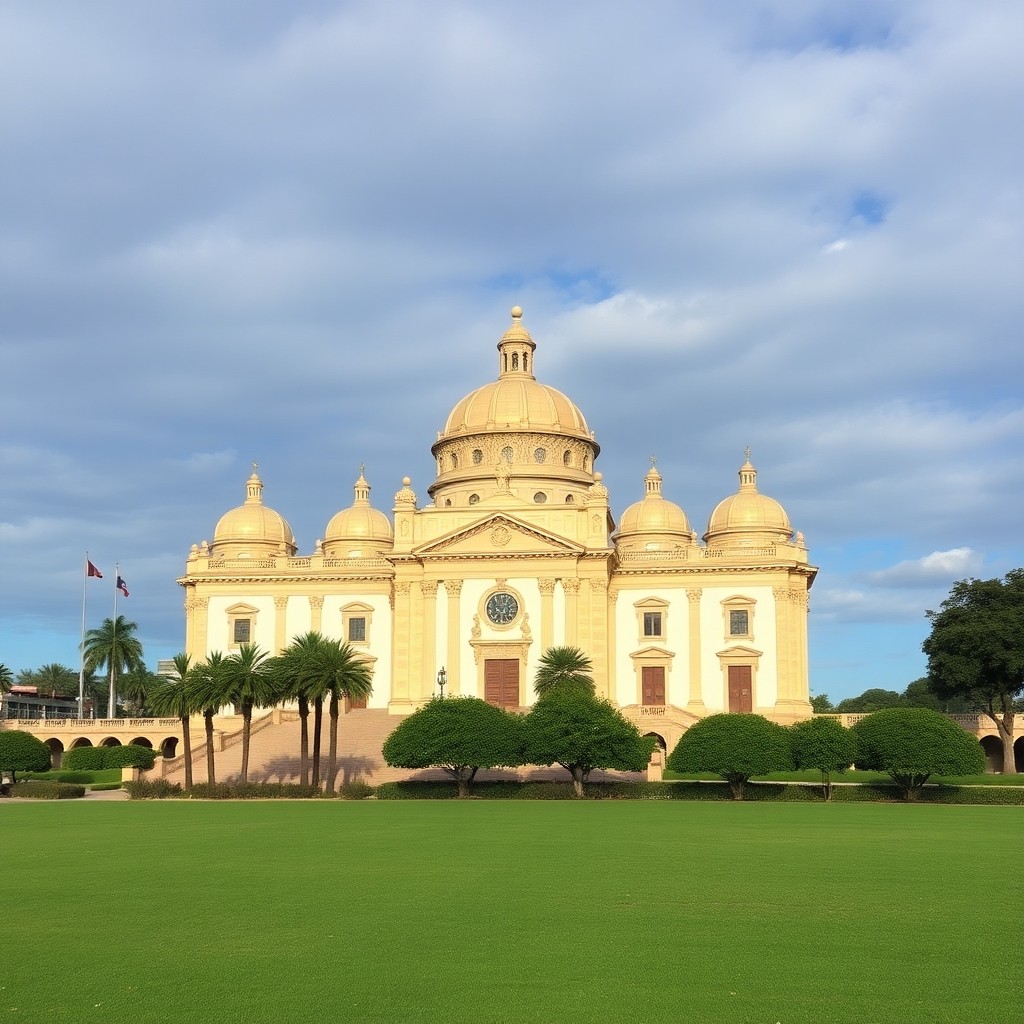
Club Atlético San Martín de Tucumán, fervently known in South American folklore as "El Santo" or by its historic nickname "El Ciruja," is one of the most passionate, traditional, and influential institutions in Argentine interior football. Currently competing in the Primera Nacional (the country's second division), the club from the "Garden of the Republic"—as the province of Tucumán is known—is experiencing a moment of intense institutional and sporting reconstruction, having recently fought memorable battles for a return to the elite of Argentine football under the technical leadership of Diego Flores, backed by one of the most vibrant and feared fanbases on the entire continent.
1. Origins and Foundation: The Genesis of the Northern Giant
The history of Club Atlético San Martín de Tucumán dates back to the beginning of the 20th century, a period of social effervescence, immigration, and urbanization in the province of Tucumán. On November 2, 1909, a group of 14 young men from working-class neighborhoods in the Tucumán capital gathered in the main square with the firm purpose of founding a new sports institution that would represent local sentiment. The name chosen was a direct tribute to the greatest hero of Argentine independence, General José de San Martín.
The original founders—among whom were names such as Romelio Castro, José Maria de la Vega, Rufino Peralta, and brothers Alberto and Emilio Costas—established that the club would adopt red and white vertical stripes, inspired by a patriotic design that evoked both passion, purity, and determination. Since its birth, San Martín has held a strong popular identity, viscerally linking itself to the working classes and the humblest sectors of Tucumán society.
Over the decades, this social identification was consolidated in the famous nickname "Ciruja". Originally, the term was used pejoratively by rivals to designate low-income people who worked in the collection and recycling of materials (scavengers of trash or bones in the area of the old municipal slaughterhouse). In a classic display of appropriation and class pride, San Martín's fans adopted the insult as a banner of honor. Today, being a "Ciruja" is synonymous with Tucumán pride, resilience, and unconditional passion.
2. Golden Eras and Historic Campaigns
San Martín de Tucumán is not just a regional giant; its history is punctuated by moments of national astonishment that challenged the hegemony of Buenos Aires clubs. Among its most golden pages, three fundamental moments stand out:
The 1944 Copa de la República: National Glory
For a long time, Argentine football was marked by exacerbated centralism. However, the defunct Copa de la República (officially known as the Copa General de División Pedro Pablo Ramírez) offered interior clubs the chance to face the metropolitan giants. In the 1944 edition, San Martín shocked the country.
After eliminating regional rivals, the Tucumán club reached the final phase. In the semifinals, they dispatched the powerful Boca Juniors with a categorical 2-1 victory. In the grand final, played on March 4, 1945, at the Atlético Tucumán stadium (due to capacity), San Martín thrashed Newell's Old Boys 3-1. Goals by Lirio Albornoz, Juárez, and Sansona secured "El Santo" the most important title in its history, the first national-level tournament won by a team from northern Argentina, officially recognized by the Argentine Football Association (AFA).
The 1988 Epic: Unprecedented Promotion
The year 1988 holds what is perhaps the greatest oddity and, at the same time, the greatest feat in Argentine football. San Martín de Tucumán achieved the feat of ascending from the third division (Torneo del Interior) directly to the Primera División, without playing a single regular-season match in the Primera B Nacional.
As champions of the 1987/88 Torneo del Interior, the club earned the right to play in the Primera B Nacional Promotion Tournament. "El Santo" consecutively eliminated Guaraní Antonio Franco, Almirante Brown, and, in the historic final, defeated Chaco For Ever (winning 1-0 in Tucumán and applying a resounding 2-0 in Resistencia). This achievement gave the club a direct spot in the top division, a unique regulation that has never been repeated in AFA history.
The Historic 6-1 at La Bombonera
On November 20, 1988, for the 12th round of the Primera División Championship, the newly promoted San Martín de Tucumán visited Boca Juniors at the mythical La Bombonera. What was expected to be a routine match turned into the biggest thrashing suffered by Boca at their own home in the entire history of modern professionalism.
With a masterful display of attacking football, San Martín thrashed Boca Juniors 6-1. Striker Antonio Vidal González was the great hero of the afternoon, scoring three goals (a perfect hat-trick). Jorge López, Dante Unali, and Erasmus Armaza completed the scoreline that silenced half-plus-one of Buenos Aires and etched San Martín's name into the record books of South American football.
3. Context and Current Moment (2024 Season)
After years of ups and downs, oscillating between the Primera División, the Primera Nacional, and even painful stints in the Torneo Federal A, San Martín de Tucumán has established a sustainable return to the elite of Argentine football as its absolute priority.
Under the management of president Rubén Moisello and the subsequent political transition of the club, the focus has been on the professionalization of football departments and the improvement of the institution's infrastructure. In the 2024 season, under the tactical command of coach Diego Flores (known in the football world as "El Traductor" for having been Marcelo Bielsa's assistant and translator at Leeds United), San Martín carried out a historic campaign in the group stage of the Primera Nacional.
The club dominated Zone A, finishing in sole leadership with a record score and securing a spot in the grand final for the first promotion against Aldosivi de Mar del Plata (winner of Zone B). Despite losing the direct final played in Rosario in November 2024, the club maintained its focus on the playoffs (Reducido), demonstrating the resilience characteristic of the "Ciruja" people in their quest to reclaim their rightful place on the country's main stage.
4. Main Idols and Coaches Who Defined an Era
The rich historical tapestry of San Martín de Tucumán was woven by athletes of extraordinary character and coaches who understood the idiosyncrasies of the Tucumán fan like few others. Among the most celebrated are:
- Jacinto Roque Roldán: Considered by many to be the greatest player in the club's history. Possessing refined technique, superb vision, and an unwavering love for the red and white jersey, the midfielder led the team in the Torneos Nacionales of the 1970s and 1980s.
- Antonio Vidal González: The Paraguayan striker who won the fans' hearts with grit, decisive goals, and the immortal three-goal performance in the historic 6-1 thrashing of Boca Juniors at La Bombonera in 1988.
- Jorge "El Capo" López: Another pillar of the 1988 campaign, a player with impressive physical commitment and technical leadership on the pitch.
- Carlos Roldán: The most emblematic coach of the club's modern era. He was the architect of San Martín's miraculous resurgence starting in 2004, pulling the club from the abyss of the local league (Liga Tucumana) and leading it, in consecutive promotions, back to the Primera División in 2008.
- Gustavo "El Ratón" Ibáñez: A fast, charismatic striker and the ultimate symbol of the club's rebirth in the 2000s. Alongside Diego "El Sacha" Magno, he formed unforgettable attacking partnerships for fans at the compact La Ciudadela stadium.
5. The Greatest Rivalries: The Tucumán Derby
Football passion in Tucumán is divided almost symmetrically by one of the hottest, most violent, and traditional rivalries on the entire American continent: the Clásico Tucumano, played against Club Atlético Tucumán.
Origin and Historical Context of the Derby
The rivalry was born at the beginning of the 20th century and carries a deep component of sociocultural distinction:
- Atlético Tucumán (The "Decano"): Founded in 1902, historically associated with the province's economic, intellectual, and political elites. Its founders were members of Tucumán's high society, which earned them an image as an aristocratic club.
- San Martín de Tucumán (The "Santo" or "Ciruja"): Founded in 1909 by young men from working-class and lower-middle-class neighborhoods. The club grew in the outskirts of the city's southern area, an industrial and commercial sector full of markets and the old municipal slaughterhouse, consolidating its purely popular and working-class identity.
The first official derby took place on May 28, 1911, ending in a 2-0 victory for Atlético. Since then, the two clubs have faced each other hundreds of times in local (Liga Tucumana), regional, and national (Primera División and Primera B Nacional) tournaments. The matches are characterized by atmospheres of extreme tension, with impressive mosaics, massive use of pyrotechnics, and, unfortunately, historic episodes of violence that have led to the banning of visiting fans in recent years.
Beyond the local derby, San Martín has also developed strong regional rivalries with other giants of the Argentine North, such as Central Córdoba de Santiago del Estero, Gimnasia y Esgrima de Jujuy, and Chaco For Ever.
6. Organized List of Titles and Notable Achievements
The trophy cabinet of Club Atlético San Martín de Tucumán is a testament to its regional greatness and its victorious incursions at the national level:
| Scope / Competition | Titles / Achievements | Years of Achievement |
|---|---|---|
| Official National Cups (AFA) | 1 (Copa de la República) | 1944 |
| National Second Division (Primera B Nacional) | 1 (Regular Season Champion) | 2007/2008 |
| Promotion Play-off Tournaments (B Nacional) | 2 (Dodecagonal / Reducido) | 1988, 2017/2018 |
| National Third Division (Torneo Federal A / Interior) | 2 (Promotion Champion) | 1988 (Interior), 2016 (Federal A) |
| Torneo Argentino B (Fourth Division) | 1 (Champion) | 2004/2005 |
| Liga Tucumana de Fútbol (Amateur and Professional Phase) | More than 50 regional titles | Historic (Since the founding of the Tucumán Federation in 1919) |
7. Period Curiosities and the "La Ciudadela" Temple
No analysis of San Martín de Tucumán would be complete without mentioning its mythical stadium, the Estadio La Ciudadela, inaugurated on March 24, 1932. Located in the neighborhood of the same name, the name of the stadium and the neighborhood pays tribute to the military fortress (the "Ciudadela") built by General Manuel Belgrano during the War of Independence to defend the city in the historic Battle of Tucumán (1812).
La Ciudadela is widely recognized in Argentina as one of the most hostile pressure cookers for opposing teams. The proximity of the stands to the pitch and the acoustics that amplify the fans' incessant chanting create an environment that the legendary player Diego Armando Maradona once described as "a setting of pure South American passion."
Historical curiosity: In the 1970s, during the club's campaigns in the Torneos Nacionales, it became a tradition for local fans to offer Tucumán empanadas (famous throughout the country for their succulent recipe based on hand-cut meat) to the journalists from Buenos Aires who traveled to cover the games, as a gesture of northern hospitality that masked the fierce sporting rivalry they would encounter on the pitch.
Sources Researched
- La Gaceta de Tucumán – Historical archive of sports coverage of northern Argentine football.
- Asociación del Fútbol Argentino (AFA) – Historical record of tournaments and homologation of the 1944 Copa de la República.
- "Historia del Fútbol Tucumano", a book of regional historical research.
- Official statistics and field archives of Club Atlético San Martín de Tucumán.





