



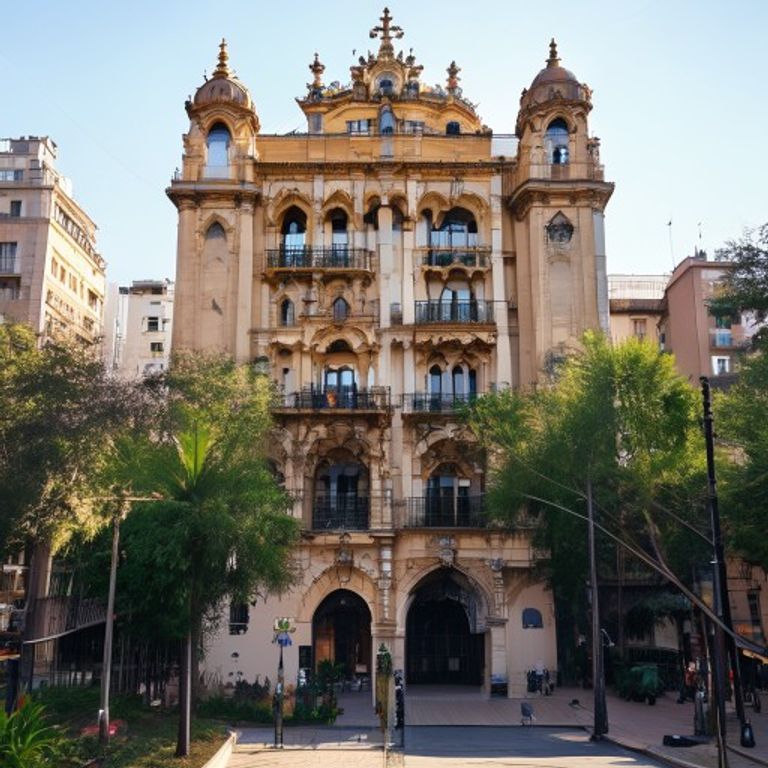
Founded in 1889 in the bustling port and industrial city of Rosario, Club Atlético Rosario Central is one of the most passionate, identity-driven, and historic institutions in South American football. Competing in the Primera División of the Argentine Football Association (AFA), the club is currently undergoing a period of profound technical transition following the departure of legendary coach Miguel Ángel Russo and the arrival of Ariel Holan in November 2024. The "Canalla" — as it is historically known — carries in its DNA a century-old history that blends its British railway origins, epic glories on the national and international stage, and one of the most fervent fanbases on the planet, based at the mystical Gigante de Arroyito Stadium.
Club History
1. Origins and Foundation: The Rail and the Train Whistle (1889–1903)
The history of Rosario Central is directly intertwined with the expansion of the Argentine railway network in the late 19th century, a process led primarily by engineers and capital of British origin. On December 24, 1889, Christmas Eve, a group of workers and employees of the Central Argentine Railway company met at a local café with a clear goal: to found an athletic club that would serve as a source of leisure and integration for the company's workers.
Under the leadership of the Scotsman Colin Bain Calder, who became the institution's first president, the Central Argentine Railway Athletic Club was born. Initially, access to the club was restricted to railway employees, and the official language of board meetings was English. The original colors adopted were red and white, in allusion to the British heritage, later passing through a combination of blue and white before definitively adopting the vertical dark blue and gold-yellow stripes (azul y amarillo) in 1904.
As football became popular on the streets of Rosario, the elitist barrier imposed by the British administrators began to crumble. In 1903, after intense internal debates and the merger with the local Talleres team, the club opened its doors to the entire Rosario community, regardless of any link to the railway. To seal this new era of popular openness, the institution was renamed Club Atlético Rosario Central, a name that would become synonymous with working-class passion and popular fervor in the province of Santa Fe.
Argentine football mythology recounts that in the 1920s, the Carrasco Hospital in Rosario, which specialized in treating people with leprosy, organized a charity match to raise funds. Central's historic rival, Newell's Old Boys, readily accepted the invitation. Rosario Central, however, refused to participate. Faced with this refusal, Newell's fans insulted their rivals by calling them "Canallas" (scoundrels). In immediate response, Central fans nicknamed their rivals "Leprosos" (lepers). What began as an insult was proudly adopted by both fanbases, shaping the cultural identity of the entire city.
2. Golden Eras and Historic Campaigns
After decades of dominance in the Rosario Football League and subsequent direct affiliation to the AFA national tournaments in 1939, Rosario Central built a trajectory of remarkable glories, becoming the first club from the interior of Argentina (outside the province of Buenos Aires and its surroundings) to be crowned national champion in the professional era.
The "Palomita de Poy" and the First Championship Shout (1971)
The year 1971 is eternal for the blue and yellow half of Rosario. Under the technical command of the historic Ángel Labruna, Central reached the final stage of the 1971 National Championship. In the semifinal, played on December 19 at the Monumental de Núñez stadium, Central faced its arch-rival, Newell's Old Boys.
In the 9th minute of the second half, striker Aldo Pedro Poy flew acrobatically to deliver a diving header (known in Argentina as palomita), sealing the 1-0 score. The goal not only eliminated their greatest rival but became a folkloric phenomenon: annually, Central fans gather in different parts of the world to recreate Poy's goal. In the tournament final, Central defeated San Lorenzo 2-1, lifting their first national title.
The "Picapiedras" and the 1973 Consecration
In 1973, now under the tactical leadership of Carlos Timoteo Griguol, Rosario Central developed a style of play characterized by defensive solidity, tactical discipline, and physical vigor, nicknamed by the press as "Los Picapiedras" (The Flintstones). This pragmatic and extremely efficient team won the 1973 National Championship, consolidating the club as an unquestionable power on the national stage.
"La Sinfónica" of Ángel Tulio Zof (1980)
The third national star arrived in 1980. Led by Ángel Tulio Zof — the most decorated coach in the club's history — the team presented an attractive, offensive, and technically refined style of football, earning the nickname "La Sinfónica" (The Symphony). Led on the pitch by Daniel Carnevali, Edgardo Bauza, and Omar Palma, Central beat Racing de Córdoba in the grand final to win the 1980 National Championship.
The Unprecedented Feat of 1986/1987
After suffering a traumatic relegation in 1984, Rosario Central achieved one of the greatest feats in the history of world football. The club won the Primera B (second division) in 1985, returning immediately to the elite. The following season (1986/1987), again under the command of Ángel Tulio Zof, the team maintained its momentum and won the Primera División title in its very first year back. No other Argentine team has managed to be champion of the second and first divisions in consecutive years.

The International Epic: 1995 CONMEBOL Cup
On the continental stage, the club's greatest glory occurred in the 1995 CONMEBOL Cup (precursor to the current Copa Sudamericana). After losing the first leg of the final 4-0 to Atlético Mineiro in Belo Horizonte, the title seemed mathematically impossible.
However, on December 19, 1995 — exactly on the anniversary of the "Palomita de Poy" — in front of a Gigante de Arroyito packed with over 45,000 souls, Rosario Central performed a miracle. With goals from Horacio Carbonari (two), Rubén Da Silva, and Martín Cardetti, the club matched the 4-0 scoreline. In the penalty shootout, goalkeeper Roberto Bonano shone, and Central won 4-3, sealing the greatest comeback in the history of CONMEBOL competition finals.
---3. Context and Current Moment
Rosario Central is experiencing a period of deep restructuring and institutional resilience in the contemporary Argentine football scene. After difficult years marked by financial crises and modest campaigns, the club experienced a sporting rebirth under the management of president Gonzalo Belloso and the technical direction of veteran Miguel Ángel Russo.
In December 2023, Central won the Copa de la Liga Profesional by defeating Platense 1-0 in the final, with a goal by Maximiliano Lovera, crowning a solid campaign that featured standout performances from goalkeeper Jorge "Fatura" Broun and midfielder Jaminton Campaz. This title secured the club's return to the Copa Libertadores in 2024.
The 2024 Copa Libertadores campaign, however, was marked by fluctuations and high-tension matches (including violent off-field clashes against Peñarol in Uruguay and Rosario). The club finished third in its group, being transferred to the 2024 Copa Sudamericana, where it was eliminated in the round of 16 by Fortaleza.
The Coaching Carousel and Di María's "No"
In August 2024, citing health issues and personal exhaustion, Miguel Ángel Russo left the technical command, causing an emotional response among fans. After a period of interim management by Matías Lequi, the board announced in November 2024 the hiring of Ariel Holan (formerly of Independiente and Universidad Católica), with the mission of modernizing the team's style of play and initiating a medium-term strategic plan for the 2025 competitions.
Another topic that dominated recent sports news was the possible return of star player Ángel Di María, who developed in the club's youth academy. During the first half of 2024, intense negotiations were conducted to promote "Fideo's" return to Arroyito after the end of his contract with Benfica. However, the return was canceled due to serious security threats directed at the player's family by criminal factions linked to drug trafficking operating in the city of Rosario, highlighting the complex socioeconomic context that affects local daily life.
---4. Main Idols and Coaches Who Defined an Era
- Ángel Tulio Zof (Don Ángel): The greatest symbol of longevity and tactical wisdom at the club. He had nine stints as Central's coach, winning three national championships (1980, 1986/87) and the historic 1995 CONMEBOL Cup. He passed away in 2015 and is revered as the "Father of the Canalla Homeland."
- Omar Palma (El Negro): One of the most talented number 10s in the history of Argentine football. He won three national titles as a player (1980, 1985 in the B, 1986/87) and the 1995 CONMEBOL Cup. Palma passed away recently, on October 7, 2024, triggering three days of official mourning in the province of Santa Fe and profound tributes at the Gigante de Arroyito.
- Mario Alberto Kempes: The hero of Argentina's 1978 World Cup title took his first steps toward national consecration with the Central shirt between 1974 and 1976. "El Matador" scored 89 goals in 107 matches for the club, boasting one of the best goal-scoring averages in the institution's history.
- Aldo Pedro Poy: The eternal hero of the 1971 classic. His devotion to Rosario Central turned him into an informal ambassador for the fans, perpetuating the club's folklore for generations.
- Edgardo Bauza (El Patón): Before becoming a renowned coach on the continent, Bauza was a defender with refined technique and an excellent header for Central, being one of the greatest goal-scoring defenders in world football. In 2018, he returned as coach to break a 23-year drought without official club titles, winning the Copa Argentina.
- Marco Ruben: The great goalscorer of the modern era. With multiple stints at the club, Ruben became Rosario Central's top scorer in the professional era (surpassing the 100-goal mark), serving as the reference for leadership and love for the shirt for the current fanbase.
5. Greatest Rivalries: The Clásico Rosarino
Football in the city of Rosario is not just a sport; it is a civil religion of a strictly binary nature. There is no room for neutrality or sympathy for clubs from Buenos Aires (like Boca Juniors or River Plate). The city is divided absolutely and viscerally between Rosario Central (Canallas) and Newell's Old Boys (Leprosos).
The Clásico Rosarino is considered by anthropologists, sociologists, and sports journalists to be the most passionate, tense, and dangerous derby in Argentina. The rivalry transcends the sporting sphere and has entered the city's social fabric since the first official match in 1905 (won by Newell's 1-0 with a goal by Faustino González).
Origin and Sociocultural Context
Historically, Rosario Central was linked to the working classes, railway and port workers, located mostly in the northern part of the city (Arroyito neighborhood). Newell's Old Boys, founded at the facilities of the Anglican Commercial College of Rosario by Isaac Newell, had its origins linked to the upper-middle class and immigrants with an academic and mercantile profile.
Although socioeconomic barriers have diluted throughout the 20th century — with both fanbases currently having branches in all social classes — the classic maintains a level of hostility and drama without parallel. Losing a classic in Rosario often means temporary social exile for players, coaches, and fans, shaping the daily mood of a population of over one million inhabitants.
---6. Organized List of Titles, Cups, and Medals
International Titles
- CONMEBOL Cup (1): 1995
Elite National Titles (Primera División)
- National Championship (3): 1971, 1973, and 1980
- Primera División Championship (1): 1986/1987
Official National Cups (AFA)
- Copa de la Liga Profesional (1): 2023
- Copa Argentina (1): 2018
- Copa de Competencia de la Liga Argentina (1): 1913
- Copa de Competencia Jockey Club (2): 1914 and 1916
- Copa de Honor Municipalidad de Buenos Aires (1): 1916
- Copa Ibarguren (1): 1915
Second Division Titles
- Primera B / Primera B Nacional (4): 1942, 1951, 1985, and 2012/2013
Researched Sources
- Argentine Football Association (AFA) – Historical records of official competitions and affiliations.
- Diario La Capital de Rosario – Historical archive and daily coverage of campaigns, the passing of Omar Palma in October 2024, and the hiring process of Ariel Holan in November 2024.
- El Gráfico Magazine – Special editions on the 1971 ("Palomita de Poy"), 1980 ("La Sinfónica") campaigns, and the 1995 CONMEBOL Cup final.
- "Homo Canallicus" – Literature and anthropology essays on the identity of the Rosario Central fanbase.
- Center for Football History Research (CIHF) – Documentary data on the foundation and transition of the club's name between 1889 and 1903.





