



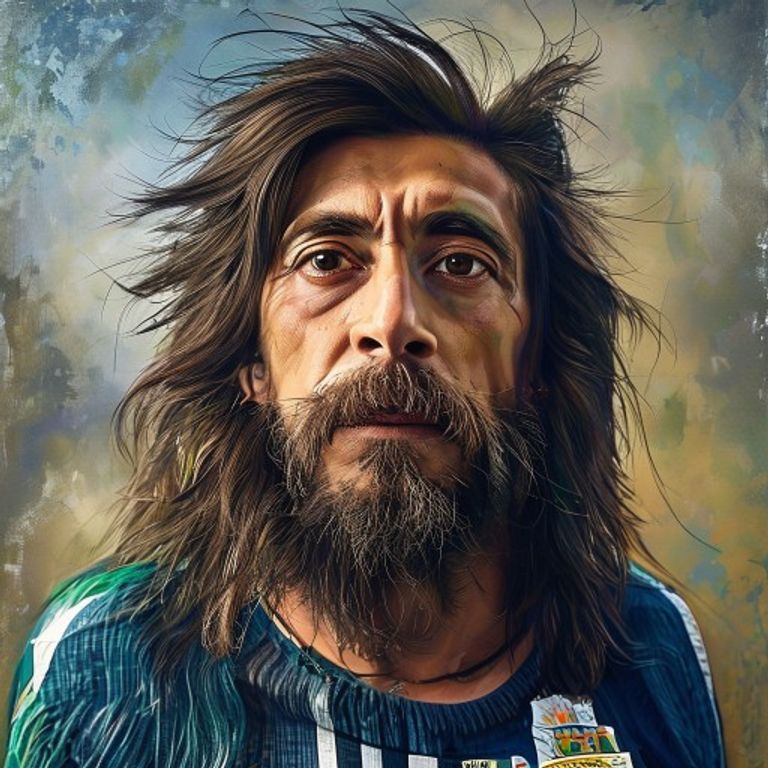
Founded in 1896 by British immigrants, Club Atlético Banfield is one of the oldest and most traditional institutions in Argentine football. Nicknamed "El Taladro" (The Drill), the club from the south of Greater Buenos Aires currently competes in the Liga Profesional de Fútbol (First Division), balancing the consolidation of its finances through one of the most prolific youth academies in the country with the quest to regain the continental prominence that marked its golden eras at the beginning of the 21st century.
Club History
1. Origins and Foundation: The British Seed on the Southern Tracks (1896-1910)
To understand the genesis of Club Atlético Banfield, one must travel back to the late 19th century, when Argentina was undergoing a profound economic and demographic transformation, driven by the expansion of British-capital railways. On January 21, 1896, a group of professionals and merchants of English, Scottish, and Irish descent, residing in the flourishing town of Banfield — named after Edward Banfield, the first manager of the Great Southern Railway company — met with the purpose of founding a social and sports club.
Led by figures such as Daniel Kingsland (who would become the first president) and George Burton, Banfield was initially focused on cricket and rugby, the favorite sports of the British expatriate elite. Football, which was beginning to spread through working-class neighborhoods and Buenos Aires suburbs, was introduced shortly thereafter, quickly becoming the primary activity.
Unlike other clubs founded by railway workers with a purely proletarian profile, the first decades of Banfield were marked by a strong influence from the Anglo-Argentine community. Its first colors were brown and gold, but the club's visual identity soon migrated to green and white. There are two historiographical theories regarding this choice: the first points to a tribute to the Irish heritage of some of its founders; the second, of a more pragmatic nature, suggests they were the colors of the railway signaling flags that crossed the region.
In 1899, Banfield won the Second Division tournament of the Argentine Association Football League, becoming the only club currently affiliated with the Argentine Football Association (AFA) to have won a title in the 19th century. However, the first decades of the 20th century were marked by extreme institutional instability, with the club even being temporarily deactivated due to financial crises before reorganizing definitively in the 1910s.
Golden Eras and Historic Campaigns
The Birth of the Nickname: "El Taladro" (1940)
Banfield earned promotion to the first division in 1939. The following year, in 1940, the club carried out a surprising campaign, defeating the great powers of Buenos Aires football with a vertical, physical, and extremely forceful style of play. Impressed by the ease with which the team pierced opposing defenses, the influential sports journalist from the newspaper El Pampero coined the phrase: "Banfield taladra a los rivales" (Banfield drills the rivals). The term caught on immediately, and since then the club has been known nationally as El Taladro (The Drill).
The 1951 Epic: The "Moral Champion" against the System
The 1951 campaign is undoubtedly one of the richest, most politicized, and debated episodes in the history of Argentine football. Under the technical leadership of the legendary midfielder Eliseo Mouriño, Banfield challenged the hegemony of the so-called "Big Five" of local football.
At the end of the regular championship, Banfield finished tied for the lead with the powerful Racing Club of Avellaneda. According to the regulations, the title had to be decided in two playoff matches, held at the neutral San Lorenzo stadium (the Gasómetro).
"The 1951 Banfield was not just a football team; it was the representation of the humble interior against the established power of the capital and Avellaneda."
— Victor Raffo, Argentine football historian.
The political context of the time added an extraordinary layer of drama to the confrontation. The First Lady of Argentina, Eva Perón (Evita), openly expressed her support for Banfield, seeing in the southern club a legitimate representation of the working class and the "descamisados" (shirtless ones). On the other hand, the Minister of Finance of the Peronist government, Ramón Cereijo, was a fervent patron and supporter of Racing Club. The behind-the-scenes clash culminated in political pressure from both sides.
On the pitch, after a 0-0 draw in the first game, Racing won the second match 1-0, with an anthological goal by Mario Boyé. Despite the runner-up finish, that year's Banfield entered the mythology of Argentine football as the "Moral Champion," being the first smaller team to break the duopoly of the big clubs in the standings of a long tournament.
Eternal Glory: The 2009 Apertura Title
The greatest achievement in the club's history occurred on December 13, 2009. Under the tactical command of strategist Julio César Falcioni, Banfield was crowned champion of the Argentine First Division for the first time in its history by winning the Apertura Tournament.
The 2009 team was a perfect blend of defensive solidity, experienced leadership, and brilliant youth. The tactical scheme was based on an impenetrable defense led by goalkeeper Cristian Lucchetti and center-back Víctor López; a combative and technical midfield with Walter Erviti and a young 18-year-old Colombian prodigy named James Rodríguez; and a lethal attack led by the Uruguayan Santiago "El Tanque" Silva, who finished as the tournament's top scorer with 14 goals.
The consecration came in the final round, right at the Boca Juniors stadium, the mythical La Bombonera. Despite a 2-0 defeat to the hosts, the direct rival in the title race, Newell's Old Boys, was also defeated in their match against San Lorenzo. The final whistle triggered the biggest popular celebration in the history of the Lomas de Zamora municipality, crowning an impeccable campaign of 12 wins, 5 draws, and only 2 losses.
International Campaigns: The Debut in the Copa Libertadores (2005)
The beginning of the 21st century consolidated Banfield as a force in continental competitions. In its first participation in the Copa Libertadores de América in 2005, the club surprised the continent. With attractive football, it advanced to the quarterfinals, being eliminated in a close matchup against River Plate, after knocking out traditional South American teams.
The Stadium: Florencio Sola ("El Lencho")
Inaugurated on October 6, 1940, Banfield's stadium bears the name of Florencio Sola (the president who led the club's reconstruction in the 1930s and 1940s), but is affectionately known by the fans as "El Lencho." Located in the heart of the residential neighborhood of Banfield, at the intersection of Peña and Arenales streets, the stadium is one of the most charming in Argentina.
Historically avant-garde, the Florencio Sola was one of the first stadiums in the country to have reinforced concrete stands and modern floodlights in the 1940s. In 2019, the club carried out a historic renovation, removing the fences from one of its side stands, transforming it into a modern seating area in the style of European stadiums, bringing the fans closer to the pitch in an unprecedented way in the country's football.
Context and Current Moment
The current moment of Club Atlético Banfield reflects the common challenges faced by mid-sized institutions in Argentina: the need to maintain financial stability in a highly volatile national economic scenario. Under the presidency of Eduardo Spinosa and subsequent administrations, the club has adopted a sustainability policy based heavily on the export of athletes trained in its youth divisions, historically known as "La Fábrica" (The Factory).
In the sporting realm, after the departure of historical technical leadership figures, the club went through a period of tactical transition. The year 2023 was marked by the return of the eternal Julio César Falcioni for his fifth stint at the club, taking over as coach during a moment of poor results and relegation risk. Faithful to his pragmatic style of play, Falcioni managed to stabilize the team, ensuring their stay in the elite and reaching the quarterfinals of the 2023 Copa de la Liga Profesional.
For the 2024 season, Banfield remains focused on consolidating young prospects in the main team — such as the club's new jewel, the young winger Gerónimo Rivera, coveted by major foreign clubs — mixed with experienced athletes. The institutional goal is clear: to accumulate points to avoid suffering with the "promedios" table (relegation) and to seek qualification for continental tournaments like the Copa Sudamericana.
Main Idols and Coaches Who Left Their Mark
- José Luis "Garrafa" Sánchez: The greatest symbol of romantic football and the Argentine "potrero" (street football). An attacking midfielder of immense skill, irreverence, and love for the game, uncompromised by modern professionalism. He was the technical leader who returned Banfield to the first division in 2001. "Garrafa" died tragically in a motorcycle accident in 2006, but his mystique remains alive in statues, flags, and in the heart of every fan.
- Julio César Falcioni: The most important coach in the club's history. With five stints on the Taladro bench, he was the architect of the historic 2009 title and the club's most significant international qualifications. Falcioni is synonymous with order, tactical discipline, and "banfileña" identity.
- James Rodríguez: The Colombian midfielder arrived at the club's youth divisions at a very young age. Launched into the main team, he became the youngest foreign player to debut and score a goal in the Argentine first division. His refined talent was fundamental to the conquest of the 2009 Apertura before starting his acclaimed career in Europe (Porto, Real Madrid, Bayern Munich).
- Eliseo Mouriño: A central midfielder of extraordinary class, elegance, and undisputed leadership in the 1950s. He was the captain and the brain of the team that almost won the 1951 championship. His premature death in a plane crash in 1961 shocked the country. One of the stands at the Florencio Sola stadium bears his name.
- Javier Zanetti: Although he was professionally revealed by Talleres de Remedios de Escalada, it was at Banfield (1993-1995) that "El Pupi" emerged on the world stage with his vertical runs down the right flank, catching the attention of Inter Milan, where he would become a global legend.
Greatest Rivalry: The "Clásico del Sur"
Banfield's greatest and fiercest rival is Club Atlético Lanús, with whom they play the traditional Clásico del Sur (Southern Derby). This rivalry is unique in Argentina due to its historical evolution and geographical proximity.
Origins and Historical Context
Geographically, the municipalities of Lanús and Lomas de Zamora (where the town of Banfield is located) are immediate neighbors in the southern zone of the Buenos Aires Metropolitan Area. The social headquarters and stadiums of the two teams are separated by just over four kilometers.
Unlike other historical derbies that were born in the early 20th century from a class division or internal dissidence, the extreme rivalry between Banfield and Lanús consolidated with greater force starting in the 1970s and 1980s. Originally, Banfield's greatest historical rival was Los Andes (from the same Lomas de Zamora district), while Lanús historically rivaled Talleres de Remedios de Escalada.
However, the constant presence of Banfield and Lanús in the First Division, contrasting with the sporting decline of their original rivals (who fell to lower divisions), fostered the mutual need for an elite derby. The dispute for territorial and symbolic control of the South of Greater Buenos Aires turned the confrontation into a high-voltage classic, characterized by matches of enormous physical intensity, notable refereeing controversies, and a fervent rivalry in the stands.
Gallery of Titles and Notable Achievements
| Category / Competition | Titles / Achievements | Years / Seasons |
|---|---|---|
| First Division (AFA) | 1 Title | Apertura 2009 |
| Official National Cups (AFA) | 1 Title | Copa de Honor Municipalidad de Buenos Aires (1920) |
| Second Division / Primera B Nacional | 10 Titles | 1899, 1900, 1919, 1939, 1946, 1962, 1973, 1992/93, 2000/01, 2013/14 |
| Notable Runner-ups (First Division) | 4 times | 1951 (Moral Champion), Clausura 2005, Apertura 2020 (Copa Diego Maradona) |
Researched Sources
- Argentine Football Association (AFA): Archives and historical records of official first and second division tournaments.
- Club Atlético Banfield: Department of Culture and History of the club (Official foundation data and biographies of the founders).
- Diário Olé: Recent sports coverage, statistical data on transfers, and history of the 2009 Apertura Tournament.
- El Gráfico (Historical Archive): Period reports on the 1951 championship and the birth of the "El Taladro" nickname.
- Raffo, Víctor (1996): El origen de los colores del Club Atlético Banfield. Independent local historical investigation.





