



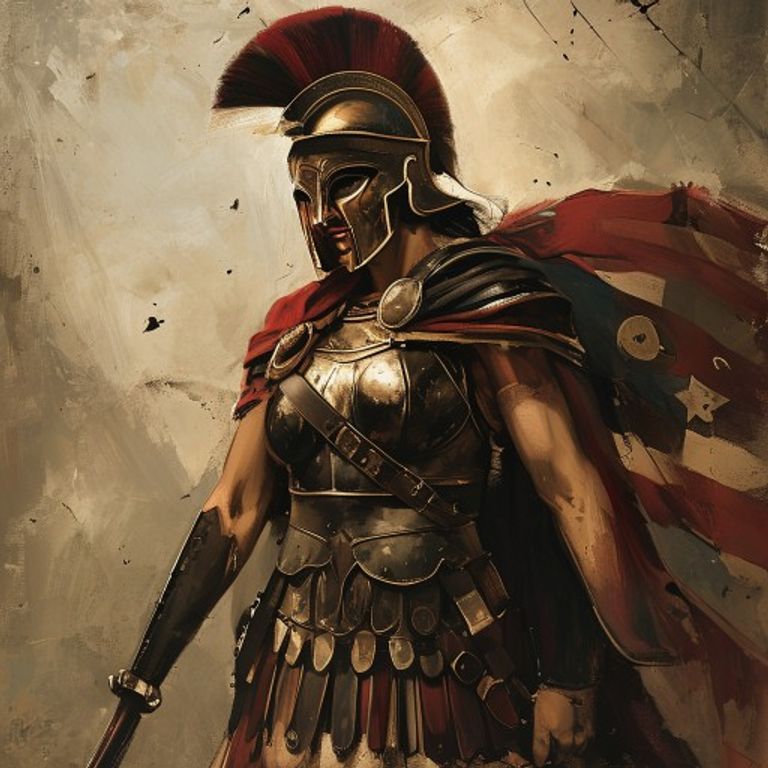
The legendary conflict of Antiquity described in Homer's Iliad, which involved the use of a wooden horse to penetrate the walls of the enemy city.
⚠️ Research conducted with the aid of Deep Research is subject to referential ambiguity.
🖥️ Clean HTML code using a proprietary tool.
👥 Research by Guilherme Felipe, Curation by Sílvio Lôbo
The Trojan Horse: A Timeless Mystery of War and Deception
Few historical accounts resonate with the force of an epic saga like the Trojan War. For centuries, the narrative of a monumental conflict, fought for a decade beneath the impenetrable walls of the city of Troy, has captivated the human imagination. However, behind the glory of the heroes and the disgrace of the defeated lies one of the greatest enigmas of ancient history: how, after all, did the Greeks manage to penetrate the impregnable fortress and seal the city's fate? The core of this mystery resides in a singular and ingenious element, immortalized as the Trojan Horse.
Our investigation delves into the depths of time to unravel the layers of myth and reality surrounding this unprecedented event. We will seek to separate the factual from the legendary, presenting the theories that attempt to explain this strategic triumph and the gaps that persist in our understanding.
1. The Context and the Incident: Where, When, and How the Mystery Began
The stage for this epic drama is ancient Troy, a prosperous city strategically located on the coast of Anatolia (modern-day Turkey). The precise dating of the conflict is a point of debate among archaeologists and historians, but archaeological evidence and literary traditions point to the late Bronze Age, approximately between the 13th and 12th centuries BC.
The incident that culminated in the end of Troy, as reported primarily in Homer's Iliad and Odyssey, was allegedly triggered by the abduction of Helen, wife of the Spartan king Menelaus, by the Trojan prince Paris. In response, a coalition of Greek kingdoms, led by Agamemnon, Menelaus's brother, sailed to Troy to recover Helen and avenge Greek honor. What followed was a prolonged siege that dragged on for ten long years, without the Greeks being able to breach the city's imposing walls.
The mystery, therefore, began with the apparent impossibility of defeating an enemy barricaded by formidable defenses, until an unexpected and cunning solution emerged, drastically changing the course of the war.
2. Timeline of Key Events (Reconstruction Based on Ancient Sources and Archaeology)
Although the chronology is inferred from literary texts that combine history and myth, we can outline a sequence of key events:
- Year 1: Arrival of the Greek fleet at Troy. Start of the siege.
- Years 1-9: Intermittent clashes, field battles, looting of neighboring villages, but no success in taking the city. Great Greek heroes like Achilles and Trojans like Hector stand out in individual combat.
- Year 10: The war drags on. The Greek army, exhausted and without prospect of a decisive victory, seeks a new strategy.
- Crucial Moment: The idea of the Trojan Horse, attributed to Odysseus (Ulysses), is conceived and executed.
- The Deception: The Greeks build a gigantic hollow wooden horse. An elite force, led by Odysseus, hides inside the structure. The rest of the Greek army simulates departure, leaving the horse behind as an offering to Athena.
- The Entry: The Trojans, believing in the Greek withdrawal and the sacred nature of the offering, take the horse inside their walls.
- The Fall: During the night, the hidden Greeks emerge from the horse, open the city gates for the Greek army that had stealthily returned, and Troy is sacked and destroyed.
3. The Main Theories: Seeking Logic in the Inexplicable
The explanation for the fall of Troy, and in particular the ingenuity of the Horse, has been a subject of debate and speculation for millennia. We present the main theories:
3.1. The Classical Literary Theory (Fact Proven in its Narrative)
This is the most widespread explanation, based on Homeric accounts. The theory posits that the Trojan Horse was a real structure, built by the Greeks, with soldiers hidden inside. Its purpose was to deceive the Trojans, making them believe in the Greek withdrawal and introduce an invading force directly into the heart of the city. Success was achieved through a combination of military ingenuity and Trojan naivety in accepting the "offering."
Logic: Prolonged siege warfare often leads to tactics of deception and surprise. Odysseus's intelligence is consistently portrayed as his greatest weapon.
3.2. The Sarcastic Offering Theory (Historical Speculation)
Some historians suggest that the "horse" may not have been a literal structure in the shape of an animal, but rather a type of disguised siege machine, perhaps a battering ram with a wooden cover, or even an innovative war mechanism that the Trojans had never seen. The story of the horse could have been a simplified and dramatic way of conveying the complexity of the contraption to the ears of the people.
Logic: Siege machines, such as mobile towers and battering rams, were crucial in ancient warfare. Deception could involve presenting one of these machines unexpectedly or with a false purpose.
3.3. The Gate Opening Theory (Fact Proven in the Narrative)
Regardless of the exact shape of the "horse," the crucial element for the Greek victory was the opening of the city gates. Once the Greek soldiers were inside, the fall of Troy became inevitable. This theory focuses on the operational aspect of the plan: infiltration and the subsequent opening of the defenses.
Logic: The conquest of fortified cities depends, in large part, on the ability to neutralize or overcome their walls and gates.
3.4. The Natural Disaster Theory (Scientific Speculation)
Some researchers have proposed that the story of the horse may be an allegory for a natural event that destabilized Troy. An earthquake, for example, could have weakened the walls, allowing for the Greek entry. The narrative of the horse would then be a poetic way of explaining a chaotic and seemingly inexplicable event.
Logic: Earthquakes were common in the region and could have caused significant damage to the fortifications.
3.5. The Conspiracy and Created Myth Theory (Historical/Sociological Speculation)
This view suggests that the story of the Trojan Horse was widely glorified and exaggerated by Greek poets and historians to justify the brutality of Troy's destruction and to create a founding myth for Greek identity. The idea of a victory based on cunning rather than brute force would serve to elevate the reputation of the Greeks, especially Odysseus.
Logic: It is common in history for narratives to be shaped to serve political and cultural purposes.
3.6. Alternative and Paranormal Theories (Speculation)
Although there is no concrete evidence, more fringe theories speculate about direct divine intervention or other inexplicable phenomena. The idea that the goddess Athena herself inspired the strategy or influenced the Trojans to accept the horse is common in the Homeric narrative, but is interpreted as part of the mythological framework.
Logic: Religion played a central role in ancient society, and extraordinary events were frequently attributed to the will of the gods.
4. Controversies and Blind Spots: The Gaps in the Investigation
Despite the richness of ancient narratives, the investigation of the Trojan War Case is marked by countless controversies and blind spots:
- The Nature of Troy: The exact location of Troy and the extent of its defenses are still a subject of archaeological debate. The discovery of the Hisarlik site by Heinrich Schliemann and subsequent excavations provided evidence of an ancient and fortified city, but the correspondence with the Homeric Troy is not unanimous.
- The Material Evidence of the Horse: There is no direct and unequivocal archaeological evidence of a giant "wooden horse." If it existed, the organic material would have deteriorated over the millennia, making discovery extremely unlikely.
- The Accuracy of Homeric Accounts: Homer, the main "witness," wrote centuries after the events he describes. The distinction between historical fact and poetic fiction in his work is a constant challenge for historians. Official reports or declassified files for such an ancient event are, obviously, non-existent.
- The Veracity of Testimonies: The only "testimonies" are literary narratives. There are no independent accounts from surviving Trojans that corroborate the story of the horse.
- Ignored Clues?: It is impossible to determine if there were ignored clues in an investigation that was never formally opened in the modern sense. However, the absence of a purely military or logistical explanation that satisfies everyone suggests that something may have escaped attention, or transmission, in ancient sources.
- The Logic of Delivery: Why would the Trojans, known for their military caution, accept such a suspicious and unusually sized offering inside their walls? This is a crucial point that fuels speculation about deception, internal weakness, or an unknown element in the Greek strategy.
5. Curiosities and Legacy: An Eternal Echo
The legacy of the Trojan War Case and, in particular, the Horse, is immeasurable:
- Cultural Impact: The story of the Trojan Horse transcended antiquity, becoming an archetype for deception, subversion, and victory obtained through intelligence and cunning. The expression "Greek gift" (or "Trojan horse") is a constant reminder of this episode.
- Inspiration for Modern Tactics: The strategy of the Trojan Horse is studied in military academies and business schools as an example of psychological and strategic warfare. In the digital world, "Trojan horse" is a well-known term for malicious software that disguises itself as legitimate programs.
- Current Status: The Trojan War Case has not been "reopened" or "shelved" in the modern forensic sense, as it was never a police investigation. It remains an object of academic and historical study and debate. The quest to understand the Homeric Troy continues, with new archaeological discoveries and textual reinterpretations, but the central mystery of the city's fall, and the literal veracity of the Horse, persist as fascinating enigmas.
- The Great Question: Until new definitive evidence emerges, the image of the gigantic wooden horse entering triumphantly into the walls of Troy will remain a powerful symbol of how audacity and deception can, at times, overcome the most insurmountable barriers.





